Artwork
Man Pulling on His Shoe
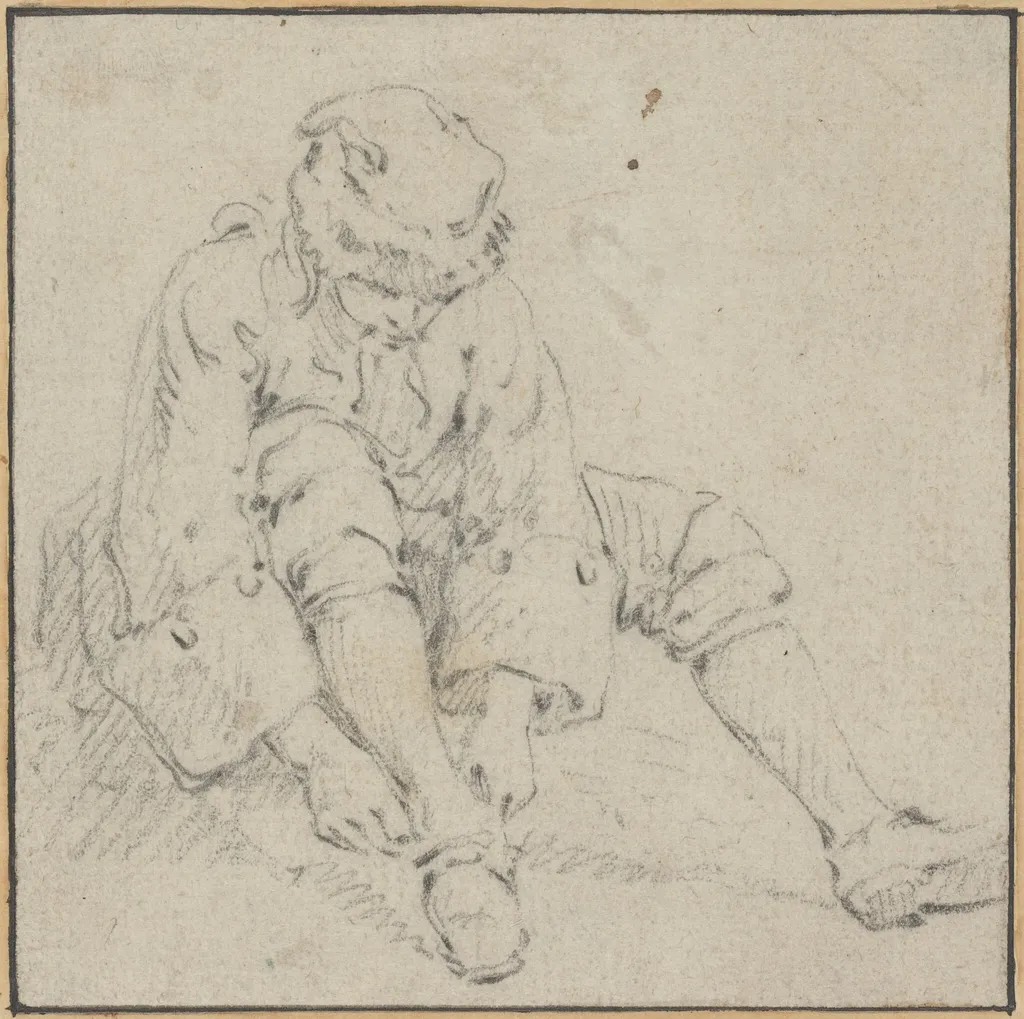
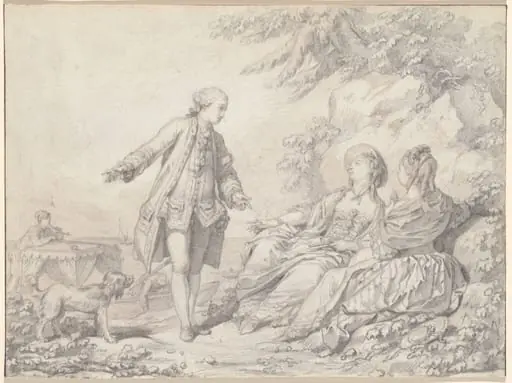
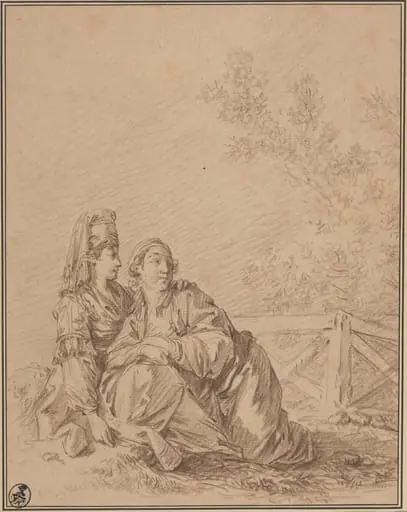
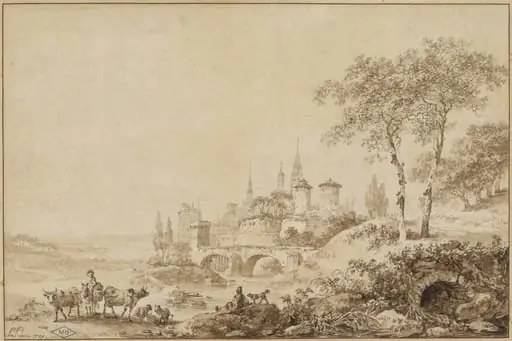
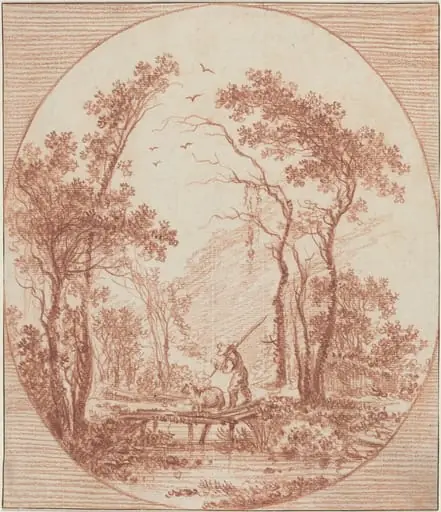
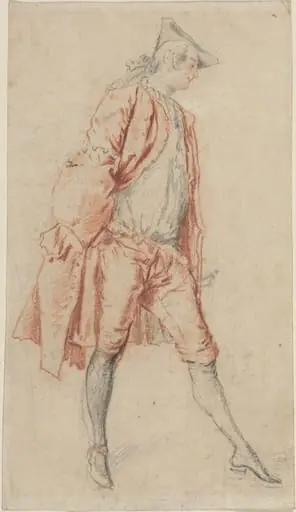
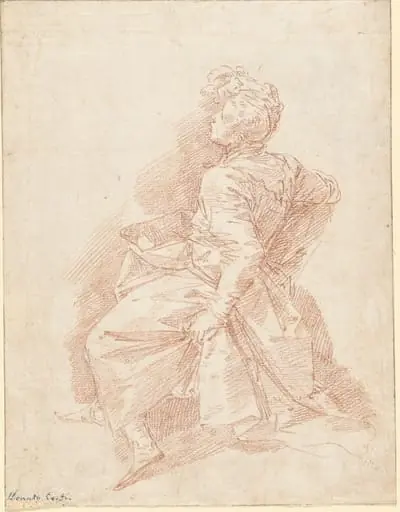
Man Pulling on His Shoe is a chalk drawing by the Baroque artist Jean-Baptiste Le Prince. It dates from 1762 and is held in the collection of the National Gallery of Art.
About this work
Overview
Created in 1762, this drawing by Jean-Baptiste Le Prince captures a moment of quiet domestic action: a man adjusting his footwear.
Created in 1762, this drawing by Jean-Baptiste Le Prince captures a moment of quiet domestic action: a man adjusting his footwear. Executed in black chalk on laid paper, the work retains the immediacy of a spontaneous observation. The paper’s handmade texture and the medium’s subtle tonal range contribute to its unpolished, intimate character, distinguishing it from formal finished compositions of the period.
Subject & Meaning
The figure is depicted in a private, unguarded moment—bent forward, one foot lifted, hands engaged with a shoe. There is no narrative context beyond the physical act, suggesting the artist valued ordinary life as worthy of study. The posture, slightly ungainly and unidealized, reflects an interest in human movement and naturalism rather than theatricality or moral symbolism.
Technique & Style
Le Prince employed loose, rapid strokes of black chalk to suggest form and motion without definition. The lines are economical, avoiding shading or detail, emphasizing gesture over finish. The light paper enhances the chalk’s contrast, while the texture of the laid paper adds a tactile quality, reinforcing the drawing’s sense of immediacy and informal observation.
History & Provenance
The drawing was mounted on a later support, a common practice to preserve fragile works on paper. Its survival suggests it was valued by collectors or artists for its expressive quality, though no documented ownership before the 19th century is known. It remains a representative example of 18th-century French draftsmanship focused on everyday subjects.
Context
In mid-18th-century France, artists increasingly turned to sketches of daily life as studies for larger works or as independent observations. Le Prince, known for his interest in genre scenes and Orientalist themes, used such drawings to refine his understanding of posture and movement, aligning with broader trends in observational drawing among academic artists.
Legacy
This drawing exemplifies how preparatory sketches gained recognition as autonomous works in the 18th century. Its unembellished approach influenced later artists who valued spontaneity and truth to observation over polished finish. Though not widely exhibited in its time, it now stands as a quiet testament to the artistic value of the fleeting, the mundane, and the unposed.
Artist & collection