Artwork
La provocation
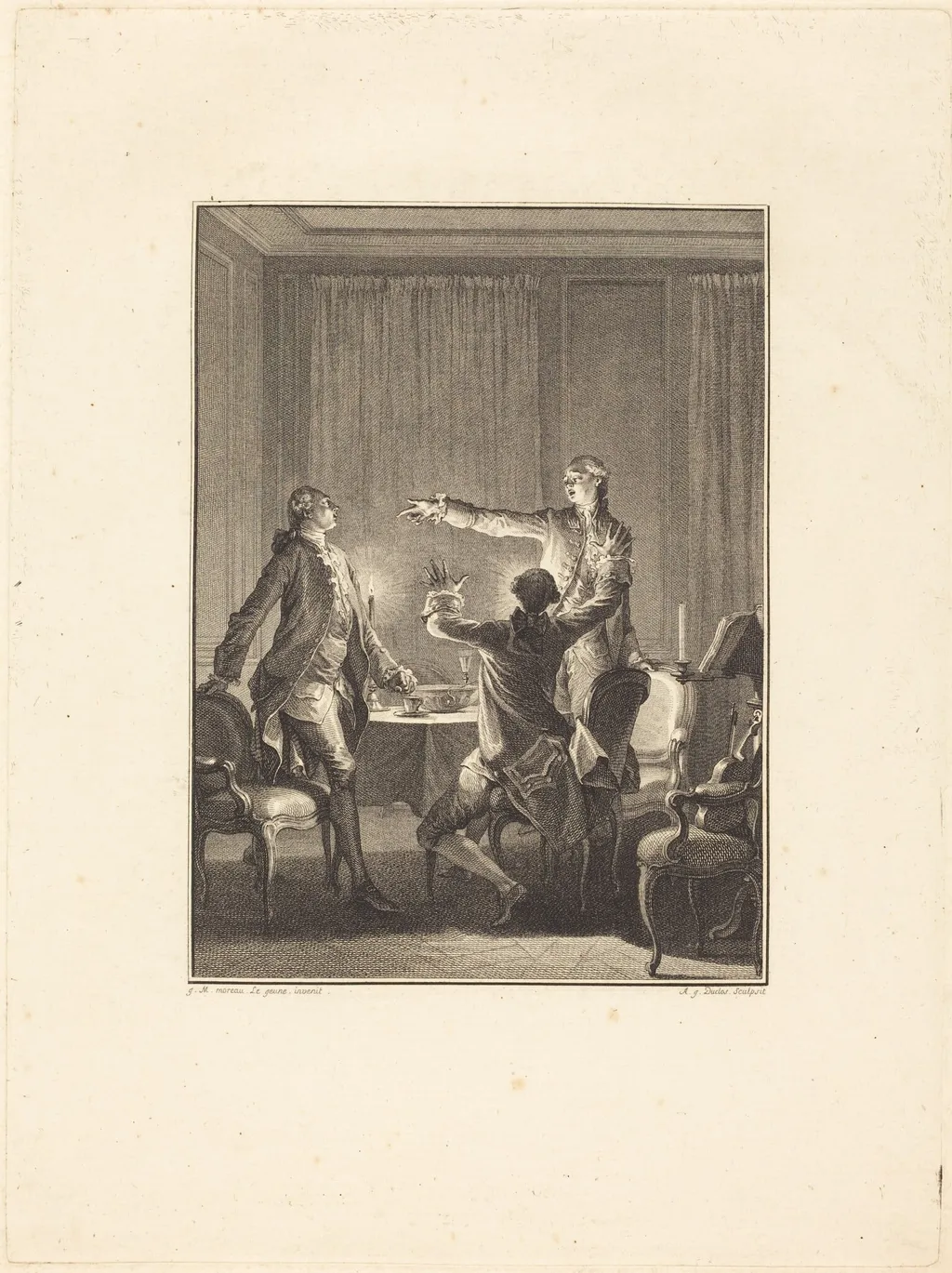
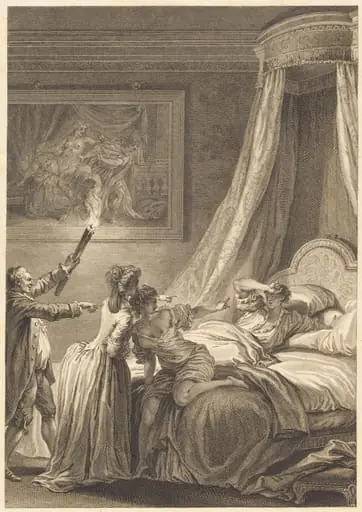
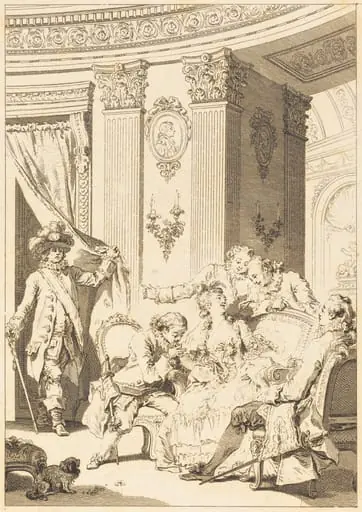
La provocation is an ink print by the Baroque artist Antoine-Jean Duclos. It dates from 1768 and is held in the collection of the National Gallery of Art.
About this work
Overview
It captures a tense interpersonal moment within an interior setting, rendered with fine linear precision and nuanced tonal gradations.
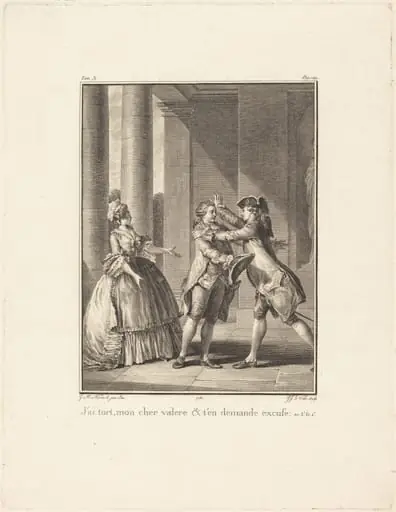
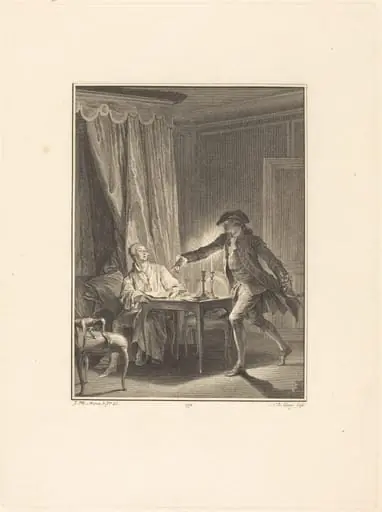
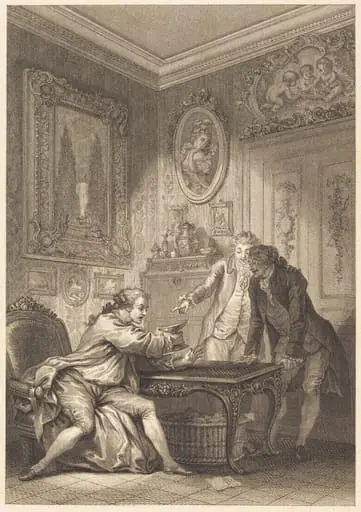
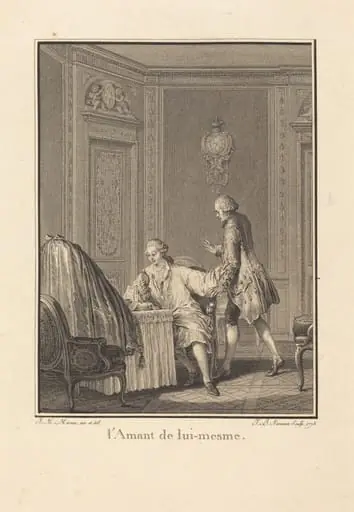
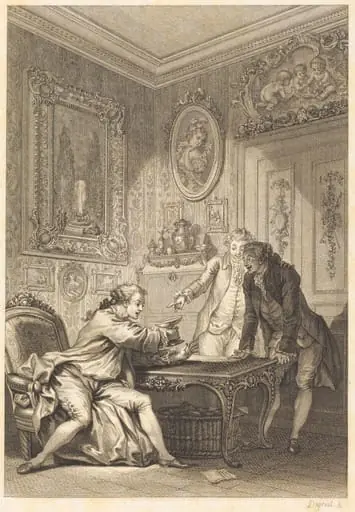
La provocation is a 1768 print by Antoine-Jean Duclos, executed in etching and engraving. It captures a tense interpersonal moment within an interior setting, rendered with fine linear precision and nuanced tonal gradations. The composition centers on a dynamic interaction between three figures, framed by modest architectural elements and subdued furnishings, suggesting a private, intimate space rather than a public one.
Subject & Meaning
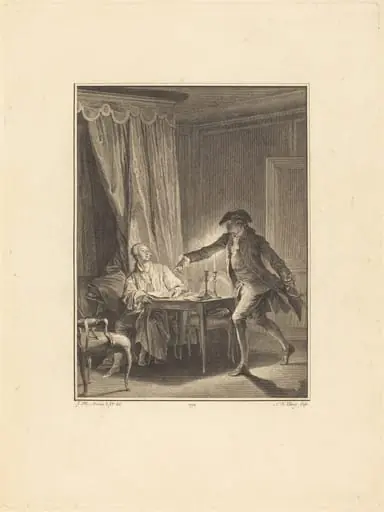
The scene portrays three men in a room: one stands and gestures sharply toward a seated figure, while a third observes from the side. The gesture implies accusation, confrontation, or revelation, though the exact nature of the provocation remains ambiguous. The lack of overt narrative clues invites interpretation, emphasizing psychological tension over explicit storytelling, a hallmark of 18th-century genre scenes.
Technique & Style
Duclos employs fine, controlled lines typical of engraving, layered with cross-hatching to build depth and texture. The contrast between light and shadow is carefully modulated, enhancing the three-dimensionality of forms and directing focus to the central figures. The wooden floor and draped curtains are rendered with attention to materiality, reinforcing the realism of the setting without theatrical exaggeration.
History & Provenance
Created in 1768, the print likely circulated among collectors of French graphic art during the late Enlightenment. Duclos, known for his genre scenes and illustrations, produced works intended for private consumption rather than public display. No definitive early provenance is recorded, but its survival suggests it was valued within artistic circles for its technical finesse and psychological nuance.
Context
In mid-18th-century France, printmaking flourished as a medium for exploring social behavior and moral themes. Duclos’s work aligns with contemporaries who depicted everyday interactions with psychological subtlety. While not overtly political, La provocation reflects a broader cultural interest in human relations, emotional restraint, and the unspoken dynamics of power within domestic spaces.
Legacy
Though not widely reproduced in later centuries, La provocation remains a representative example of French academic printmaking at its most restrained. Its quiet intensity and technical discipline influenced minor genre artists in the decades following its creation. Today, it is studied for its understated narrative power and as a window into the visual culture of private life in pre-Revolutionary France.
Artist & collection