Artwork
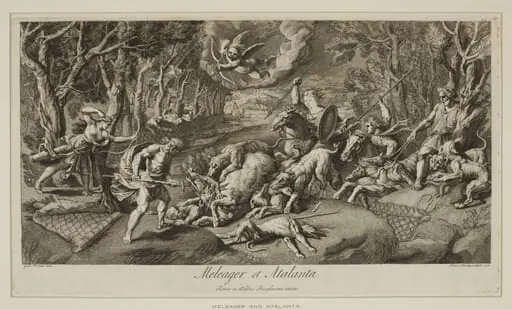
Meleager and Atalanta
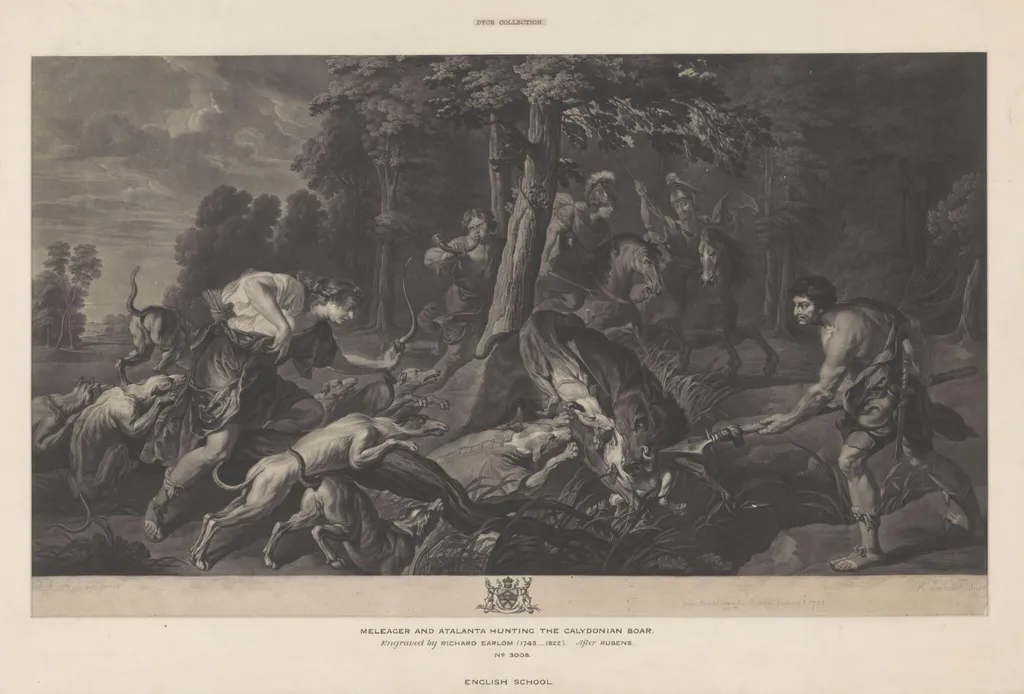
Meleager and Atalanta is a print by Richard Earlom. It is held in the collection of the Victoria and Albert Museum.
About this work
Overview
Meleager and Atalanta is an 1850 print on paper, an engraved interpretation of a Rubens composition, executed by Richard Earlom as an artist's proof, characterized by lightly scratched names on the plate.
Subject & Meaning
The print depicts a chaotic forest scene of the mythological hunt for the Calydonian boar, featuring Meleager, Atalanta, and companions amidst nudity, armor, dogs, and turmoil, illustrating a pivotal moment from Greek mythology.
Technique & Style
Earlom's engraving translates Rubens' original painting into a detailed, dynamic print, with expressive handling of textures (fur, armor, foliage) and atmosphere (stormy sky), achieved through meticulous etching techniques.
History & Provenance
Produced in 1850 by Richard Earlom after Rubens, this artist's proof is distinguished by its lightly scratched plate signatures, indicating an early or experimental stage in the print's production.
Context
This work reflects 19th-century interest in reproducing Renaissance masterpieces through engraving, making iconic scenes accessible to broader audiences, while also highlighting the artistic challenge of translating brushwork into line work.
Legacy
As part of a tradition of engraved reproductions, Meleager and Atalanta contributes to the dissemination of Rubens' oeuvre and the enduring appeal of classical mythological themes in art, preserved in collections like the Victoria and Albert Museum.
Artist & collection

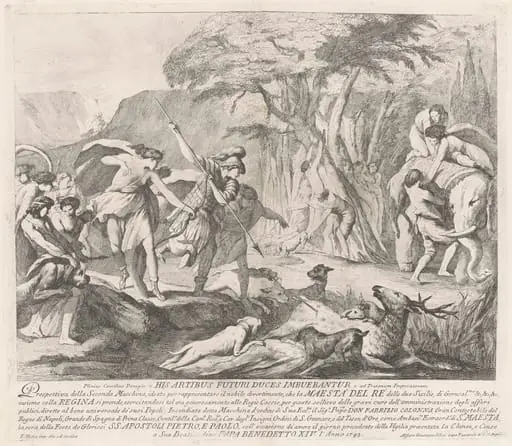 The Seconda Macchina for the Chinea of 1743: The Royal Hunt
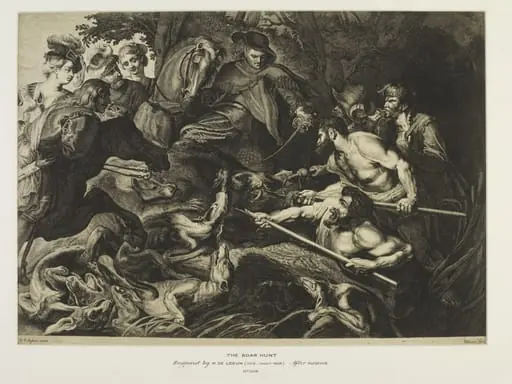 Boar Hunt
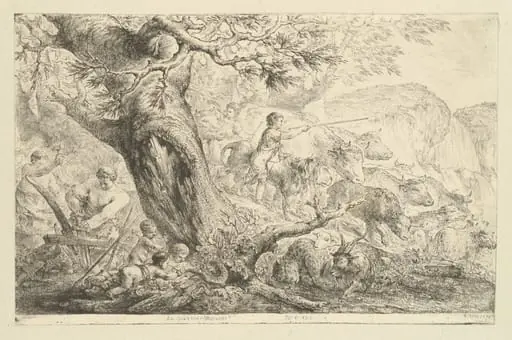 Das glückliche Weltalter (The Happy New Age)
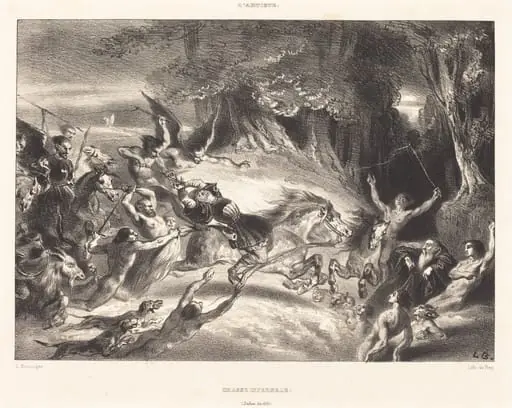 Chasse Infernale
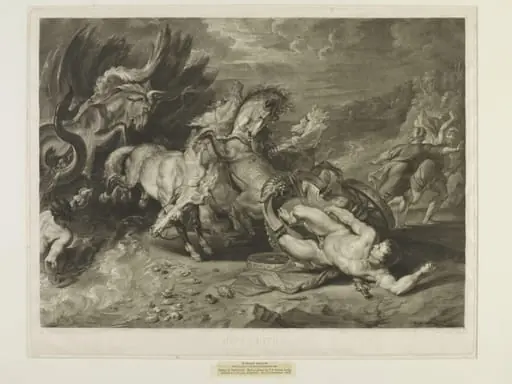 Death of Hippolytus
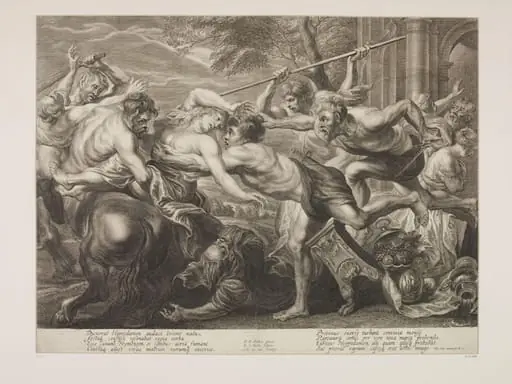 The Rape of Hippodamia
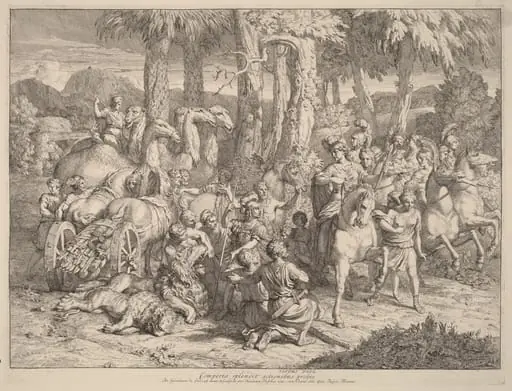 Semiramis on the Lion Hunt
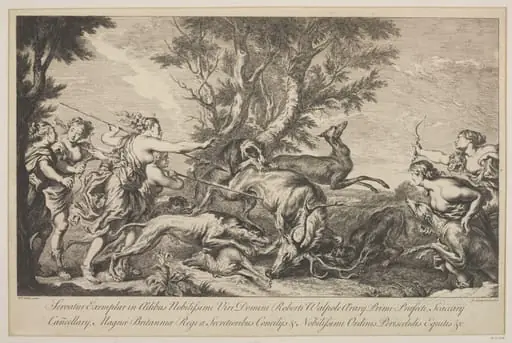 Diana and her nymphs chasing the stag
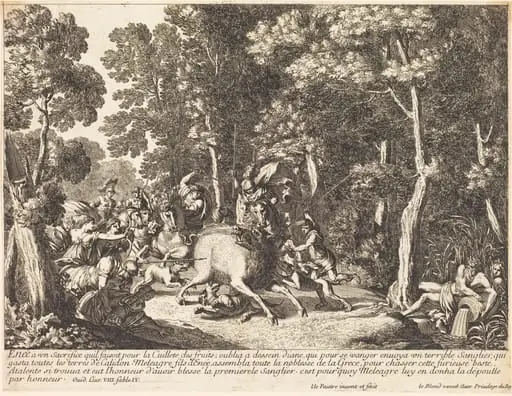 Atlanta and Meleager Hunting the Boar of Calydon
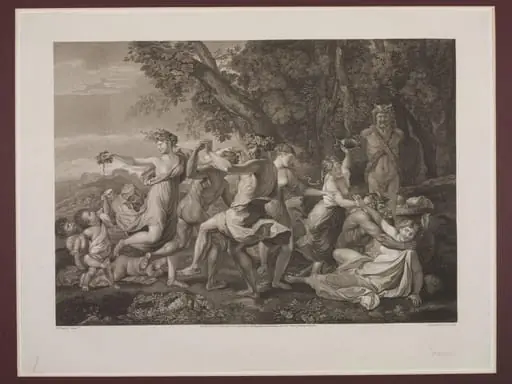 Bacchanalian Dance
 The Conversion of Saul
 Meleager and Atlanta