Artwork
Death and the Woodcutter, 2nd plate (La mort et le bucheron)
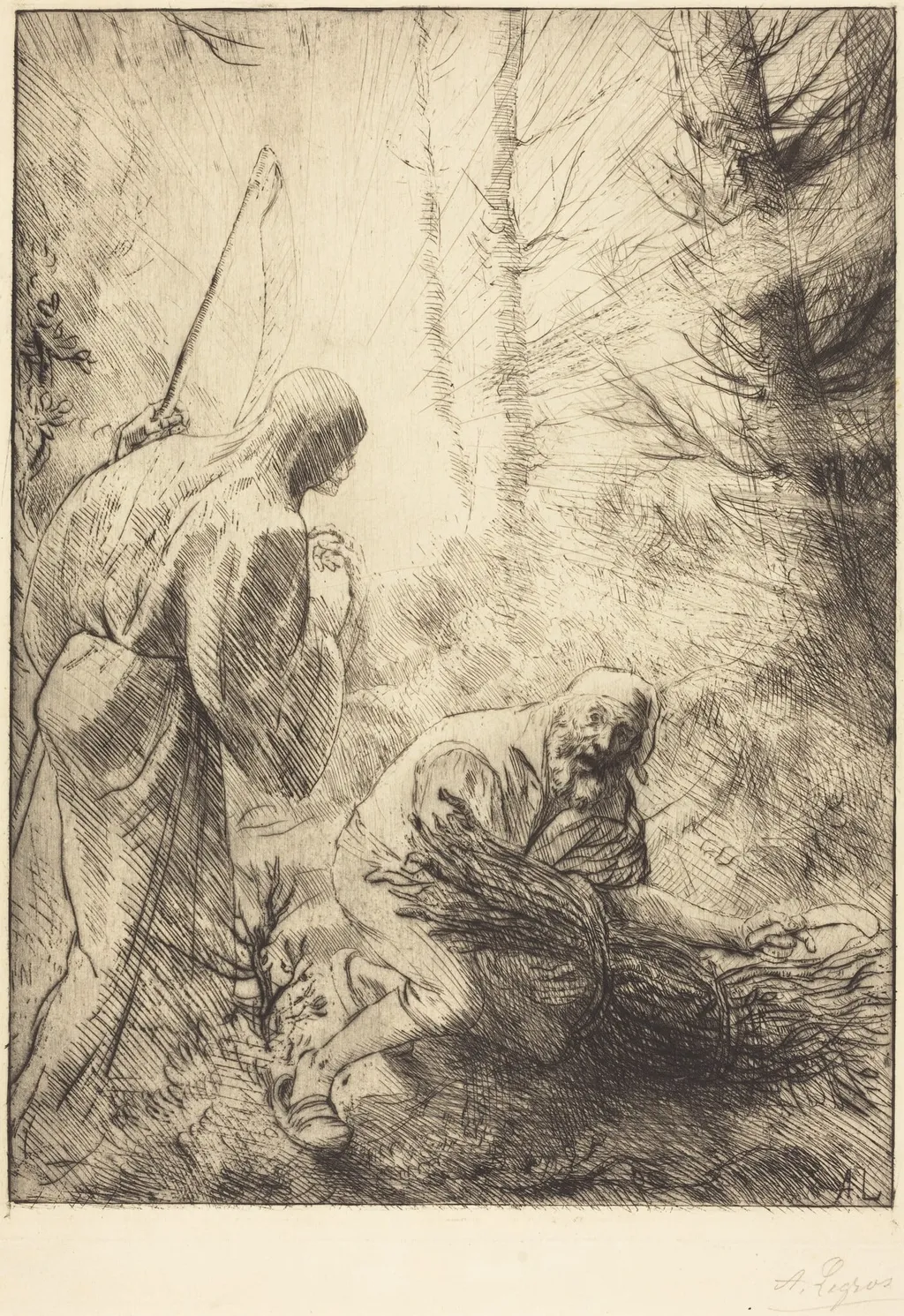
Death and the Woodcutter, 2nd plate (La mort et le bucheron) is an ink print by the Romanticist artist Alphonse Legros. It dates from 1874 and is held in the collection of the National Gallery of Art.
About this work
Overview
Alphonse Legros produced the print *Death and the Woodcutter, 2nd plate (La mort et le bucheron)* in 1874. Executed with a combination of etching and drypoint, the work belongs to the printmaking genre and presents a stark encounter between a skeletal personification of Death and a solitary woodcutter within a forest setting.
Subject & Meaning
The composition juxtaposes the grim figure of Death, cloaked and scythe‑armed, against a woodcutter caught in a moment of collapse or imminent fall. The scene draws on longstanding allegorical motifs that link the labor of cutting wood with the inevitability of mortality, inviting contemplation of human vulnerability.
Technique & Style
Legros employed both intaglio processes: traditional acid etching for broader tonal areas and drypoint for the fine, velvety lines that define the figures and foliage. The contrast between deep shadows and illuminated surfaces creates a dense, atmospheric depth, while the meticulous rendering of the woodcutter’s attire and bark texture demonstrates the artist’s command of line and shading.
History & Provenance
Born in France and later naturalised in Britain, Legros settled in London in 1863, where he became a pivotal figure in the 19th‑century revival of etching. *Death and the Woodcutter* reflects his mature period in England, though the work’s subsequent ownership trail is not extensively documented.
Context
The print aligns with Romantic interests in the sublime and the macabre, echoing contemporary literary and visual preoccupations with death as a dramatic, moralizing presence. Its forested backdrop and stark chiaroscuro echo the mood of Romantic landscape art while maintaining a narrative focus typical of allegorical prints.
Legacy
Legros’s contribution to British printmaking helped re‑establish etching as a respected medium in the late 19th century. Works such as this plate illustrate his synthesis of French academic training and British artistic currents, influencing a generation of printmakers who followed his technical and thematic example.
Own this work as a print
Artist & collection

Artist
Alphonse Legros (French pronunciation: ; 8 May 1837 – 8 December 1911) was a French, later British, painter, etcher, sculptor, and medallist.

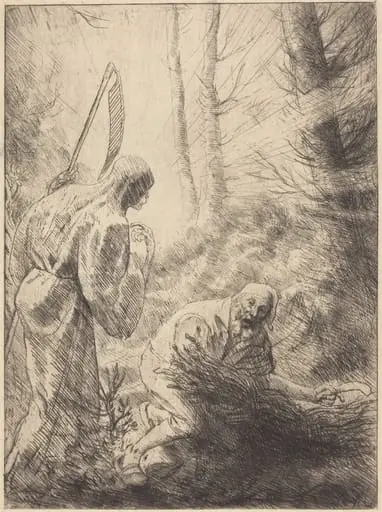 Death and the Woodcutter, 2nd plate (La Mort de le bucheron)
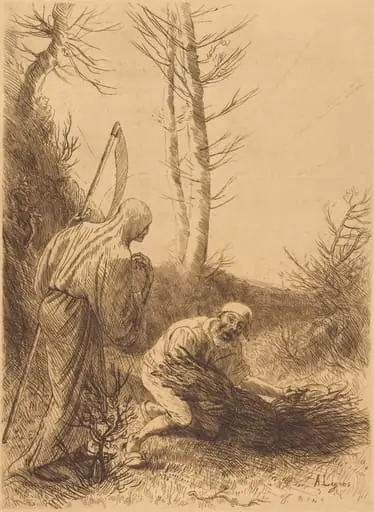 Death and the Woodcutter, 2nd plate (Le mort et le bucheron)
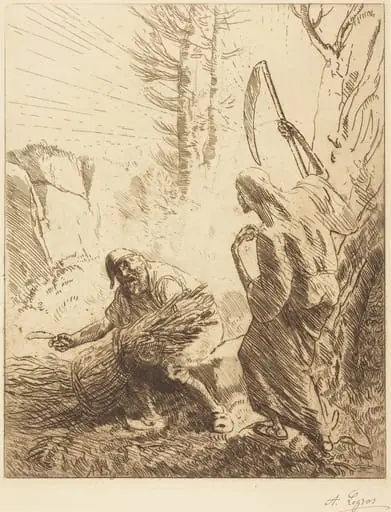 Death and the Woodcutter, 3rd plate (La mort et le bucheron)
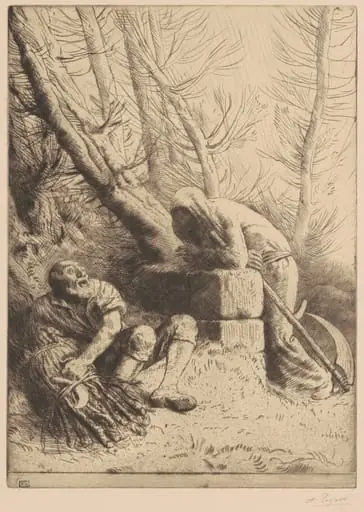 Death and the Woodcutter, 4th plate (La Mort et le bûcheron)
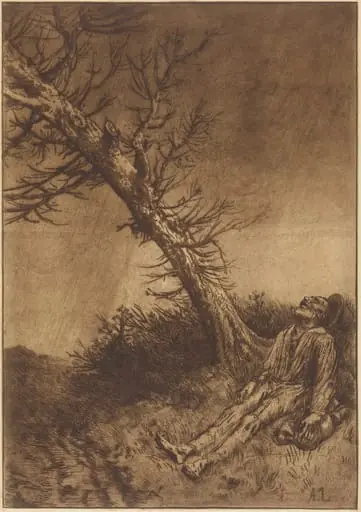 Death of the Vagabond (La mort du vagabond)
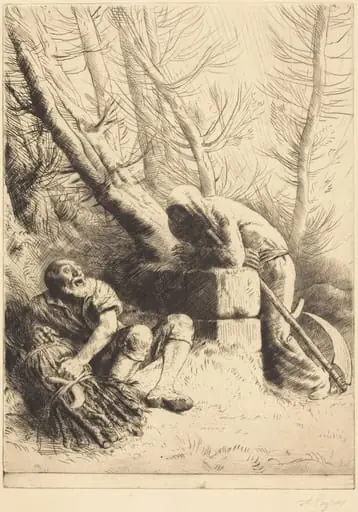 Death and the Woodcutter, 4th plate (La mort et le bucheron)
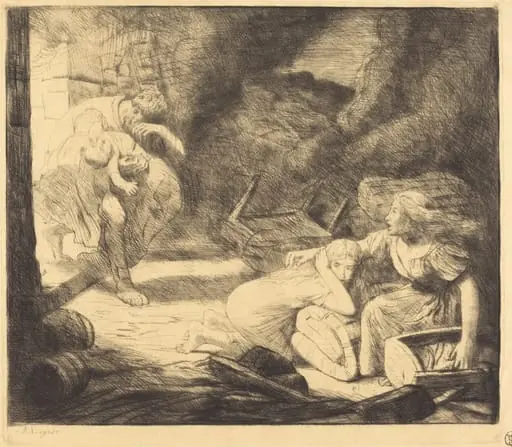 The Fire, 2nd plate (L'incendie)
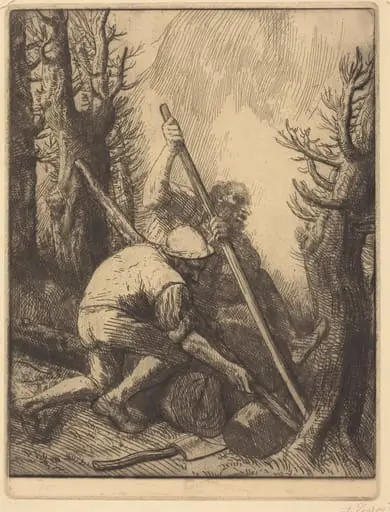 Woodcutters, 3rd plate (Les bucherons)
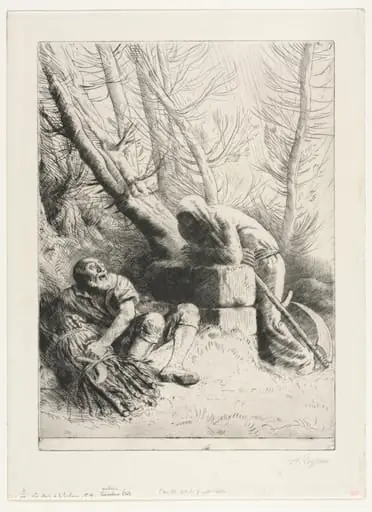 Death and the Woodcutter