Artwork
Burning Grass (Le bruleur d'herbes)
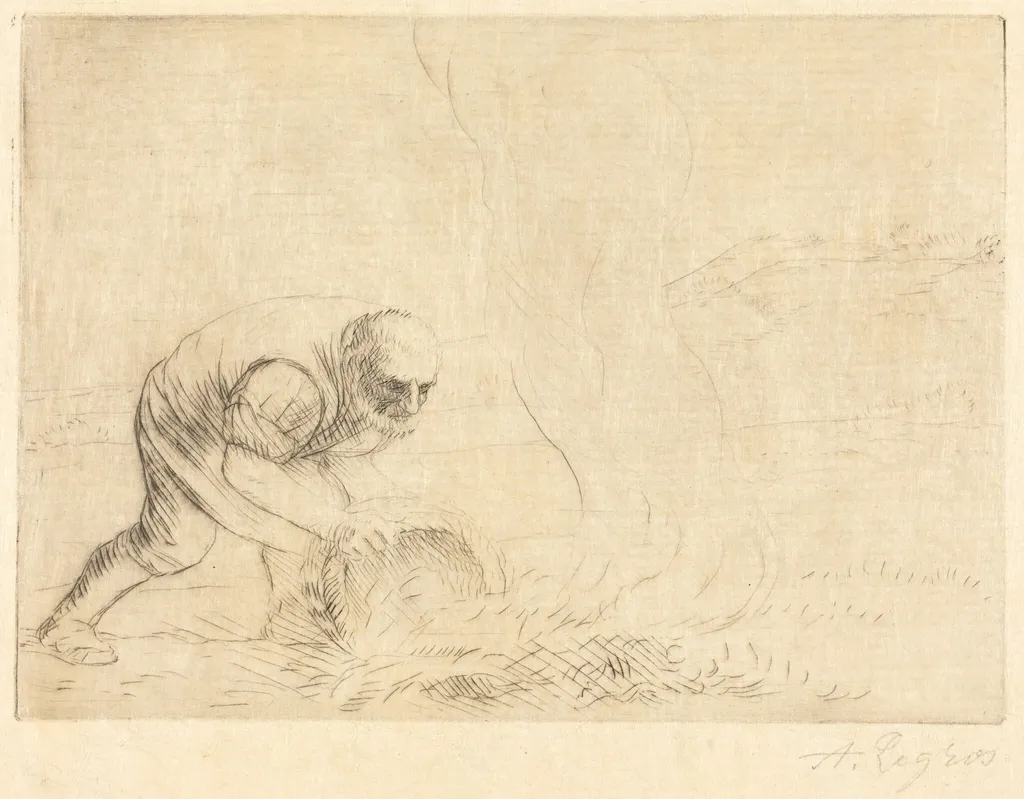
Burning Grass (Le bruleur d'herbes) is an ink print by the Romanticist artist Alphonse Legros. It dates from 1874 and is held in the collection of the National Gallery of Art.
About this work
Overview
Though trained in France, Legros became a central figure in British printmaking, influencing a generation through his teaching at the Slade School.
Created in 1874 by Alphonse Legros, *Burning Grass (Le bruleur d'herbes)* is an etching and drypoint print made after the artist moved to London. Though trained in France, Legros became a central figure in British printmaking, influencing a generation through his teaching at the Slade School. This work exemplifies his commitment to the expressive potential of direct, hand-drawn intaglio techniques.
Subject & Meaning
The image captures a solitary figure crouching in a field, igniting dry grass with a match. The act is mundane yet charged with quiet urgency, suggesting rural labor and the cyclical nature of land management. The figure’s tense posture and shielded face imply physical discomfort or the immediacy of fire’s danger, grounding the scene in tactile reality rather than symbolism.
Technique & Style
Legros employed etching and drypoint to achieve a raw, spontaneous line quality. The drypoint’s burr creates soft, smudged edges around the flames, while loose, irregular strokes suggest movement and flickering light. The minimal background, rendered with faint, sparse lines, isolates the action and enhances the sense of immediacy, as if the moment were sketched in real time.
History & Provenance
Made during Legros’s early years in England, the print reflects his transition from French academic training to a more direct, observational approach. It was likely produced for private circulation among artists and collectors, consistent with the revival of etching as an independent art form in Britain. No public record of its early ownership is widely documented.
Context
In the 1870s, British printmaking was undergoing a revival, with artists rejecting mass-produced imagery in favor of hand-crafted prints. Legros, alongside figures like Samuel Palmer, championed etching as a medium for personal expression. This work aligns with a broader interest in rural life and the dignity of labor, common among European realists of the period.
Legacy
Though not widely exhibited in Legros’s lifetime, *Burning Grass* exemplifies his influence on the British etching revival. His emphasis on direct drawing and tactile mark-making inspired students at the Slade, helping shift printmaking from reproductive craft to autonomous artistic practice. The print remains a quiet testament to his commitment to the medium’s expressive potential.
Artist & collection

Artist
Alphonse Legros (French pronunciation: ; 8 May 1837 – 8 December 1911) was a French, later British, painter, etcher, sculptor, and medallist.

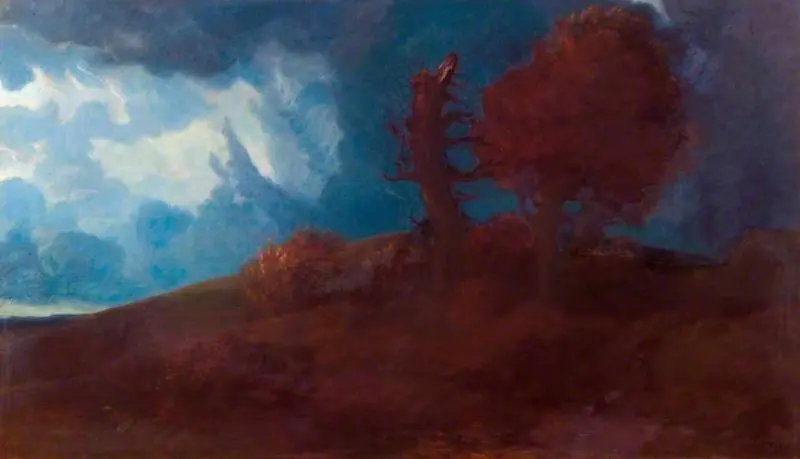
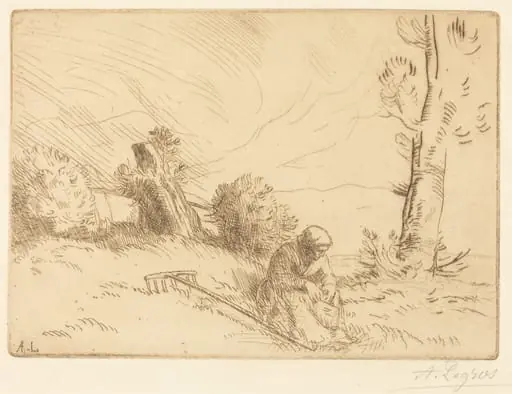 Peasant Woman Seated near a Hedge (Paysanne assise pres d'une haie)
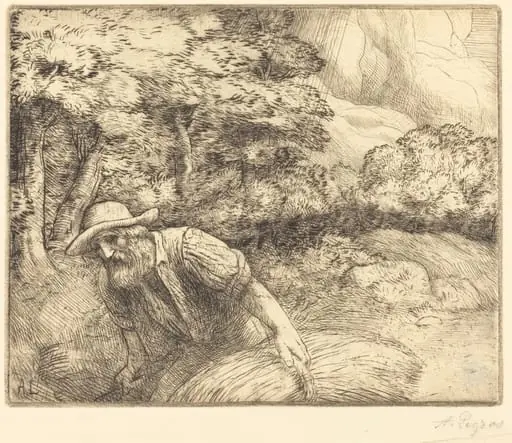 Man Foraging (L'homme au fourrage)
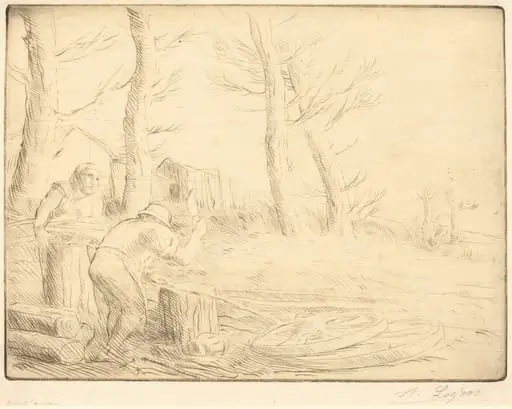 Wheelwright (Un charron)
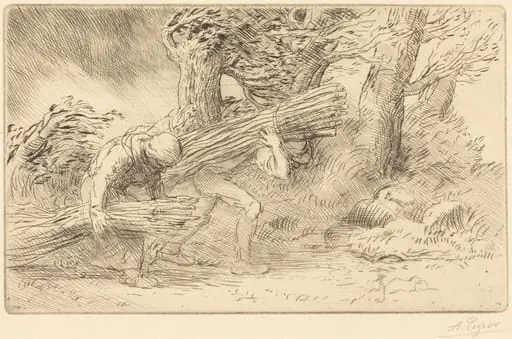 Fagot-gatherers (Les fagottiers)
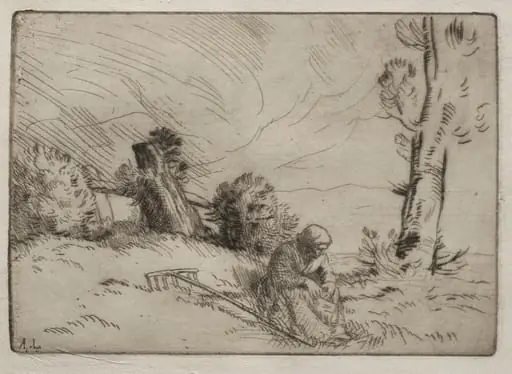 Peasant Woman Seated near a Hedge
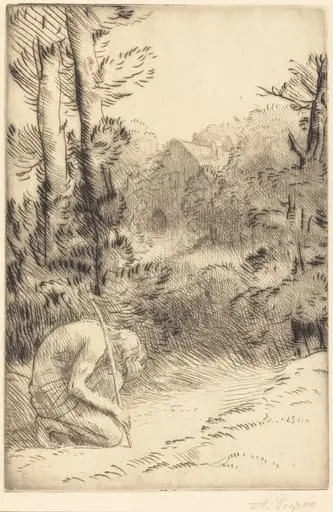 The Prodigal Son, 2nd plate (L'enfant prodigue)
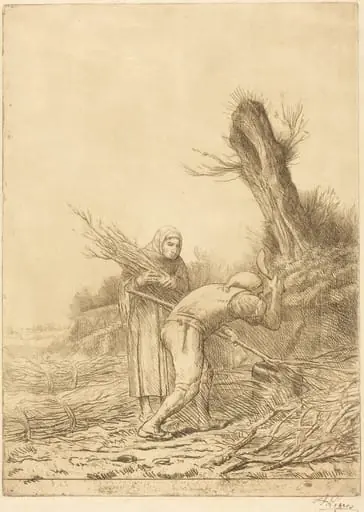 Fagot-makers (Les faiseurs de fagots)
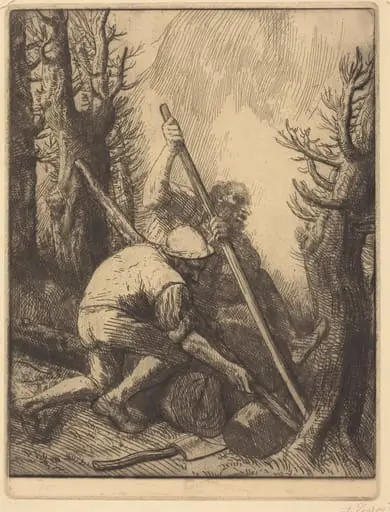 Woodcutters, 3rd plate (Les bucherons)
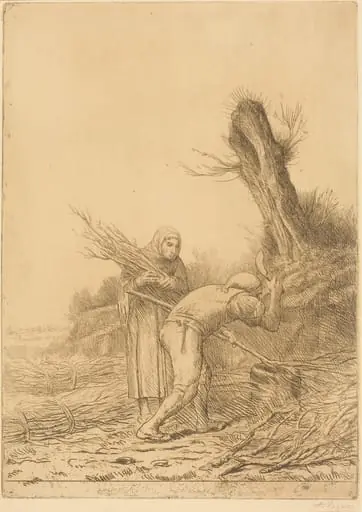 Fagot-makers (Les faiseurs de fagots)
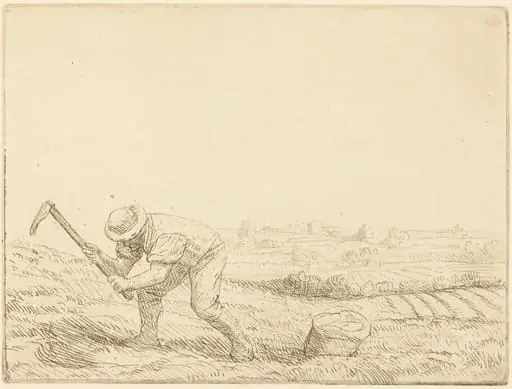 Digger (Le piocheur)