Artwork
Chickweed Merchant (Marchand de mouron)
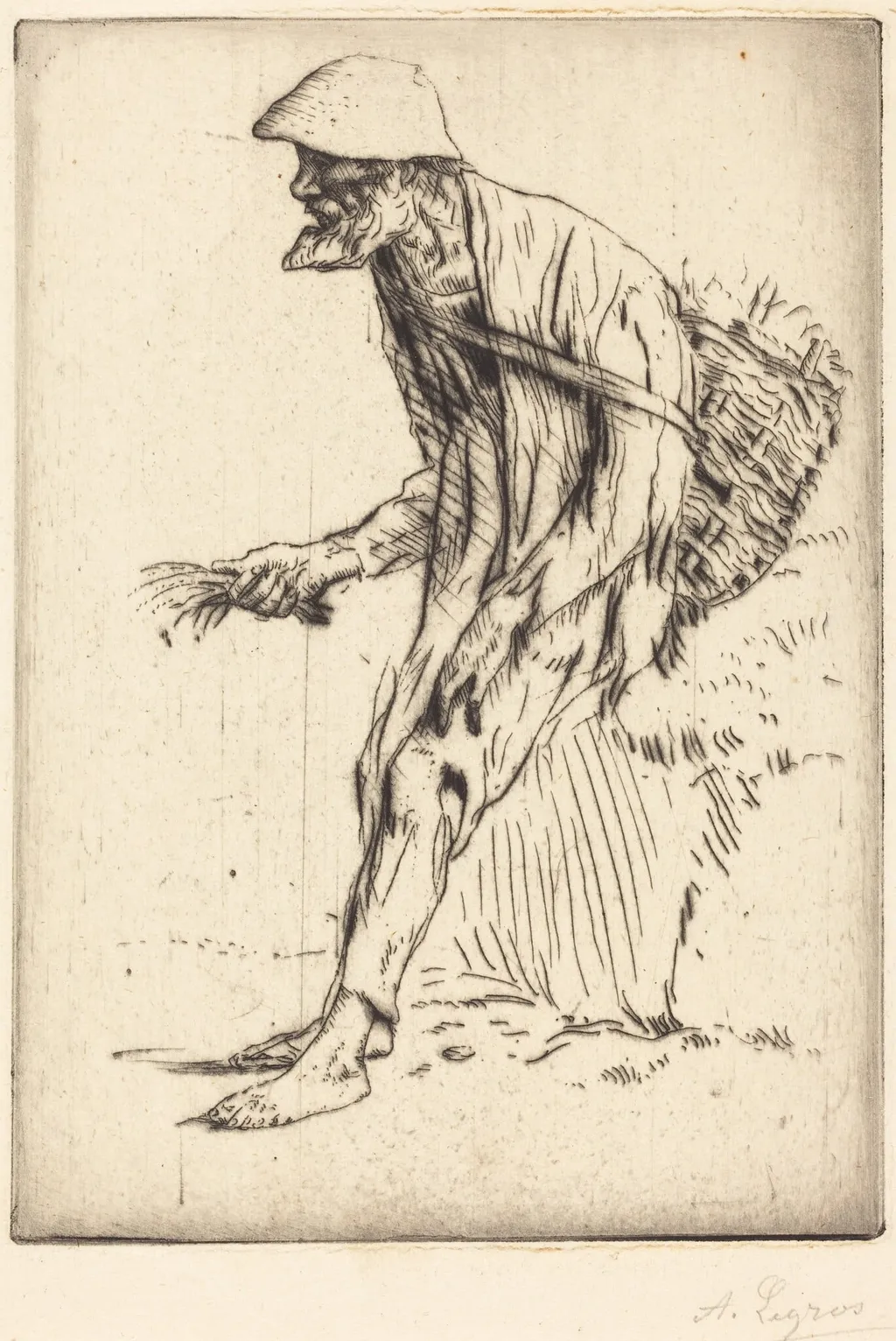
Chickweed Merchant (Marchand de mouron) is an ink print by the Romanticist artist Alphonse Legros. It dates from 1874 and is held in the collection of the National Gallery of Art.
About this work
The etching uses drypoint: the artist scratched fine lines into a metal plate, then inked it so the scratches catch light.
A man in a long coat walks past a stand of chickweed. The plant’s tangled stems and small white flowers fill most of the scene. He carries a basket, maybe for the green leaves people ate to survive hard times.
Legros made this in 1865, when Paris still had street sellers hawking greens door-to-door. The etching uses drypoint: the artist scratched fine lines into a metal plate, then inked it so the scratches catch light. That gives the fuzzy leaves a soft shimmer.
The print feels quiet but honest. Check the National Gallery of Art, Washington.
Overview
Alphonse Legros, a French artist who moved to London in 1863 and later became a British citizen, produced *Chickweed Merchant* in 1874 as an etching and drypoint print. Known for his engagement with multiple media, Legros contributed significantly to the revival of printmaking in Britain. This work captures a moment of everyday urban life, rendered with technical precision and quiet observation, reflecting his commitment to truthful representation over idealization.
Subject & Meaning
The print portrays a street vendor carrying a basket of chickweed, a common wild green once consumed by the urban poor. Behind him, a small stall displays the plant’s delicate, tangled stems and tiny white flowers. The figure moves silently through the scene, suggesting the routine nature of such commerce. Legros does not romanticize the subject; instead, he presents it with dignity, acknowledging the economic realities of post-war Parisian life.
Technique & Style
Legros employed drypoint to scratch fine, irregular lines directly into a metal plate, creating a soft, velvety texture when inked. The technique allows for subtle gradations of tone, particularly in the rendering of the chickweed’s foliage, which appears to shimmer with a muted glow. Etching complements this with sharper contours, defining the vendor’s coat and basket. The combination yields a tactile, intimate quality, emphasizing the fragility of the plant and the quiet persistence of its seller.
History & Provenance
Created in 1874, the print emerged during Legros’s tenure at the Slade School of Art in London, where he influenced a generation of British artists. Though rooted in French subject matter, the work gained recognition in British print circles. It entered the collection of the National Gallery of Art, Washington, where it remains accessible as part of a broader effort to preserve 19th-century European printmaking. Its provenance reflects Legros’s transnational impact and the growing institutional interest in etching as fine art.
Context
In the 1860s and 1870s, Parisian streets still hosted vendors selling wild greens like chickweed, especially among working-class communities recovering from war and economic hardship. Legros, who witnessed this practice firsthand, chose to document it not as spectacle but as quiet endurance. His focus on ordinary labor aligned with broader European realist movements, rejecting academic grandeur in favor of unadorned, socially grounded imagery.
Legacy
Legros’s *Chickweed Merchant* stands as a testament to the expressive potential of etching and drypoint in capturing the textures of daily life. It influenced British printmakers who sought to elevate printmaking beyond reproduction into a medium of personal expression. The work’s understated realism and technical nuance continue to be studied for its contribution to the revival of handcrafted printmaking in the late 19th century.
Artist & collection

Artist
Alphonse Legros (French pronunciation: ; 8 May 1837 – 8 December 1911) was a French, later British, painter, etcher, sculptor, and medallist.

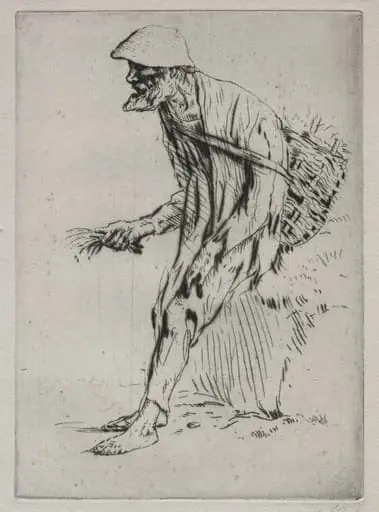 The Red Pimpernel Vender
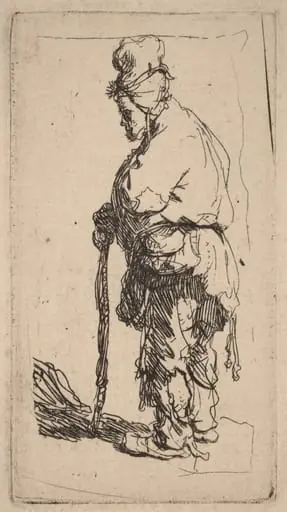 Beggar Leaning on a Stick, Facing Left
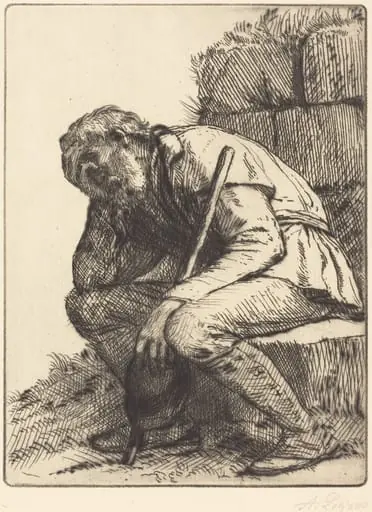 Desperate Man (Le desespere)
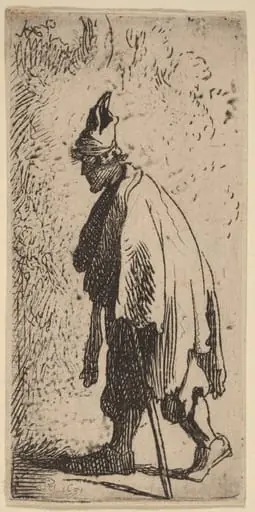 Beggar with a Stick, Walking to the Left
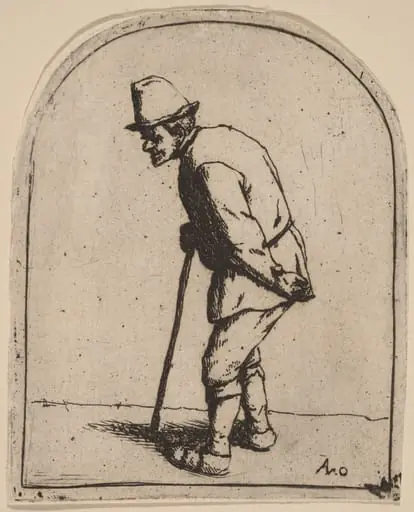 Peasant with a Crooked Back Leaning on a Stick
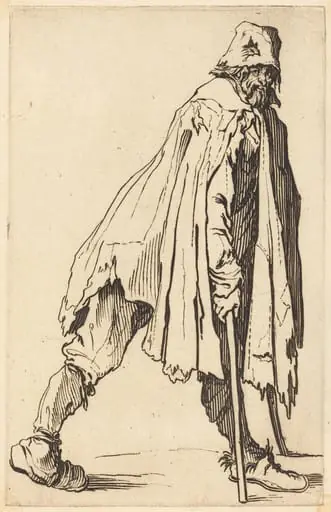 Beggar with Crutches and Cap
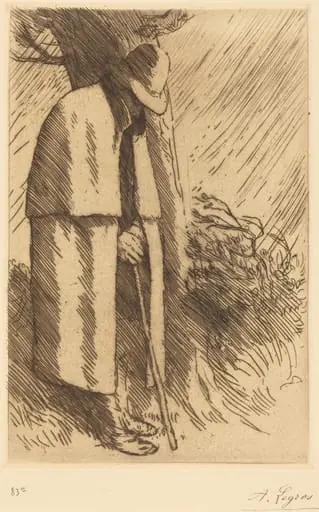 Traveler taking Shelter (Le voyageur a l'abri)
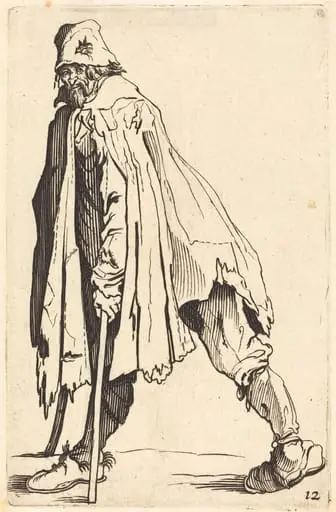 Beggar with Crutches and Cap
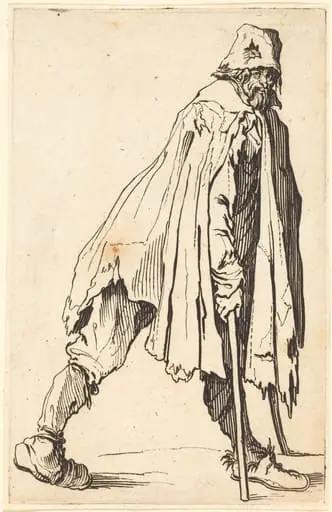 Beggar with Crutches and Cap
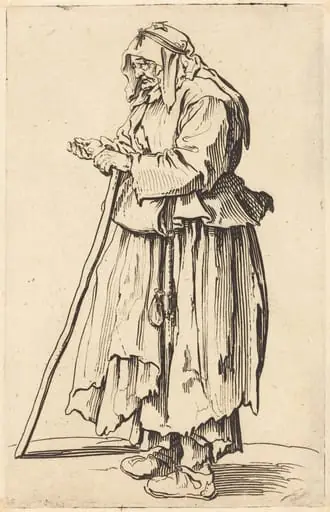 Beggar Woman Receiving Charity
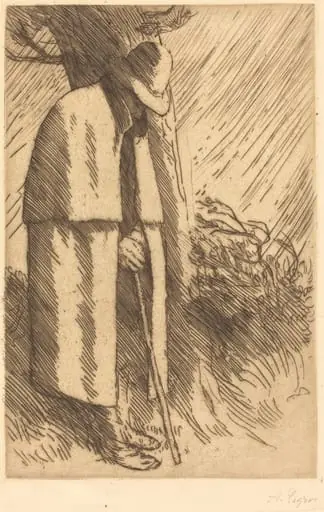 Traveler taking Shelter (Le voyageur a l'abri)
 Beggar in a High Cap, Standing and Leaning on a Stick