Artwork
Beggar with Crutches and Cap
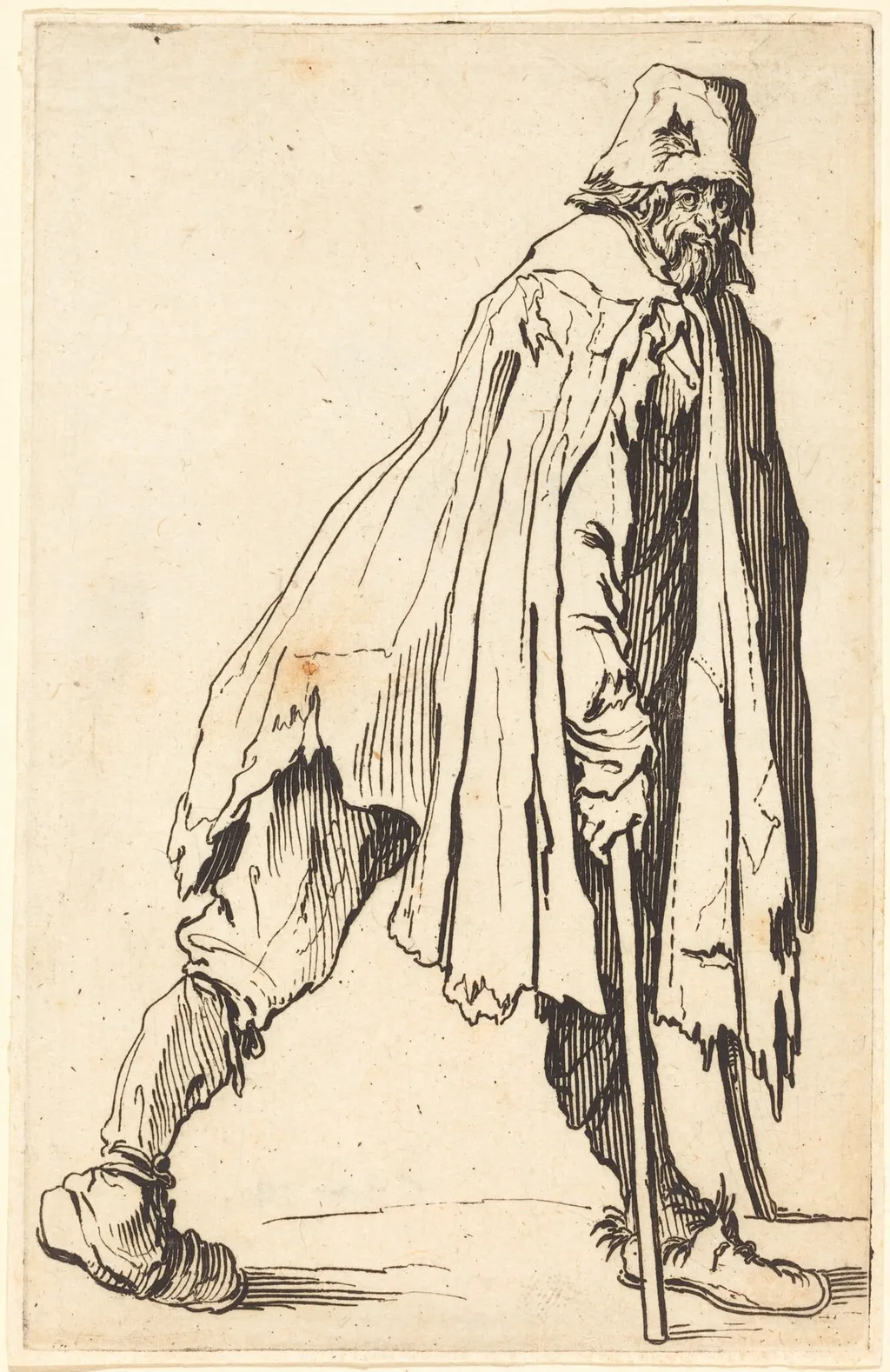
Beggar with Crutches and Cap is an ink print by the Baroque artist Jacques Callot. It dates from 1622 and is held in the collection of the National Gallery of Art.
About this work
Overview
Created around 1622, this work is an etching on laid paper by Jacques Callot, a prolific printmaker from the Duchy of Lorraine whose output exceeds a thousand prints. The image presents a solitary figure—a beggar supported by crutches—rendered with Callot’s characteristic attention to everyday detail, situating the scene within the broader social landscape of early‑17th‑century France.
Subject & Meaning
The central figure is a destitute man whose clothing is ragged and torn, a long coat hanging loosely over his body. A low‑set cap conceals his face, casting a shadow that emphasizes anonymity. The sturdy, worn crutches he leans upon underscore the physical and economic hardships endured by the marginalized in Callot’s society.
Technique & Style
Executed with fine lines on laid paper, the etching employs Callot’s precise incising methods, allowing subtle gradations of tone and texture. The artist’s control of line depth creates a sense of material wear on the garments and the wood of the crutches, while the relatively open background highlights the figure without distraction.
History & Provenance
Part of Callot’s extensive series documenting contemporary life, this print reflects his interest in portraying the lower strata of society. While the original plate’s ownership history is not fully recorded, the work has circulated among collectors of early modern prints and appears in several catalogues of Callot’s oeuvre, confirming its attribution and dating to the early 1620s.
Artist & collection
Artist
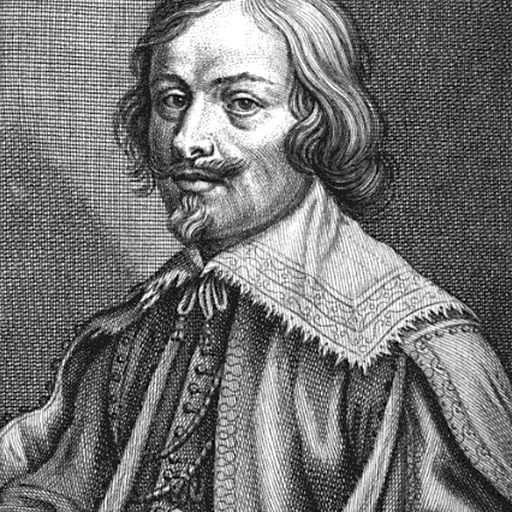
Jacques Callot was a baroque printmaker and draftsman from the Duchy of Lorraine.

 Holy Family at supper
 Restoration of the Aqueduct at Pisa
 Restoration of the Aqueduct at Pisa
 Square in Paris with Many Figures
 Square in Paris with Many Figures
 Horsemen Attacked by Robbers
 HOW WILL A COVERED PART BE CORRECTED?HOW WIKA A COVERED HEART DEED CORRECTED?
![Christ Walking on the Water [second plate], by Jacques Callot](https://artifactworldgallery.com/img/jacques-callot--christ-walking-on-the-water-second-plate--2069f3bfe4cb2126-w320.webp) Christ Walking on the Water [second plate]
Christ Walking on the Water [second plate]
 Beggar with Crutches and Cap
 Beggar with Crutches and Cap
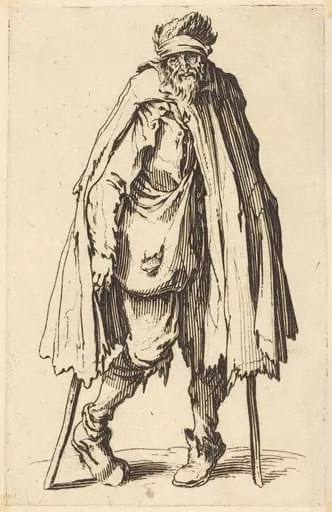 Beggar with Crutches and Sack
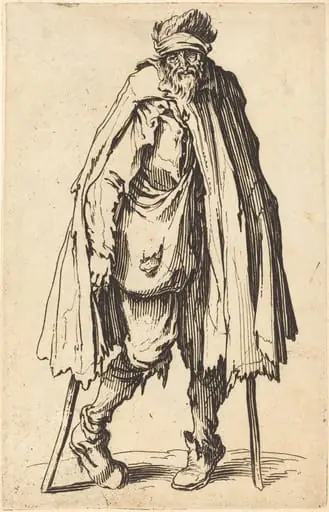 Beggar with Crutches and Sack
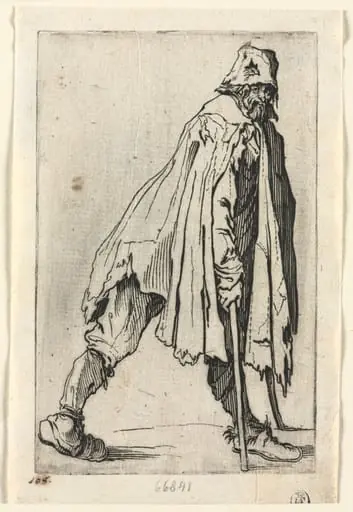 The Beggars: The Beggar on Crutches, Wearing a Cap
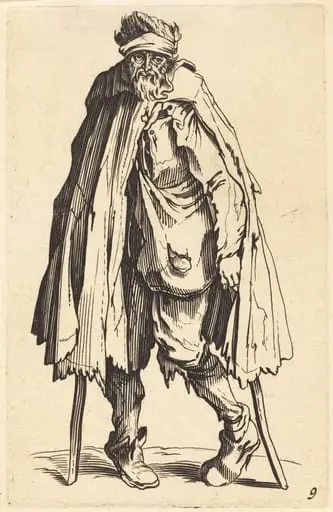 Beggar with Crutches and Sack
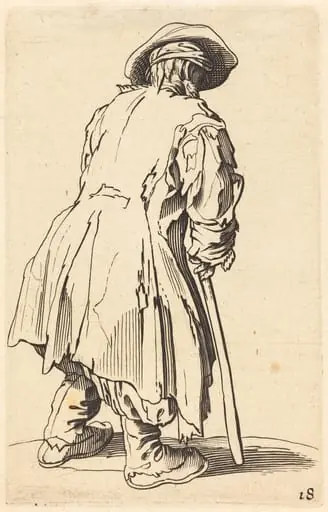 Old Beggar with One Crutch
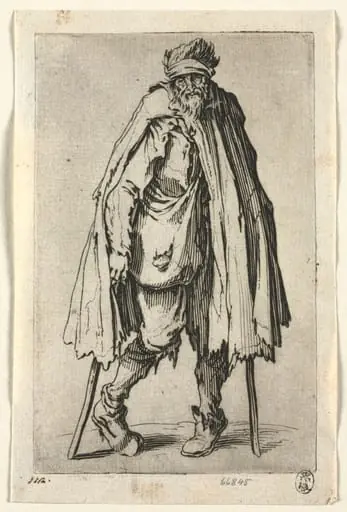 The Beggars: Beggar on Crutches with a Bag
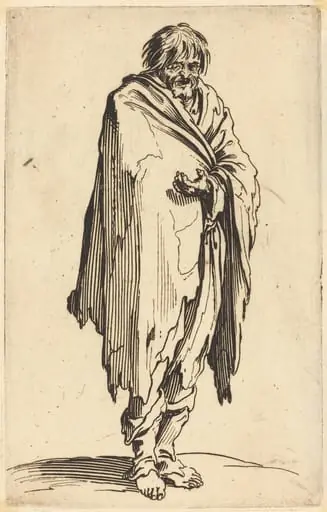 Beggar with Bare Head and Feet
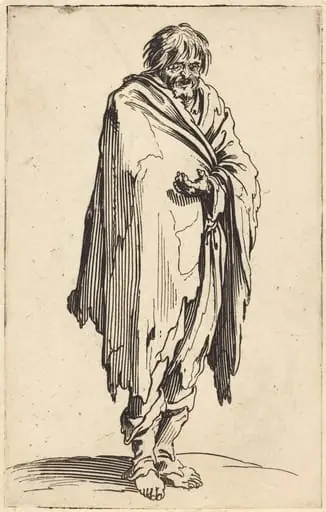 Beggar with Bare Head and Feet
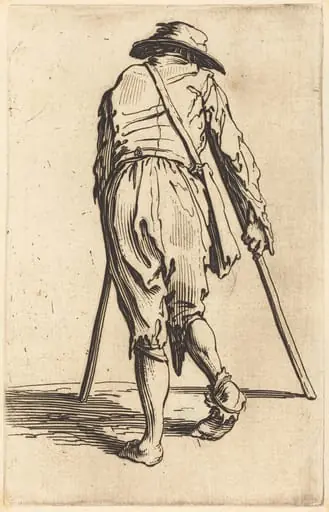 Beggar with Crutches and Hat, Back View
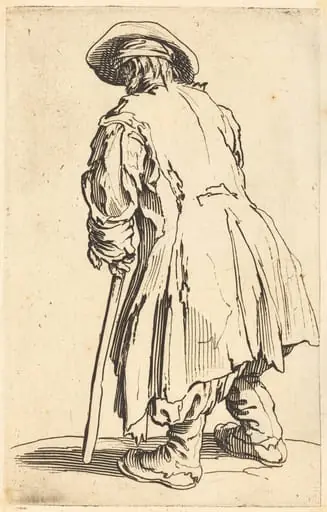 Old Beggar with One Crutch