Artwork
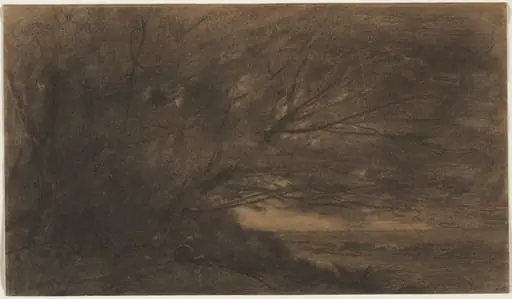
Countryside of Burgundy [recto]
![Countryside of Burgundy [recto], by Alphonse Legros, ink, 1874](https://artifactworldgallery.com/img/alphonse-legros--countryside-of-burgundy-recto--9e1817c2035fe59f-w1024.webp)
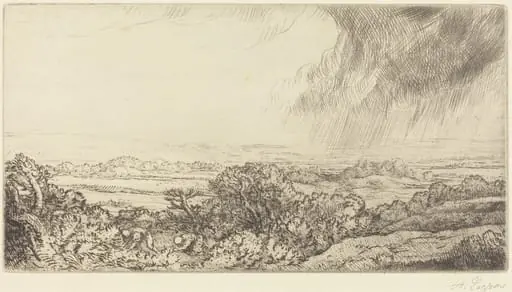
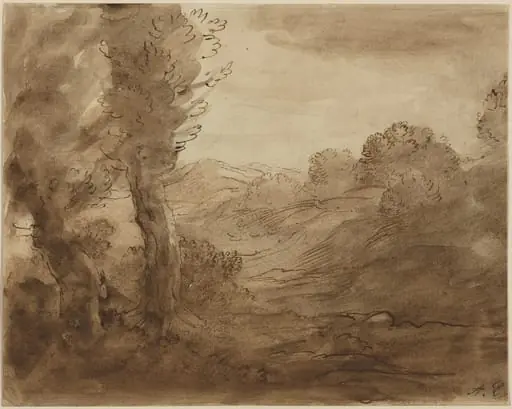
Countryside of Burgundy [recto] is an ink drawing by the Romanticist artist Alphonse Legros. It dates from 1874 and is held in the collection of the National Gallery of Art.
About this work
Overview
Created in 1874, this drawing by Alphonse Legros captures a tranquil rural scene in Burgundy using pen, brown ink, and wash over graphite on paperboard.
Created in 1874, this drawing by Alphonse Legros captures a tranquil rural scene in Burgundy using pen, brown ink, and wash over graphite on paperboard. Legros, originally French but later a British citizen, focused on quiet, observed landscapes during this period. The work exemplifies his commitment to direct observation and the expressive potential of graphic media, avoiding theatricality in favor of subtle atmospheric nuance.
Subject & Meaning
The scene depicts undulating fields, lightly plowed and ready for cultivation, with a solitary tree on the left framing the composition. The sky, rendered in soft washes, holds no storm or dramatic light—only stillness. There is no human presence, yet the land bears the imprint of labor. The quietude suggests an appreciation for the rhythms of agricultural life, not as idealized pastoral, but as lived, unembellished reality.
Technique & Style
Legros built the image through layered pen lines and controlled washes, using cross-hatching to model form and texture in the earth and foliage. The graphite underdrawing guides the composition, while the ink and wash create gradations of tone that suggest both the weight of soil and the lightness of cloud. The precision of the lines contrasts with the fluidity of the wash, yielding a surface that feels both deliberate and softly atmospheric.
History & Provenance
Executed in 1874, the drawing dates from Legros’s early years in London, following his 1863 move to Britain. During this time, he was deeply involved in the revival of etching as a serious artistic medium. While this work is a drawing rather than an etching, it reflects his broader commitment to graphic precision and tonal subtlety, aligning with his influence on British print culture and his teaching at the Slade School.
Context
In the 1870s, European artists increasingly turned to direct observation of rural life, moving away from romanticized landscapes. Legros’s work aligns with this trend, sharing affinities with French Realists and the Barbizon School. His approach—attentive to texture, light, and the quiet dignity of the land—resonated with contemporaries seeking authenticity over idealization, particularly in the graphic arts where line and tone could convey truth without color.
Legacy
This drawing contributes to Legros’s reputation as a bridge between French and British artistic traditions. His emphasis on disciplined draftsmanship and tonal control influenced a generation of British artists, especially in printmaking and drawing instruction. Though not widely exhibited, such works underscore his quiet but enduring impact on the revival of graphic arts in late 19th-century Britain.
Own this work as a print
Artist & collection

Artist
Alphonse Legros (French pronunciation: ; 8 May 1837 – 8 December 1911) was a French, later British, painter, etcher, sculptor, and medallist.