Artwork
English Beggars
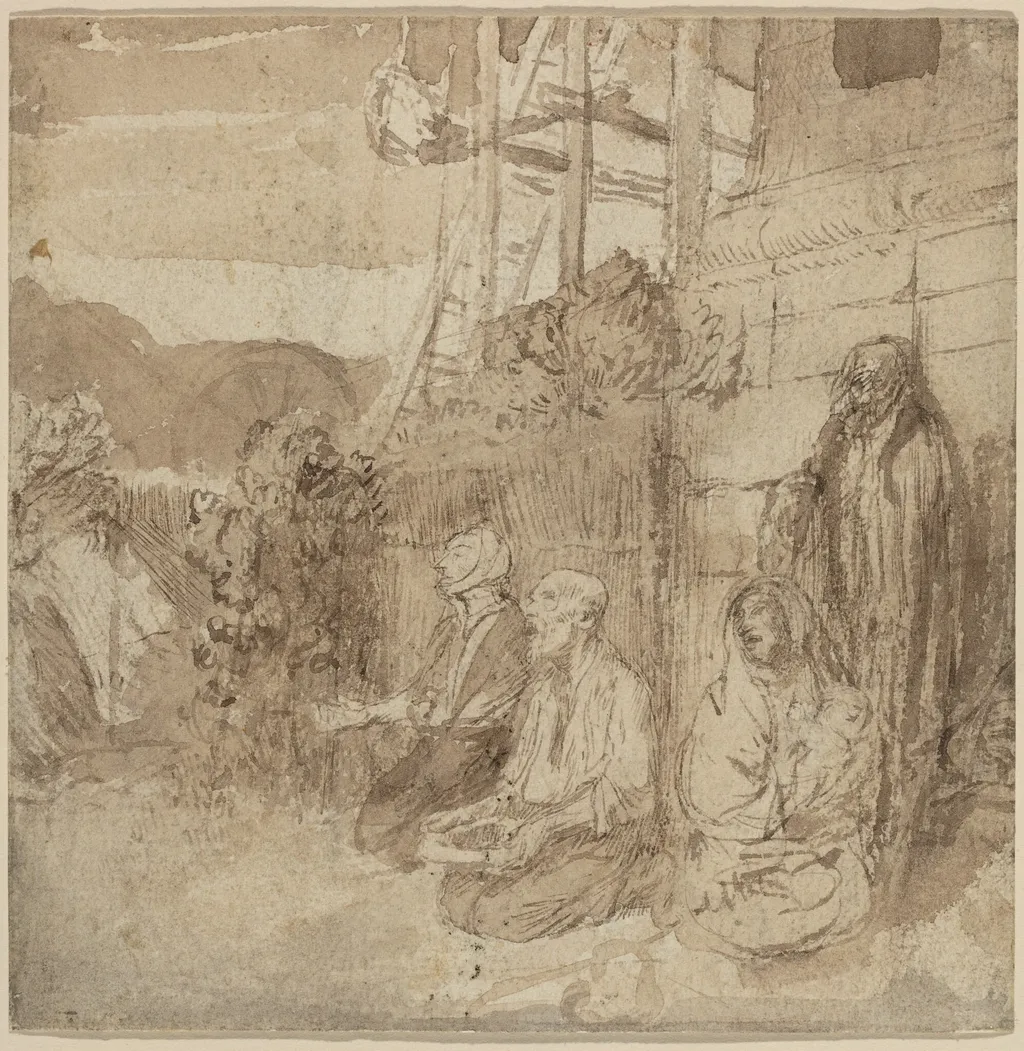
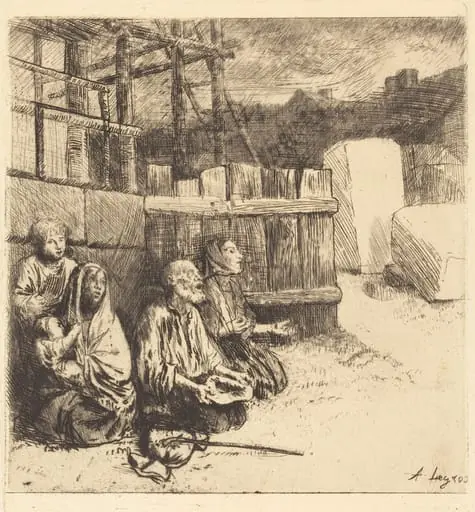
English Beggars is an ink drawing by the Romanticist artist Alphonse Legros. It dates from 1874 and is held in the collection of the National Gallery of Art.
About this work
Overview
English Beggars is a 1874 drawing by Alphonse Legros, executed in pen and brown ink with brown wash. The work captures a scene of impoverished individuals, characteristic of the social themes prevalent in Legros' later career.
Subject & Meaning
The drawing portrays a group of beggars, likely in a public setting, dressed in tattered attire and soliciting alms. This subject matter reflects Legros' focus on social issues, offering a poignant glimpse into the lives of the disadvantaged.
Technique & Style
Legros employed pen, brown ink, and brown wash to create a warm and intimate atmosphere. The loose composition, combining standing and seated figures, is enriched by cross-hatching, which adds depth and draws attention to the scene's intricate details.
History & Provenance
Created in 1874, English Beggars is part of Legros' output after settling in London in 1863 and later gaining British citizenship. While specific provenance details are not provided, the work aligns with his role in Britain's artistic scene, particularly in etching revival.
Context
Within the broader context of Legros' diverse artistic practice (painting, etching, sculpture, and medals), English Beggars stands as a representation of his engagement with social realism, a theme that resonated with late 19th-century European artistic and social consciousness.
Legacy
As a key figure in the revival of etching in Britain and through works like English Beggars, Legros contributed to the visibility of social themes in art, influencing subsequent generations of artists exploring similar subjects.
Artist & collection

Artist
Alphonse Legros (French pronunciation: ; 8 May 1837 – 8 December 1911) was a French, later British, painter, etcher, sculptor, and medallist.

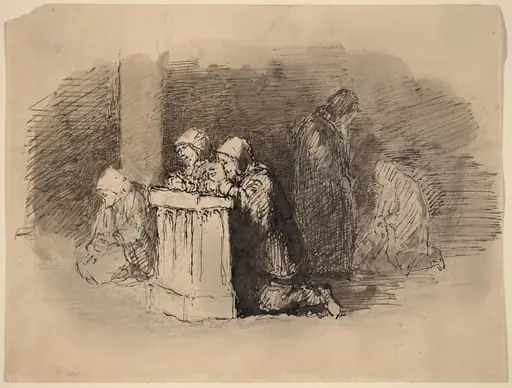 Praying Figures in a Church, Florence
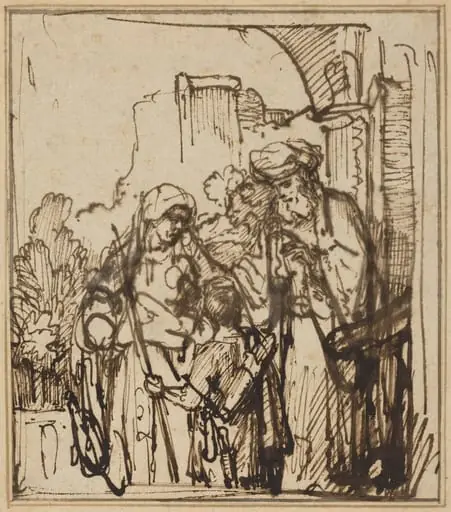 The Dismissal of Hagar
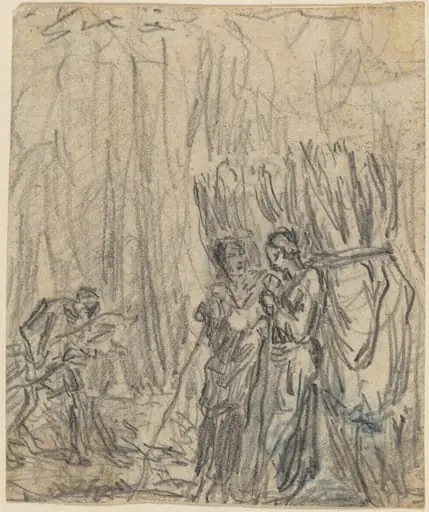 Gleaners
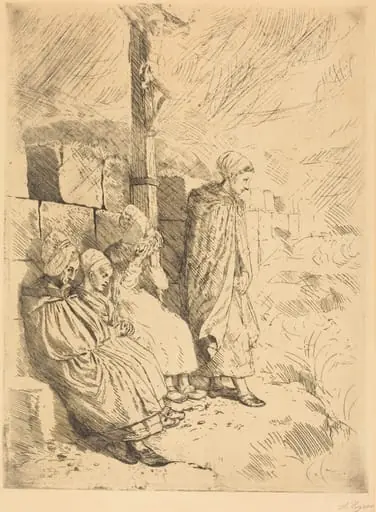 Fishermen's Wives (Femmes de pecheurs)
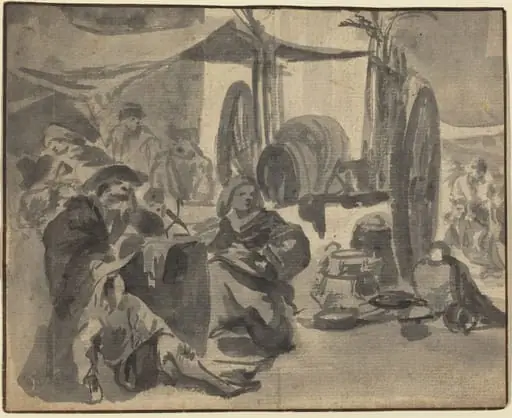 Market Scene
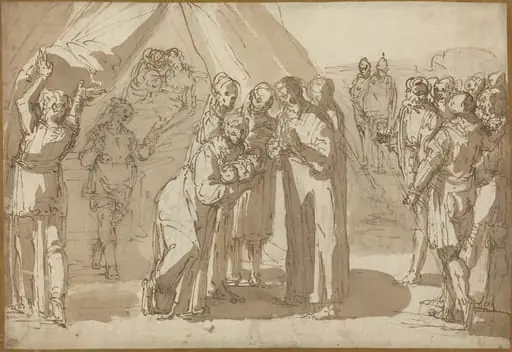 Birth Scene
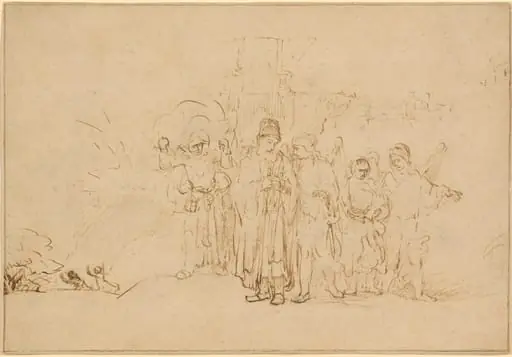 Lot and His Family Leaving Sodom
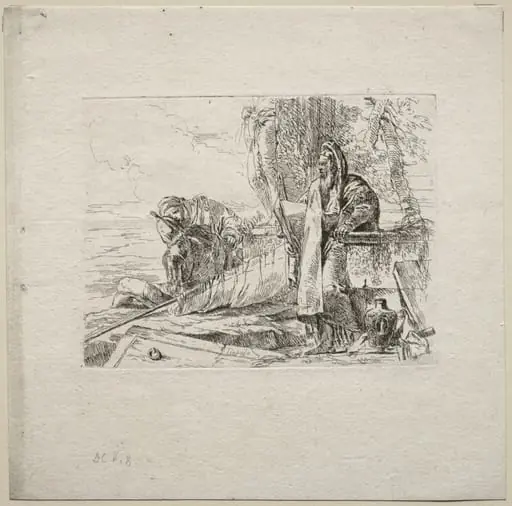 Various Caprices: The Philosopher Standing with Book
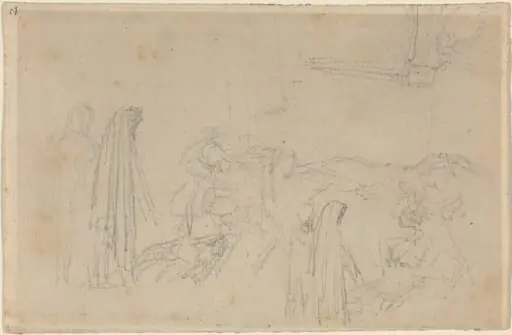 Sketches with a Hooded Figure (Virgil and Beatrice?)
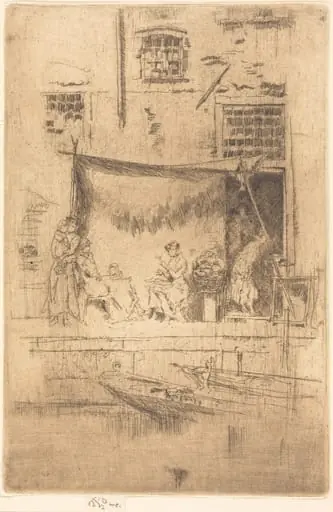 Fruit-Stall
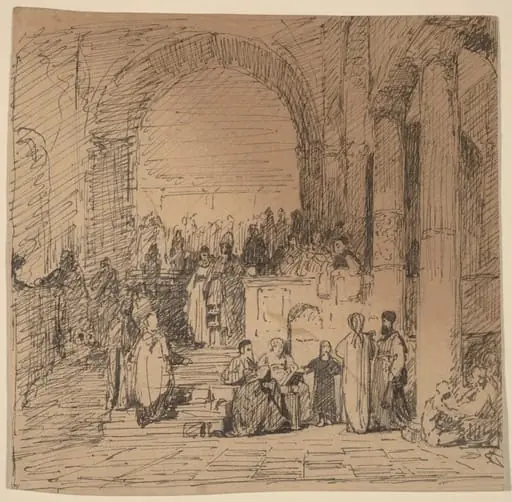 Study after Old Master
 English Beggars (Les mendiants anglais)