Artwork
Fishermen's Wives (Femmes de pecheurs)
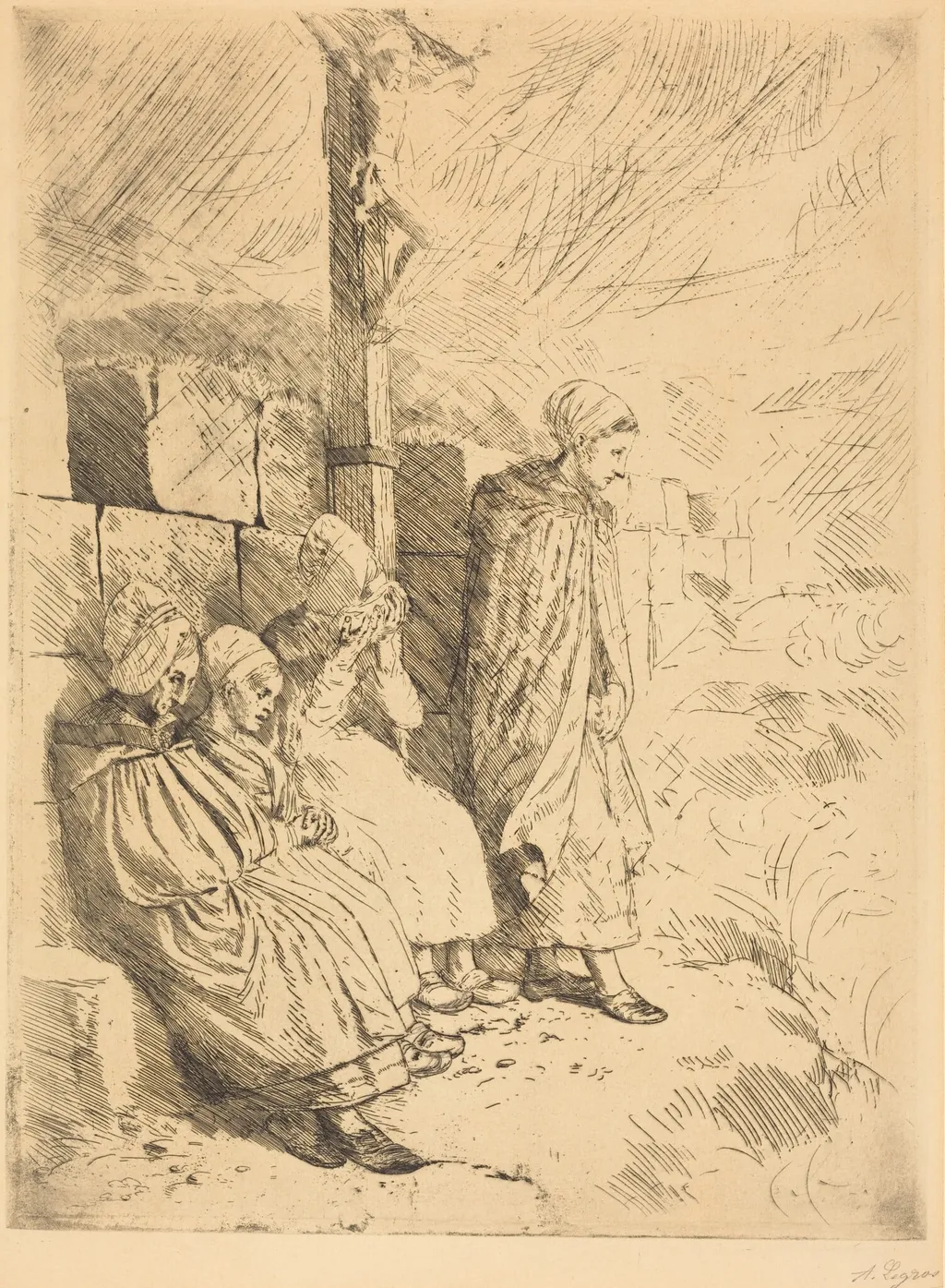
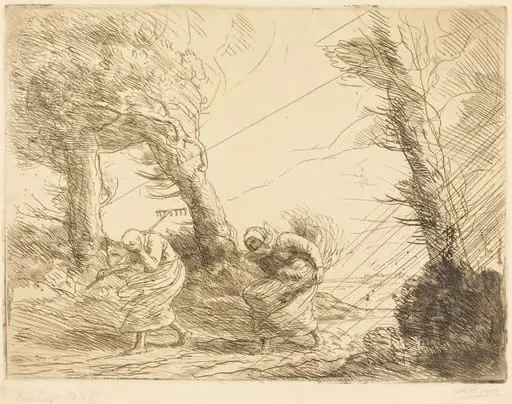
Fishermen's Wives (Femmes de pecheurs) is an ink print by the Romanticist artist Alphonse Legros. It dates from 1874 and is held in the collection of the National Gallery of Art.
About this work
Overview
Executed in etching, possibly with drypoint, the work reflects his dedication to printmaking and his role in revitalizing the medium in Britain.
Created in 1874, *Fishermen's Wives (Femmes de pecheurs)* is a print by Alphonse Legros, a French artist who moved to London in 1863 and later became a British citizen. Executed in etching, possibly with drypoint, the work reflects his dedication to printmaking and his role in revitalizing the medium in Britain. It captures a moment of quiet labor among coastal communities, aligning with Legros’s broader interest in the dignity of ordinary life.
Subject & Meaning
The print portrays three women near the shore, engaged in the quiet, repetitive tasks of fishing life. Two sit hunched together, cloaked against the elements; a third stands with her back turned, holding a small object, perhaps tools or nets. Their postures suggest endurance and vigilance, not narrative action. The scene avoids romanticism, instead emphasizing the physical and emotional weight of their daily existence in a harsh environment.
Technique & Style
Legros employed etching and possibly drypoint to create a textured, atmospheric surface. Fine, erratic lines suggest wind moving through fabric and the uneven, damp ground. The scratchy, economical strokes convey movement and chill without detail, focusing on mood over realism. Faces are minimally rendered but expressive, hinting at inner resolve. The composition is tightly framed, drawing attention to the figures’ isolation against a sparse, elemental backdrop.
History & Provenance
The print was made during Legros’s early years in England, when he was actively involved in the British art scene as both creator and educator. Though specific early ownership records are not widely documented, the work aligns with his broader output in printmaking during the 1870s. It was likely circulated among collectors and students, contributing to the revival of etching as a serious artistic medium in Victorian Britain.
Context
In the 1870s, British art saw renewed interest in social realism and printmaking, influenced by French precedents and a growing appreciation for the handmade image. Legros, trained in Paris and embedded in London’s artistic circles, bridged these traditions. His focus on laborers—particularly women in coastal communities—reflected a broader cultural shift toward depicting the working class with gravity, countering idealized narratives of rural life.
Legacy
Legros’s prints, including this one, influenced a generation of British etchers through his teaching at the Slade School. His emphasis on direct, expressive line and subject matter drawn from everyday labor helped redefine printmaking as a vehicle for serious artistic expression. *Fishermen's Wives* remains a quiet but significant example of his commitment to capturing the unvarnished reality of working lives.
Artist & collection

Artist
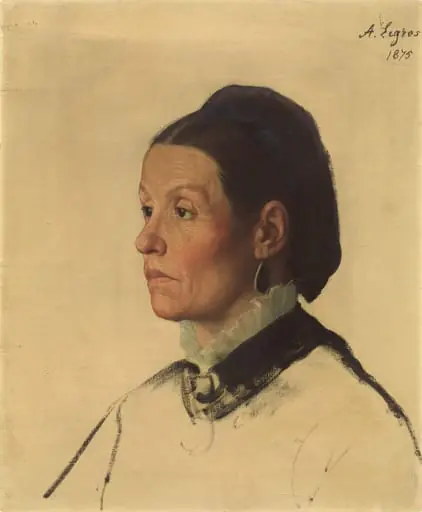
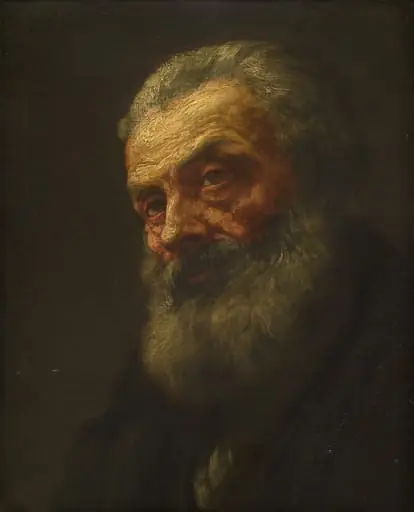
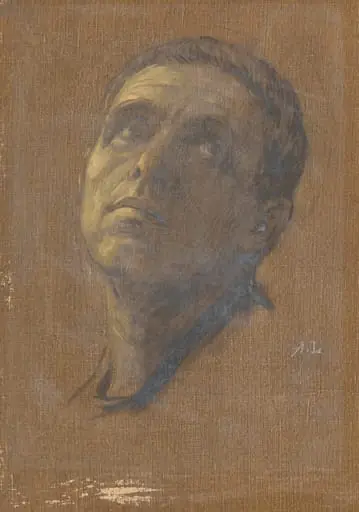
Alphonse Legros (French pronunciation: ; 8 May 1837 – 8 December 1911) was a French, later British, painter, etcher, sculptor, and medallist.

 The Dismissal of Hagar
 English Beggars
 The Departure
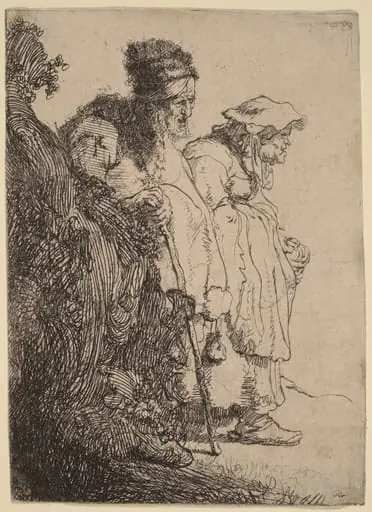 Beggar Man and Woman behind a Bank
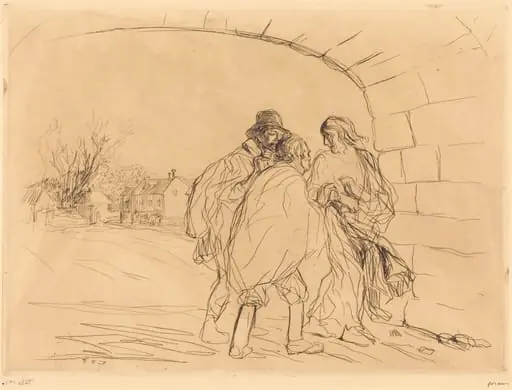 La rencontre sous la voute (1ère planche) (The Meeting under the Arch) (first plate)
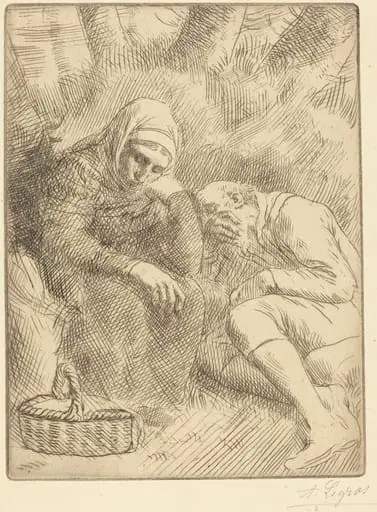 Man and Wife Seated by the Road with a Basket(Homme et femme assis au bord de la rou te aven un panier)
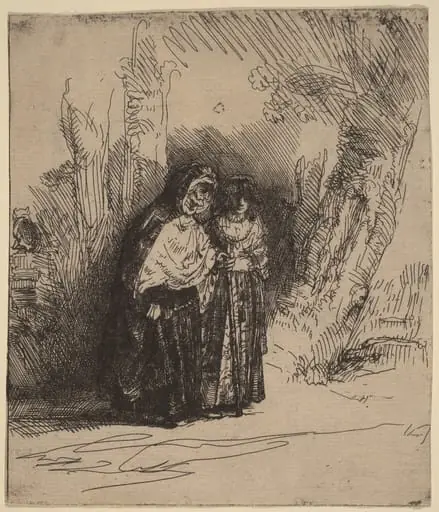 The Spanish Gypsy "Preciosa"
 The Parable of the Miller and the Donkey
 Bead-Stringers
 Encounter Under the Vault
 Two Beggars (Les deux mendiants)
 Harvesters Surprised by the Storm (Moissonneuses surprises par l'orage)