Artwork
Old Village (Ville vieille)
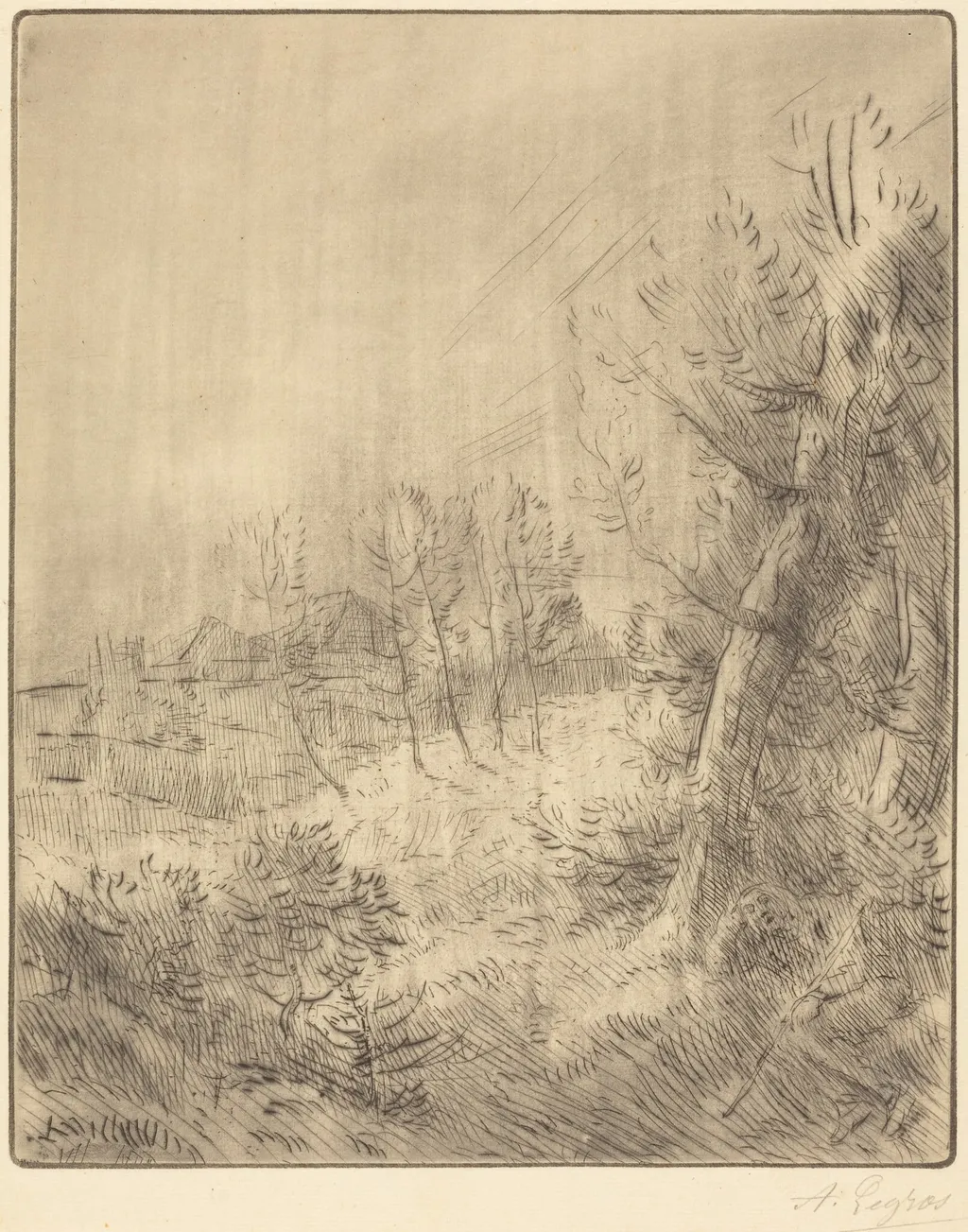
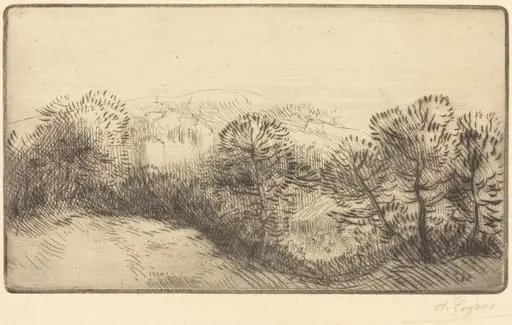
Old Village (Ville vieille) is an ink print by the Romanticist artist Alphonse Legros. It dates from 1874 and is held in the collection of the National Gallery of Art.
About this work
Overview
This work exemplifies his engagement with printmaking as a medium for intimate, observational art, distinct from his larger-scale paintings and sculptures.
Created in 1874, *Old Village (Ville vieille)* is an intaglio print by Alphonse Legros, combining etching and drypoint techniques. Though French by birth, Legros had been based in London since 1863 and became a central figure in the British etching revival. This work exemplifies his engagement with printmaking as a medium for intimate, observational art, distinct from his larger-scale paintings and sculptures.
Subject & Meaning
The scene depicts a secluded rural hamlet nestled in a wooded valley, with narrow paths winding between dense trees and modest dwellings. There is no human presence, and the architecture is subdued, suggesting a quiet, unremarkable place. The composition conveys a sense of stillness and timelessness, emphasizing the relationship between built environment and natural growth rather than narrative or symbolism.
Technique & Style
Legros used drypoint to scratch directly into the plate, creating rich, velvety lines, while etching provided finer, controlled details. The texture varies between abrupt, sketch-like strokes and smoother, tonal areas, mimicking the play of light through foliage. The effect is neither polished nor overly refined, reflecting a direct, almost spontaneous response to the landscape, grounded in close observation.
History & Provenance
Produced during Legros’s tenure at the Slade School of Fine Art in London, the print emerged from his active participation in the 19th-century revival of printmaking in Britain. It was likely made for private circulation or as part of a series of landscape studies. No public record of its early ownership exists, but it aligns with the modest, non-commercial ethos of the etching revival movement.
Context
In the 1870s, British artists were re-engaging with intaglio printmaking as a serious artistic medium, moving away from reproductive prints. Legros, trained in Paris but immersed in London’s artistic circles, bridged French academic discipline with British interest in direct, expressive mark-making. His work contributed to a broader shift toward personal, landscape-centered prints.
Legacy
Though not widely exhibited during his lifetime, *Old Village* reflects Legros’s influence on a generation of British printmakers who valued technical precision and quiet observation. His integration of French training with British sensibilities helped legitimize etching as a vehicle for artistic expression beyond illustration, leaving a subtle but enduring mark on the medium’s development.
Artist & collection

Artist
Alphonse Legros (French pronunciation: ; 8 May 1837 – 8 December 1911) was a French, later British, painter, etcher, sculptor, and medallist.

 Near the Woods (Pres du bois)
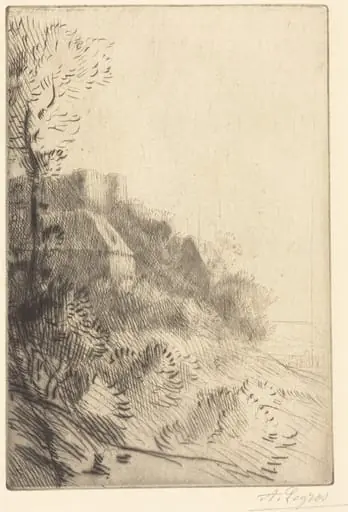 Farm on a Hillside in Sunlight (La ferme du coteau; Effet de soleil sur le coteau)
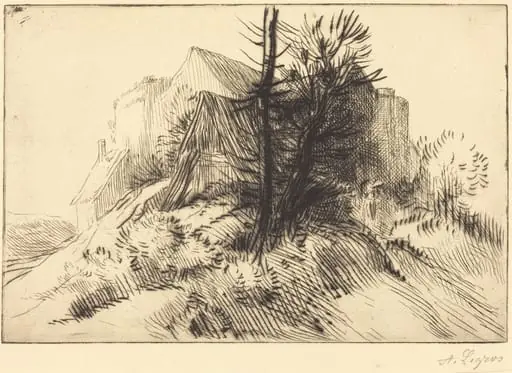 Farm in Winter (Une ferme en hiver)
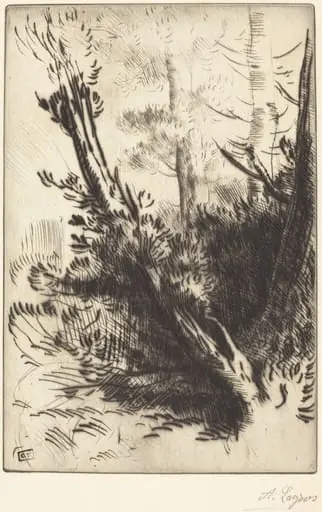 In the Woods (Dans les bois)
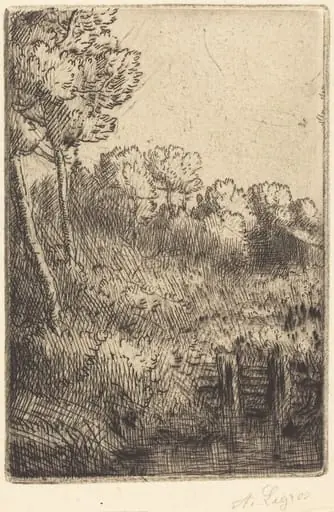 Along the Marne (Sur la Marne)
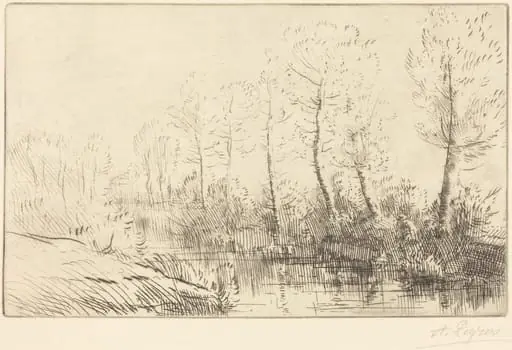 Birch Trees: Water's Edge Seen in Morning Light (Les bouleaux: Bord de l'eau, effet du matin
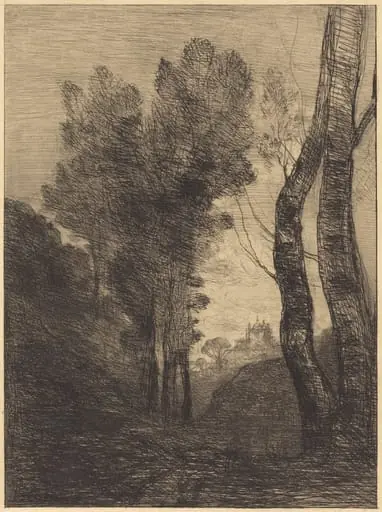 Environs of Rome (Environs de Rome)
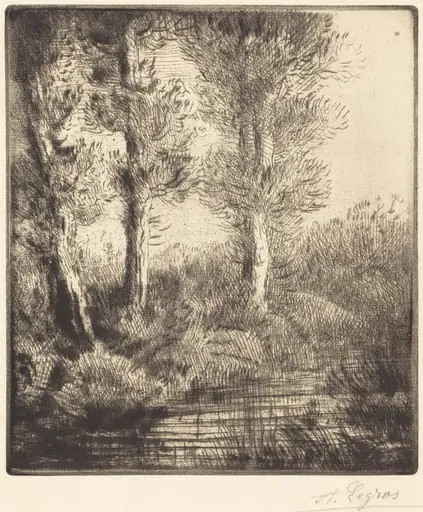 Banks of the Saint-Pre (Rive du Saint-Pre)
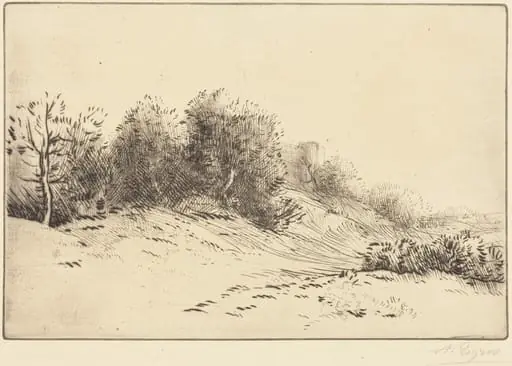 Castle in Spain (Chateau en Espagne)
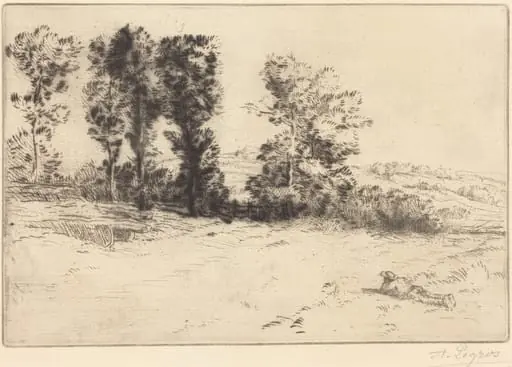 Meadow in Sunshine (Le pre ensoleille)