Artwork
Head of a Man
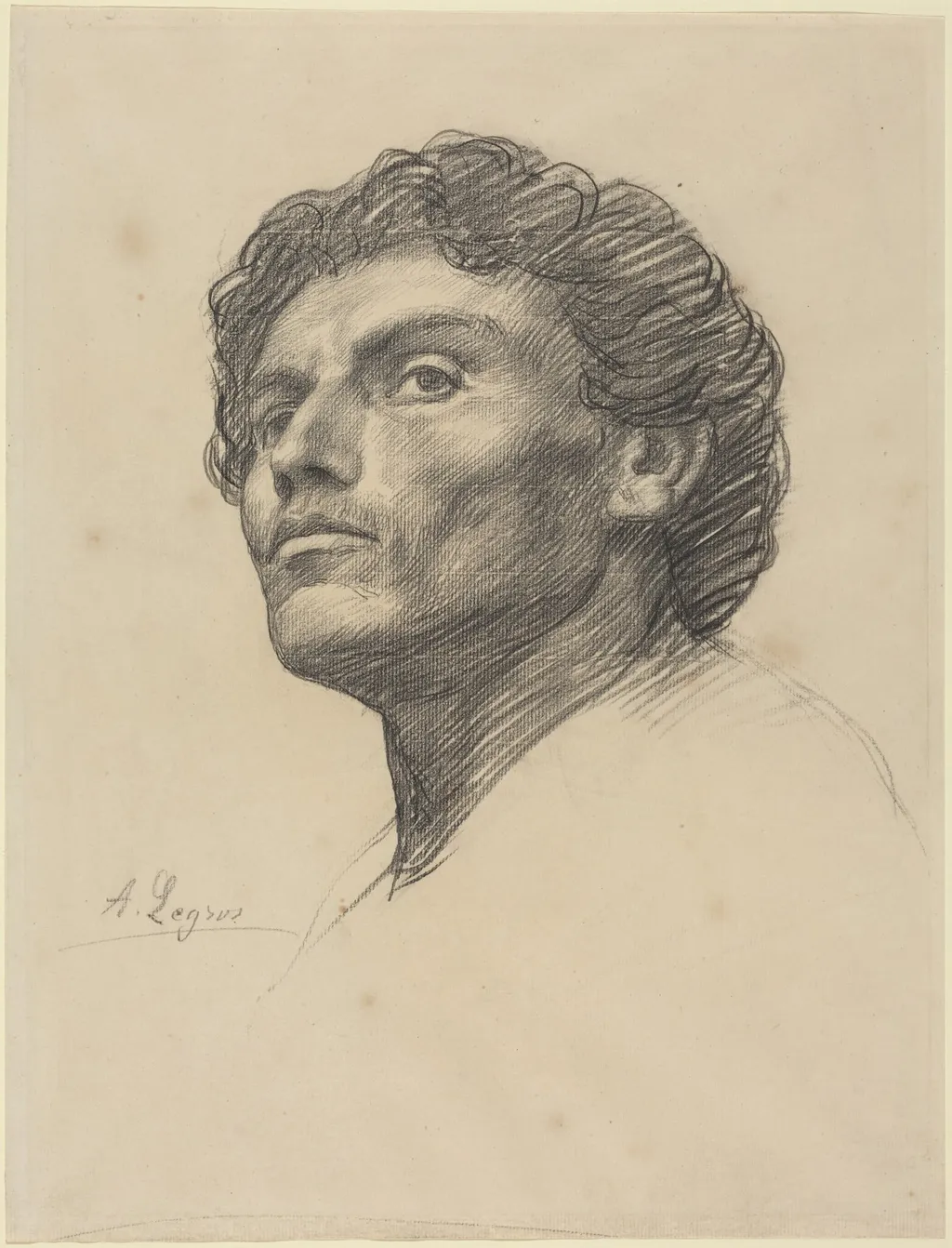
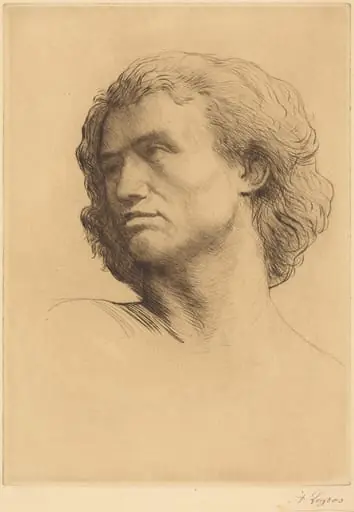
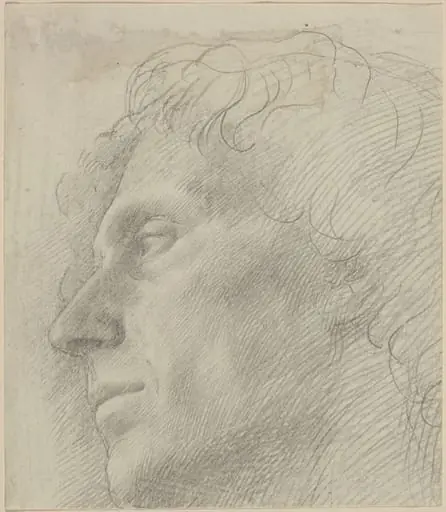
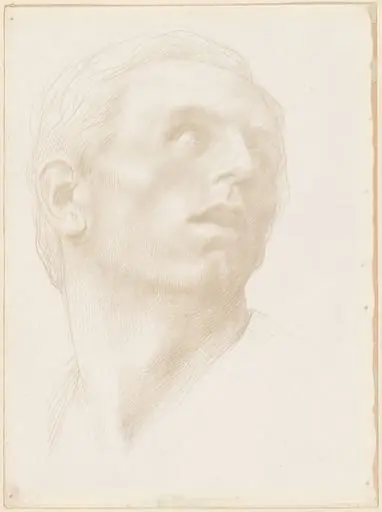
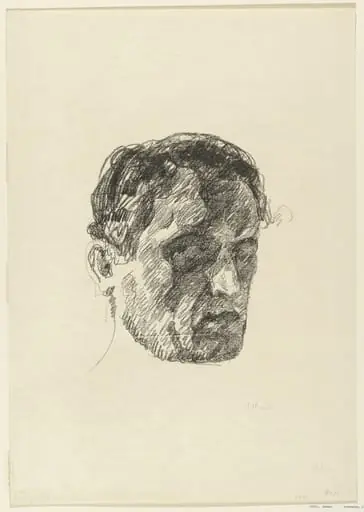
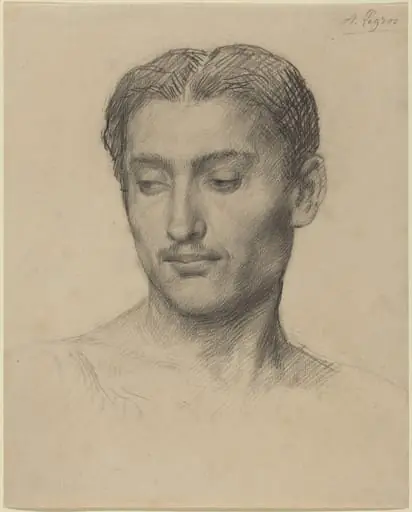
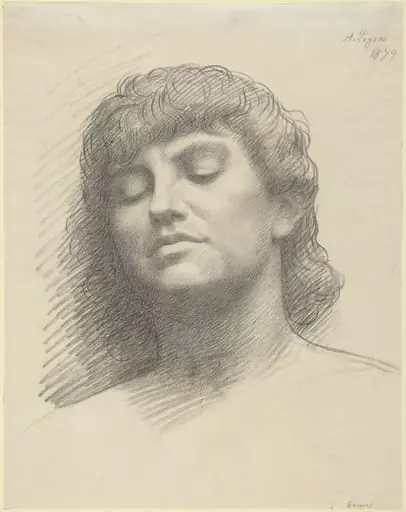
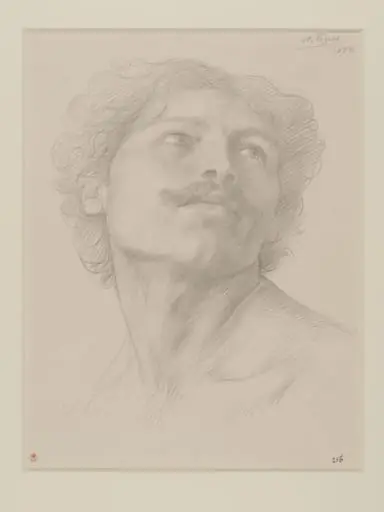
Head of a Man is a chalk drawing by the Romanticist artist Alphonse Legros. It dates from 1874 and is held in the collection of the National Gallery of Art.
About this work
Overview
The work belongs to a broader tradition of observational drawing, emphasizing directness and economy of line over finish.
Created in 1874, this drawing by Alphonse Legros is a study in monochrome, executed in black chalk on laid paper. The artist, originally French but based in London since 1863, used minimal means to explore form and volume. The work belongs to a broader tradition of observational drawing, emphasizing directness and economy of line over finish. Its unadorned surface and lack of background focus attention entirely on the subject’s presence.
Subject & Meaning
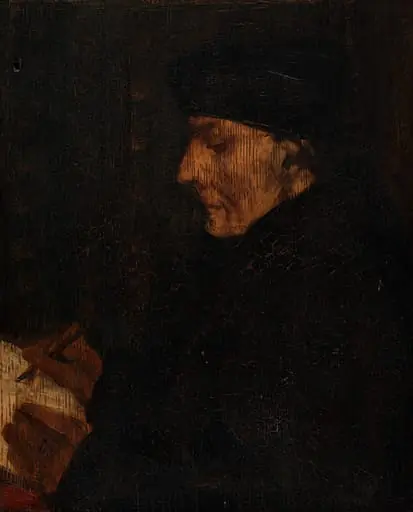
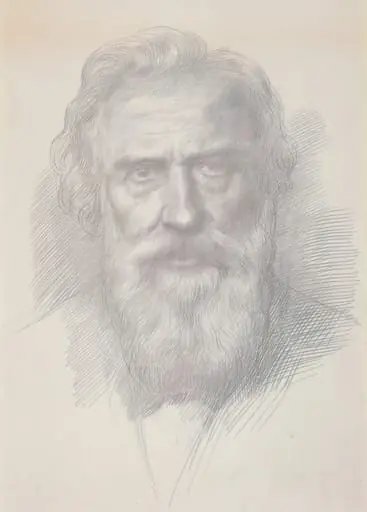
The portrait captures a man in three-quarter profile, his head turned slightly toward the viewer. His hair is tightly gathered, and a high collar encircles his neck, suggesting modest attire or occupational dress. No identity is given, nor is emotion overtly expressed. The figure’s anonymity reinforces the drawing’s function as a study of structure and light, valuing formal qualities over narrative or psychological depth.
Technique & Style
Legros employed black chalk with controlled pressure to model the contours of the face, using soft gradations to define the cheekbones, jaw, and brow. Loose, fluid strokes suggest the texture of hair and skin without detailing individual strands. The background remains untouched, heightening the contrast and three-dimensionality achieved through chiaroscuro. The sketch’s immediacy implies a rapid, direct observation, typical of preparatory studies in 19th-century academic practice.
History & Provenance
Legros moved to London in 1863 and became a central figure in the British art scene, particularly through his teaching and advocacy of etching. This drawing, made a decade later, reflects his ongoing engagement with life drawing and the study of form. While its early ownership is undocumented, it likely remained within his circle or academic environment, consistent with the practice of preserving studies as teaching aids.
Context
In the 1870s, British art institutions emphasized rigorous drawing from life as foundational training. Legros, trained in Paris and influenced by Realism, brought this discipline to London, where he taught at the Slade School. His drawings, like this one, aligned with a broader revival of attention to anatomical accuracy and tonal modeling, countering the decorative tendencies of some contemporary styles.
Legacy
Though not widely exhibited as a finished work, this drawing exemplifies Legros’s influence on British art education. His emphasis on direct observation and tonal discipline shaped generations of students. The drawing’s restraint and technical clarity continue to serve as a reference for the expressive potential of simple media, preserving his commitment to drawing as a core artistic practice.
Own this work as a print
Artist & collection

Artist
Alphonse Legros (French pronunciation: ; 8 May 1837 – 8 December 1911) was a French, later British, painter, etcher, sculptor, and medallist.

![Head of a Man Facing Left [recto], by Alphonse Legros](https://artifactworldgallery.com/img/alphonse-legros--head-of-a-man-facing-left-recto--f7a024e42f6a9f0f-w320.webp)