Artwork
Self-Portrait, 3rd plate
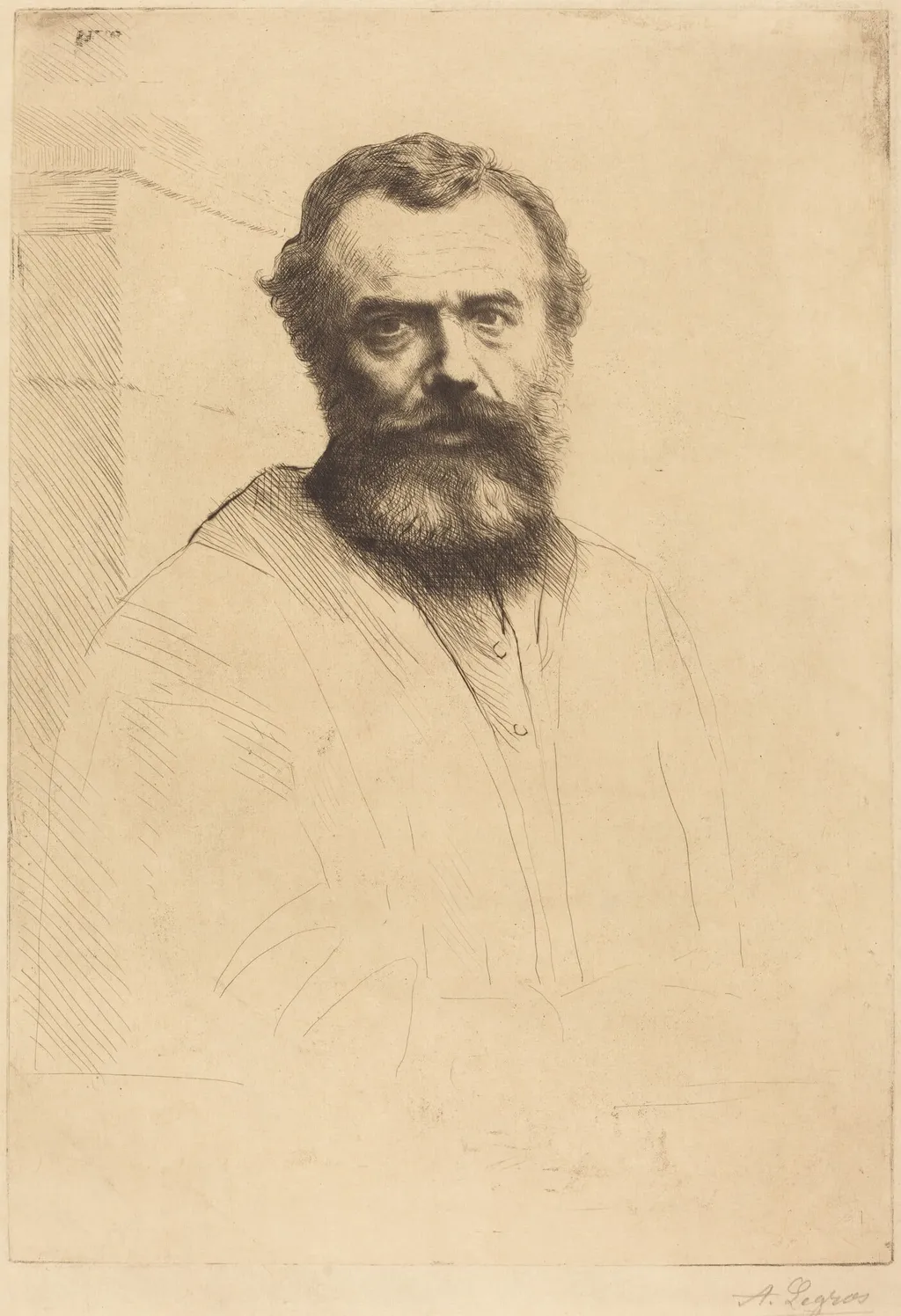
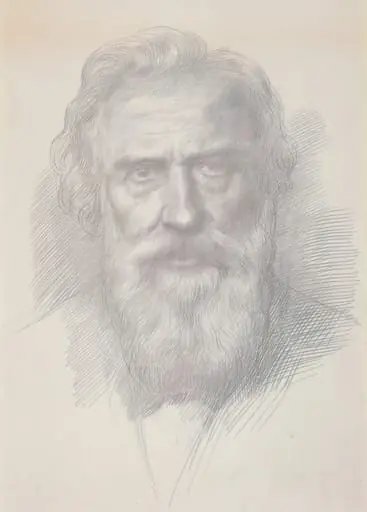
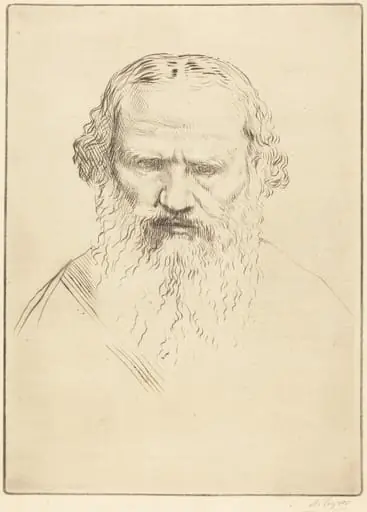
Self-Portrait, 3rd plate is an ink print by the Impressionist artist Alphonse Legros. It dates from 1880 and is held in the collection of the National Gallery of Art. Created in 1880, this print presents the artist’s own likeness rendered through a combination of etching and drypoint.
About this work
Overview
Created in 1880, this print presents the artist’s own likeness rendered through a combination of etching and drypoint. The image concentrates on the head and upper torso, set against an unadorned background that isolates the figure. The sitter, a bearded man in a plain jacket, looks slightly off‑center with a sober expression, giving the work a contemplative tone.
Subject & Meaning
The work is a self‑portrait, a genre the artist frequently explored in his graphic output. By depicting himself with minimal attire and a straightforward pose, the image emphasizes personal identity over narrative, inviting viewers to consider the artist’s presence and character rather than a specific story or allegory.
Technique & Style
Executed with both etching and drypoint, the print merges the fine lines of acid‑etched grooves with the richer, burr‑laden strokes of drypoint. The hand‑drawn quality of the lines, some left intentionally rough, conveys a sense of immediacy, as if the artist captured a fleeting study rather than a finished, highly polished image.
History & Provenance
The creator, born in France and later naturalised as a British citizen, was instrumental in revitalising British etching after his 1863 move to London. This particular plate reflects his early period of experimentation with printmaking techniques, and it forms part of a broader body of work that helped re‑establish the medium in the United Kingdom.
Artist & collection

Artist
Alphonse Legros (French pronunciation: ; 8 May 1837 – 8 December 1911) was a French, later British, painter, etcher, sculptor, and medallist.