Artwork
Landscape
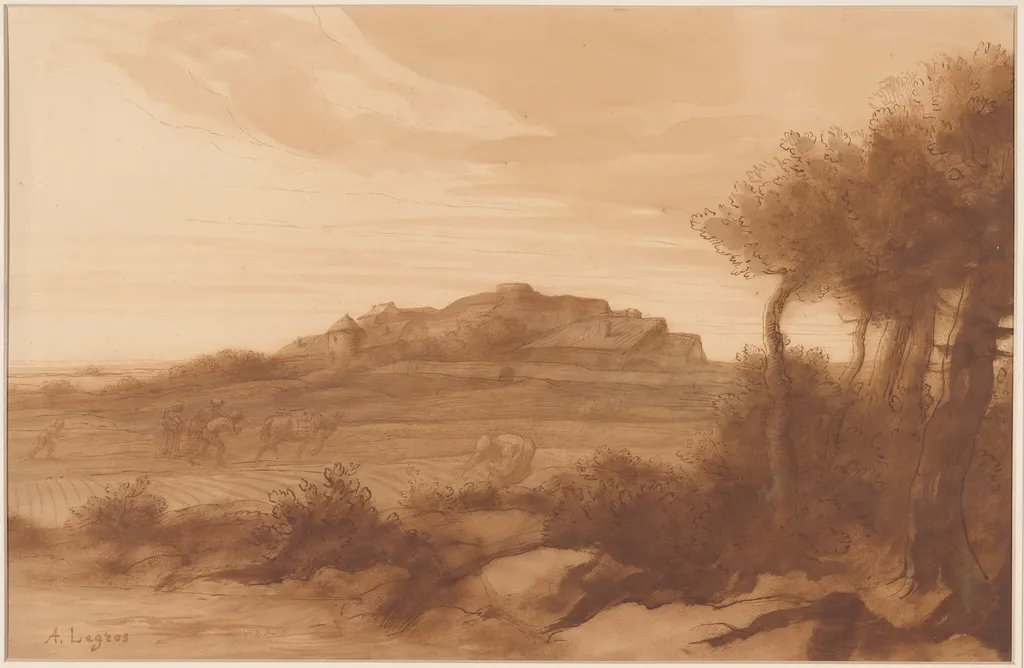
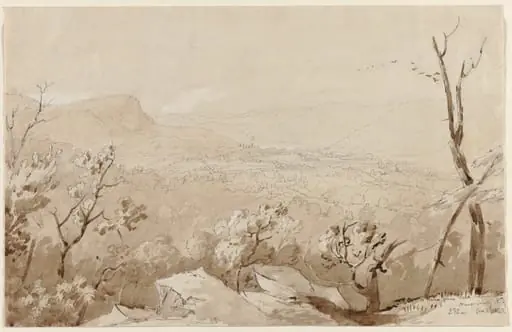
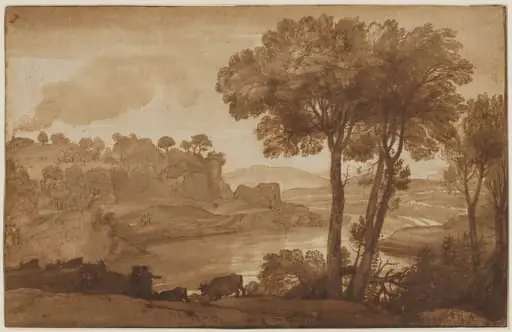
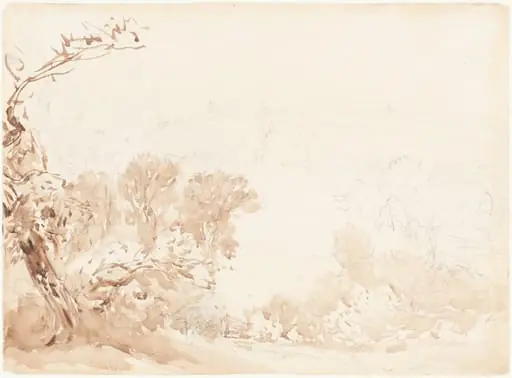
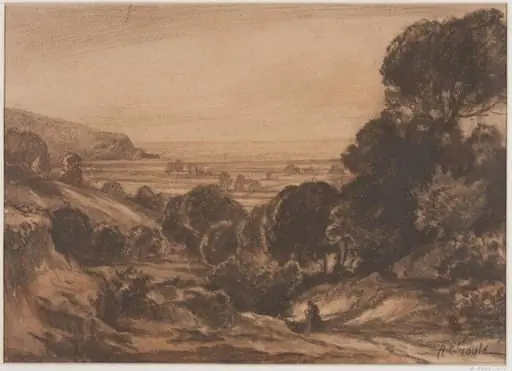
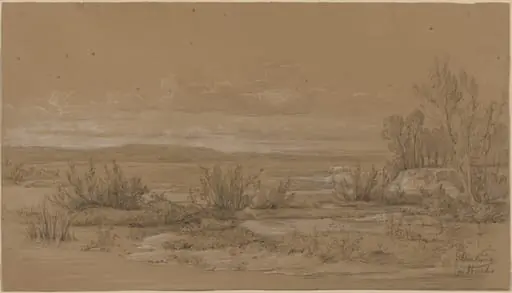
Landscape is an ink drawing by the Romanticist artist Alphonse Legros. It dates from 1874 and is held in the collection of the National Gallery of Art.
About this work
Overview
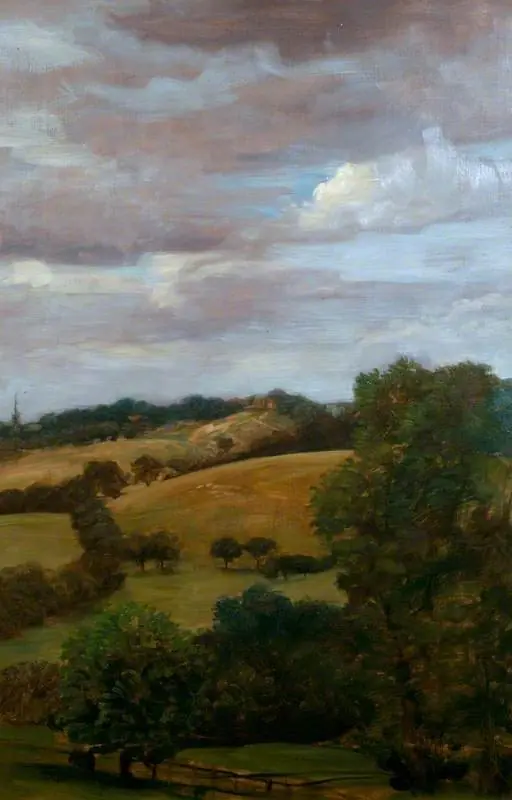
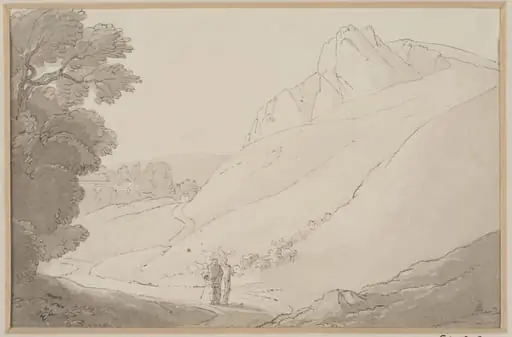
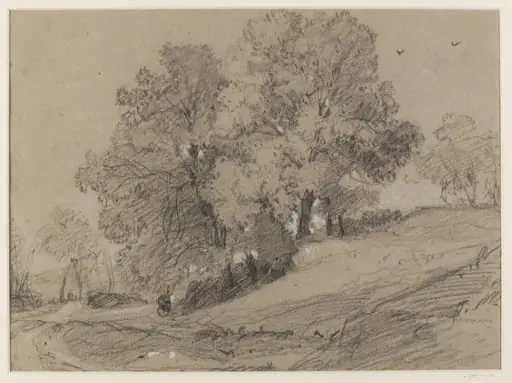
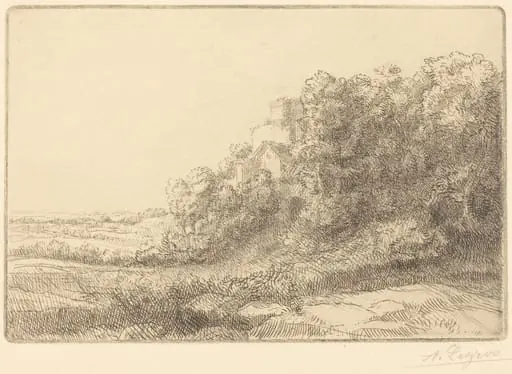
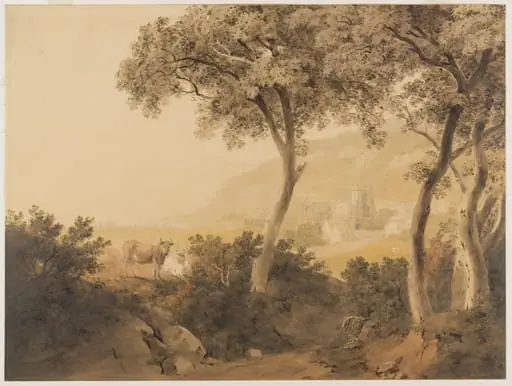
Created in 1874, this drawing by Alphonse Legros combines pen work with brown ink and a complementary brown wash. The composition presents a bucolic scene: foreground vegetation, distant figures laboring in a field, a cloud‑filled sky, and rolling hills beyond. The overall effect is warm and muted, emphasizing tonal harmony over vivid color.
Subject & Meaning
The image portrays a rural landscape where human activity integrates subtly with the natural environment. Figures are placed far enough to suggest agricultural work without dominating the view, allowing the viewer to contemplate the relationship between labor and the surrounding terrain.
Technique & Style
Legros employs fine pen lines to delineate trees, bushes, and structural elements, while a brown wash supplies atmospheric depth and a cohesive tonal base. The delicate shading and restrained palette generate a soft, almost reverie‑like ambience, characteristic of 19th‑century landscape drawing.
History & Provenance
Alphonse Legros, originally from France, relocated to Britain where he became a central figure in the British etching revival. Though primarily known for his prints and sculpture, he produced works in drawing such as this piece, reflecting his versatility across media during the late 19th century.
Context
The drawing aligns with Romantic sensibilities that favored emotive, idealized depictions of nature. While not a painting, its atmospheric qualities and emphasis on mood echo the broader Romantic movement’s interest in the sublime aspects of the countryside.
Own this work as a print
Artist & collection

Artist
Alphonse Legros (French pronunciation: ; 8 May 1837 – 8 December 1911) was a French, later British, painter, etcher, sculptor, and medallist.