Artwork
Landscape (Paysage)
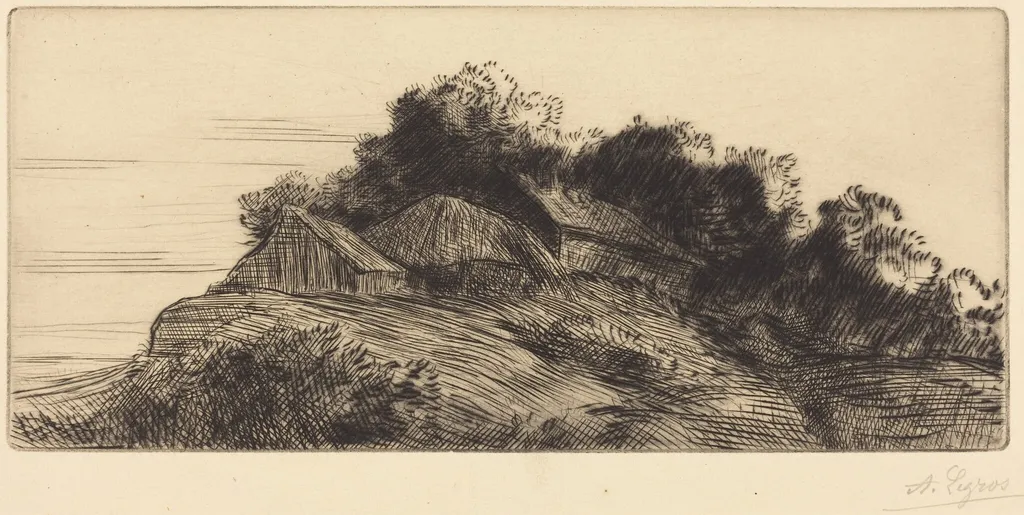
Landscape (Paysage) is an ink print by the Romanticist artist Alphonse Legros. It dates from 1874 and is held in the collection of the National Gallery of Art.
About this work
Overview
Alphonse Legros created 'Landscape (Paysage)' in 1874, a print that showcases his expertise in intaglio techniques. The work is a representation of a natural scene, achieved through the combination of etching and drypoint.
Technique & Style
The print's textured appearance is a result of the artist's use of etching and drypoint. Drypoint, in particular, allowed Legros to add detailed, rough textures by scratching the plate with a sharp tool, which holds more ink and creates a distinctive visual effect.
Subject & Meaning
The etching depicts a hilly landscape with sparse vegetation, rendered through a multitude of lines that contribute to its textured look. The scene is a straightforward representation of a natural setting, with no clear narrative or symbolic content.
History & Provenance
Legros, a French-born artist, settled in Britain in 1863 and played a significant role in reviving etching in the country. 'Landscape (Paysage)' is a product of this period, reflecting his work in printmaking during the late 19th century.
Artist & collection

Artist
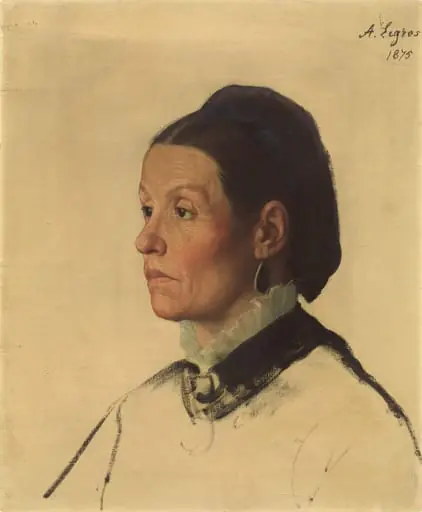
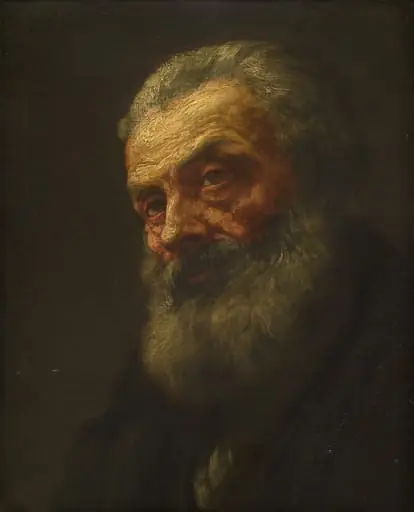
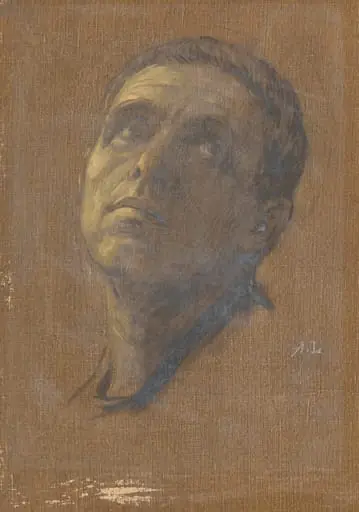
Alphonse Legros (French pronunciation: ; 8 May 1837 – 8 December 1911) was a French, later British, painter, etcher, sculptor, and medallist.

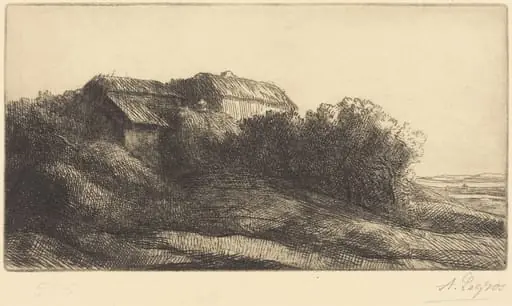 Cottage on a Hillside (Chaumiere sur le coteau)
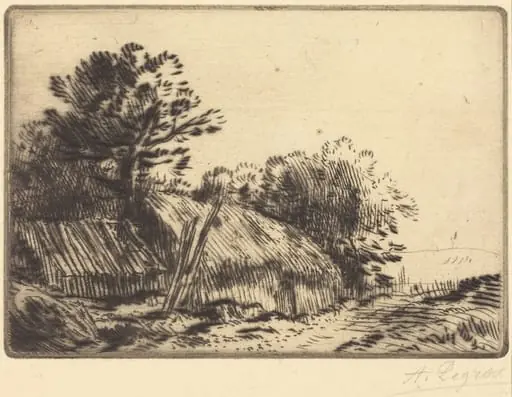 Rustic Scene (Scene rustique)
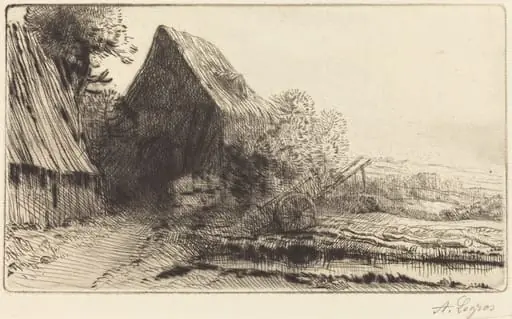 Wheelwright's Home (La maison du charron)
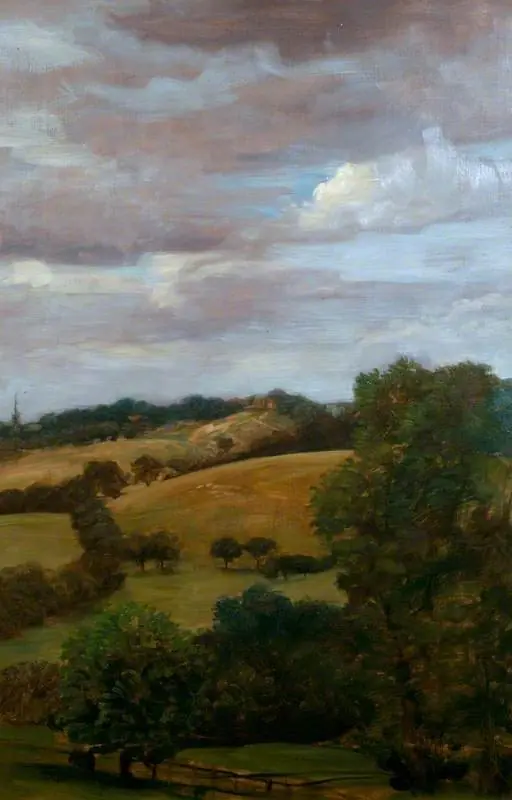
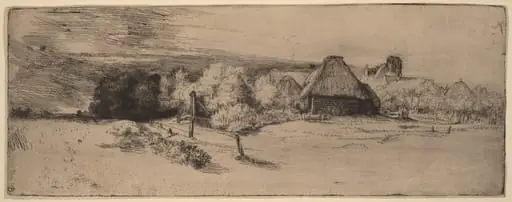 Landscape with Trees, Farm Buildings and a Tower
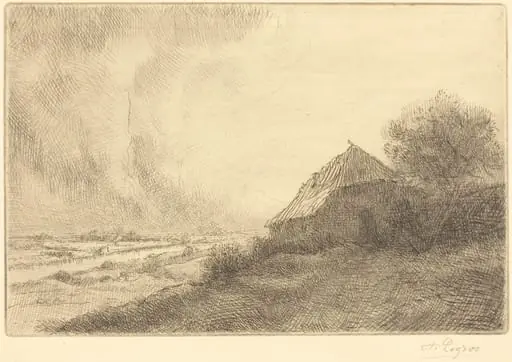 Hovel on a Hillside (Masure sur la colline)
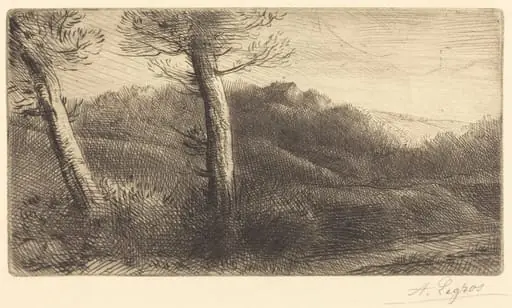 Sunset (Coucher du soleil)
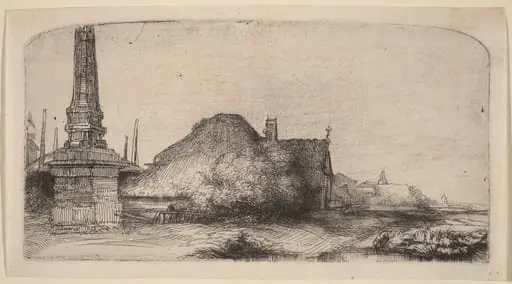 Landscape with an Obelisk
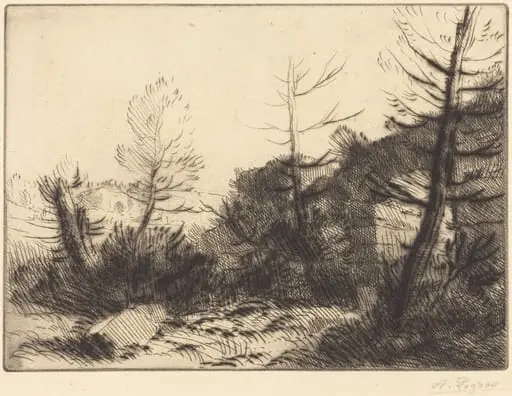 Roman Ruin (Ruine romaine)
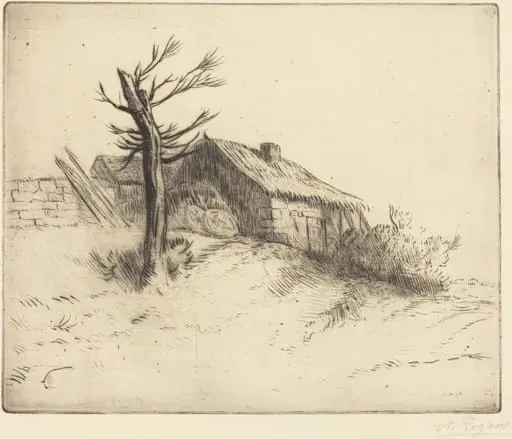 Thatched Cottage (Chaumiere)
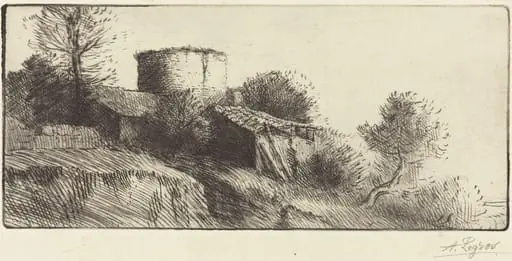 Pigeon Tower (La tour aux pigeons)