Artwork
Pigeon Tower (La tour aux pigeons)
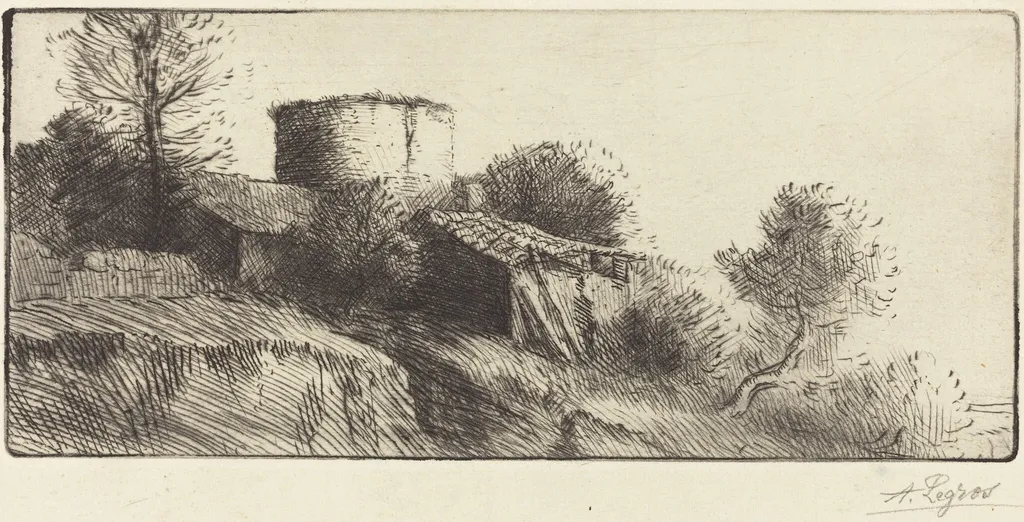
Pigeon Tower (La tour aux pigeons) is an ink print by the Romanticist artist Alphonse Legros. It dates from 1874 and is held in the collection of the National Gallery of Art.
About this work
Overview
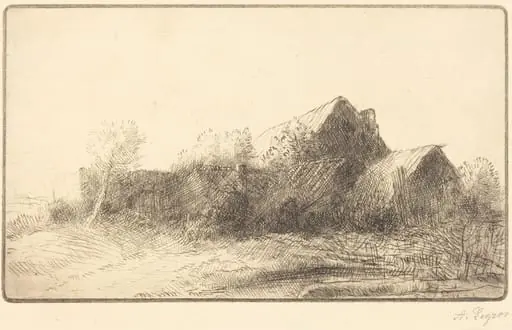
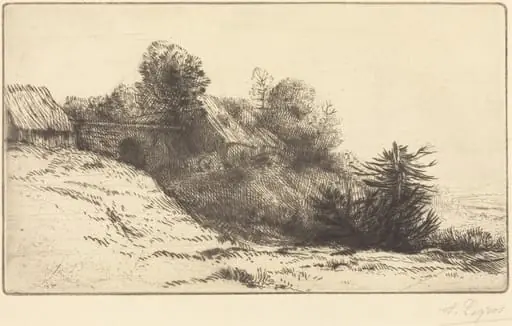
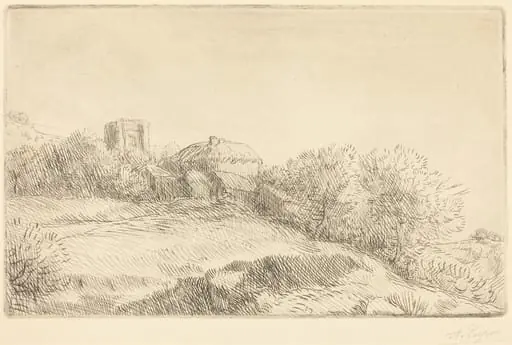
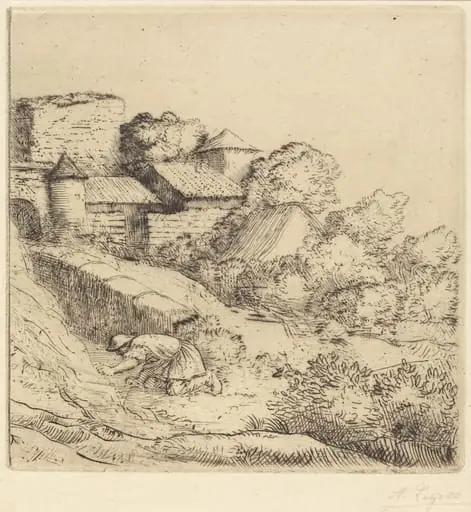
Created in 1874, *Pigeon Tower (La tour aux pigeons)* is a black‑and‑white print that combines etching with drypoint. The composition centers on a solitary tower set amid trees and a low mound, its silhouette rendered in strong linear contrasts that suggest depth without revealing the sky. The work reflects the artist’s interest in architectural forms within a natural landscape.
Subject & Meaning
The image presents a lone tower, likely a rural or historic structure, surrounded by foliage and a gentle rise of ground. By isolating the building within a quiet setting, the print invites contemplation of human presence amid the countryside, a theme recurrent in the artist’s graphic oeuvre.
Technique & Style
Legros employed both etching, which allows fine line work, and drypoint, which adds rich, velvety burr lines, to achieve a range of tonal values. The resulting effect is marked by bold contours and a play of light and shadow that conveys atmospheric depth, aligning the piece with the Romantic emphasis on mood and imagination.
History & Provenance
Born in France, Alphonse Legros moved to London in 1863, where he became instrumental in the 19th‑century revival of etching in Britain. *Pigeon Tower* was produced during this period of renewed interest in printmaking, and it exemplifies Legros’s contribution to the medium after his relocation.
Artist & collection

Artist
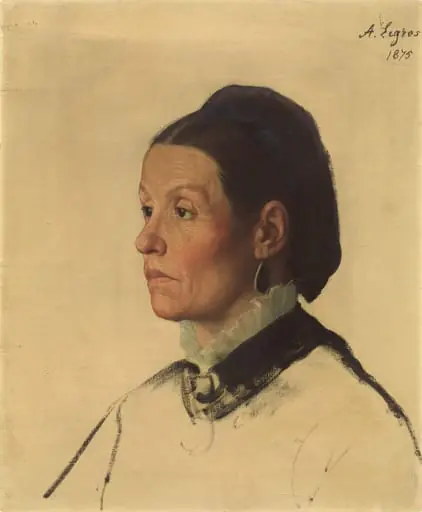
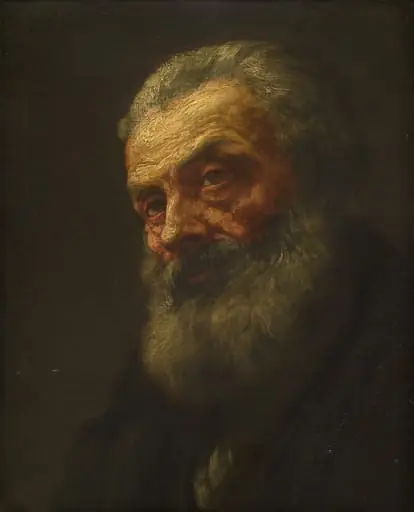
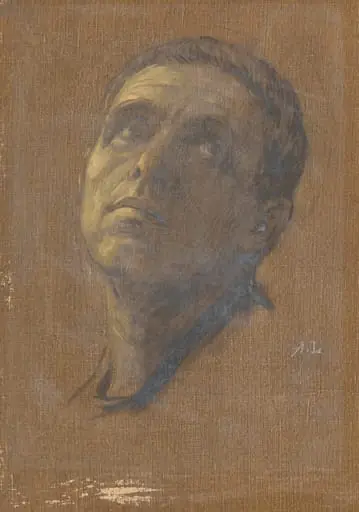
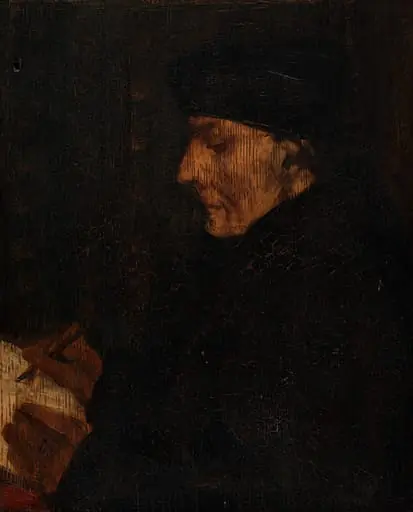
Alphonse Legros (French pronunciation: ; 8 May 1837 – 8 December 1911) was a French, later British, painter, etcher, sculptor, and medallist.