Artwork
Farm in Winter (Une ferme en hiver)
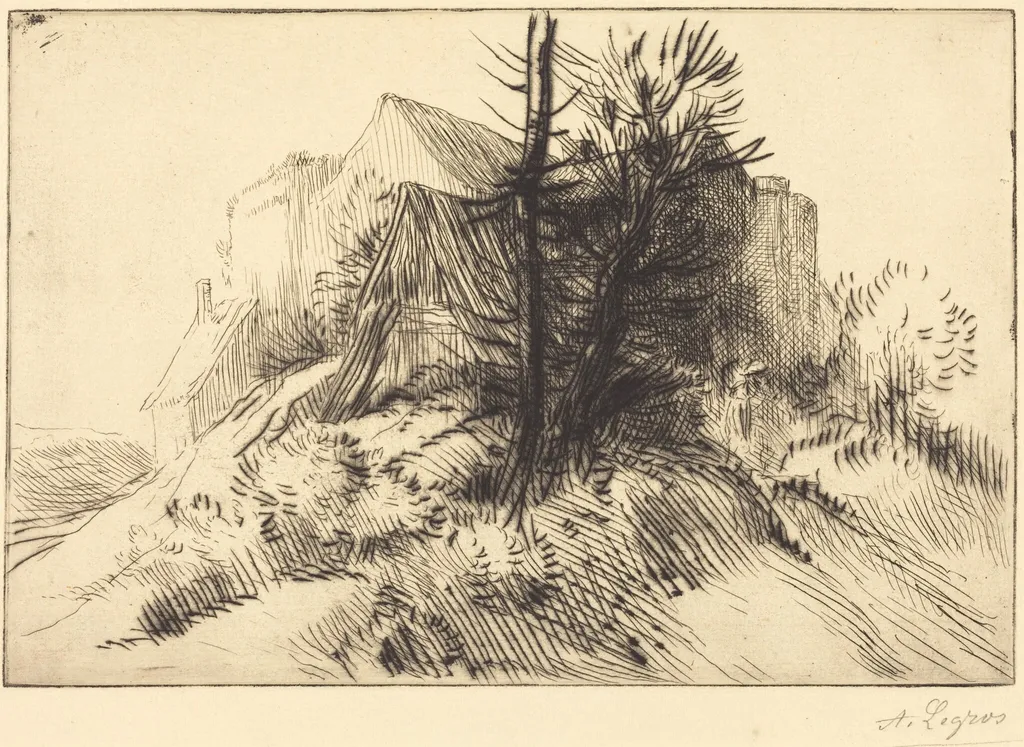
Farm in Winter (Une ferme en hiver) is an ink print by the Romanticist artist Alphonse Legros. It dates from 1874 and is held in the collection of the National Gallery of Art.
About this work
Overview
Created in 1874, *Farm in Winter* is a print by Alphonse Legros, a French artist who relocated to London in 1863 and eventually became a British citizen.
Created in 1874, *Farm in Winter* is a print by Alphonse Legros, a French artist who relocated to London in 1863 and eventually became a British citizen. Executed in etching and drypoint, the work reflects his deep engagement with printmaking as both an artistic and pedagogical medium. Legros was instrumental in revitalizing interest in traditional print techniques in Britain during the late nineteenth century.
Subject & Meaning
The scene portrays a solitary farmhouse nestled in a barren winter landscape, partially obscured by skeletal trees and undulating hills. There is no human presence, and the composition conveys stillness and isolation. The quiet austerity of the setting suggests a meditation on rural endurance, shaped by seasonal hardship rather than romanticized pastoral ideals.
Technique & Style
Legros combined etching and drypoint to generate a tactile, uneven surface. Drypoint’s burr produced rich, fuzzy lines, while etching allowed for sharper, controlled incisions. The result is a rough-hewn texture that mirrors the harshness of winter—scratchy, irregular strokes evoke wind-swept earth and brittle branches, avoiding smoothness in favor of physical immediacy.
History & Provenance
The print was made during Legros’s tenure at the Slade School of Fine Art, where he influenced a generation of British artists. Though produced in England, the subject reflects his French rural roots. The work entered public collections in the late nineteenth century, primarily through institutional acquisitions tied to his teaching legacy and the revival of etching as a serious art form.
Context
In the 1870s, British printmaking was shifting away from reproductive engravings toward original, expressive etchings. Legros, alongside contemporaries like James McNeill Whistler, championed this movement. His focus on humble rural subjects aligned with broader European trends that valued authenticity over idealization, positioning *Farm in Winter* within a quiet but significant artistic reorientation.
Legacy
Legros’s use of drypoint and etching in *Farm in Winter* helped redefine printmaking as a vehicle for personal expression rather than mere reproduction. His technical rigor and emphasis on direct, tactile mark-making influenced later British printmakers. The work remains a quiet but enduring example of how humble subjects, rendered with disciplined technique, can carry profound emotional weight.
Own this work as a print
Artist & collection

Artist
Alphonse Legros (French pronunciation: ; 8 May 1837 – 8 December 1911) was a French, later British, painter, etcher, sculptor, and medallist.

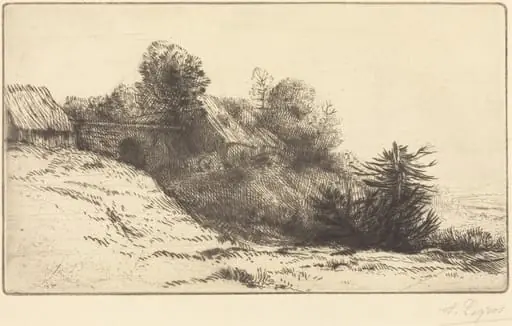 View of a Farm, 2nd plate (La ferme du Bienheureux)
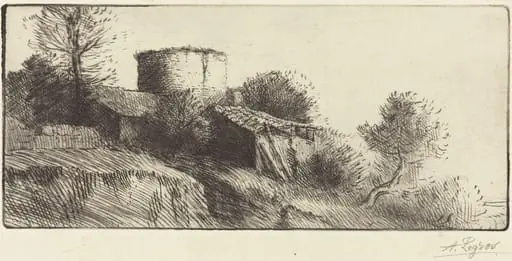 Pigeon Tower (La tour aux pigeons)
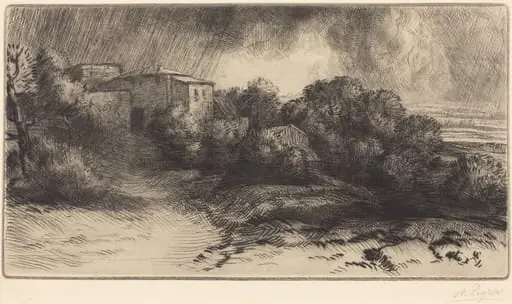 La Ferme de Brieux (Effect d'orage) (Farm at Brieux in a Storm)
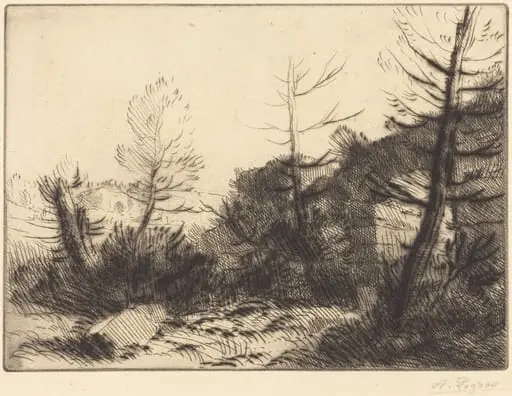 Roman Ruin (Ruine romaine)
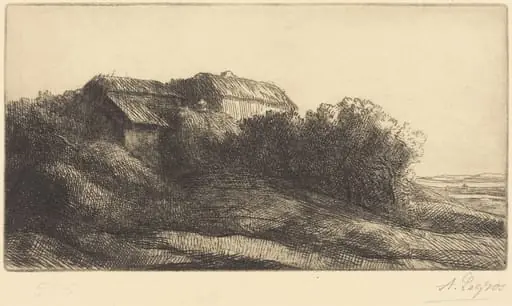 Cottage on a Hillside (Chaumiere sur le coteau)
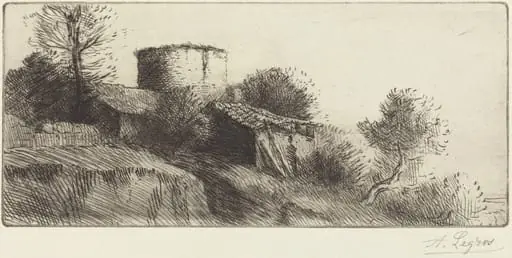 Pigeon Tower (La tour aux pigeons)
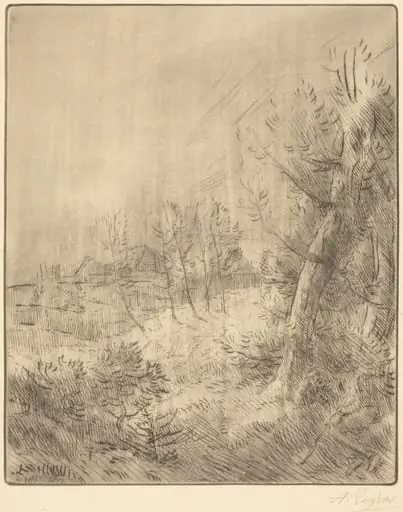 Old Village (Ville vieille)
 A Souvenir of Ostia
 Ruins of a Monastery (Les ruines du monastere)
 Near the Woods (Pres du bois)