Artwork
Remembrance of My Village (Souvenir de mon village)
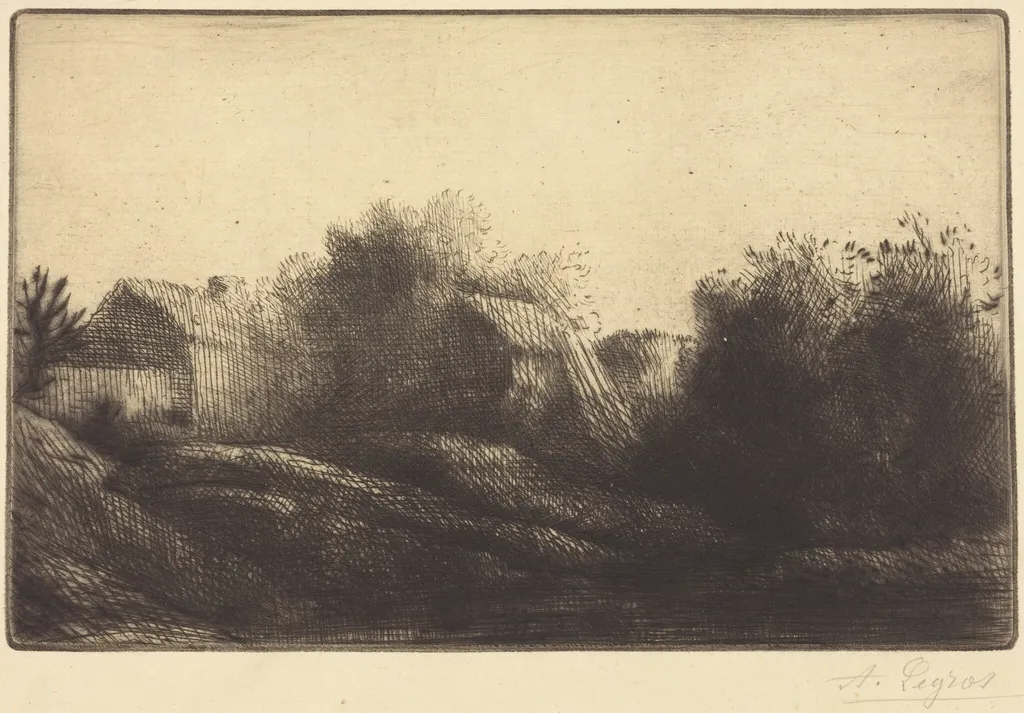
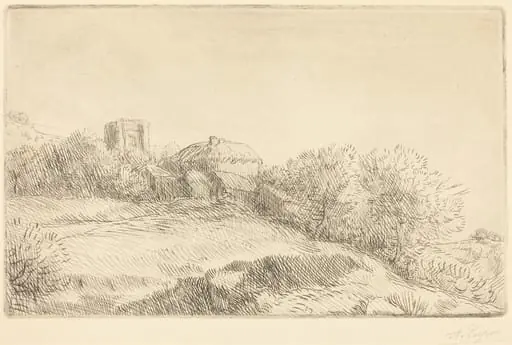
Remembrance of My Village (Souvenir de mon village) is an ink print by the Romanticist artist Alphonse Legros. It dates from 1874 and is held in the collection of the National Gallery of Art.
About this work
Overview
Executed in etching and drypoint, the work belongs to a period when Legros was deeply engaged with printmaking, helping to reinvigorate the medium in England.
Created in 1874, *Remembrance of My Village* is a print by Alphonse Legros, a French artist who settled in Britain in 1863. Executed in etching and drypoint, the work belongs to a period when Legros was deeply engaged with printmaking, helping to reinvigorate the medium in England. Its intimate scale and unpolished aesthetic reflect his commitment to the expressive potential of direct, hand-made marks over refined finish.
Subject & Meaning
The image depicts a modest rural hamlet, rendered with sparse detail: a cluster of dwellings, scattered trees, and an almost absent sky. There is no narrative or human presence, only the quiet architecture of memory. The title suggests personal recollection rather than topographical accuracy, framing the scene as an emotional echo rather than a documentary record of place.
Technique & Style
Legros employed drypoint to create dense, scratchy lines that bite into the plate, producing rich, velvety blacks. Etching provided finer contours, but the overall effect is deliberately rough, with textures built from accumulations of small, urgent marks. The lack of smoothing or refinement emphasizes immediacy, aligning the print with the tactile honesty of sketching directly onto metal.
History & Provenance
Made during Legros’s early years in London, the print emerged from his active participation in British artistic circles and his teaching at the Slade School. While rooted in French rural memory, it was produced in an English context, reflecting his dual cultural identity. The work was likely circulated among print collectors and students, contributing to the revival of etching as a serious artistic medium in late 19th-century Britain.
Context
In the 1870s, European artists were re-examining printmaking beyond reproductive purposes, seeking personal expression through direct engraving. Legros’s work aligned with this movement, paralleling contemporaries like Whistler and Daubigny. His focus on humble landscapes countered academic grandeur, offering instead a quiet, introspective alternative grounded in everyday observation.
Legacy
Legros’s approach to etching and drypoint influenced a generation of British printmakers who valued emotional resonance over technical polish. *Remembrance of My Village* stands as an early example of how personal memory could be translated into print form with minimal means. Its unidealized vision helped legitimize the sketch-like aesthetic in fine art printmaking, paving the way for later modernist explorations of the medium.
Artist & collection

Artist
Alphonse Legros (French pronunciation: ; 8 May 1837 – 8 December 1911) was a French, later British, painter, etcher, sculptor, and medallist.

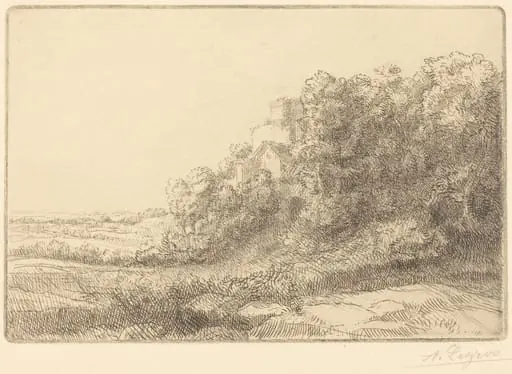 Old Chateau (Un vieux chateau)
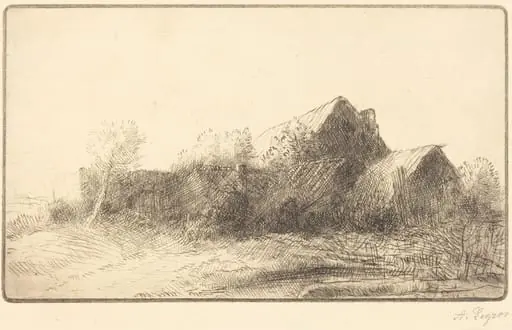 Farm (Une ferme)
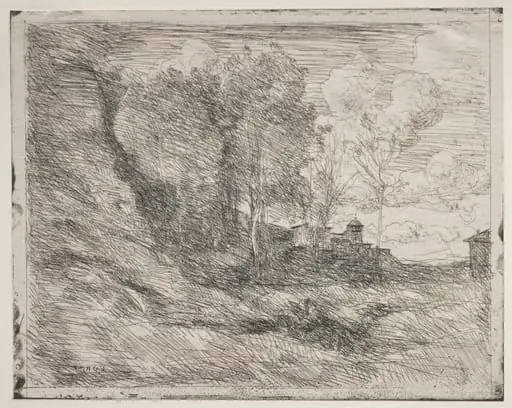 A Souvenir of Ostia
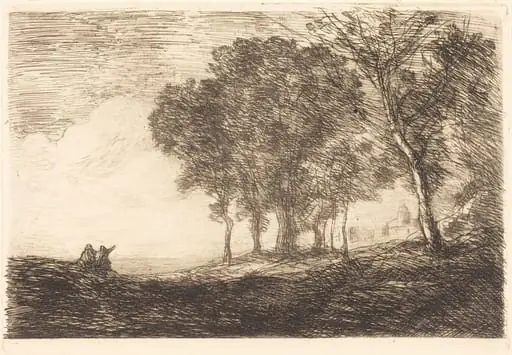 Italian Landscape
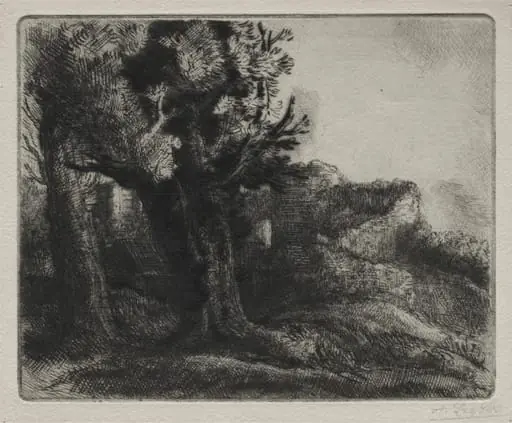 In the Ruins
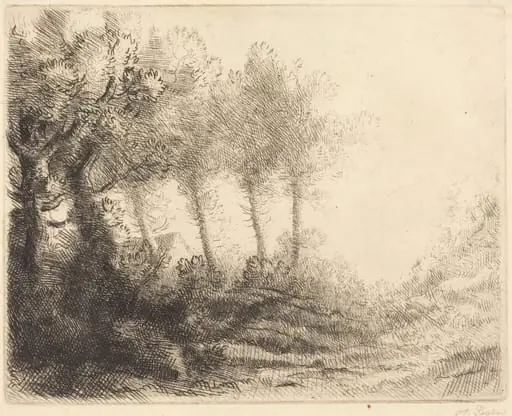 Landscape (Paysage)
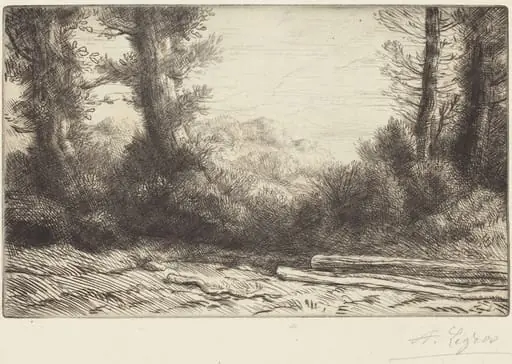 Edge of a Wood (Lisiere de bois)
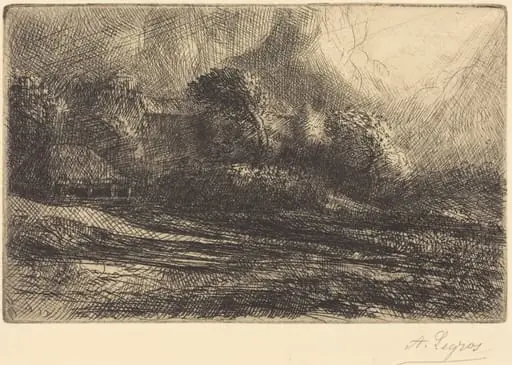 Chailli Seen in a Storm (Chailli: Effet d'orage)
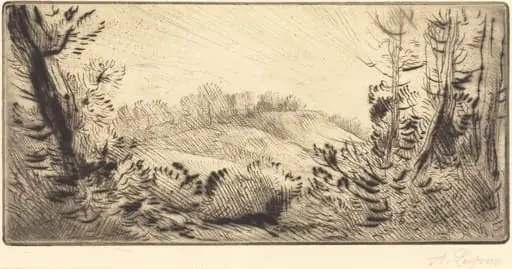 Small Hill (Le coteau)
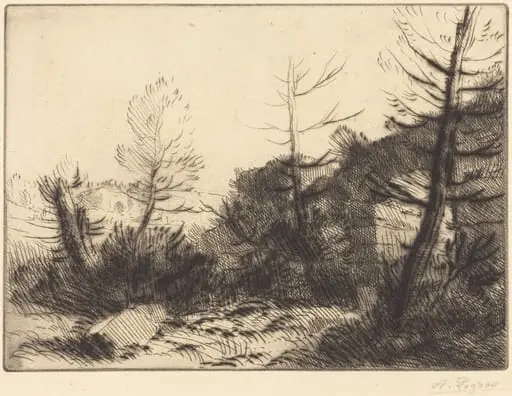 Roman Ruin (Ruine romaine)
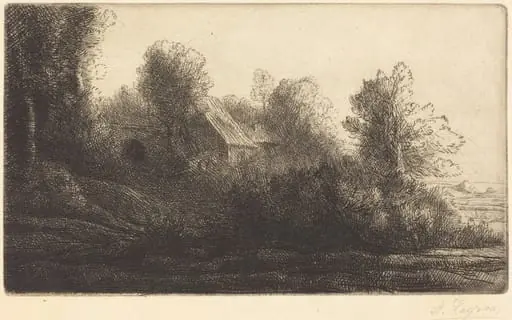 View of a Farm, 2nd plate (La ferme de Bienheureux)
 Village (Un village)