Artwork
Return to the Cottage (Le retour a la chaumiere)
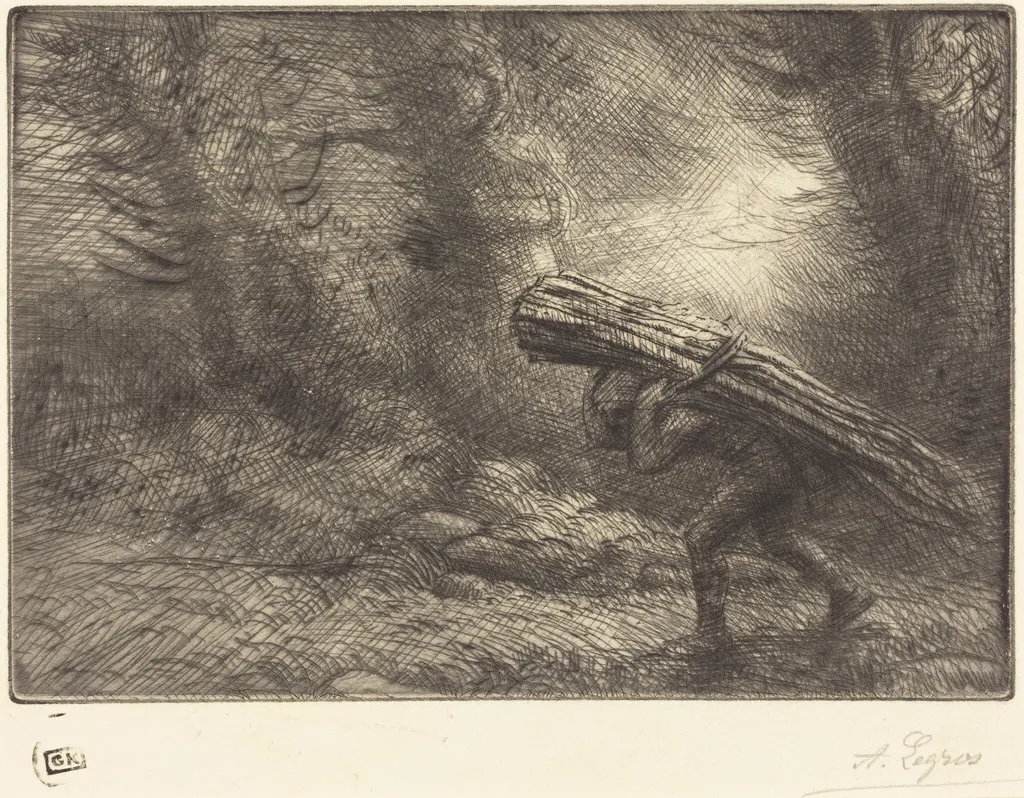
Return to the Cottage (Le retour a la chaumiere) is an ink print by the Romanticist artist Alphonse Legros. It dates from 1874 and is held in the collection of the National Gallery of Art.
About this work
Overview
Created in 1874, *Return to the Cottage* is a drypoint print by Alphonse Legros, a French artist who moved to London in 1863 and later became a British citizen.
Created in 1874, *Return to the Cottage* is a drypoint print by Alphonse Legros, a French artist who moved to London in 1863 and later became a British citizen. The work belongs to a body of prints that reflect his dedication to reviving the art of etching in Britain. Executed in monochrome, the image captures a moment of quiet movement through a dense woodland, emphasizing texture and atmosphere over narrative detail.
Subject & Meaning
The scene portrays a woman and child returning home along a narrow path, burdened by a bundle and bound by a shared physical connection. The forest surrounding them is dense and enclosing, suggesting isolation or the weight of rural labor. Legros avoids sentimentality; the figures are rendered with dignity, their journey implied rather than dramatized, aligning with his interest in unadorned, everyday life.
Technique & Style
Using drypoint, Legros incised lines directly into a metal plate, creating soft, velvety blacks through the burr left by the needle. The absence of color and the reliance on line and tone generate a chiaroscuro effect, heightening the sense of depth and enclosure. The thick, overlapping strokes of the trees convey a tactile, almost oppressive vegetation, while the figures emerge with subtle clarity from the shadowed ground.
History & Provenance
The print was made during Legros’s tenure at the Slade School of Fine Art, where he influenced a generation of British printmakers. While specific early ownership records are sparse, the work entered public collections in the late 19th or early 20th century, reflecting its recognition within academic and artistic circles focused on print revival. It remains part of institutional holdings that preserve his legacy in British print culture.
Context
In the 1870s, British art was undergoing a renewed interest in printmaking as a serious medium, moving beyond reproductive techniques. Legros, trained in France and immersed in Realist traditions, brought continental approaches to British studios. His focus on rural life aligned with broader European trends but was distinct in its restrained, unsentimental treatment, setting his work apart from both Romantic idealism and urban realism.
Legacy
Legros’s drypoints, including this work, helped redefine etching as a vehicle for personal expression rather than mere reproduction. His emphasis on direct handwork and tonal nuance influenced later British artists and contributed to the medium’s academic legitimacy. *Return to the Cottage* endures as an example of his quiet, disciplined approach to capturing the dignity of ordinary moments through the precision of line.
Artist & collection

Artist
Alphonse Legros (French pronunciation: ; 8 May 1837 – 8 December 1911) was a French, later British, painter, etcher, sculptor, and medallist.

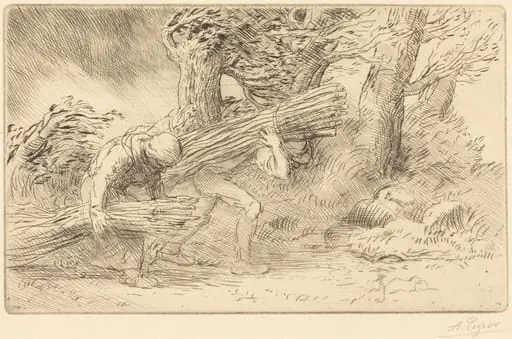 Fagot-gatherers (Les fagottiers)
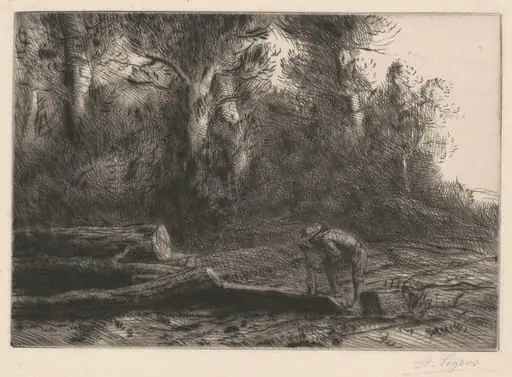 Man Squaring Logs (Homme qui fend des bûches)
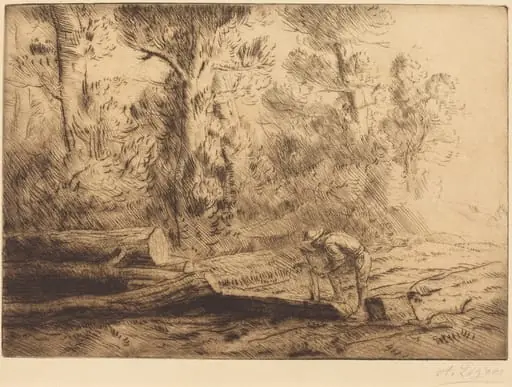 Squaring Logs (Homme que fend des buches)
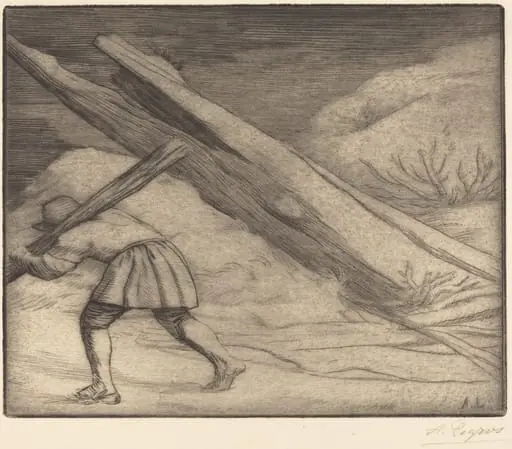 Winter, 1st plate (L'hiver)
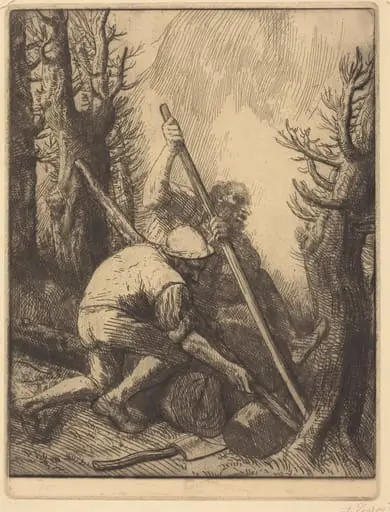 Woodcutters, 3rd plate (Les bucherons)
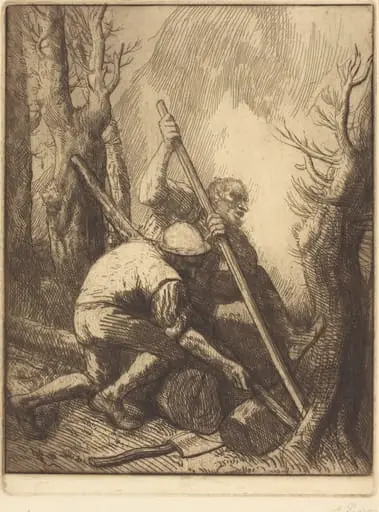 Woodcutters, 3rd plate (Les bucherons)
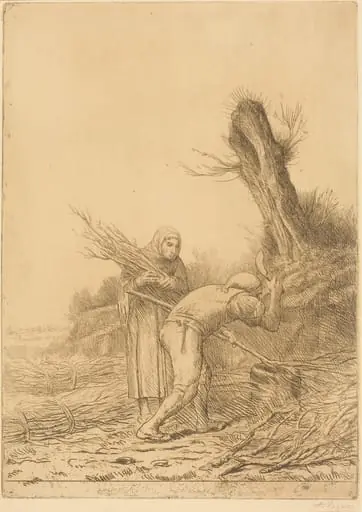 Fagot-makers (Les faiseurs de fagots)
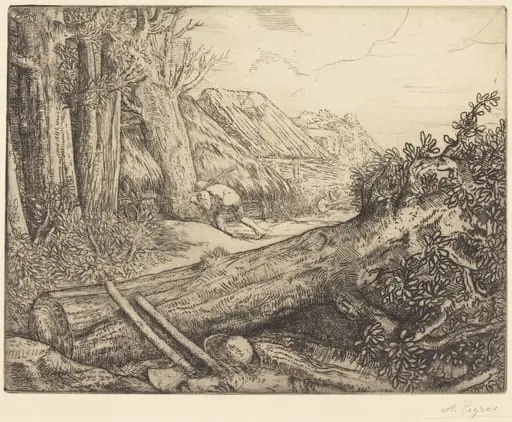 At the Home of the Woodcutters (Chez les bucherons)
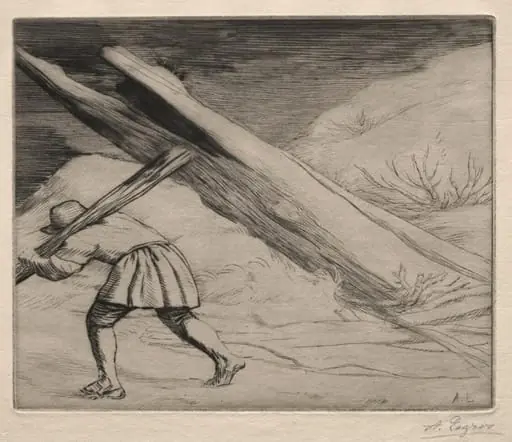 Winter (1st Plate)