Artwork
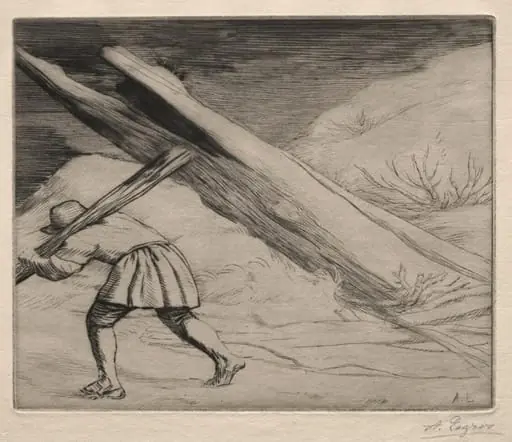
Winter, 1st plate (L'hiver)
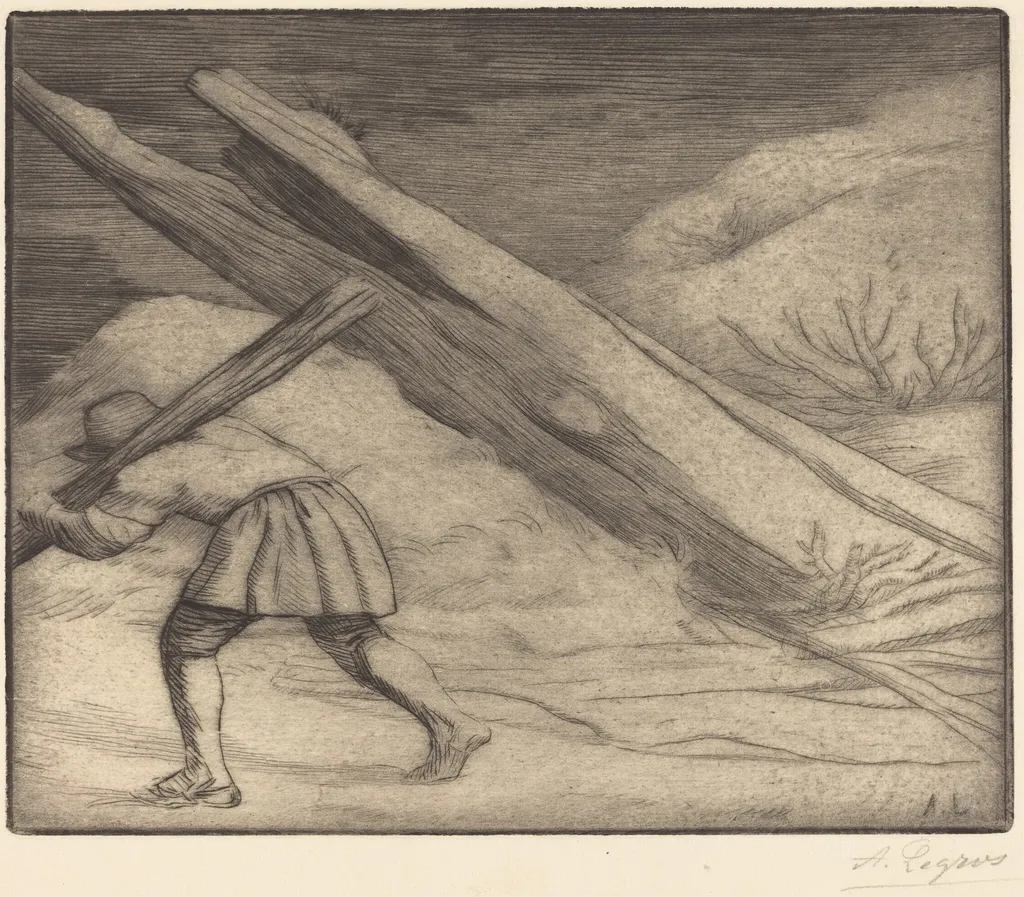
Winter, 1st plate (L'hiver) is an ink print by the Romanticist artist Alphonse Legros. It dates from 1874 and is held in the collection of the National Gallery of Art.
About this work
Overview
Alphonse Legros’s drypoint print *Winter, 1st plate* (L’hiver) was executed in 1874. The work depicts a solitary figure trudging along a dimly lit path, burdened with a long, slender log balanced on the shoulder. The composition is rendered in stark, linear marks that suggest a wintry landscape of trees or hills receding into darkness.
Subject & Meaning
The lone traveler, cloaked in a simple shirt, shorts and a low‑slung hat, is shown bent forward, his face concealed, emphasizing anonymity and the universal strain of labor in harsh weather. The heavy log serves as a visual metaphor for the weight of survival, while the muted background reinforces a mood of isolation and endurance.
Technique & Style
Created with drypoint, Legros incised the image directly onto a copper plate, allowing the characteristic burr to produce rich, velvety lines and deep shadows. The print’s linear economy and dramatic chiaroscuro align it with Romantic sensibilities, where emotional intensity is conveyed through stark contrast rather than elaborate detail.
History & Provenance
Born in France, Legros moved to London in 1863, where he became a central figure in the British etching revival. *Winter, 1st plate* reflects his mastery of printmaking techniques that he promoted through teaching and exhibition. The work remains documented in collections that trace the artist’s influence on late‑19th‑century British print culture.
Own this work as a print
Artist & collection

Artist
Alphonse Legros (French pronunciation: ; 8 May 1837 – 8 December 1911) was a French, later British, painter, etcher, sculptor, and medallist.

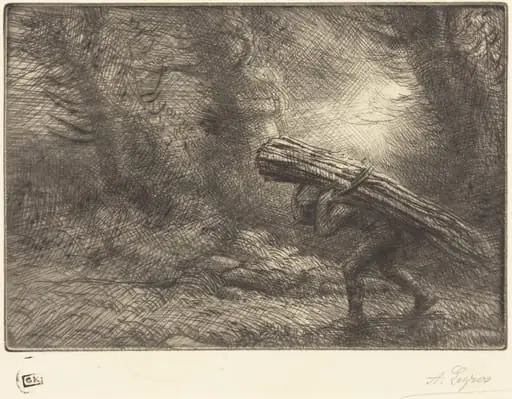 Return to the Cottage (Le retour a la chaumiere)
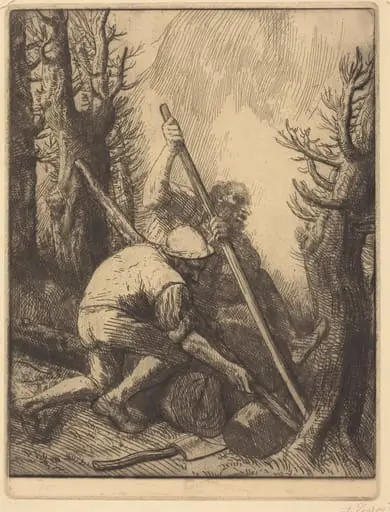 Woodcutters, 3rd plate (Les bucherons)
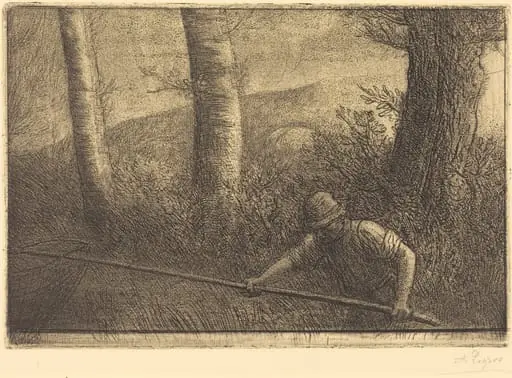 Fisherman with a Hoop-net (La peche a la truble)
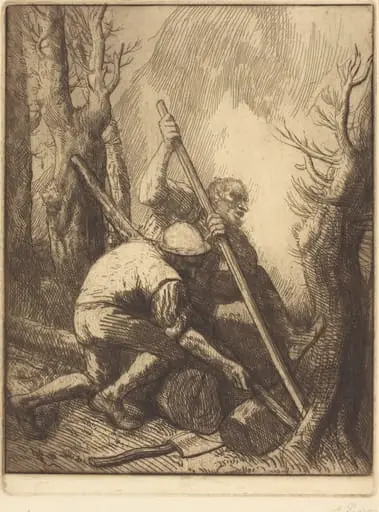 Woodcutters, 3rd plate (Les bucherons)
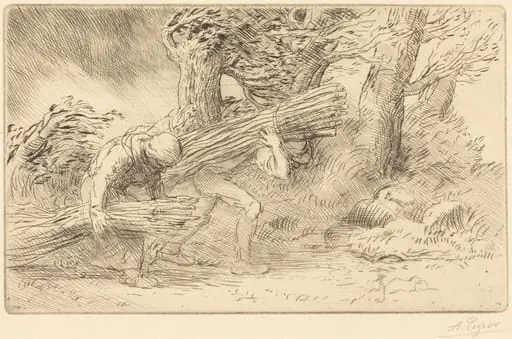 Fagot-gatherers (Les fagottiers)
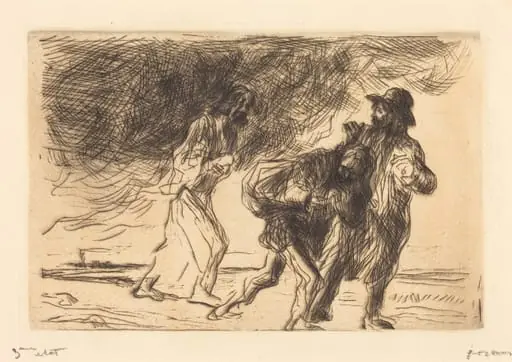 La route d'Emmaüs (1ère planche) (The Road to Emmaus) (first plate)
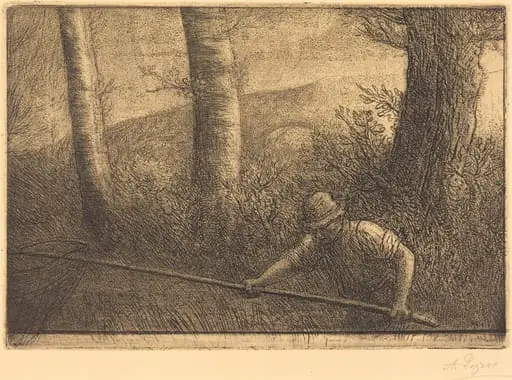 Fisherman with a Hoop-net (La peche a la truble)
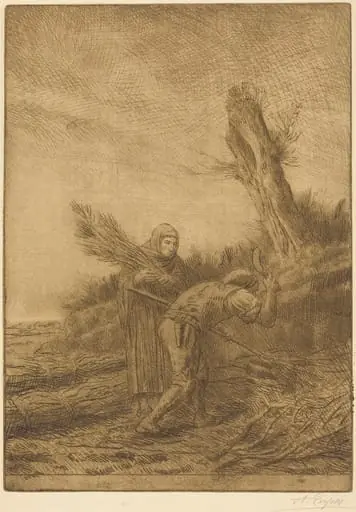 Fagot-makers (Les faiseurs de fagots)
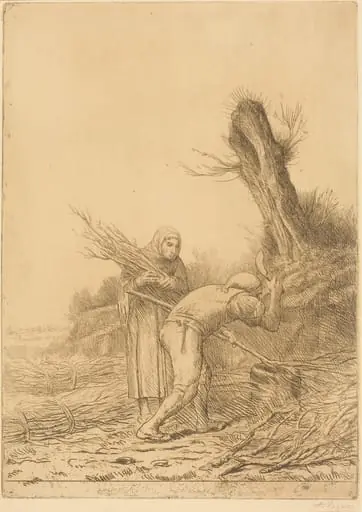 Fagot-makers (Les faiseurs de fagots)
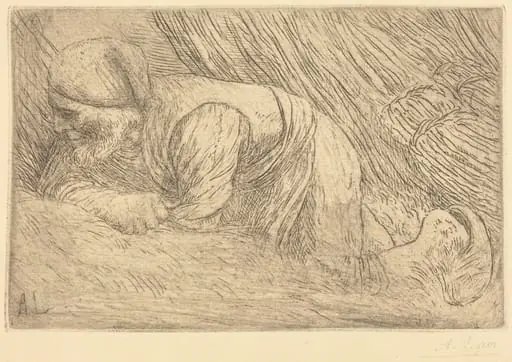 Fagot-gatherer (Le fagotier)
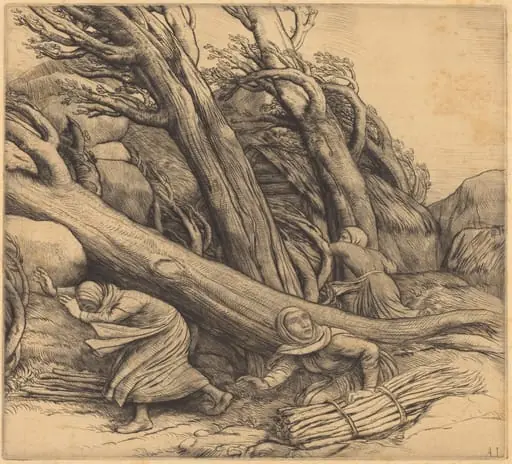 Tornado (Le typhon)
 Winter (1st Plate)