Artwork
Saint Jerome, 2nd plate
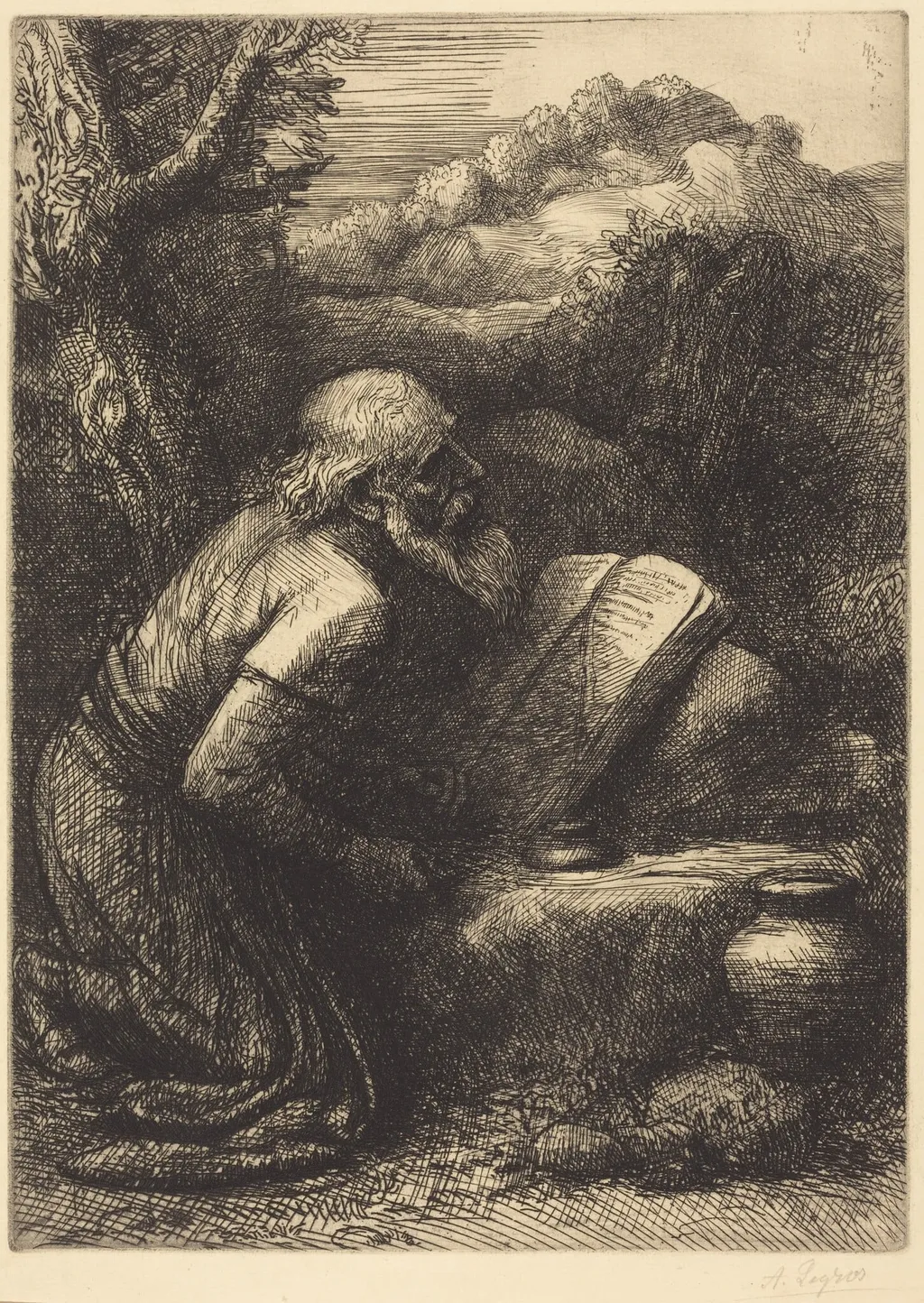
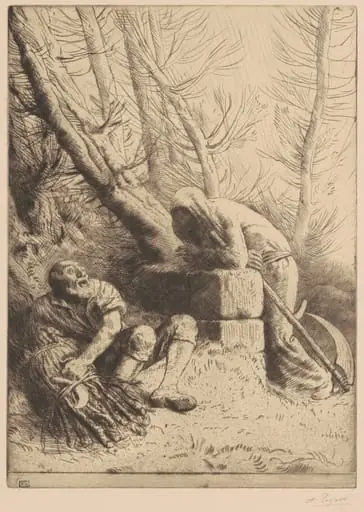
Saint Jerome, 2nd plate is an ink print by the Romanticist artist Alphonse Legros. It dates from 1874 and is held in the collection of the National Gallery of Art.
About this work
Overview
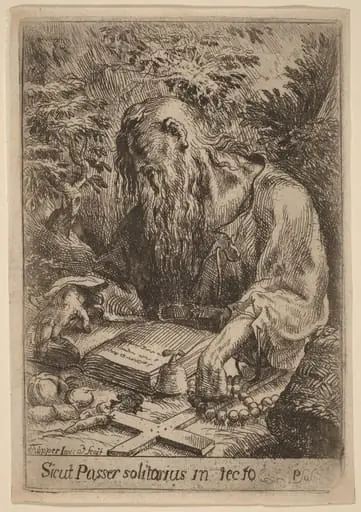
Saint Jerome, 2nd plate, is an 1874 etching by Alphonse Legros, a French-born artist instrumental in the British etching revival. The work belongs to the religious genre, depicting the revered figure of Saint Jerome.
Subject & Meaning
The etching portrays Saint Jerome in contemplation, alone in a forest, intensely engaged with a book. His bowed head and loosely draped robe convey deep devotion and solitude.
Technique & Style
Legros employed fine etching lines to achieve nuanced shadows and light, leveraging the medium's capabilities to create a richly textured, immersive environment of tangled forest surroundings.
History & Provenance
Created in 1874, this etching reflects Legros's influence as both an artist and educator in the British etching revival. Provenance details are not specified.
Context
As part of the religious genre, Saint Jerome, 2nd plate, taps into traditional themes while showcasing the revival of etching techniques in 19th-century Britain, highlighting Legros's dual role as practitioner and promoter.
Legacy
This work contributes to the broader recognition of Legros's impact on the British etching revival, illustrating the medium's potential for expressive, detailed religious subjects. Its style and technique continue to educate those interested in etching.
Artist & collection

Artist
Alphonse Legros (French pronunciation: ; 8 May 1837 – 8 December 1911) was a French, later British, painter, etcher, sculptor, and medallist.

 A Hermit Saint
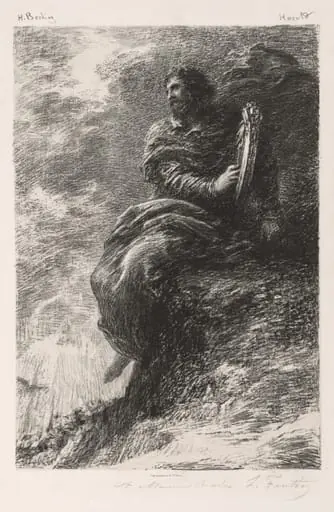 Harolde dans les Montagnes
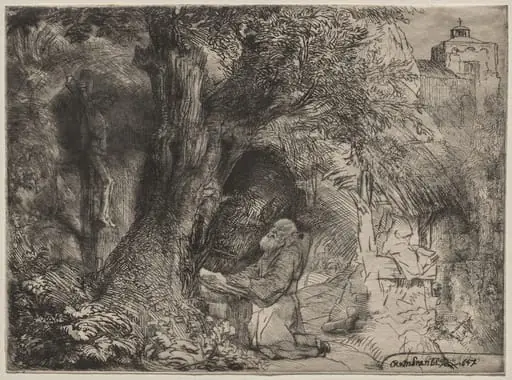 St. Francis Beneath a Tree Praying
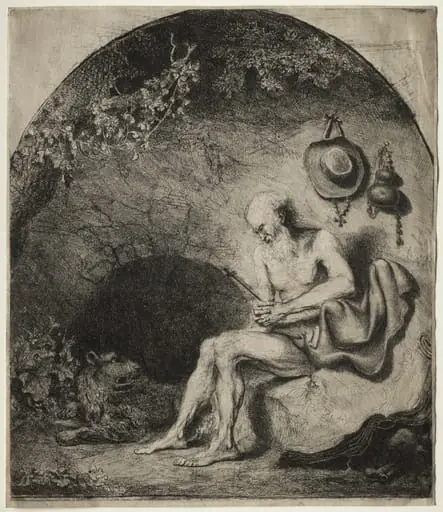 St. Jerome in Penitence
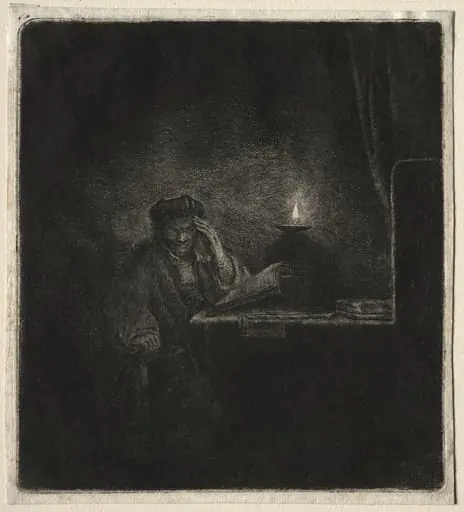 Copy of Student at a Table by Candelight
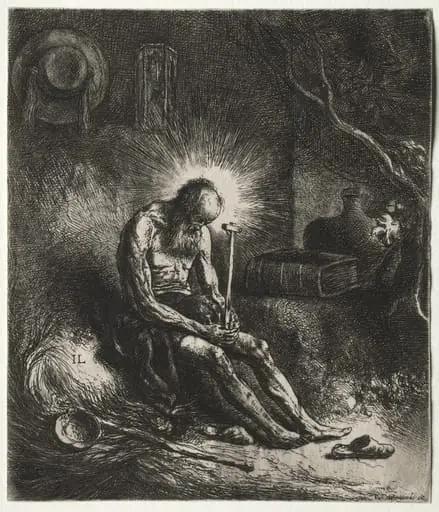 St. Jerome
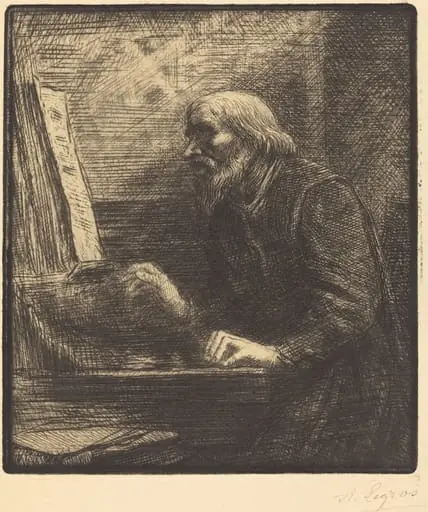 Choirmaster (Le maitre de chapelle)
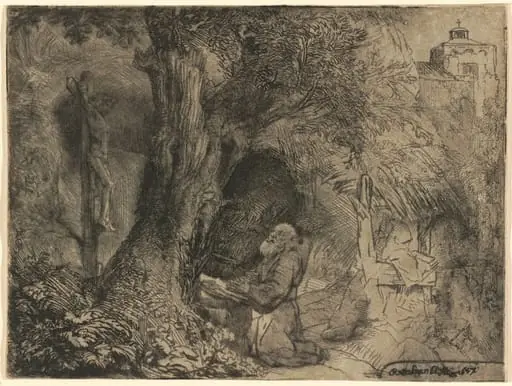 Saint Francis beneath a Tree Praying
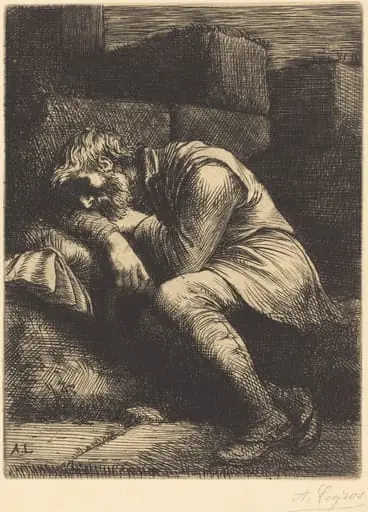 Sleeping Beggar (Mendiant endormi)
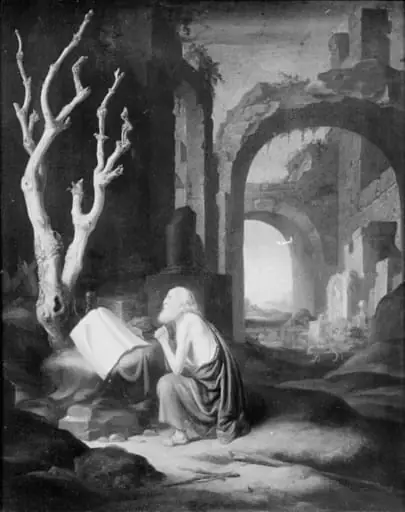 Saint Jerome
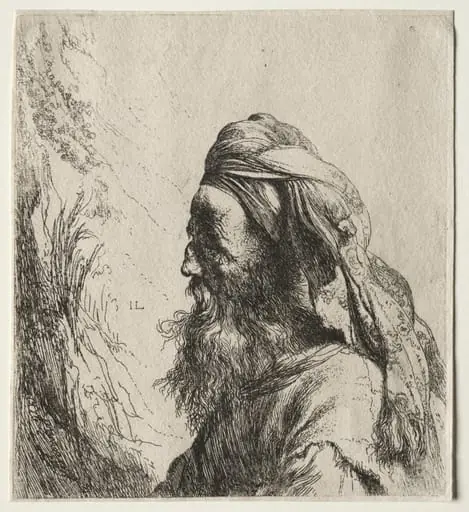 Head of an Oriental
 Death and the Woodcutter, 4th plate (La Mort et le bûcheron)