Artwork
Study from the Antique
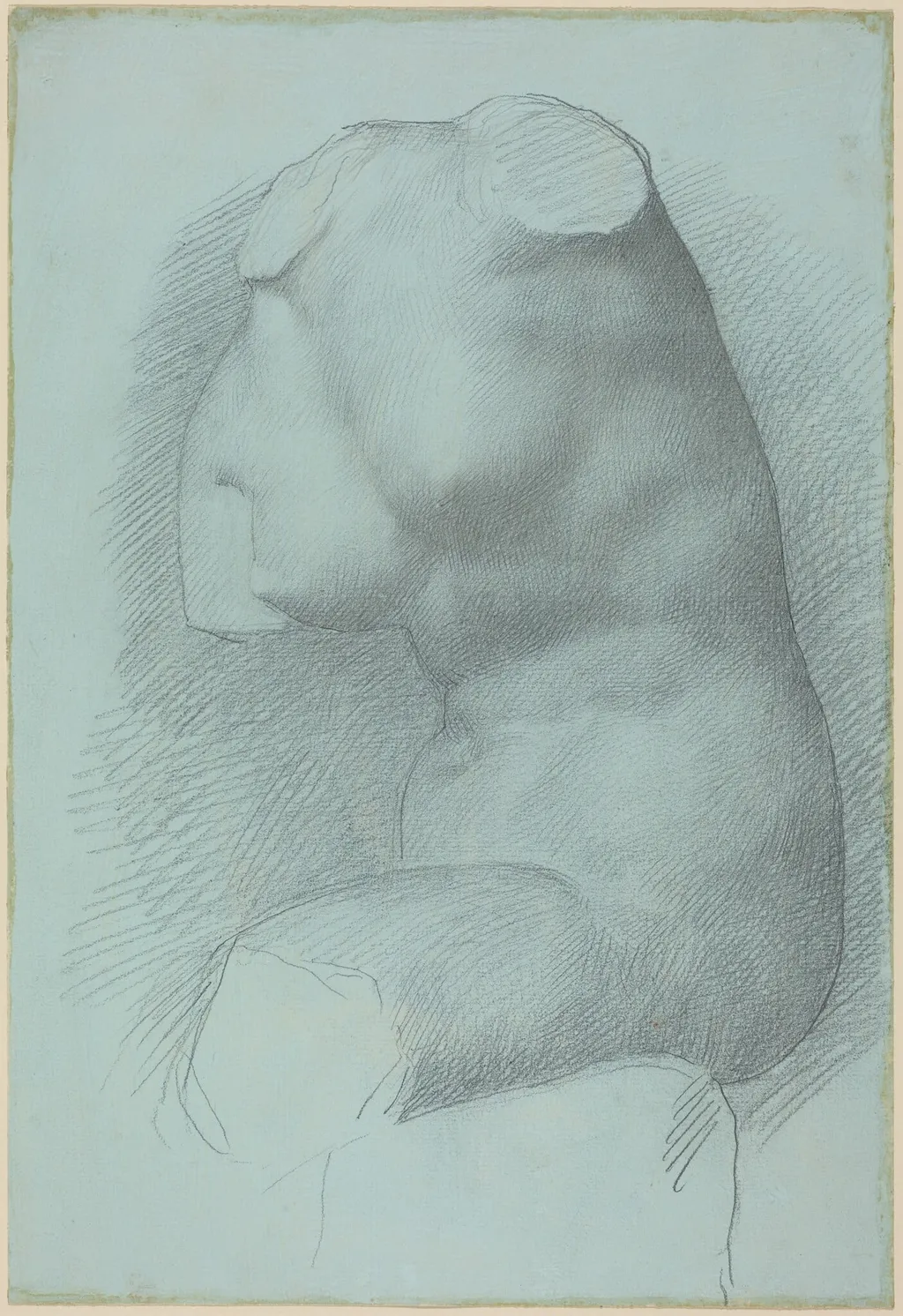
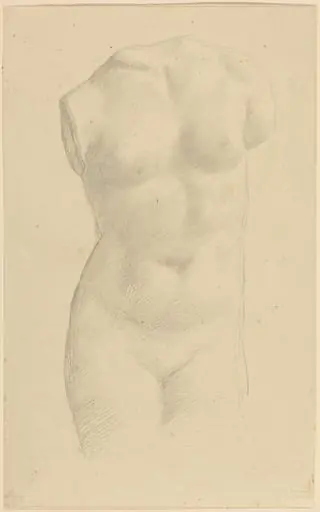
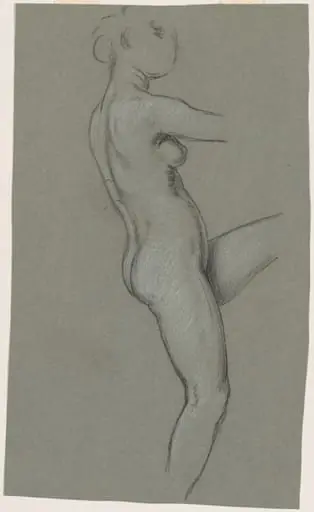
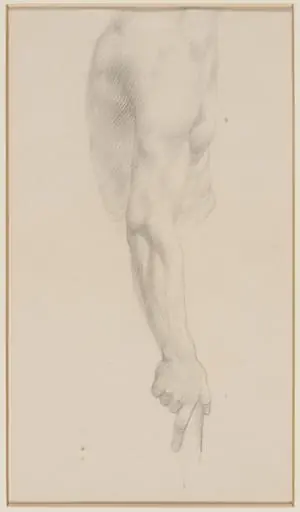
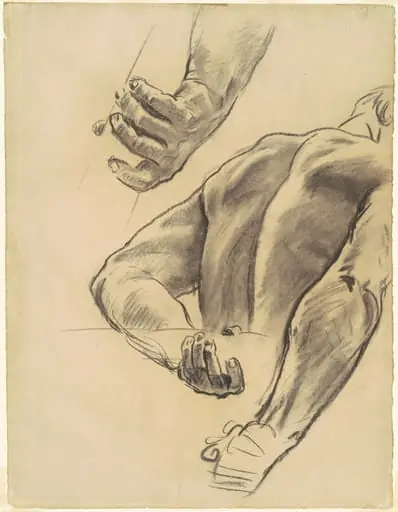
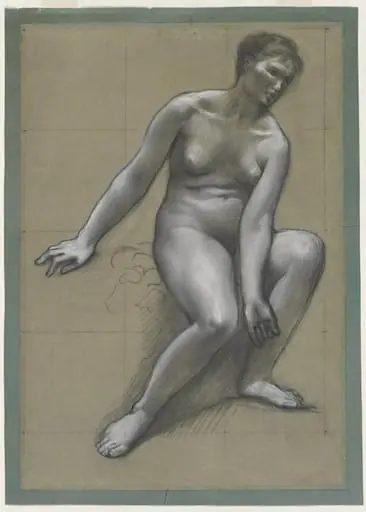
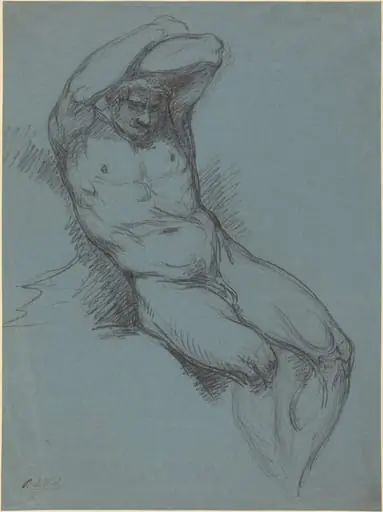
Study from the Antique is a graphite drawing by the Romanticist artist Alphonse Legros. It dates from 1874 and is held in the collection of the National Gallery of Art.
About this work
Overview
This study exemplifies his disciplined approach to form, rooted in the academic tradition of drawing from classical models.
Created in 1874, this graphite drawing on blue prepared paper is the work of Alphonse Legros, a French artist who spent much of his career in Britain after settling there in the 1860s. Naturalized as a British citizen, Legros was active across multiple media, including painting, sculpture, and printmaking. This study exemplifies his disciplined approach to form, rooted in the academic tradition of drawing from classical models.
Subject & Meaning
The drawing is a careful observation of a classical sculpture, likely a torso or limb, rendered with attention to volume and anatomical structure. It reflects the academic practice of studying ancient art to understand idealized human form. Rather than an independent composition, it functions as a pedagogical exercise, revealing Legros’s commitment to foundational training and the enduring influence of antiquity on 19th-century art education.
Technique & Style
Legros employed graphite on a blue-toned paper, a surface chosen for its ability to enhance tonal contrast and suggest depth. The medium allowed for subtle gradations, enabling him to model form with precision while preserving the paper’s underlying hue. His lines are controlled and economical, avoiding ornamentation in favor of clarity and structural accuracy, characteristic of academic drawing methods of the time.
History & Provenance
The drawing was produced during Legros’s tenure at the Slade School of Fine Art in London, where he taught from 1876. Though created in 1874, it likely predates his formal appointment, suggesting his early engagement with British art pedagogy. Its survival indicates it was retained as a teaching aid or personal reference, reflecting the value placed on such studies within institutional art training.
Context
In mid-19th-century Europe, academic art institutions emphasized direct study of classical sculpture as essential training. Legros’s work aligns with this tradition, even as broader artistic movements began to challenge its dominance. His focus on the antique stood in contrast to emerging realist and impressionist tendencies, underscoring his role as a conservator of established methods within a changing artistic landscape.
Legacy
Legros’s drawings from the antique contributed to the transmission of academic principles in British art education. Though later overshadowed by modernist shifts, his emphasis on disciplined observation influenced generations of students at the Slade. This work remains a quiet testament to the enduring role of classical study in shaping artistic technique, even as its cultural authority waned.
Artist & collection

Artist
Alphonse Legros (French pronunciation: ; 8 May 1837 – 8 December 1911) was a French, later British, painter, etcher, sculptor, and medallist.