Artwork
The Artist's Brother-in-Law, Ludwig Hassenpflug, Preparing to Play the Piano
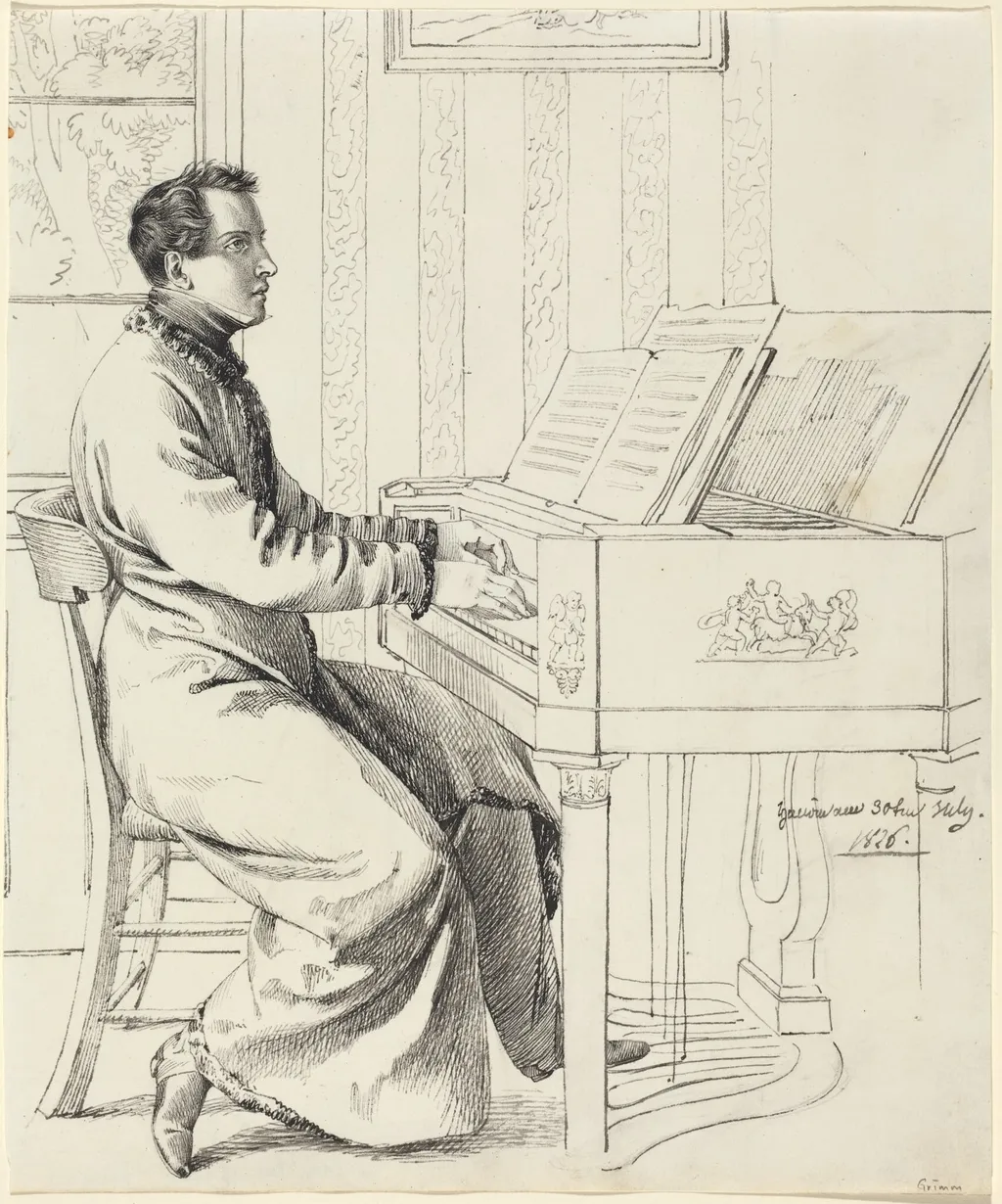
The Artist's Brother-in-Law, Ludwig Hassenpflug, Preparing to Play the Piano is an ink drawing by the Romanticist artist Ludwig Emil Grimm. It dates from 1826 and is held in the collection of the National Gallery of Art.
About this work
Overview
Ludwig Emil Grimm's 1826 drawing, 'The Artist's Brother-in-Law, Ludwig Hassenpflug, Preparing to Play the Piano', captures a moment of anticipatory stillness. Executed in pen and black ink over graphite on wove paper, the work depicts Ludwig Hassenpflug poised to play the piano, conveying a sense of quiet introspection.
Subject & Meaning
The subject, Ludwig Hassenpflug, is shown in a state of pre-performance contemplation, his hands hovering over the keyboard. His attire, including a long coat and boots, suggests a casual yet refined setting. The overall mood implies a personal, perhaps emotional, connection to the music about to be played.
Technique & Style
Grimm's use of pen and black ink over graphite creates nuanced shading and texture, particularly evident in the intricate carvings on the piano's front panel. The simple, understated depiction of the room contrasts with the subject's poised intensity, reflecting a blend of realism and expressive subtlety characteristic of early 19th-century drawing techniques.
History & Provenance
Created in 1826, the drawing is a product of Ludwig Emil Grimm's oeuvre, highlighting his ability to capture intimate moments. Little detailed provenance is provided, but its creation date situates it within Grimm's active period as an artist.
Context
While the work's style does not overtly align with the dramatic expressiveness often associated with Romanticism, its focus on emotional anticipation and personal moment shares a thematic affinity with the movement's emphasis on individual feeling and introspection.
Legacy
The drawing's legacy is not broadly highlighted in the provided information, suggesting it may be valued more for its personal and historical significance within Grimm's body of work rather than as a widely recognized landmark of art historical innovation.
Artist & collection


 Paganini moderne ...
 The Bass Player (Le Jouer de Contre-Basse)
 The Bass Player (Le joueur de contre-basse)
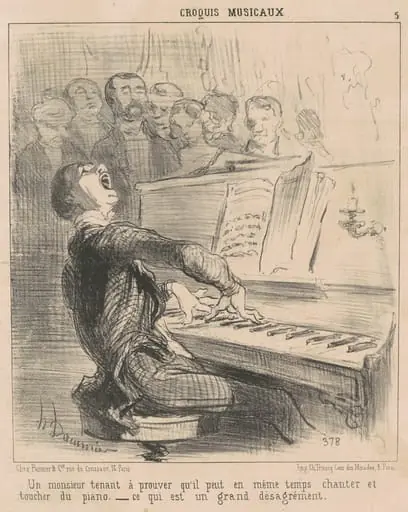 Un monsieur tenant a prouver qu'il peut ...
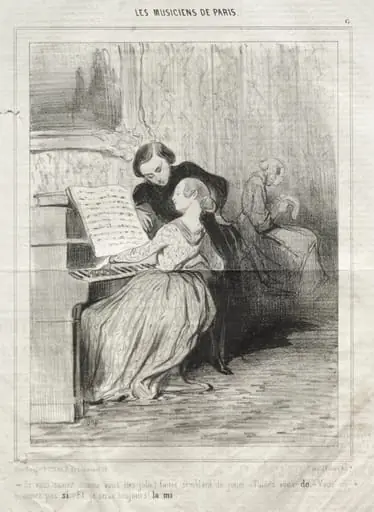 If you knew how pretty you are!
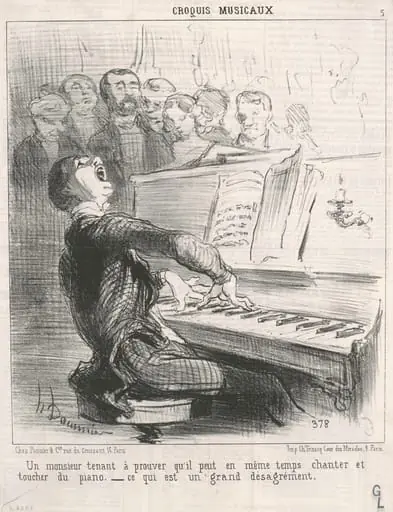 Un Monsieur tenant à prouver qu'il peut...
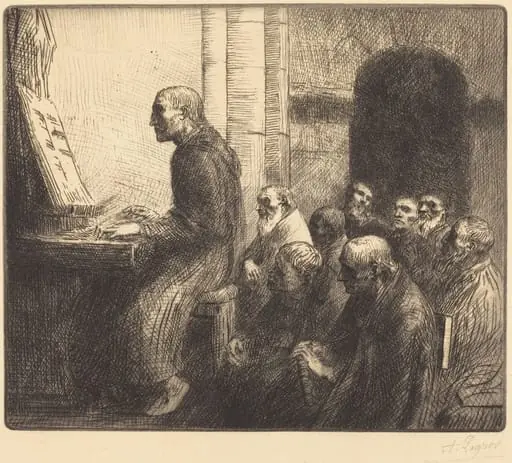 Monk Playing the Organ in Church (Moine jouant de l'orgue a l'eglise)
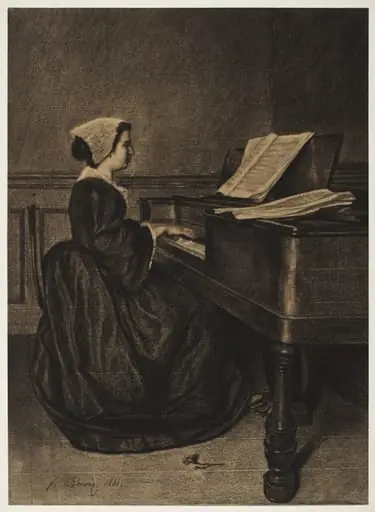 Woman at the Spinet
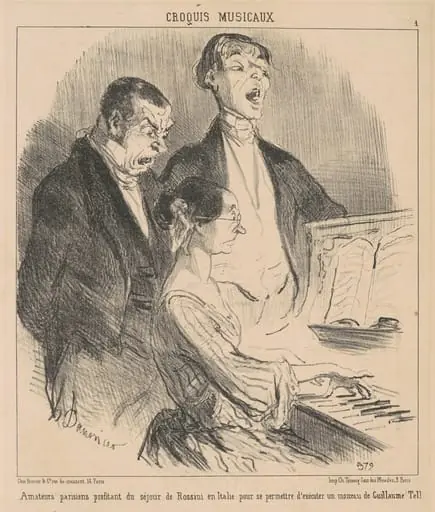 Amateurs parisiens profitant du séjour de Rossini
 H Beard Print Collection