Artwork
The Tree of Salvation (L'arbre de salut)
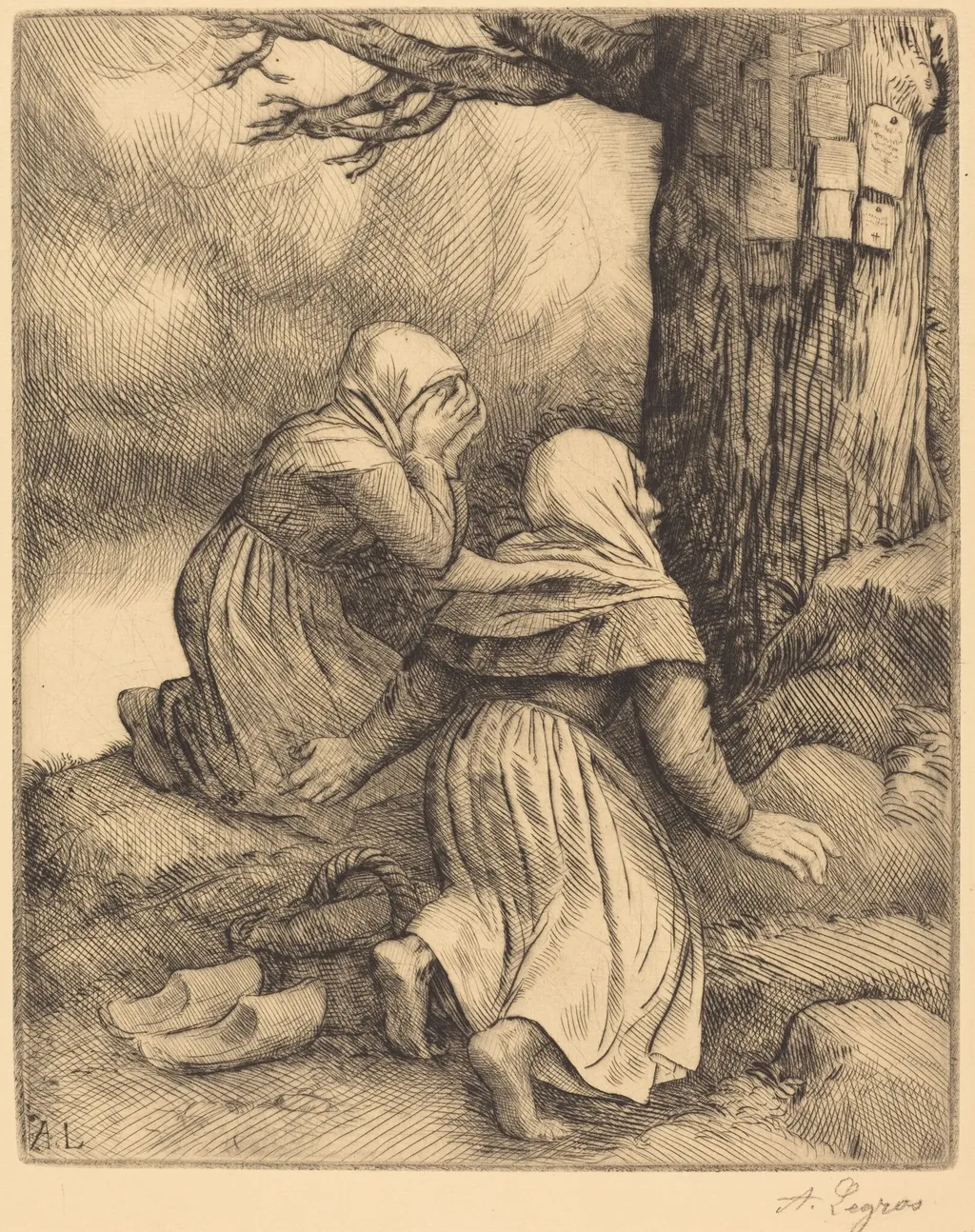
The Tree of Salvation (L'arbre de salut) is an ink print by the Romanticist artist Alphonse Legros. It dates from 1874 and is held in the collection of the National Gallery of Art.
About this work
Overview
Alphonse Legros produced the print *The Tree of Salvation* in 1874. Executed on cream‑coloured paper, the work combines drypoint with possible etching, resulting in a stark, monochrome image that emphasizes line and texture.
Subject & Meaning
The composition depicts two figures seated beneath a gnarled, twisted tree. Their garments are loosely draped and heavily folded, suggesting a timeless, perhaps impoverished condition. One figure rests a head on a hand, while the other leans forward, almost touching the ground, creating a sense of quiet contemplation or resignation.
Technique & Style
Legros employed drypoint’s characteristic incised lines, producing sharp, scratchy marks that render the bark and fabric with a tactile quality. The potential addition of etching would have allowed for deeper tonal variations, but the dominant effect remains the stark, linear rendering typical of mid‑nineteenth‑century printmaking.
History & Provenance
Born in France, Legros moved to London in 1863, where he became a central figure in the revival of British etching. *The Tree of Salvation* dates from his early London period, reflecting his active engagement with print techniques during that decade.
Context
The print emerges at a time when British artists were re‑examining the possibilities of intaglio processes. Legros’s work contributed to a broader resurgence of interest in drypoint and etching, aligning him with contemporaries who sought to elevate printmaking beyond reproductive functions.
Artist & collection

Artist
Alphonse Legros (French pronunciation: ; 8 May 1837 – 8 December 1911) was a French, later British, painter, etcher, sculptor, and medallist.

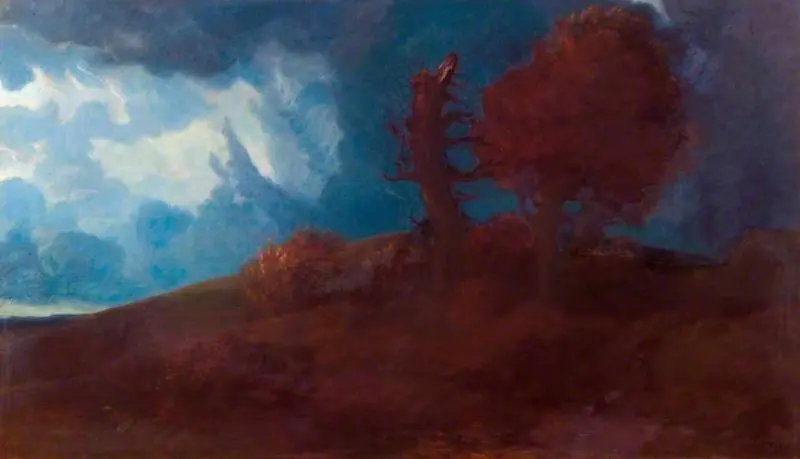
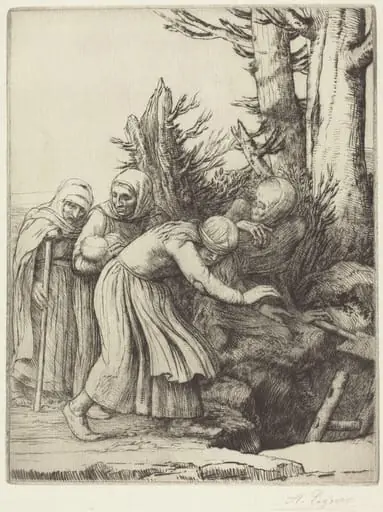 The Triumph of Death: Death Prepares a Dwelling for the Homeless (Le triomphe de la Mort: Lamort a prepare une demeure a des abandonnees)
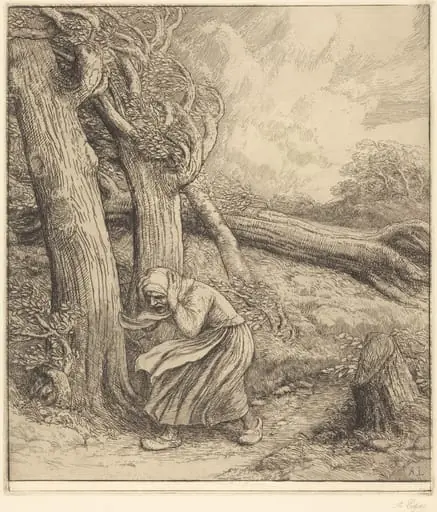 Hurricane (L'ouragan)
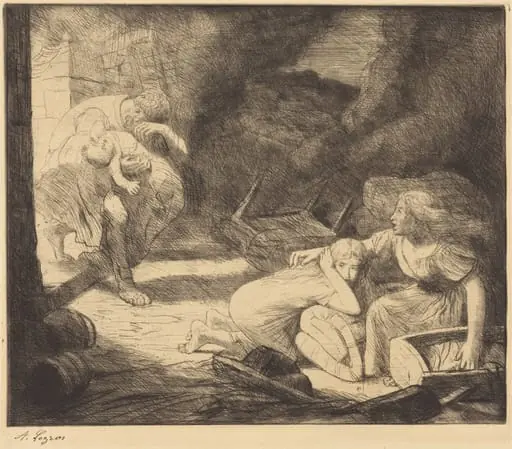 The Fire, 2nd plate (L'incendie)
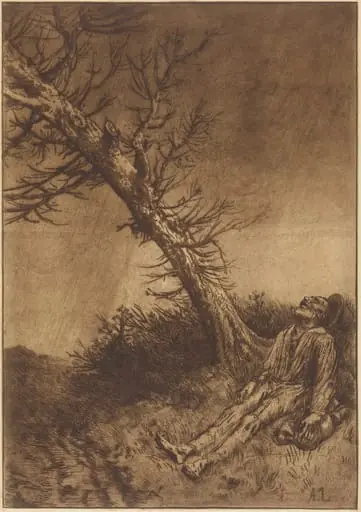 Death of the Vagabond (La mort du vagabond)
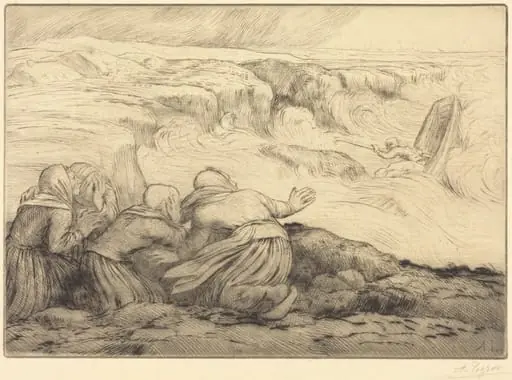 Small Boat in Peril (Barque en peril)
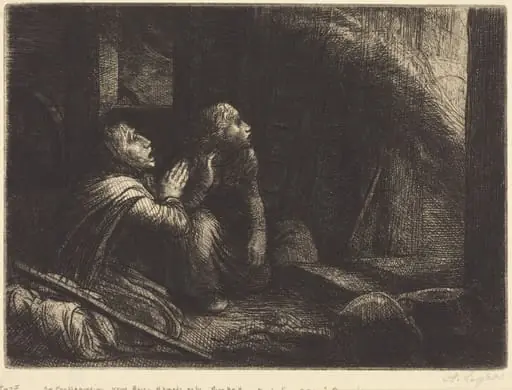 Fire, 3rd plate (L'incendie)
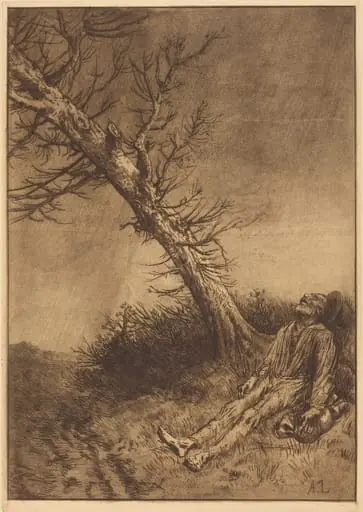 Death of the Vagabond (La mort du vagabond)
 Orphans (Les orphelins (?))
 The Fire, 2nd plate (L'incendie)
 Monks Chopping Wood (Les moines bucherons)