Artwork
The Fire, 2nd plate (L'incendie)
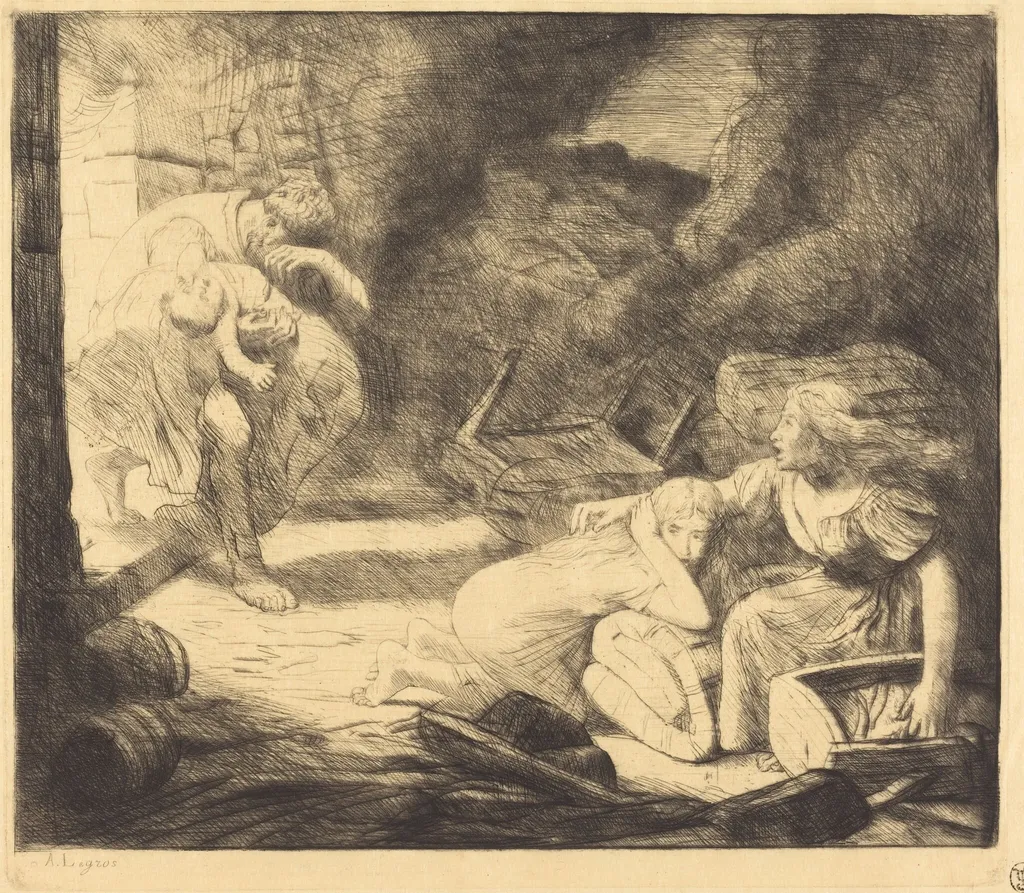
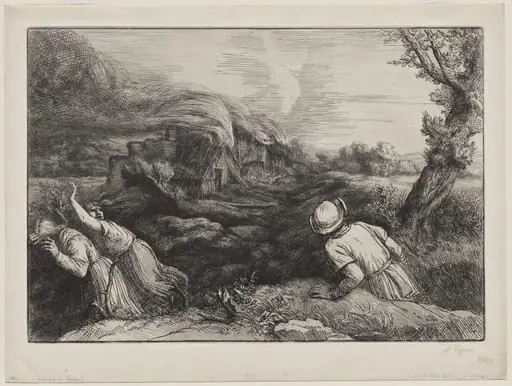
The Fire, 2nd plate (L'incendie) is an ink print by the Romanticist artist Alphonse Legros. It dates from 1874 and is held in the collection of the National Gallery of Art.
About this work
Overview
Known for his versatility across media, Legros contributed significantly to the revival of etching as a serious artistic practice in Britain.
Created in 1874, *The Fire, 2nd plate (L'incendie)* is an etching by Alphonse Legros, a French artist who relocated to London in 1863. Known for his versatility across media, Legros contributed significantly to the revival of etching as a serious artistic practice in Britain. This print captures a moment of urban crisis, rendered with immediacy and emotional weight through direct engraving on metal.
Subject & Meaning
The scene portrays a violent urban fire, with figures in the foreground scrambling to escape or rescue belongings and children. The chaos is unidealized—no heroism is staged, only survival. The composition emphasizes human vulnerability amid destruction, reflecting Legros’s interest in contemporary life and the raw realities of industrial-era cities, where such disasters were increasingly common.
Technique & Style
Legros employed direct etching, scratching lines into a metal plate with a needle rather than relying on tonal washes. The resulting marks are jagged and urgent, mimicking the instability of the moment. The absence of smooth contours or refined detail heightens the sense of panic. This method prioritizes spontaneity over polish, aligning the technique with the emotional intensity of the subject.
History & Provenance
Produced during Legros’s early years in London, the print emerged from his active participation in the British printmaking revival. It was likely part of a series exploring urban emergencies, though few records detail its early ownership. The work reflects Legros’s transition from French academic training to a more personal, observational approach influenced by his new environment.
Context
In the 1870s, British cities faced growing risks from overcrowded housing and inadequate fire safety. Legros’s depiction aligns with a broader artistic interest in social realism, paralleling literary and journalistic accounts of urban peril. Unlike romanticized disasters, this image avoids spectacle, focusing instead on the disoriented movement of ordinary people caught in sudden catastrophe.
Legacy
The print stands as an example of Legros’s influence on British print culture, demonstrating how etching could convey psychological depth without narrative embellishment. Its raw aesthetic inspired later artists seeking authenticity in graphic media. Though not widely reproduced, it remains a significant artifact in the history of 19th-century printmaking and social observation.
Artist & collection

Artist
Alphonse Legros (French pronunciation: ; 8 May 1837 – 8 December 1911) was a French, later British, painter, etcher, sculptor, and medallist.

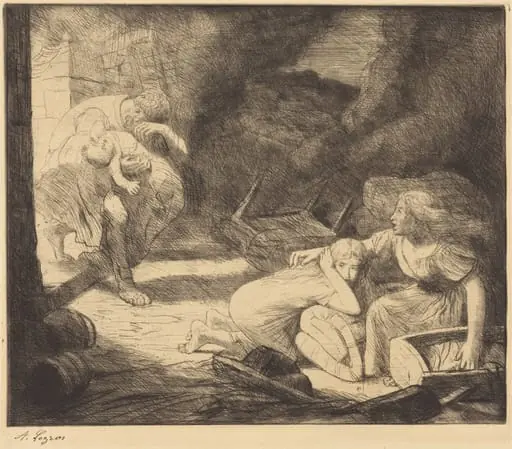 The Fire, 2nd plate (L'incendie)
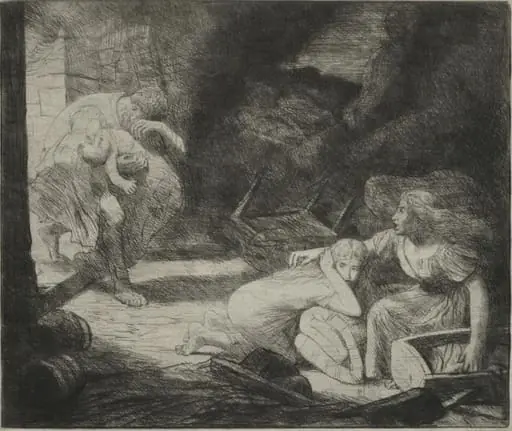 L'Incendie
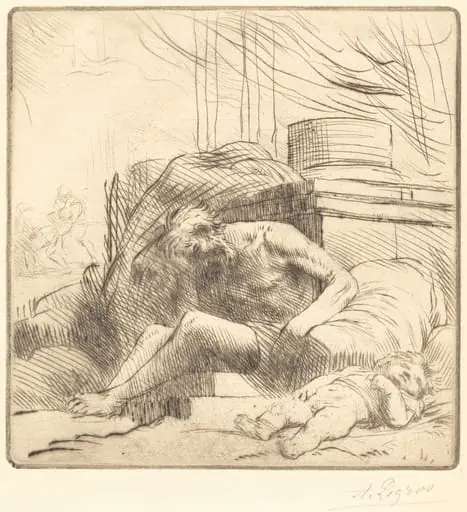 Victim of a Fire (Victime d'un incendie)
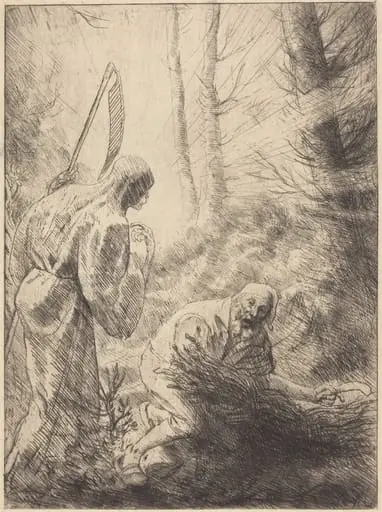 Death and the Woodcutter, 2nd plate (La Mort de le bucheron)
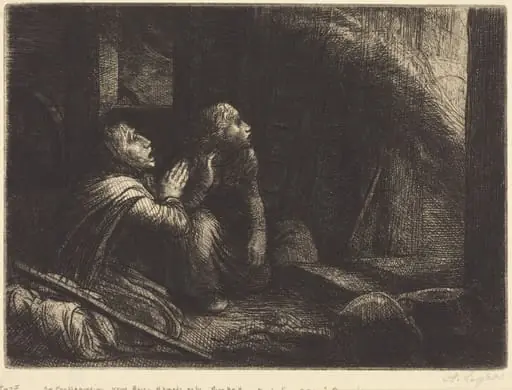 Fire, 3rd plate (L'incendie)
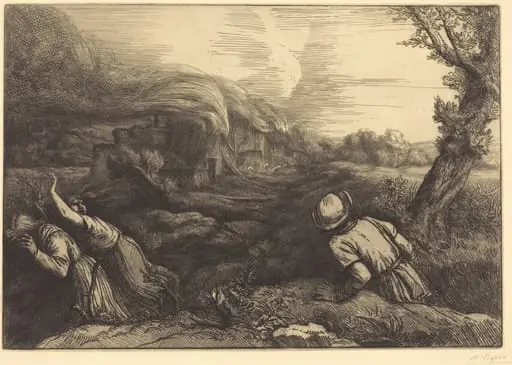 Fire in the Hamlet (L'incendie du hameau)
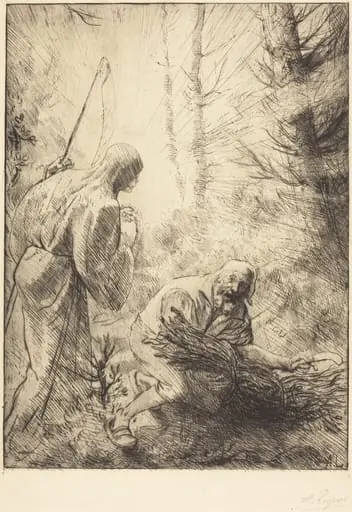 Death and the Woodcutter, 2nd plate (La mort et le bucheron)
 The Village in Flames (L'Incendie du Hameau)