Artwork
Willows (Les saules)
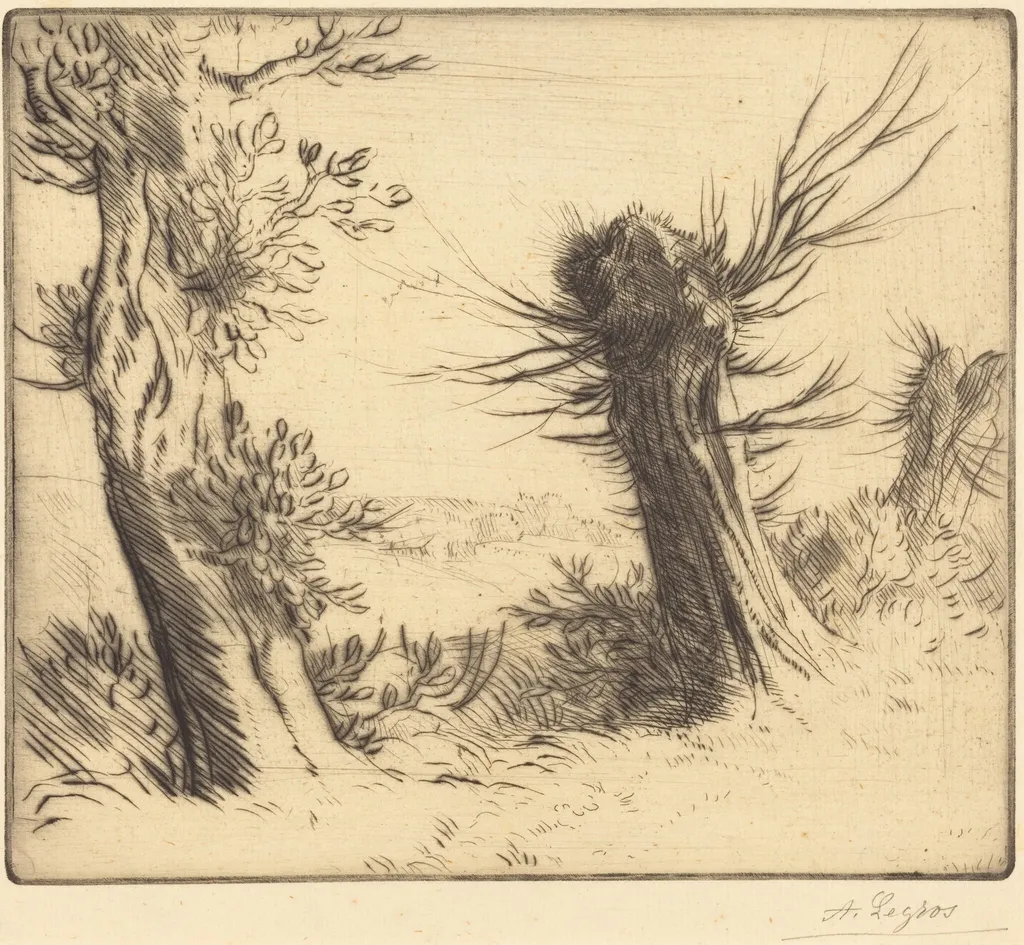
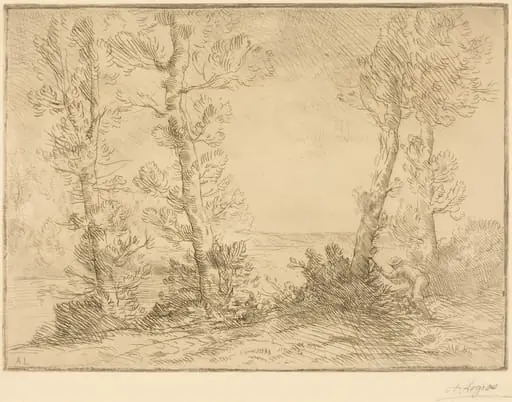
Willows (Les saules) is an ink print by the Romanticist artist Alphonse Legros. It dates from 1874 and is held in the collection of the National Gallery of Art.
About this work
Overview
Created in 1874, *Willows (Les saules)* is a drypoint print by Alphonse Legros, a French artist who moved to London in 1863 and later became a British citizen.
Created in 1874, *Willows (Les saules)* is a drypoint print by Alphonse Legros, a French artist who moved to London in 1863 and later became a British citizen. The work belongs to a period when Legros was deeply engaged in printmaking, contributing significantly to the revival of etching in Britain. Unlike traditional engraving, drypoint involves incising lines directly into a metal plate, producing a distinctive texture that retains ink along roughened edges.
Subject & Meaning
The image captures a cluster of bare willow branches in a sparse, windswept composition. The tangled limbs, rendered with urgent, irregular lines, suggest movement and resilience against an open, light-filled space. No figures or narrative elements are present; the focus remains on the plant’s organic form, evoking quiet endurance and the subtle rhythms of nature without symbolic embellishment.
Technique & Style
Legros employed drypoint, a method where a sharp needle carves lines directly into a copper plate, raising a burr that holds ink and creates soft, blurred edges. The resulting marks are uneven and tactile, mimicking the roughness of twigs and the fragility of winter foliage. The scratchy, spontaneous quality of the lines conveys immediacy, as if the artist worked quickly under natural light, capturing the scene in a single sustained gesture.
History & Provenance
Produced during Legros’s tenure at the Slade School of Fine Art in London, the print reflects his influence on British printmaking pedagogy. Though the exact early ownership history is undocumented, the work aligns with his broader output of intimate, nature-focused prints from the 1870s. It was likely circulated among artists and collectors interested in the revival of handcrafted print techniques during the Victorian era.
Context
In the 1870s, British art saw renewed interest in etching as a serious medium, moving away from reproductive prints toward original, expressive works. Legros, trained in France but active in London, bridged continental precision with British sensibilities. His focus on natural subjects like willows reflected broader European trends toward direct observation, contrasting with the idealized landscapes common in academic painting.
Legacy
Legros’s *Willows* exemplifies his role in elevating drypoint as a vehicle for personal expression. His technical rigor and emphasis on direct drawing influenced a generation of British printmakers. Though less widely known today, the work remains a quiet testament to the potential of printmaking to convey natural form with emotional restraint and formal clarity.
Artist & collection

Artist
Alphonse Legros (French pronunciation: ; 8 May 1837 – 8 December 1911) was a French, later British, painter, etcher, sculptor, and medallist.

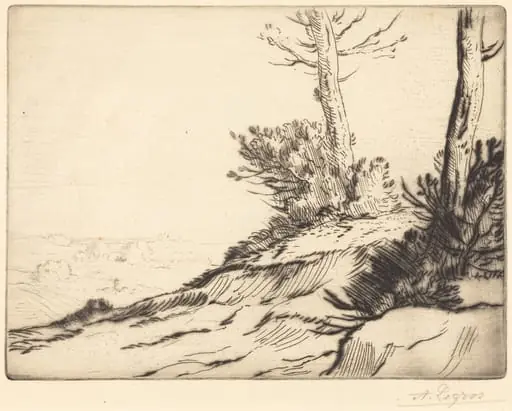 Hill with Bushes (La butte aux brousailles)
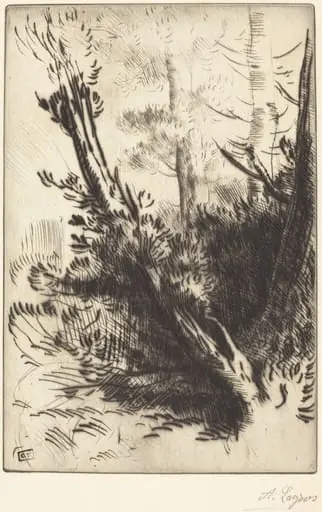 In the Woods (Dans les bois)
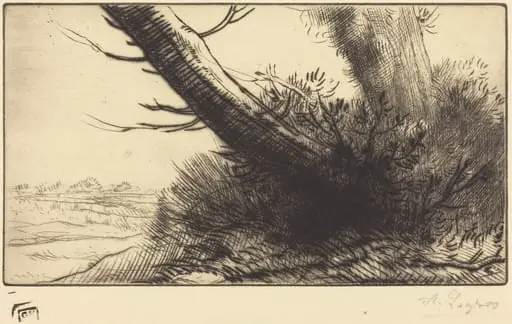 Corner of a Path (Au coin d'un chemin)
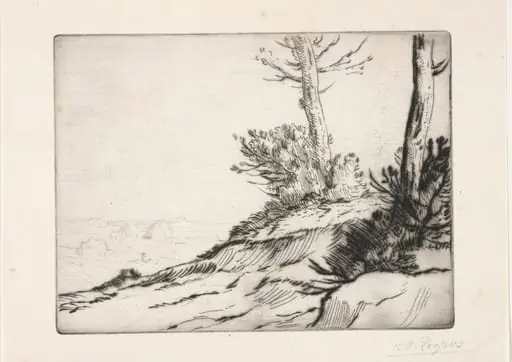 La butte aux broussailles
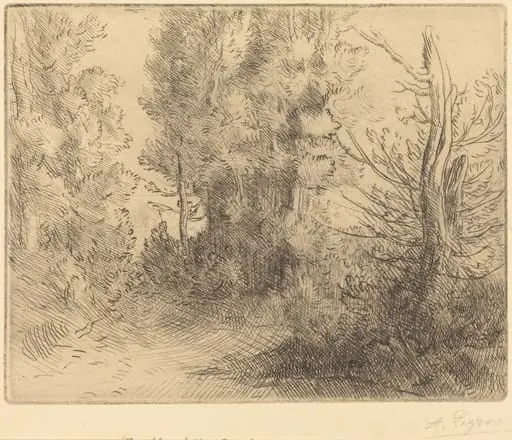 Landscape: Near Chailleux (Paysage: Pres Chailleux)
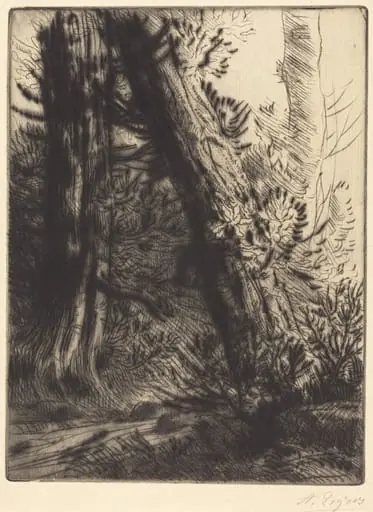 Edge of a Brook (Bord de ruisseau)
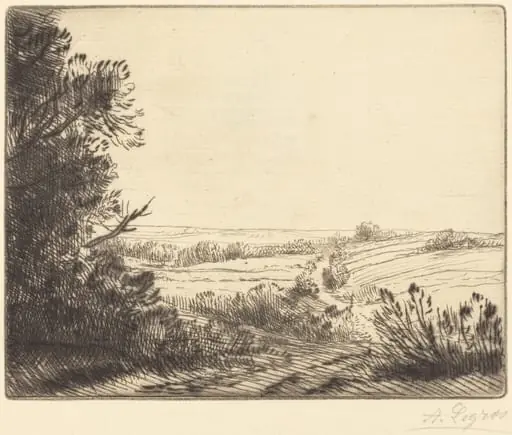 Landscape: Road to Horville (Paysage: Chemin d'Horville)
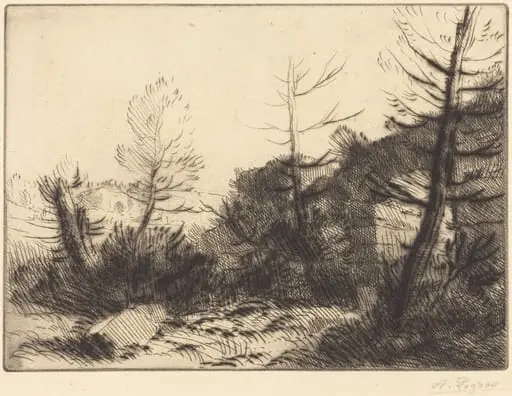 Roman Ruin (Ruine romaine)
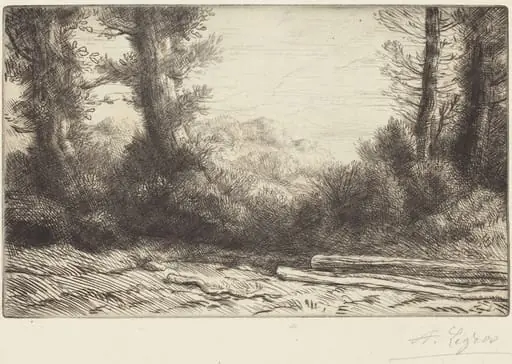 Edge of a Wood (Lisiere de bois)
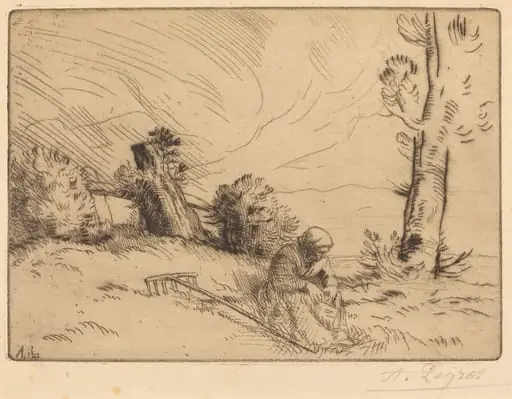 Peasant Woman Seated near a Hedge (Paysanne assise pres d'une haie)
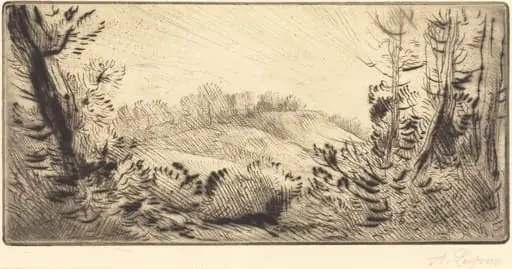 Small Hill (Le coteau)
 Salmon Fisher (Le pecheur du saumon)