Artwork
Death and the Woodcutter, 2nd plate (Le mort et le bucheron)
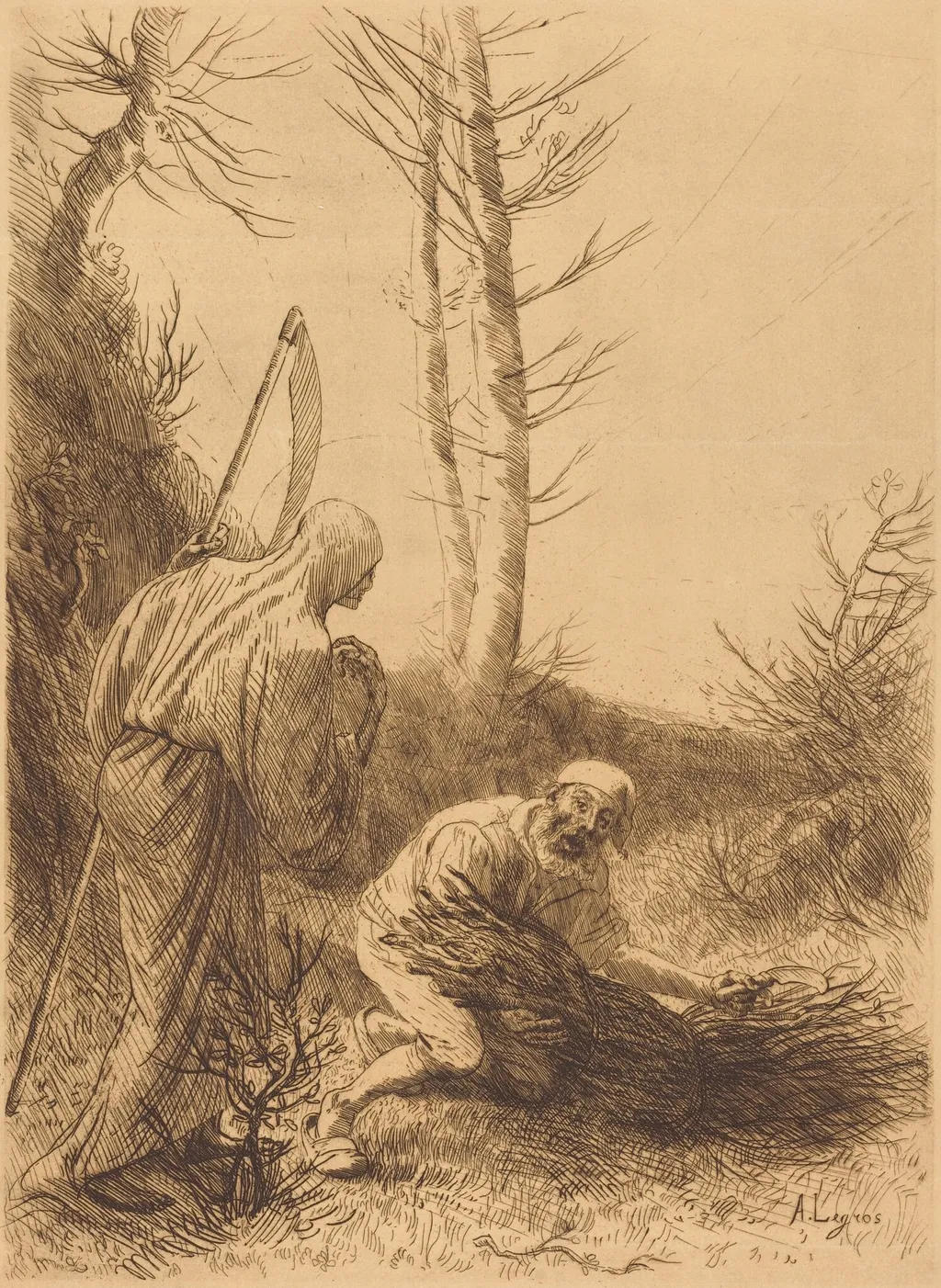
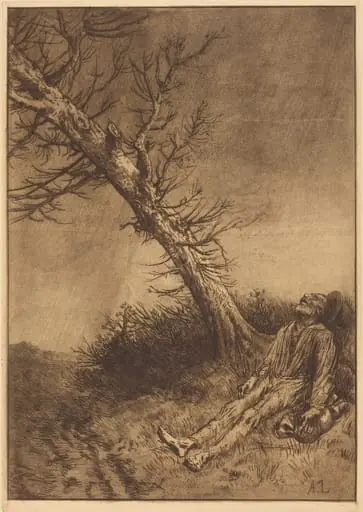
Death and the Woodcutter, 2nd plate (Le mort et le bucheron) is an ink print by the Romanticist artist Alphonse Legros. It dates from 1874 and is held in the collection of the National Gallery of Art. Created in 1874, *Death and the Woodcutter, 2nd plate* is an etching executed in bistre, a brownish tone typical of monochrome prints.
About this work
Overview
The image presents a stark, allegorical confrontation between a skeletal figure and a solitary woodcutter set against a barren landscape.
Created in 1874, *Death and the Woodcutter, 2nd plate* is an etching executed in bistre, a brownish tone typical of monochrome prints. The French‑born artist Alphonse Legros produced the work after settling in London, where he became a naturalized British citizen. The image presents a stark, allegorical confrontation between a skeletal figure and a solitary woodcutter set against a barren landscape.
Subject & Meaning
The composition centers on a cloaked, skeletal personification of Death, scythe in hand, looming over a woodcutter who appears weakened or wounded. The woodcutter looks upward, his posture suggesting distress or resignation. The stark contrast between the looming figure and the desolate setting amplifies themes of mortality, the inevitability of death, and the vulnerability of human labor.
Technique & Style
Legros employed traditional intaglio methods, incising lines into a copper plate and printing them with bistre ink to achieve rich, dark tones. The limited palette emphasizes chiaroscuro, enhancing the dramatic mood. The work reflects Romantic sensibilities through its emotional intensity, dramatic lighting, and focus on a solitary figure confronting an elemental force.
History & Provenance
Alphonse Legros moved to London in 1863 and quickly became a pivotal figure in the British etching revival, teaching at the Slade School of Fine Art. This print was produced during his most active period of printmaking in the 1870s. Its early exhibition history and subsequent ownership remain documented within collections of 19th‑century British prints.
Context
The piece belongs to a broader 19th‑century fascination with allegorical representations of death, a motif common in Romantic literature and visual art. Legros’s interest in the medium aligns with a resurgence of etching in Britain, where artists sought to reclaim the craft’s expressive possibilities after a period of decline.
Artist & collection

Artist
Alphonse Legros (French pronunciation: ; 8 May 1837 – 8 December 1911) was a French, later British, painter, etcher, sculptor, and medallist.

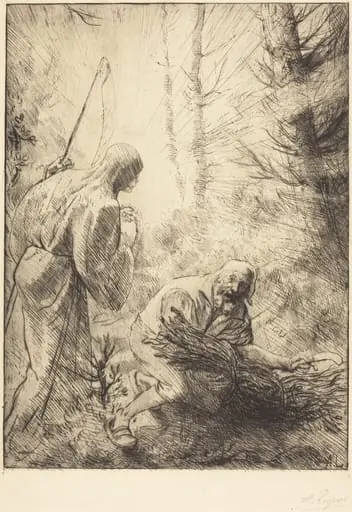 Death and the Woodcutter, 2nd plate (La mort et le bucheron)
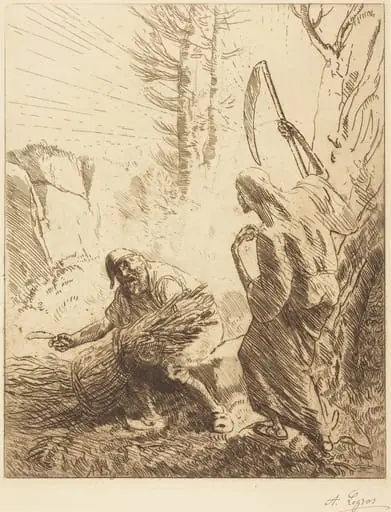 Death and the Woodcutter, 3rd plate (La mort et le bucheron)
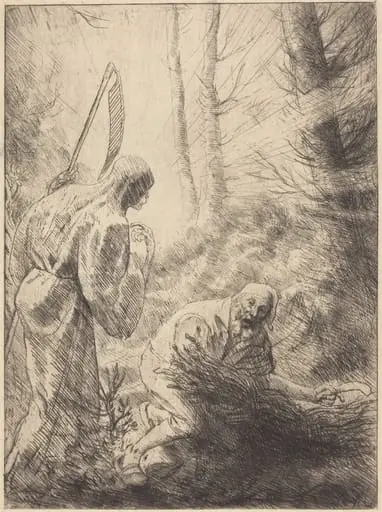 Death and the Woodcutter, 2nd plate (La Mort de le bucheron)
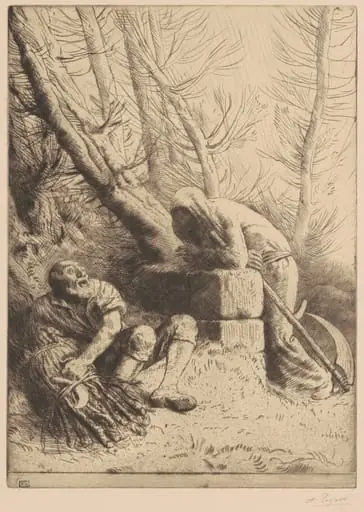 Death and the Woodcutter, 4th plate (La Mort et le bûcheron)
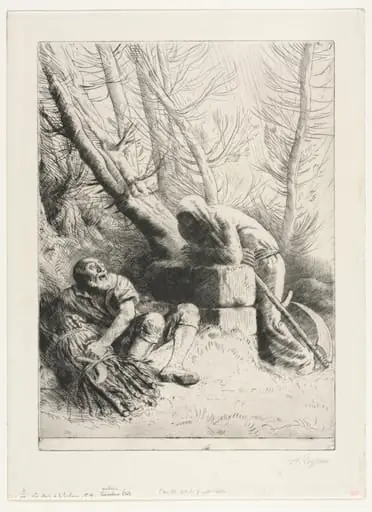 Death and the Woodcutter
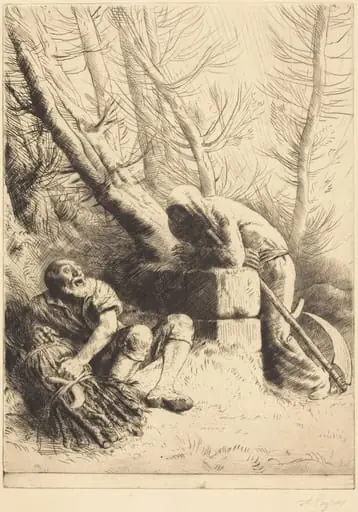 Death and the Woodcutter, 4th plate (La mort et le bucheron)
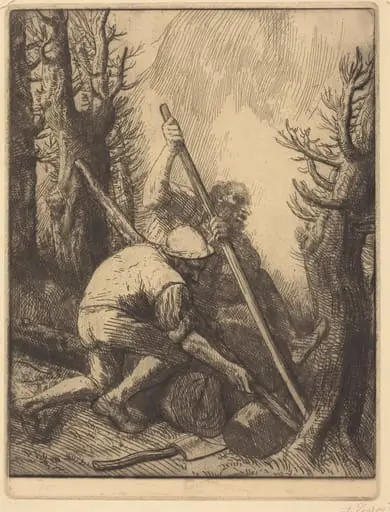 Woodcutters, 3rd plate (Les bucherons)
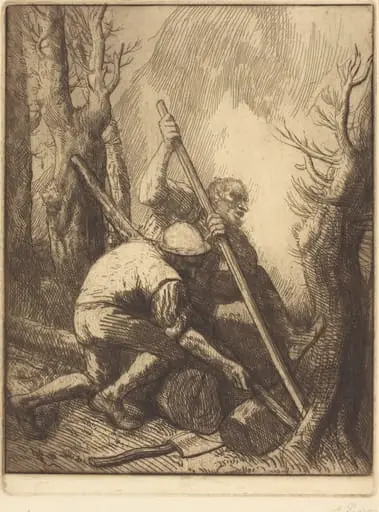 Woodcutters, 3rd plate (Les bucherons)
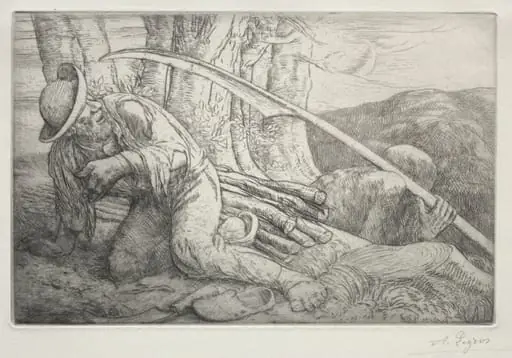 La Mort et le Bûcheron (5th Plate)
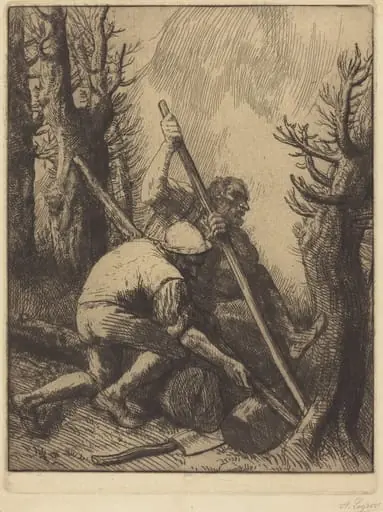 Woodcutters, 3rd plate (Les bucherons)
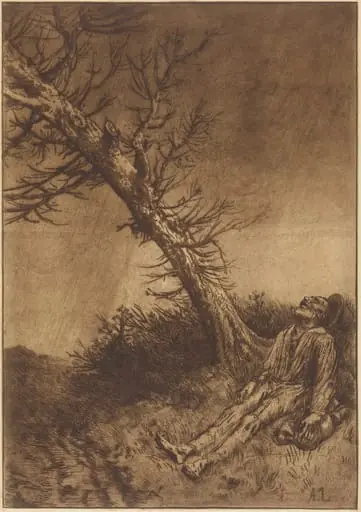 Death of the Vagabond (La mort du vagabond)
 Death of the Vagabond (La mort du vagabond)