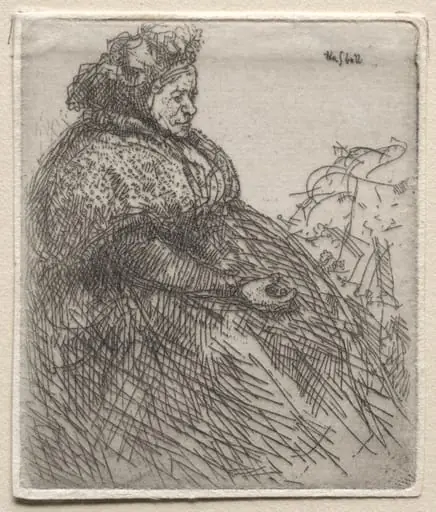
Artwork
Peasant Woman with Closed Eyes
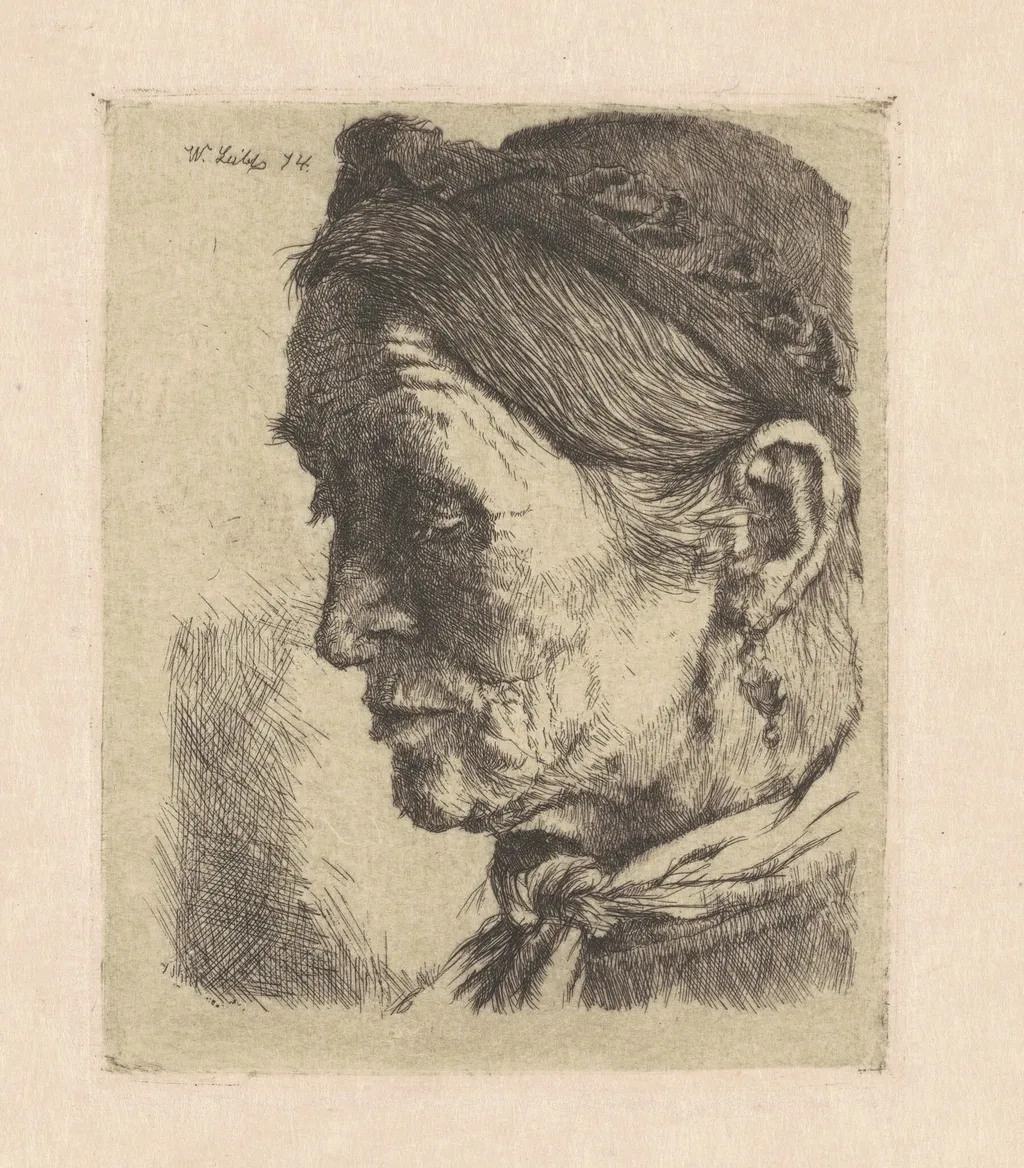
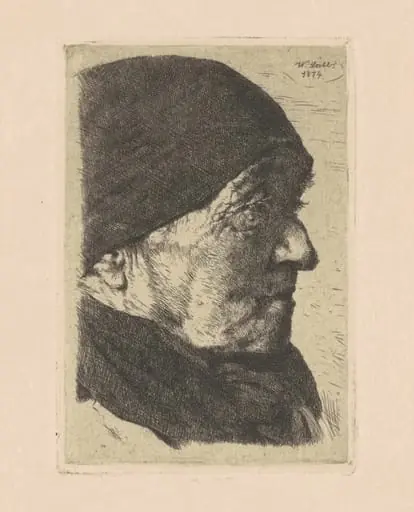
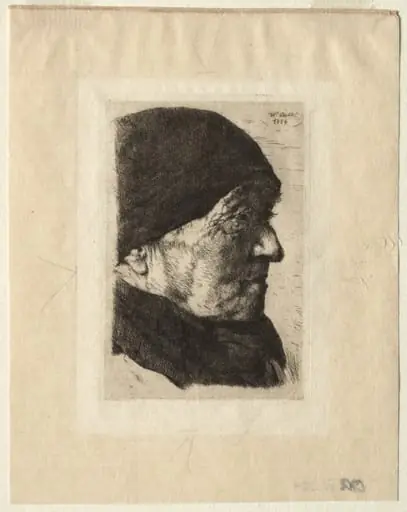
Peasant Woman with Closed Eyes is an ink print by the Impressionist artist Wilhelm Leibl. It dates from 1874 and is held in the collection of the National Gallery of Art.
About this work
Overview
The National Gallery of Art in Washington holds the print, which exemplifies Leibl’s commitment to portraying ordinary rural life without embellishment.
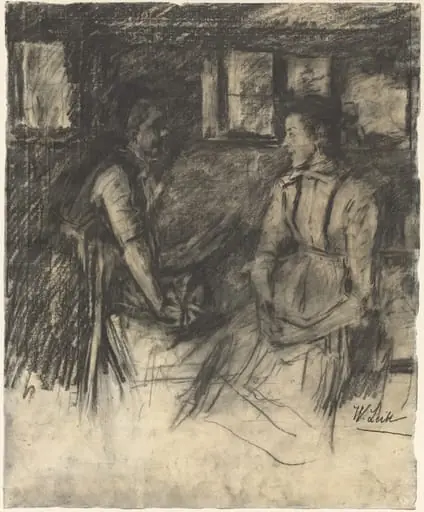
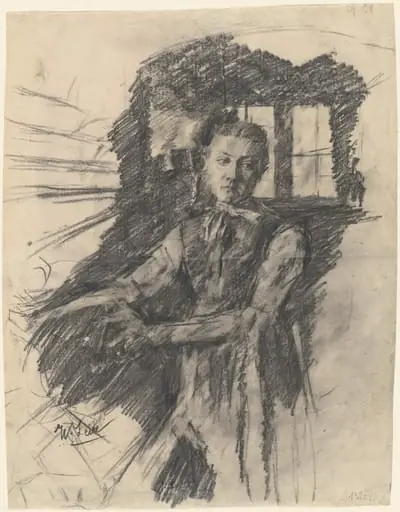
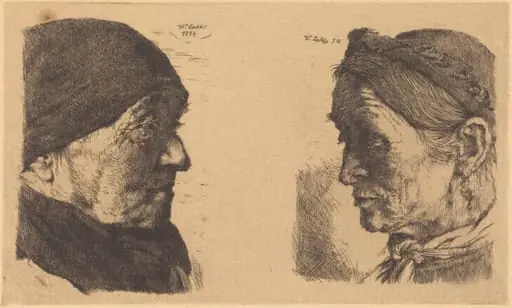
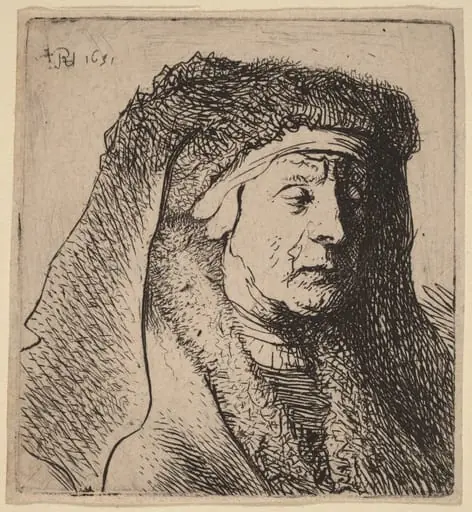
Created in 1874, this etching by Wilhelm Leibl depicts a peasant woman in quiet repose. Rendered in fine dark lines on a pale ground, the work captures her profile with restrained precision. The National Gallery of Art in Washington holds the print, which exemplifies Leibl’s commitment to portraying ordinary rural life without embellishment. The image’s simplicity and focus on a single figure reflect his interest in authentic human presence.
Subject & Meaning
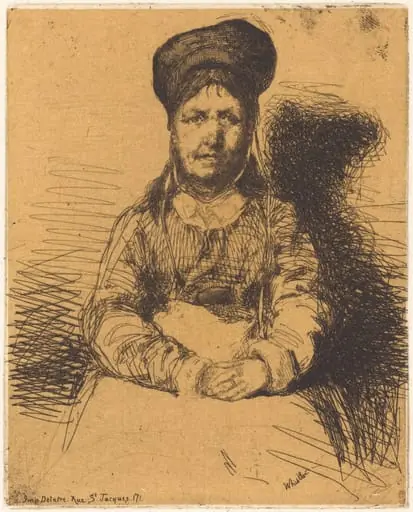
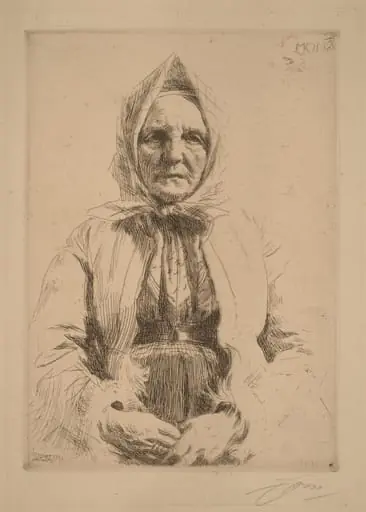
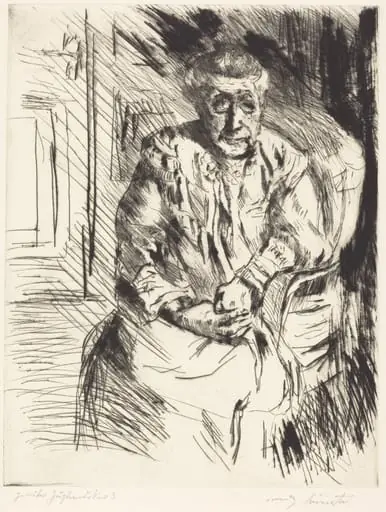
The woman, her eyes closed, appears absorbed in inner thought or rest. Her aged features—wrinkled skin, pulled-back hair, and knotted scarf—suggest a life of labor and endurance. Leibl avoids sentimentality; her dignity emerges not from idealization but from unvarnished observation. The closed eyes invite reflection, transforming a moment of stillness into a quiet meditation on solitude and resilience.
Technique & Style
Leibl employed etching to achieve subtle tonal variation through fine, deliberate lines. The contrast between dark contours and the untouched paper enhances the three-dimensionality of her face. His brushwork in the medium is controlled, emphasizing texture—skin, fabric, and hair—without flourish. The style aligns with his realist approach, prioritizing structural accuracy and tactile presence over dramatic effect.
History & Provenance
The print was made in 1874 during Leibl’s period of intense focus on rural subjects in Bavaria. It entered the National Gallery of Art’s collection through established acquisition channels in the 20th century. No record of early ownership or exhibition history is widely documented, but its inclusion in a major American institution underscores its recognition as a significant example of 19th-century German printmaking.
Context
Leibl worked alongside artists who rejected academic idealism in favor of direct observation. This etching aligns with broader European movements that elevated everyday figures as worthy subjects. In a time when urbanization reshaped society, such images preserved the visual culture of rural communities. Leibl’s focus on the individual, not the scene, marked a shift toward psychological depth in genre representation.
Legacy
Though less known than his paintings, this etching exemplifies Leibl’s mastery of the graphic medium and his enduring influence on realist portraiture. It contributed to a broader acceptance of peasant life as a legitimate subject in fine art. Later artists, particularly in Germany, drew from his unadorned approach, reinforcing the value of quiet, unheroic human presence in visual culture.
Artist & collection