Artwork
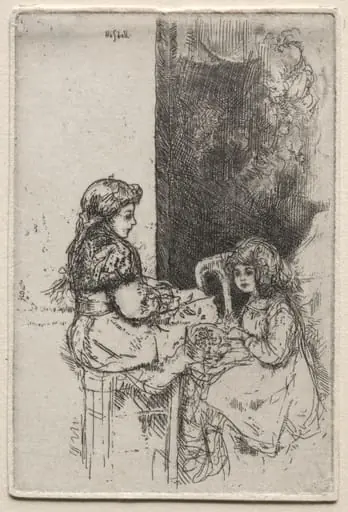
Paris: Ribbon Vender
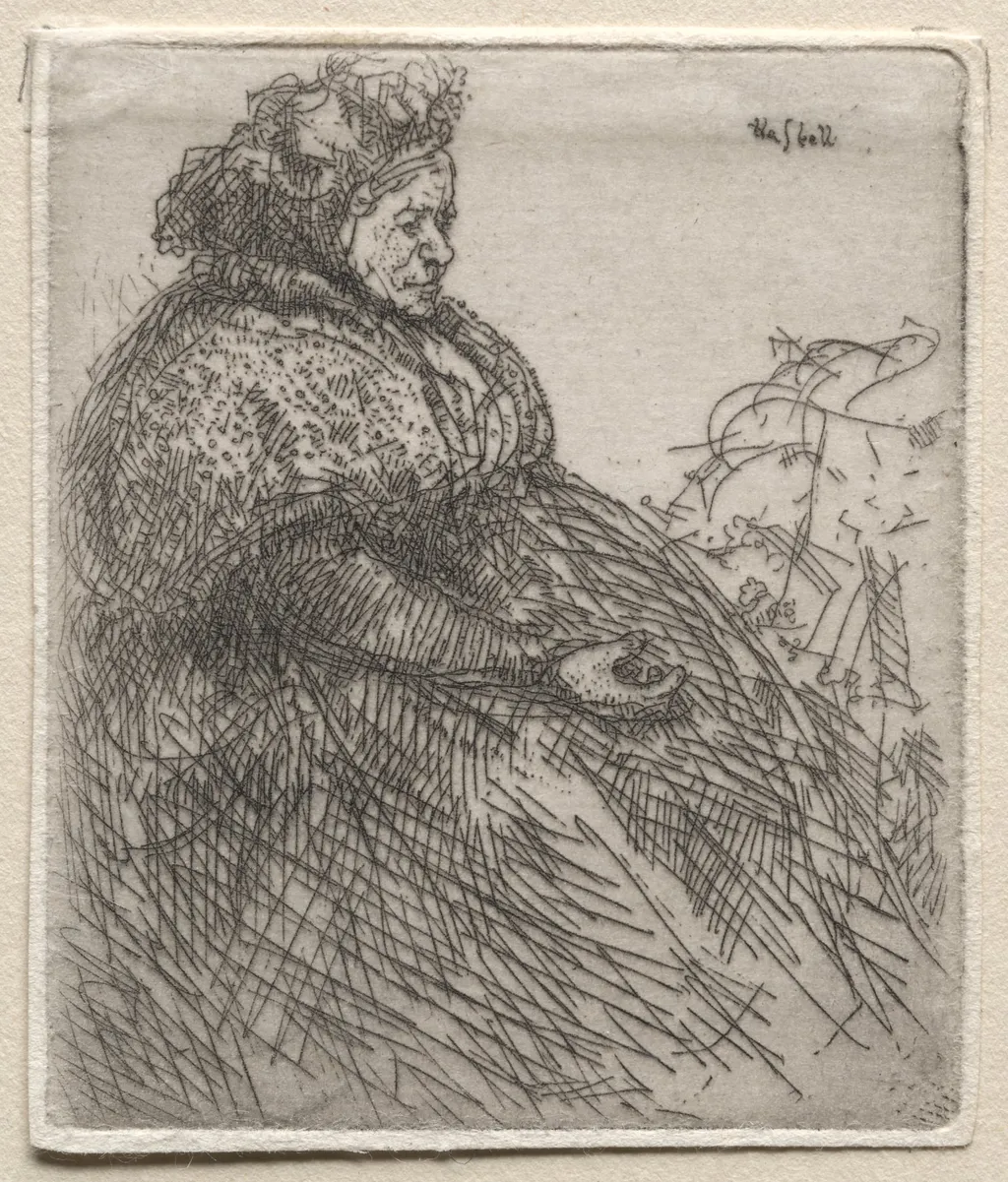
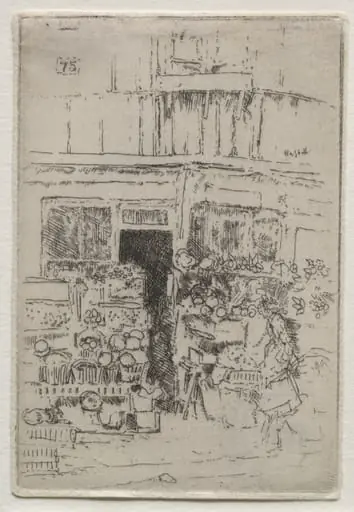
Paris: Ribbon Vender is a print by Ernest Haskell. It dates from 1910 and is held in the collection of the Cleveland Museum of Art.
About this work
Overview
It is part of the permanent collection at The Cleveland Museum of Art, where it is valued for its candid portrayal of everyday urban life.
Created in 1910 by Ernest Haskell, this ink drawing captures a street vendor in Paris, identified by her trade of selling ribbons. Executed with swift, expressive lines, the work belongs to a series of observational sketches Haskell made during his time in France. It is part of the permanent collection at The Cleveland Museum of Art, where it is valued for its candid portrayal of everyday urban life.
Subject & Meaning
The figure is a working-class woman, her identity obscured by layers of fabric and a wrapped headpiece, typical of Parisian street vendors of the era. Her bundled ribbons, tied with a neat bow, suggest both her livelihood and the quiet dignity of her labor. The anonymity of her face emphasizes the universality of her role rather than individual identity, reflecting Haskell’s interest in ordinary people.
Technique & Style
Haskell employed loose, fluid ink lines to convey texture and movement rather than precise detail. The folds of her garments and the weight of the ribbons are suggested through overlapping strokes and varying line density. The sketch’s unfinished quality enhances its immediacy, as if captured in a fleeting moment on the street, prioritizing sensory impression over polished finish.
History & Provenance
The drawing entered The Cleveland Museum of Art’s collection as part of Haskell’s broader body of work, acquired following his death. It was likely made during his travels in Paris around 1910, when he focused on documenting urban life through direct observation. The piece remained in private hands before being donated to the museum, where it has been preserved as an example of early 20th-century American draftsmanship.
Context
Haskell’s sketch reflects a broader artistic interest in urban realism during the early 1900s, when artists turned from idealized scenes to everyday subjects. Paris, with its bustling streets and distinct class dynamics, offered rich material. His approach aligns with contemporaries who valued spontaneity and authenticity, capturing the rhythms of city life without romanticization.
Legacy
Though not widely exhibited, this drawing contributes to understanding Haskell’s role as a documentarian of modern life. It exemplifies how American artists engaged with European urban culture, using sketching as a tool for social observation. The work remains a quiet testament to the visibility of laborers in public space, preserved as a record of a vanishing urban routine.
Artist & collection

Artist
Ernest Haskell was an American artist and illustrator, internationally famous in his lifetime and remembered for his etchings, as well as engravings, pen-and-ink drawings, lithographs and watercolors.

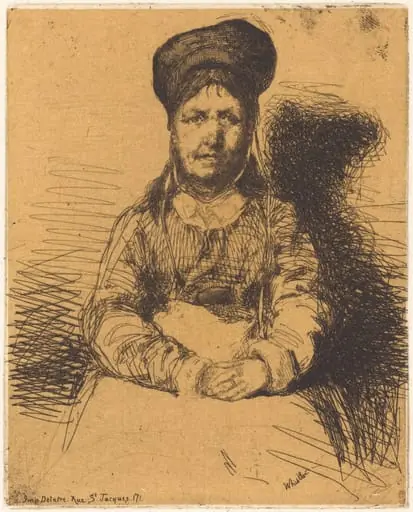 La Rétameuse
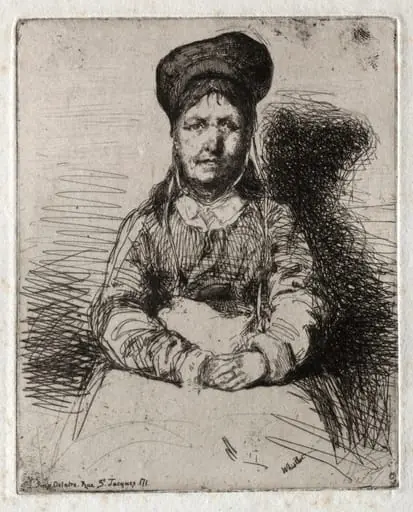 Twelve Etchings from Nature: La Rétameuse
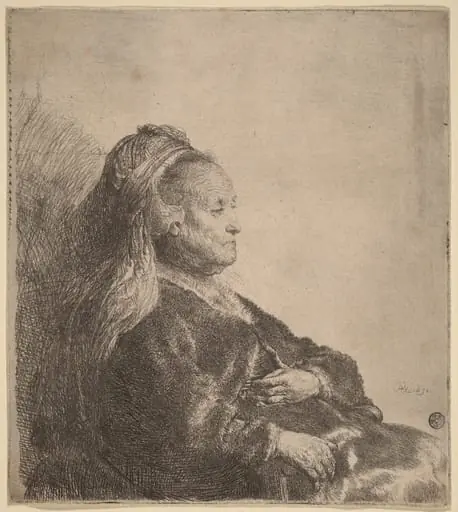 The Artist's Mother Seated, in an Oriental Headdress
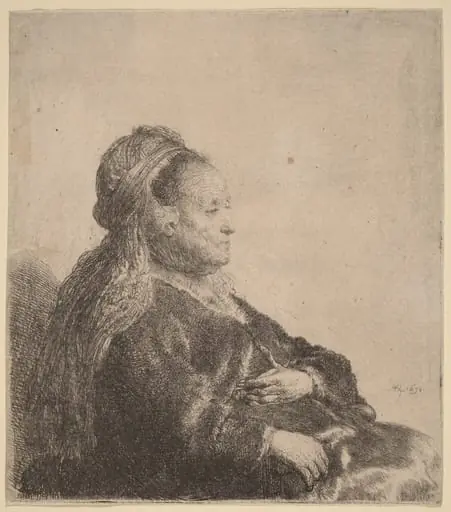 The Artist's Mother Seated, in an Oriental Headdress
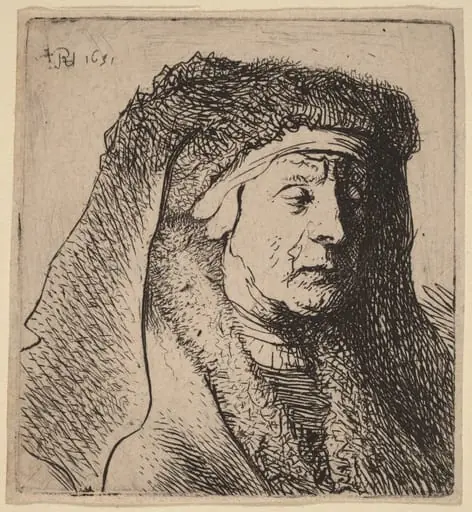 Bust of an Old Woman in a Furred Cloak and Heavy Headdress
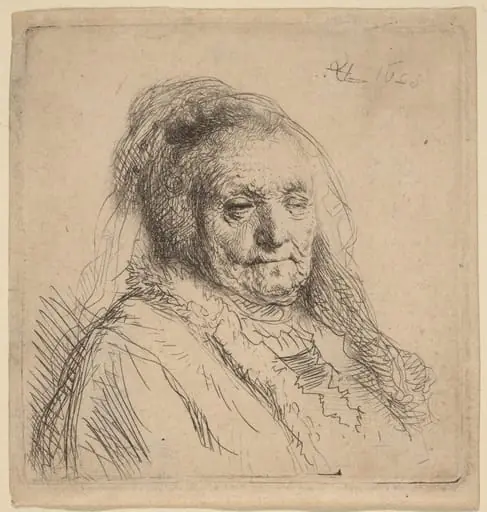 The Artist's Mother, Head and Bust
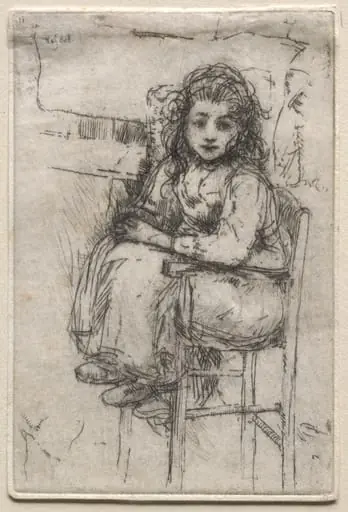 Paris: The Scavenger's Daughter
 Agnes
Agnes Portrait Study: Mrs. Philip
 Krankenschwester (Nurse)
 Fumette
 Little Arthur