Artwork
Drinking and Dancing Before the Tribal Chief
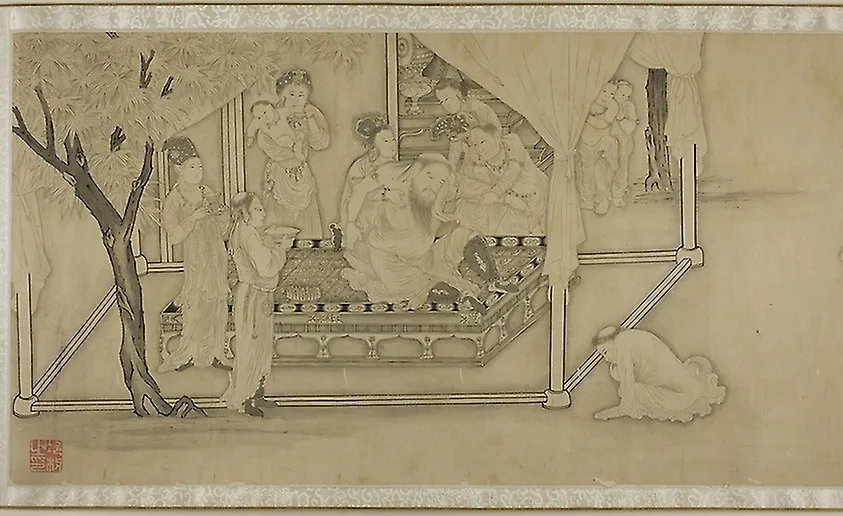
Drinking and Dancing Before the Tribal Chief is an unspecified painting by Leng Mei. It dates from 1705 and is held in the collection of the Art Institute of Chicago.
About this work
Overview
His work focused on genre scenes depicting social rituals and daily life, often centered on figures in refined or ceremonial settings.
Leng Mei, active in the late 17th and early 18th centuries, was a court-affiliated painter trained under Jiao Bingzhen. His work focused on genre scenes depicting social rituals and daily life, often centered on figures in refined or ceremonial settings. This painting, dated 1705, captures a moment of communal celebration before a tribal leader, reflecting the artist’s interest in human interaction within structured social hierarchies. It is now held in the Art Institute of Chicago.
Subject & Meaning
The scene portrays a gathering of individuals engaged in drinking and dance before a seated tribal chief, likely representing a ritual or diplomatic event. The chief’s elevated position underscores his authority, while the lively actions of others suggest communal participation and cultural expression. The interaction implies a moment of alliance, tribute, or celebration, where social bonds are reinforced through performance and shared ritual rather than formal ceremony.
Technique & Style
Leng Mei employed fine brushwork to render individual garments, accessories, and facial expressions with precision. His use of soft, layered pigments creates subtle tonal variations in fabric and skin, enhancing the scene’s vitality. The composition arranges figures in a loose semicircle around the chief, guiding the viewer’s eye through gestures and spatial relationships. Background elements are minimized, focusing attention on the dynamics of the group.
History & Provenance
Created in 1705 during the early Qing dynasty, the painting reflects the continued interest in genre painting among court artists despite the dominance of landscape traditions. Its survival and eventual acquisition by the Art Institute of Chicago indicate its recognition beyond its original context. While specific ownership records prior to the 20th century are sparse, its stylistic consistency with Leng Mei’s known works supports its attribution.
Context
Leng Mei worked in a period when Chinese artists increasingly documented non-elite social life, blending observation with idealized form. This painting aligns with broader Qing-era interests in ethnographic detail and ceremonial customs, particularly among frontier or non-Han groups. Though the setting may be stylized, it reflects imperial curiosity about diverse cultural practices within the empire’s expanded borders.
Legacy
Leng Mei’s genre scenes, including this work, contributed to a quieter but persistent tradition of figure painting that emphasized social nuance over grand narrative. While less celebrated than his contemporaries in landscape, his attention to gesture and costume influenced later artists interested in everyday life. The painting remains a rare surviving example of early 18th-century courtly genre work with ethnographic undertones.
Artist & collection
Artist
Leng Mei (Chinese: 冷枚; pinyin: Lěng Méi; Wade–Giles: Leng Mei), was a Chinese painter.

 Untitled
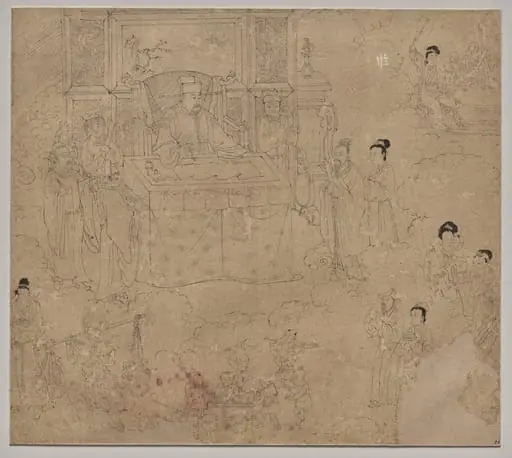 Album of Daoist and Buddhist Themes: Kings of Hells: Leaf 28
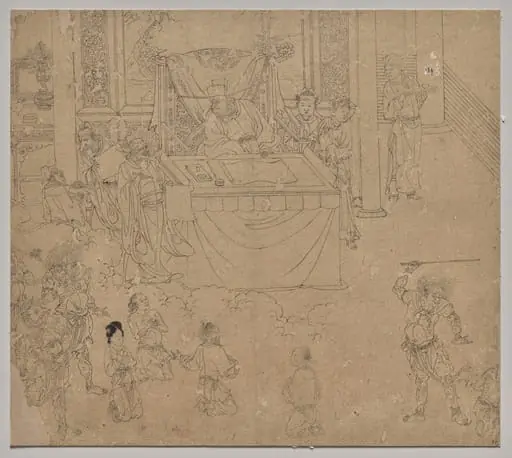 Album of Daoist and Buddhist Themes: Kings of Hells: Leaf 35
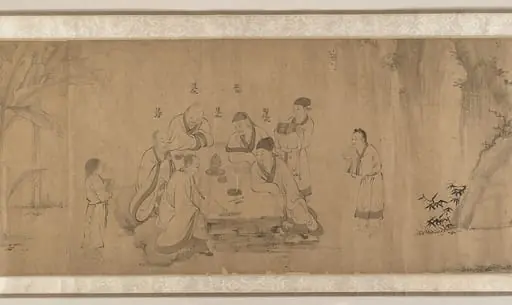 明 佚名 李公麟 偽款 白蓮社圖 卷|White Lotus Society
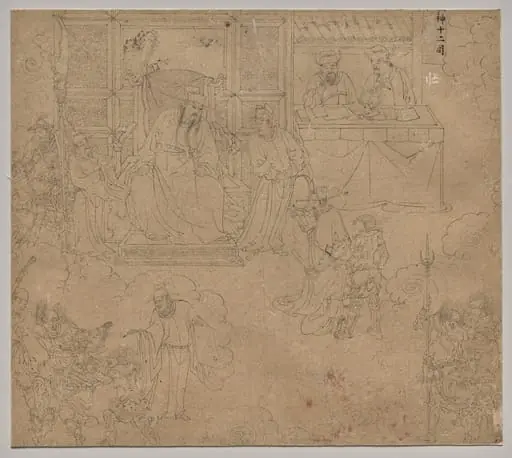 Album of Daoist and Buddhist Themes: Kings of Hells: Leaf 27
 Album of Daoist and Buddhist Themes: Kings of Hells: Leaf 40
 Album of Daoist and Buddhist Themes: Kings of Hells: Leaf 36
 Album of Daoist and Buddhist Themes: Kings of Hells: Leaf 34
 明/清 佚名 舊傳王振鵬 養正圖 卷|Family Training
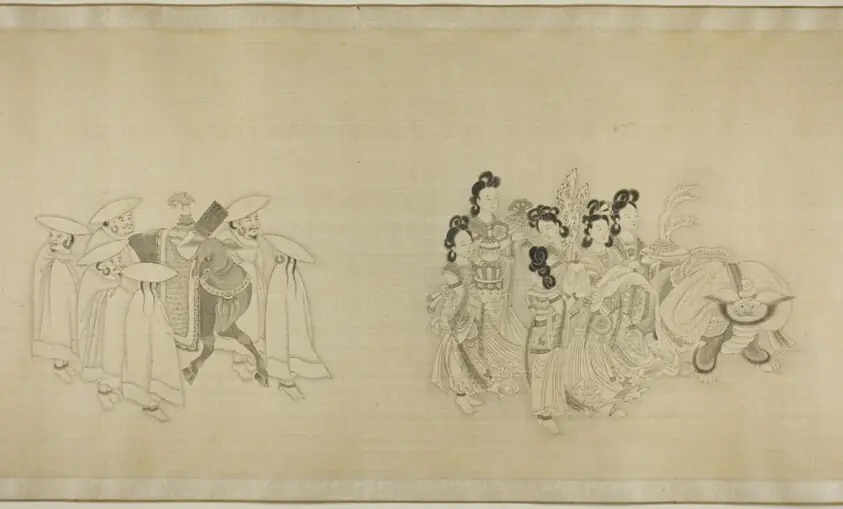 Barbarian Envoys Presenting Tribute
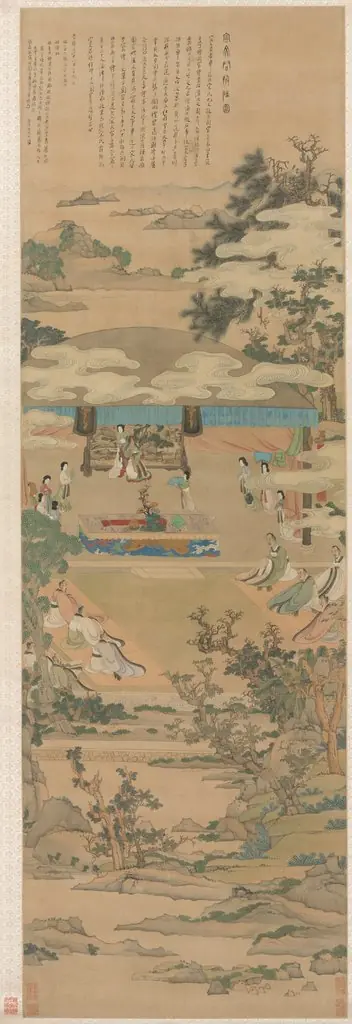 Lady Xuanwen Giving Instruction on the Rites of Zhou
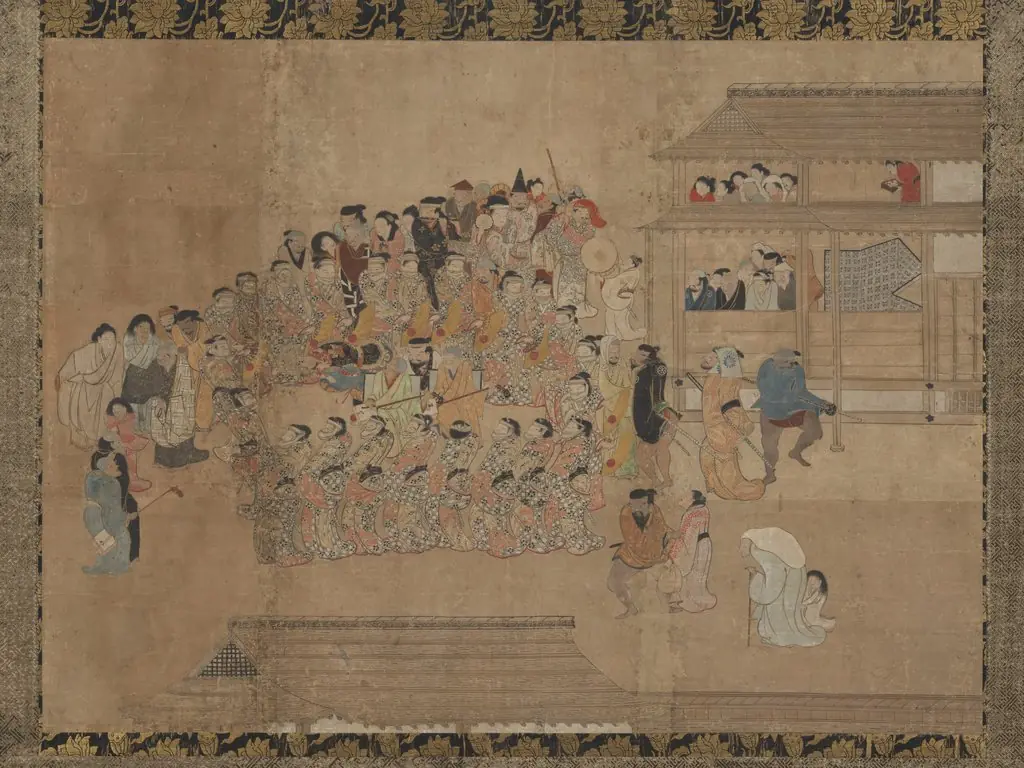 People Dancing