Artwork
Album of Daoist and Buddhist Themes: Kings of Hells: Leaf 35
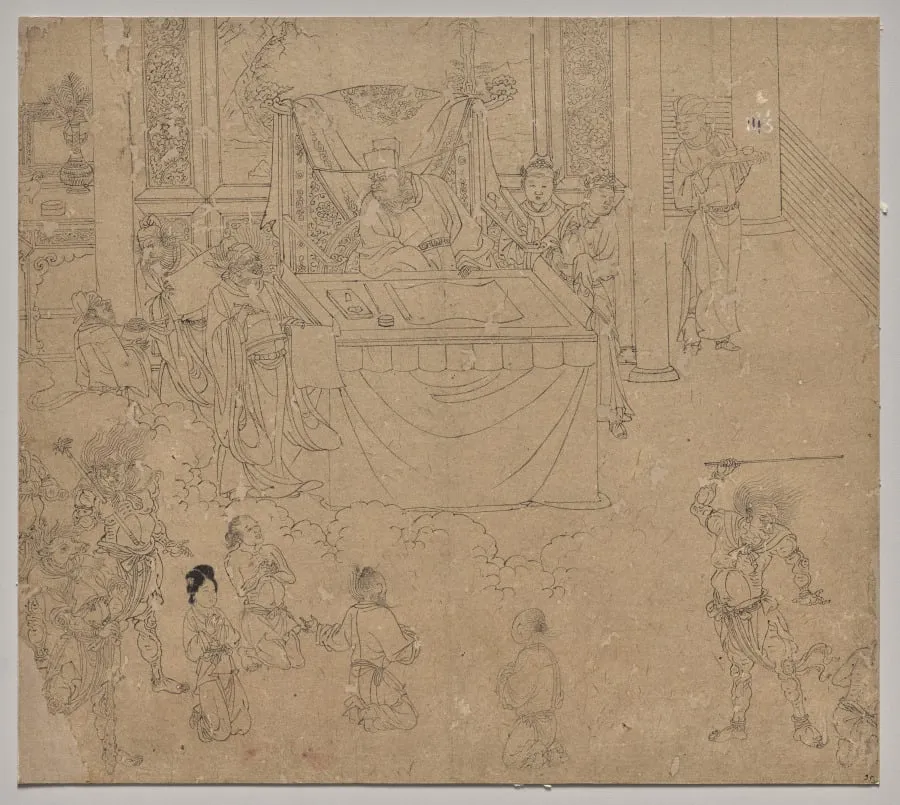
Album of Daoist and Buddhist Themes: Kings of Hells: Leaf 35 is an unspecified painting by the Ming dynasty painting artist Unknown. It dates from 1204 and is held in the collection of the Cleveland Museum of Art. This ink drawing is one leaf from a fifty‑page model book created in 12th‑century China.
About this work
You see a thin black-ink drawing of a judge in flowing robes seated on a high bench, four souls kneeling before him—two older, two younger, one shirtless.
You see a thin black-ink drawing of a judge in flowing robes seated on a high bench, four souls kneeling before him—two older, two younger, one shirtless.
This is one page from a 50-page model book used by professional painters in 1200s China. The lines are crisp and sure, meant to be copied onto temple walls or silk scrolls. The scene shows a Daoist or Buddhist king deciding the fate of the dead.
To see more drawings like this, look up subject: china, southern song dynasty (1127-1279).
Overview
This ink drawing is one leaf from a fifty‑page model book created in 12th‑century China. The sheet depicts a judge‑like figure seated on an elevated bench, flanked by four kneeling souls—two elderly and two younger, one of whom is partially unclothed. The composition served as a reference for artists tasked with illustrating religious narratives on temple walls or silk scrolls.
Subject & Meaning
The central figure represents one of the Ten Kings of Hell, a deity in Daoist and Buddhist afterlife belief who adjudicates the fate of the deceased. The four supplicants embody contrasting cases: an aged couple pleading their innocence and a younger couple accused of wrongdoing, highlighting moral judgments concerning age and conduct in the afterlife.
Technique & Style
Executed in monochrome ink, the drawing features precise, confident line work that defines garments, posture, and facial expressions with minimal strokes. The clarity of the lines suggests it was intended as a template, allowing painters to reproduce the scene accurately in larger formats such as murals or silk paintings.
History & Provenance
The model book originated in the Southern Song period (1127‑1279) and was likely produced in a workshop serving Buddhist and Daoist temples. Its purpose was to provide standardized visual guides for professional painters commissioned to decorate religious spaces across the empire.
Context
During the Song dynasty, religious institutions commissioned extensive visual programs to educate lay followers about cosmology and moral law. Illustrations of the Ten Kings of Hell functioned as didactic tools, reinforcing doctrinal teachings about judgment after death.
Artist & collection

 Domestic Scene
 Giacomo and Cardinal Marco, investing Andrea, Abbot of San Zeno, with his Benefice
 The Nymph of Fontainebleau
 Portrait of a Woman
 Madonna and Child with Saints in the Enclosed Garden
 Venus and Minerva
 Family Group of Four on Sofa
 Wall painting from Room H of the Villa of P. Fannius Synistor at Boscoreale
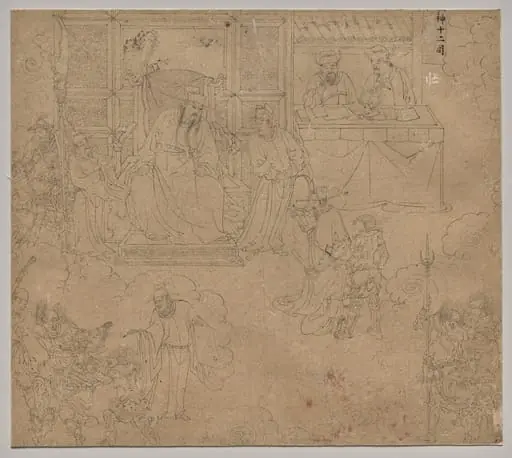 Album of Daoist and Buddhist Themes: Kings of Hells: Leaf 27
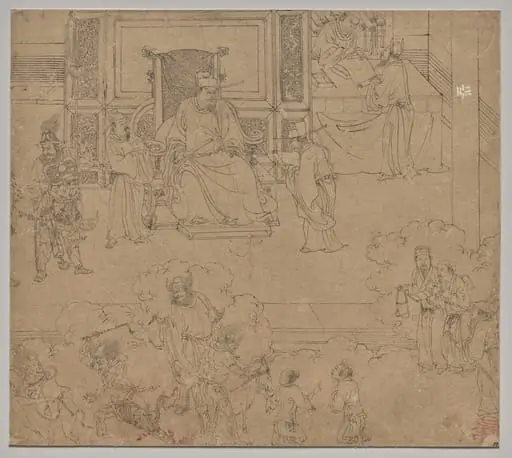 Album of Daoist and Buddhist Themes: Kings of Hells: Leaf 33
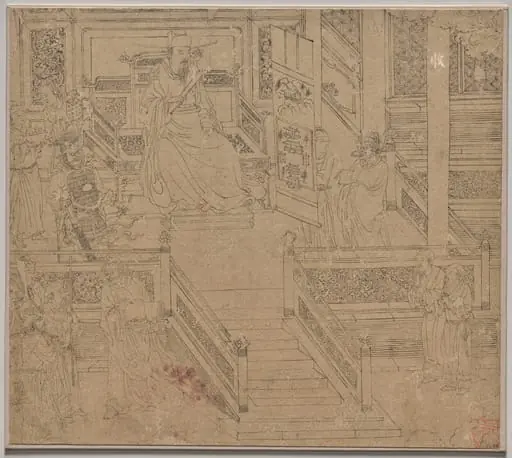 Album of Daoist and Buddhist Themes: Kings of Hells: Leaf 29
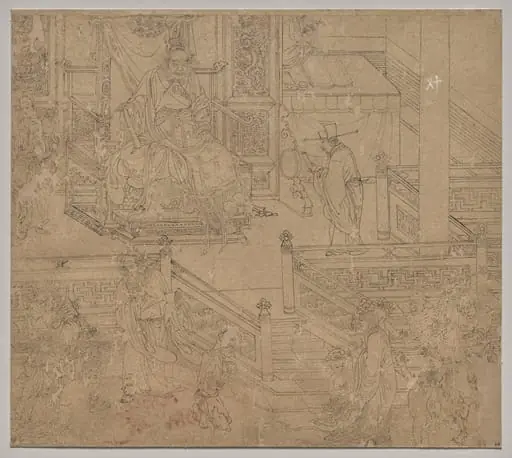 Album of Daoist and Buddhist Themes: Kings of Hells: Leaf 40
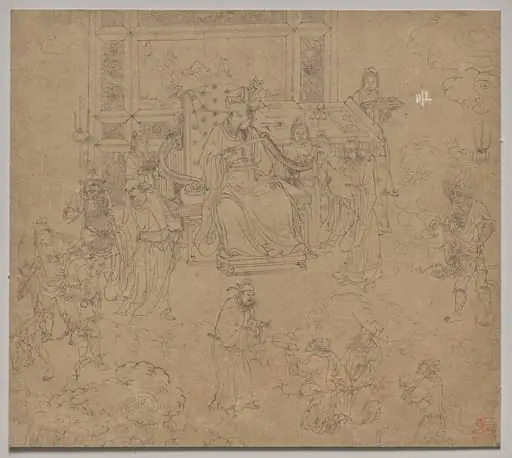 Album of Daoist and Buddhist Themes: Kings of Hells: Leaf 36
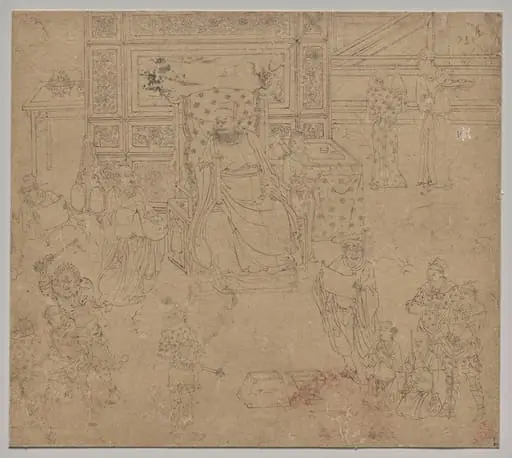 Album of Daoist and Buddhist Themes: Kings of Hells: Leaf 34
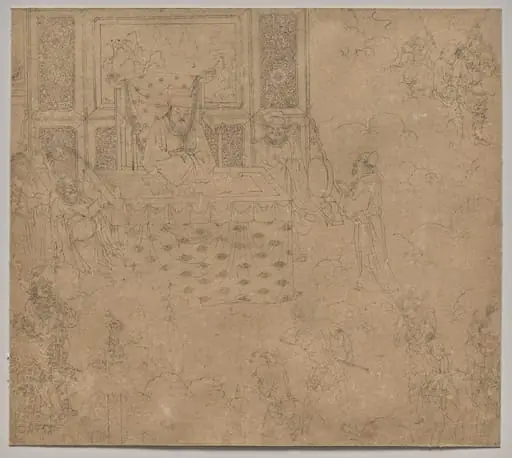 Album of Daoist and Buddhist Themes: Kings of Hells: Leaf 31