Artwork
Das Innere einer Taufkapelle
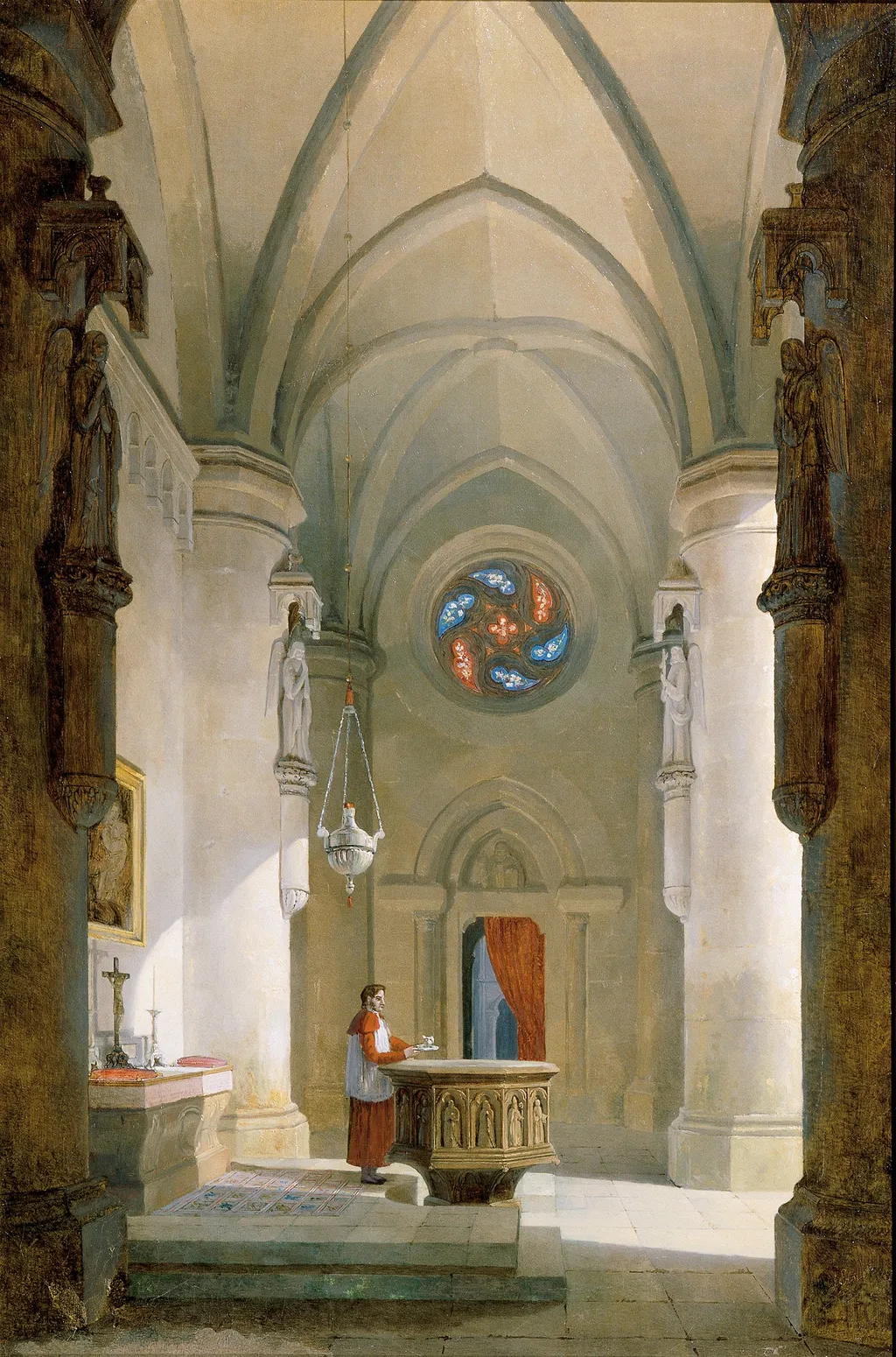
Das Innere einer Taufkapelle is an oil painting by the Biedermeier artist Leopold Ernst. It dates from 1838 and is held in the collection of the Kunsthistorisches Museum.
About this work
Overview
Leopold Ernst’s 1838 oil painting presents the interior of a baptismal chapel. The composition captures a single robed figure positioned near an altar, framed by Gothic architectural elements. The work reflects the artist’s focus on spatial clarity and the effects of natural illumination within a sacred setting.
Subject & Meaning
The scene centers on a baptismal chapel’s austere interior, evoking themes of ritual and solitude. A cleric in red vestments stands before an altar, holding liturgical objects. The subdued atmosphere and absence of congregants suggest a moment of quiet preparation, emphasizing the solemnity of the space rather than public ceremony.
Technique & Style
Ernst employs a precise, almost analytical approach to rendering architectural details and light. Subtle gradations of tone model the stone surfaces, while the stained-glass window introduces chromatic accents. The interplay of shadow and illumination enhances the three-dimensionality of the scene, aligning with mid-19th-century academic conventions.
History & Provenance
Completed in 1838, the painting has been part of the Kunsthistorisches Museum’s collection since its acquisition. Little documentation survives regarding its early exhibition history or commission, though its preservation suggests recognition of its technical and thematic merits within the museum’s holdings.
Context
The work emerges from a period when artists increasingly explored ecclesiastical interiors as subjects. Such scenes often served as vehicles for demonstrating draftsmanship and an understanding of perspective. Ernst’s depiction aligns with broader 19th-century interests in Gothic architecture and the representation of sacred spaces.
Artist & collection

 Church interior
 Caudebec on the Seine - Church Interior
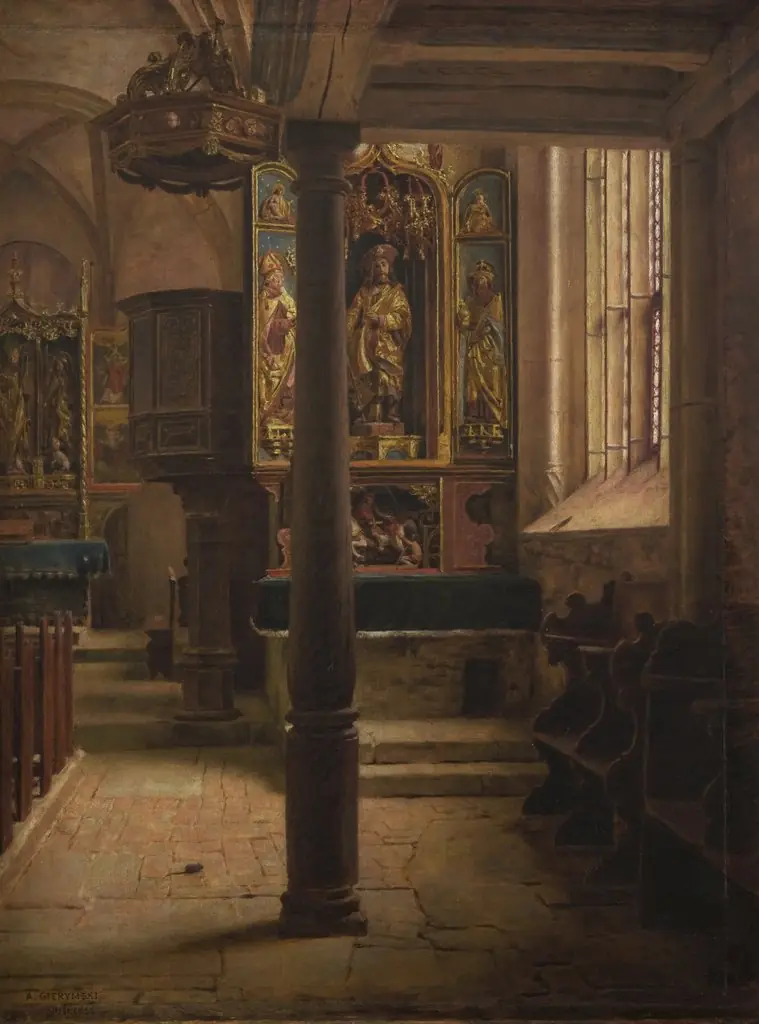 Interior of St Wolfgang's Church in Rothenburg
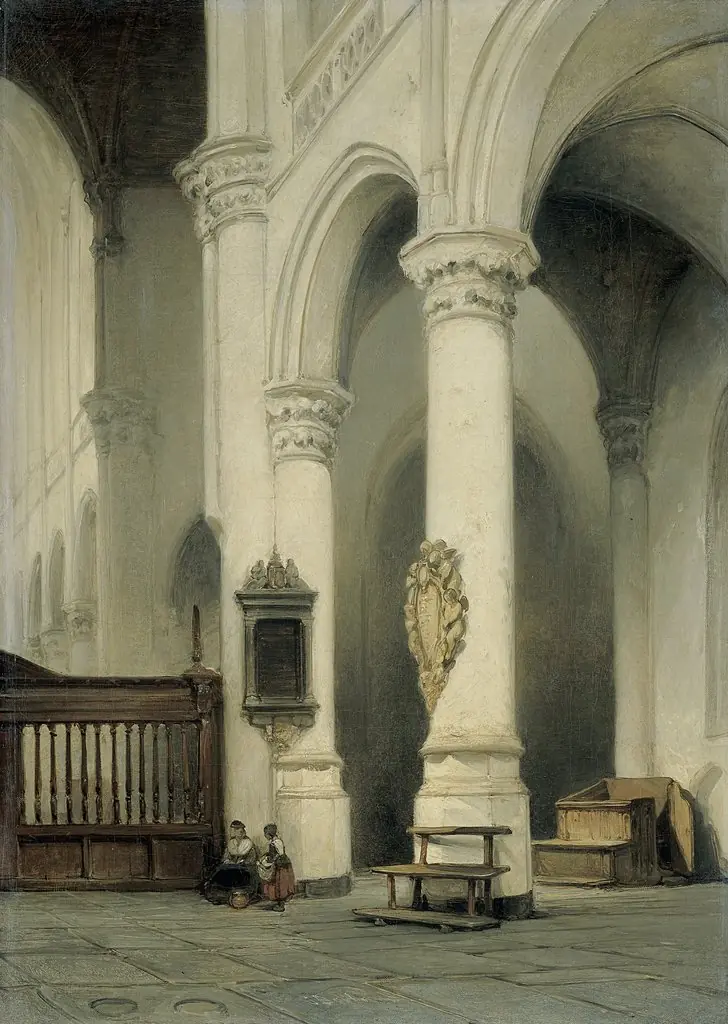 Church interior
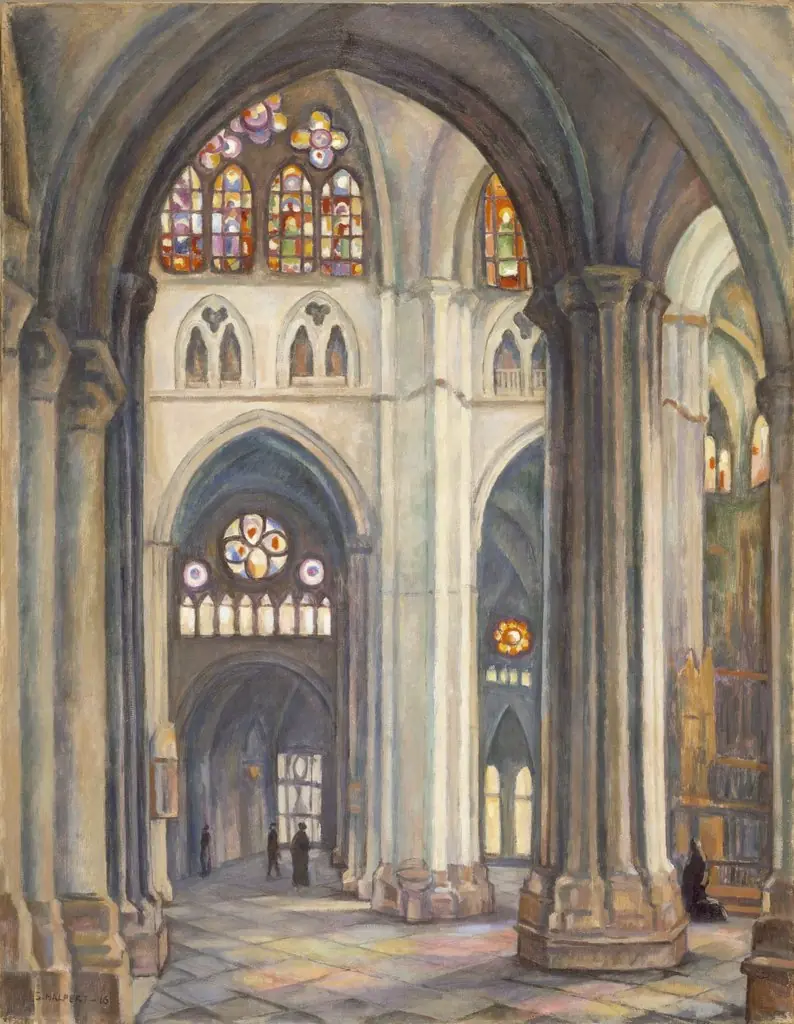 Toledo Cathedral
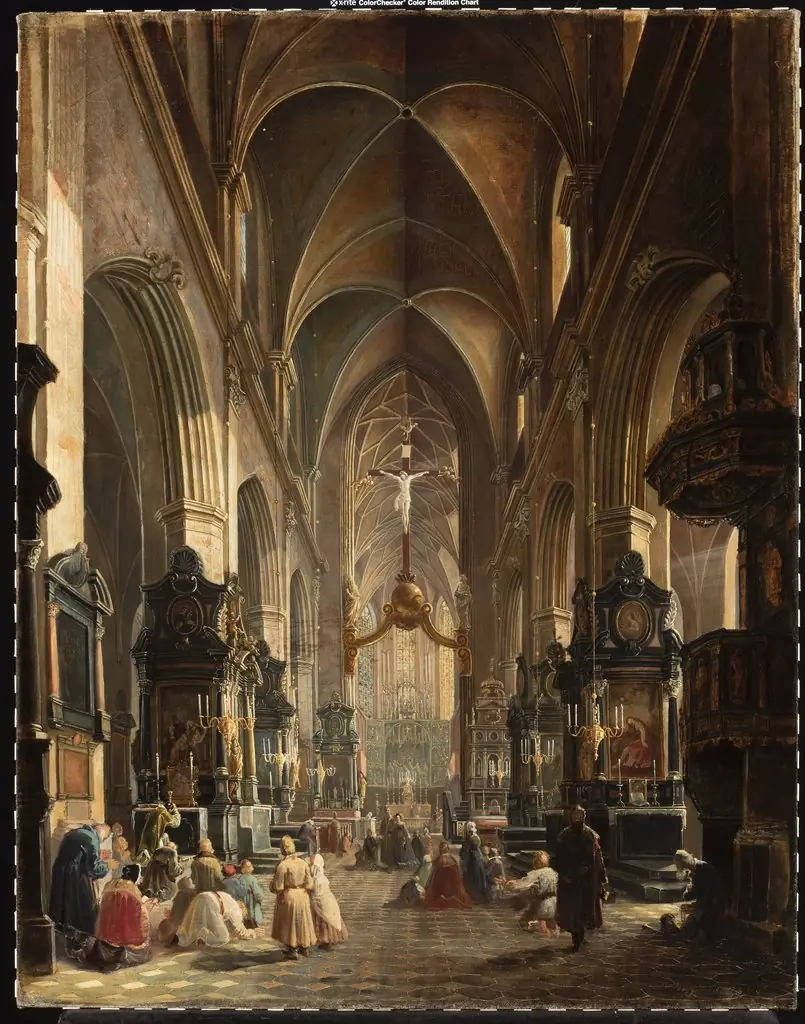 Interior of the Church of Virgin Mary in Kraków
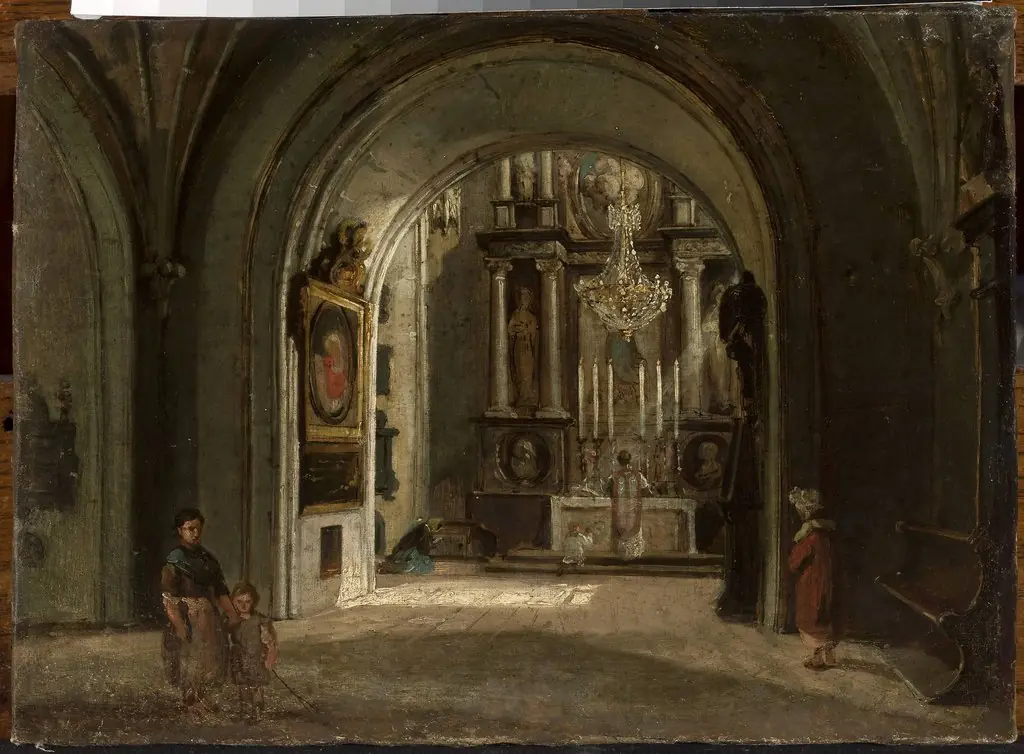 Interior of St. John’s church in Warsaw
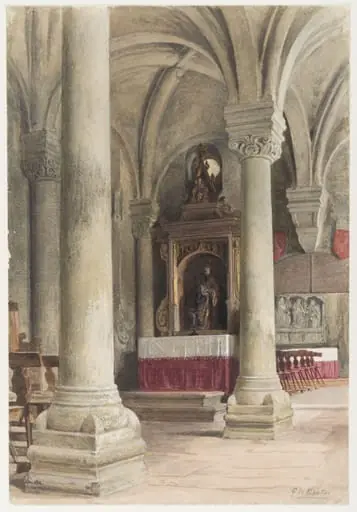 The Chapel of St Eucharius, Nuremberg
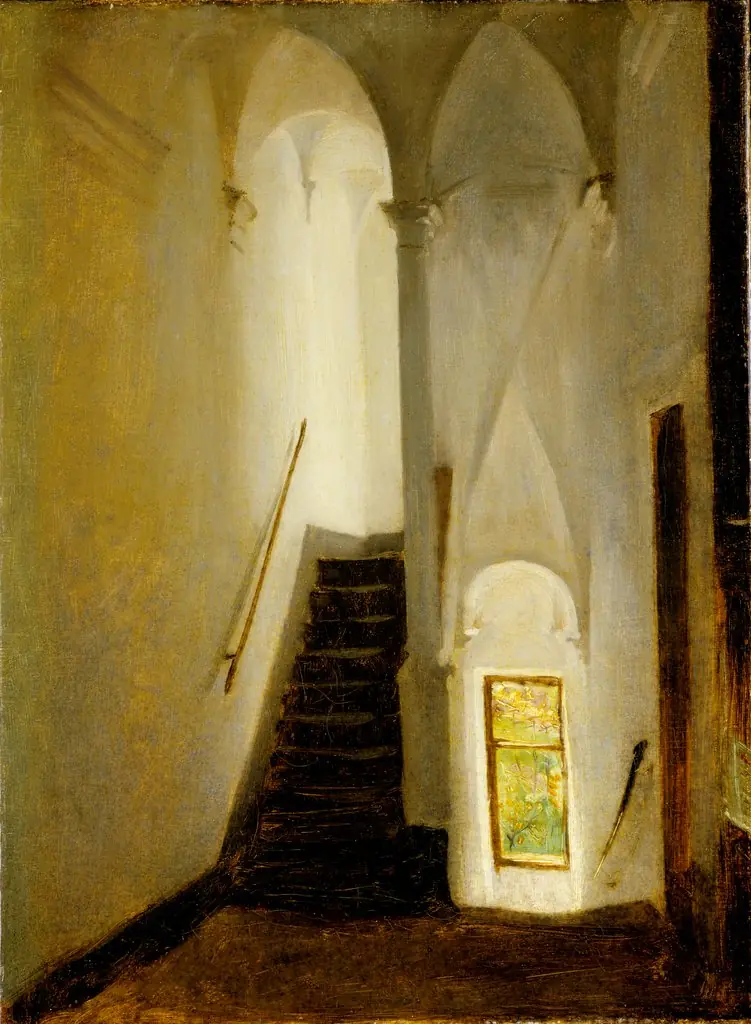 Staircase
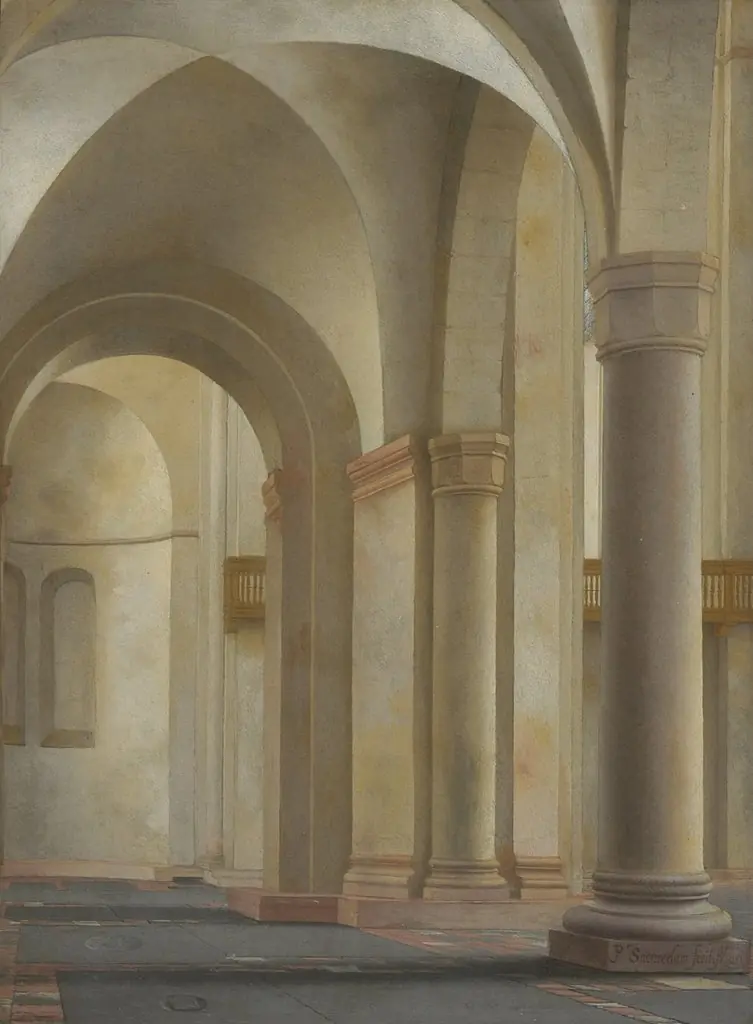 Interior of the Mariakerk, Utrecht
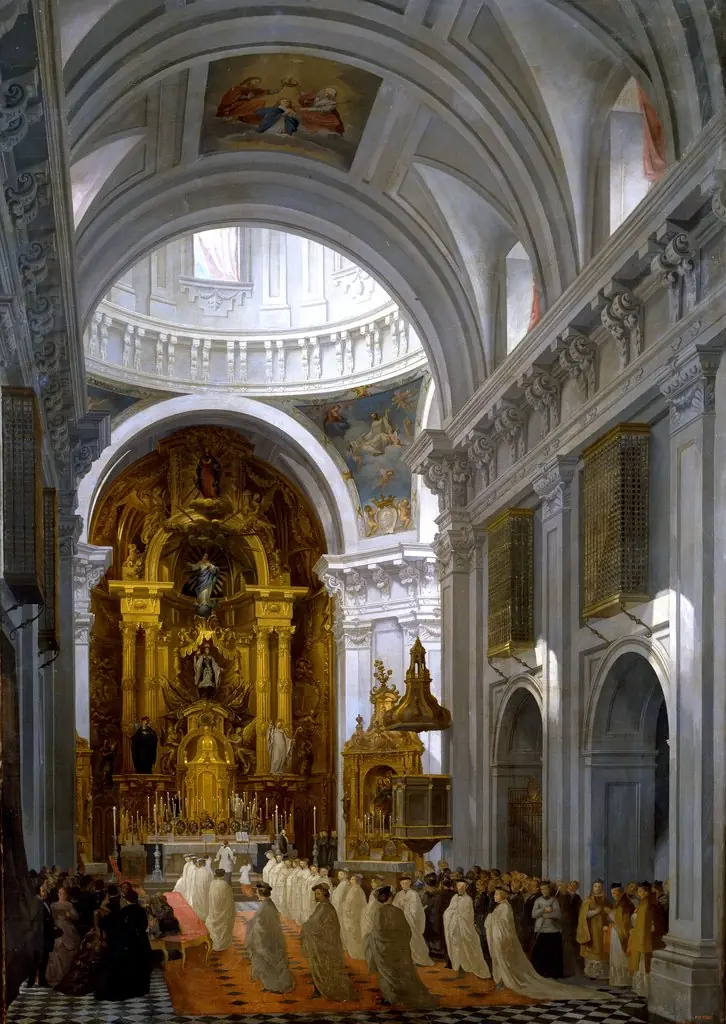 Interior de la Iglesia de las Calatravas en Madrid
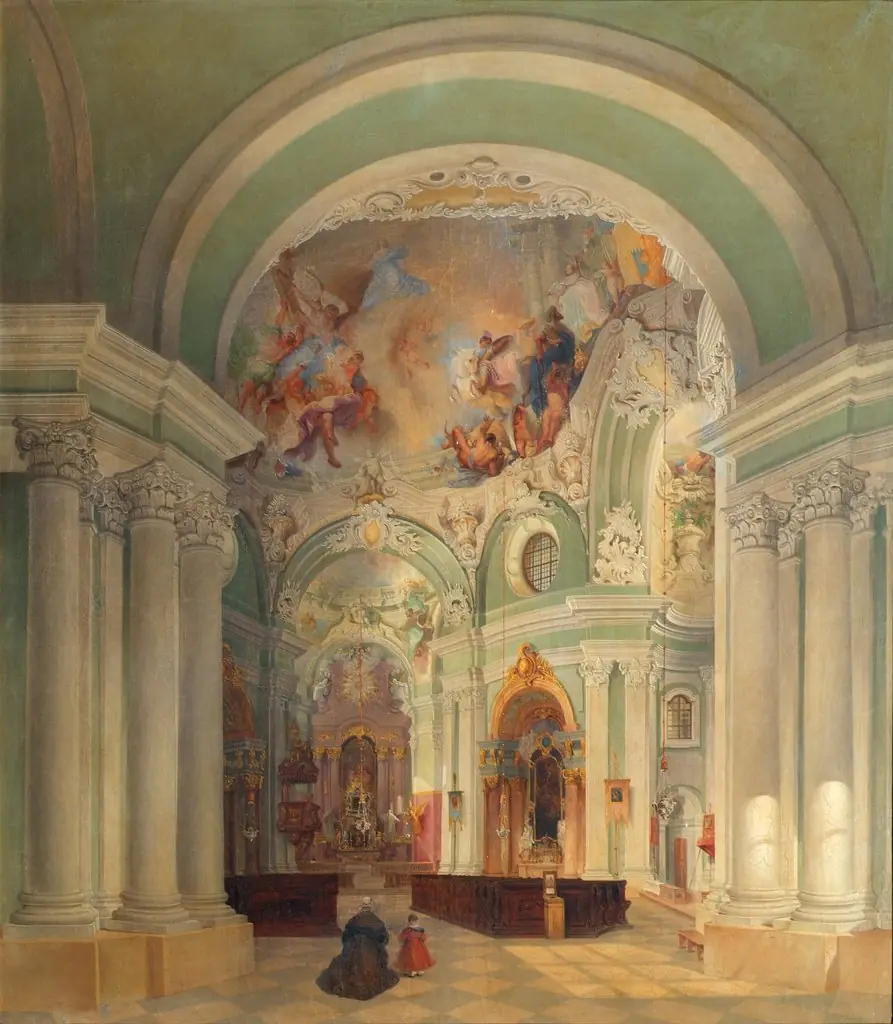 Das Innere der Piaristenkirche in Wien