Artwork
The Poulterer, Vendee (Le Poulailler, Vendee)
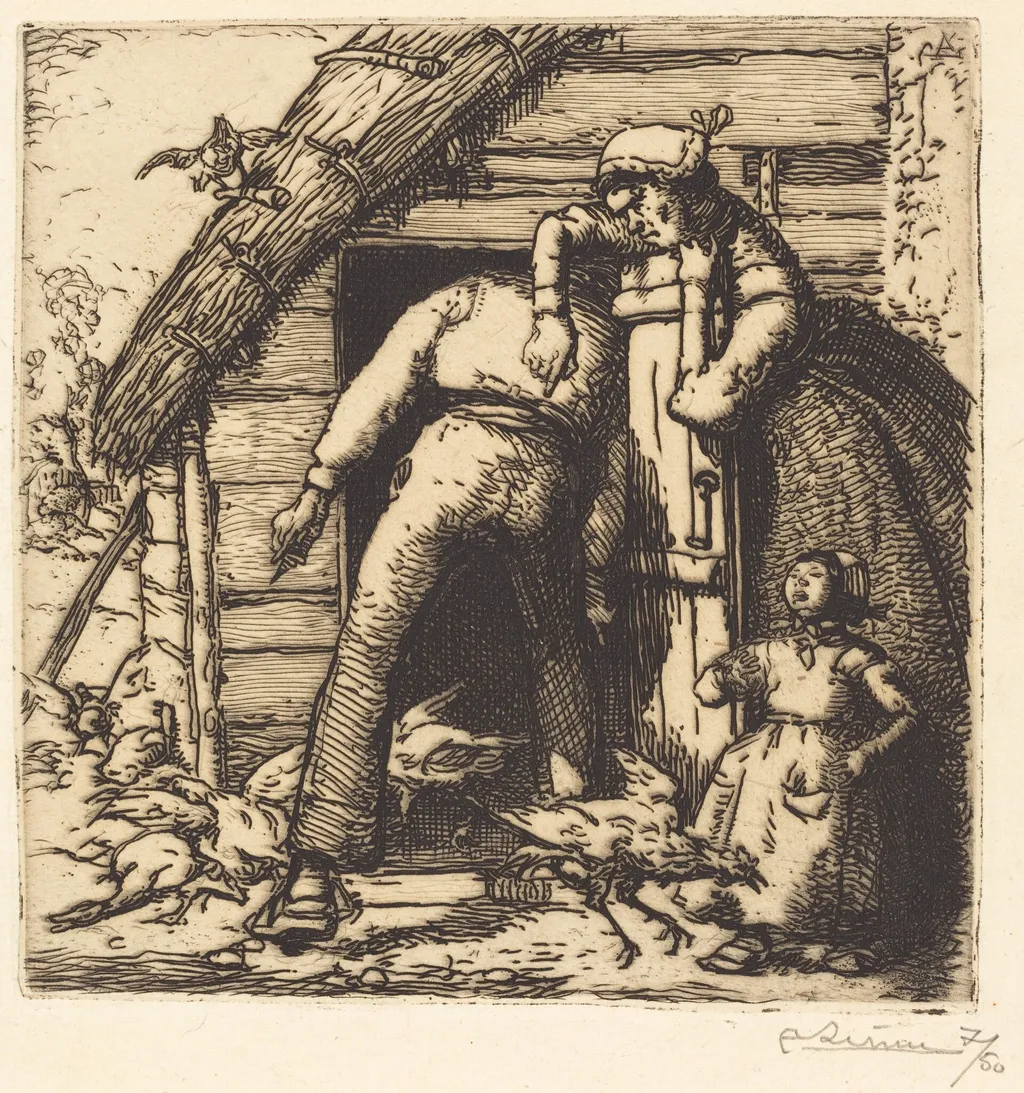
The Poulterer, Vendee (Le Poulailler, Vendee) is an ink print by Auguste Lepère. It dates from 1908 and is held in the collection of the National Gallery of Art.
About this work
Overview
Created in 1908 by French artist Auguste Lepère, *The Poulterer, Vendee* is an etching that captures a moment of daily life in rural France.
Created in 1908 by French artist Auguste Lepère, *The Poulterer, Vendee* is an etching that captures a moment of daily life in rural France. Lepère, known for his dedication to printmaking, used this work to explore the textures and rhythms of provincial scenes. The image is rendered entirely through incised lines on a metal plate, with ink pressed into those grooves to produce a dense, tonal composition that emphasizes movement and atmosphere.
Subject & Meaning
The scene depicts a man carrying a large fowl on his shoulder, navigating a narrow, bustling street filled with pedestrians and animals. The figures are rendered in hurried, overlapping forms, suggesting the chaos of a market day. There is no overt narrative or symbolism—instead, the work presents an unembellished observation of labor and commerce in the Vendée region, valuing authenticity over idealization.
Technique & Style
Lepère employed traditional etching methods, using acid to bite lines into a metal plate, which he then inked and printed. The lines vary in weight and density, creating contrast between shadowed corners and sunlit pathways. The rough, scratchy texture of the buildings and ground reflects the physicality of the medium, with no smoothing or softening—each mark retains the immediacy of the artist’s hand.
History & Provenance
The print emerged during a period when Lepère was actively promoting wood engraving and etching as serious artistic mediums in France. While specific ownership records are sparse, the work was likely circulated among print collectors and artists interested in the revival of handcrafted printmaking. It remains part of broader 20th-century efforts to elevate printmaking beyond reproductive roles.
Context
In early 20th-century France, rural life was increasingly overshadowed by urbanization. Lepère’s focus on provincial scenes like this one aligned with a broader interest in documenting vanishing traditions. His choice of etching—rather than painting—reflected a deliberate return to tactile, labor-intensive processes, positioning his work in dialogue with both folk culture and artisanal printmaking revivalists.
Legacy
Though not widely exhibited today, *The Poulterer, Vendee* exemplifies Lepère’s commitment to printmaking as a vehicle for social observation. His technical precision and unromanticized depictions of everyday life influenced later generations of printmakers who sought to ground their work in real-world detail rather than decorative flourish.
Artist & collection
Artist
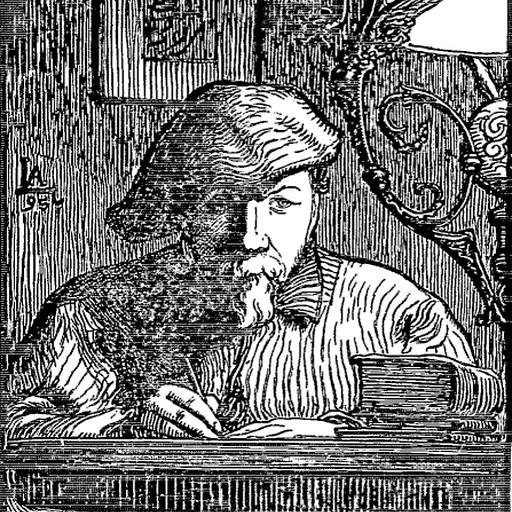
Louis-Auguste Lepère (30 November 1849 – 20 November 1918) was a French painter and etcher. Lepère is also considered a leader in the creative revival of wood engraving in Europe.

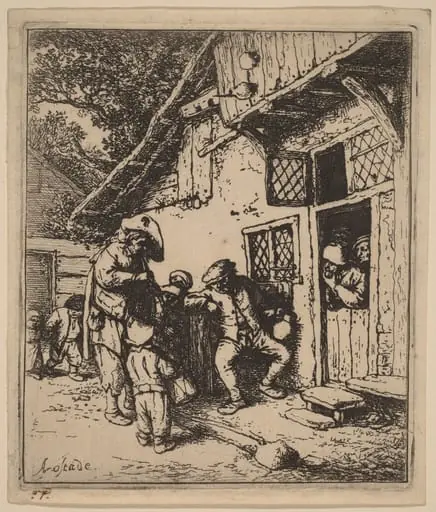 Peasants Outside an Inn Entertained by Musicians with a Flute and a Drum
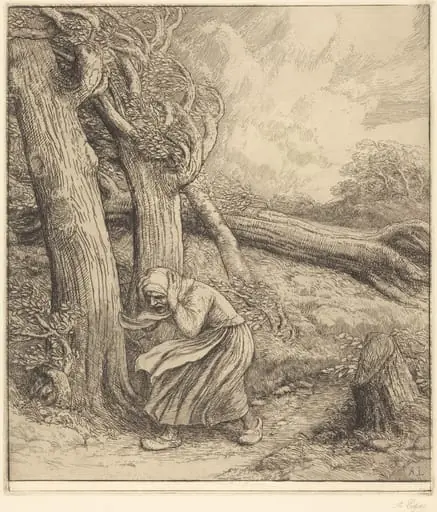 Hurricane (L'ouragan)
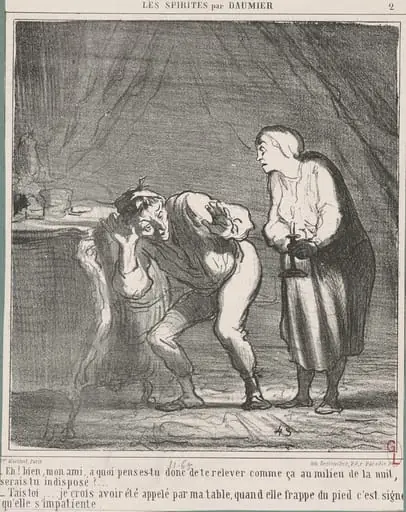 Eh! Bien ... mon ami, a quoi penses-tu? ...
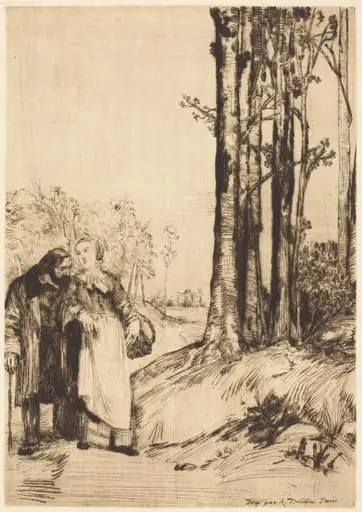 Stroll of the Convalescent (La promenade du convalescent)
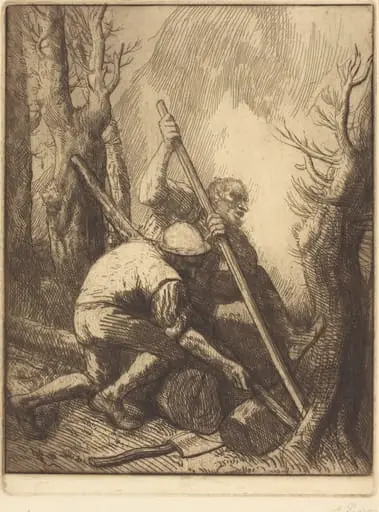 Woodcutters, 3rd plate (Les bucherons)
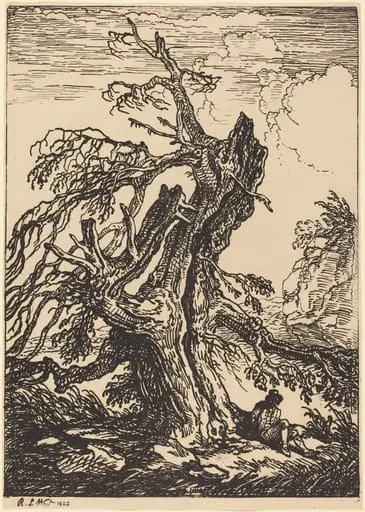 Study of a Tree
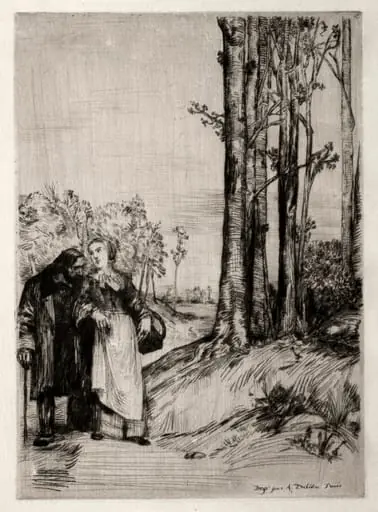 Le Promenade du convalescent
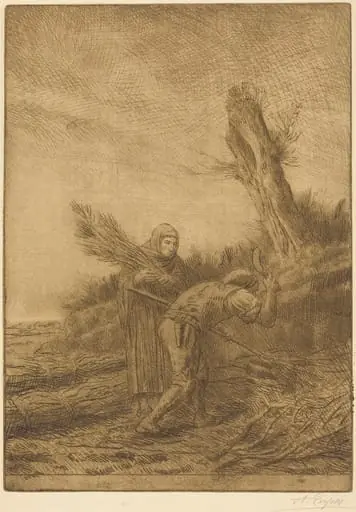 Fagot-makers (Les faiseurs de fagots)
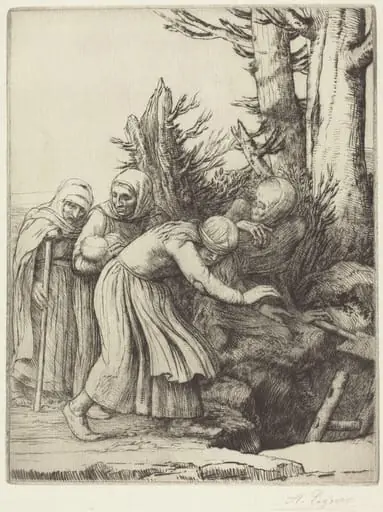 The Triumph of Death: Death Prepares a Dwelling for the Homeless (Le triomphe de la Mort: Lamort a prepare une demeure a des abandonnees)
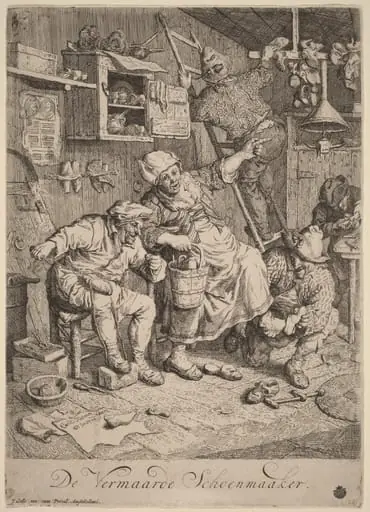 The Merry Shoemaker