Artwork
Hippolytus and the Sea Monster
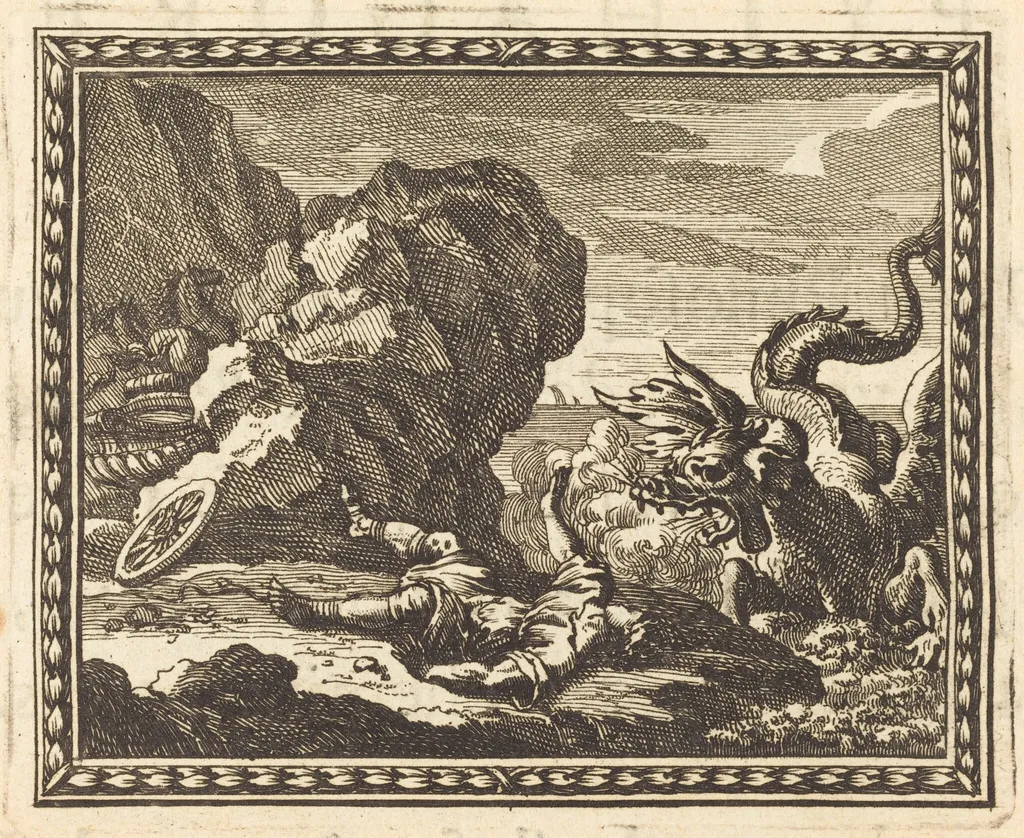
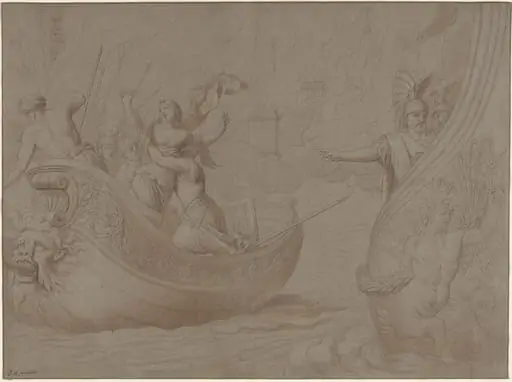
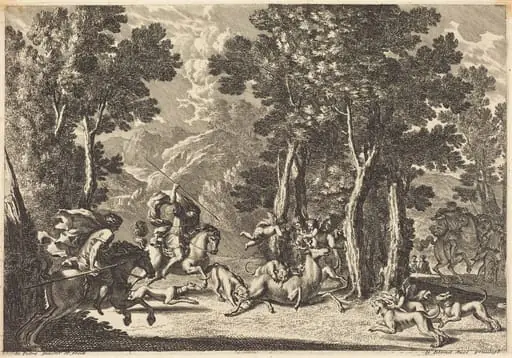
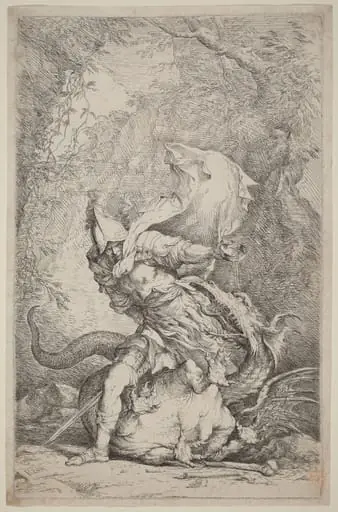
Hippolytus and the Sea Monster is an ink print by the Baroque artist Jean Lepautre. It dates from 1676 and is held in the collection of the National Gallery of Art.
About this work
Overview
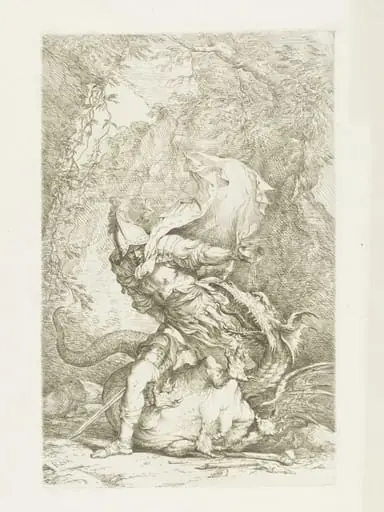
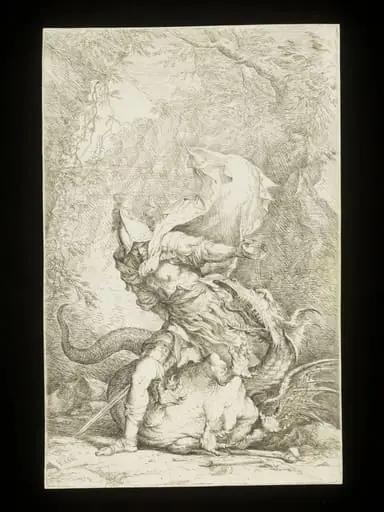
Jean Lepautre’s print titled *Hippolytus and the Sea Monster* dates from 1676. Executed as an etching and engraving on laid paper, the work presents a stark monochrome tableau of a lone figure confronting a ferocious sea creature. The composition is framed by turbulent clouds and churning waves, emphasizing the perilous moment.
Subject & Meaning
The image depicts the mythological hero Hippolytus, seized by a monstrous sea beast with gaping jaws and sinuous tentacles. Clinging to a rocky outcrop, the figure looks upward, his expression one of terror. The scene captures the clash between human vulnerability and untamed natural forces, a theme recurrent in classical narratives.
Technique & Style
Lepautre combined etching’s fine line work with the deeper tones of engraving to model volume and motion. Cross‑hatching and varied stippling generate a sense of depth, while the stark contrast between black and white heightens drama. The vigorous chiaroscuro and dynamic composition reflect the Baroque aesthetic, which prized emotional intensity and theatricality.
History & Provenance
Created in the late seventeenth century, the print belongs to Lepautre’s broader output of mythological subjects. It survives on laid paper, a common support for prints of the period, and is documented in several European collections. Its provenance traces back to private collectors before entering public holdings in the nineteenth century.
Artist & collection