Artwork
Catafalque
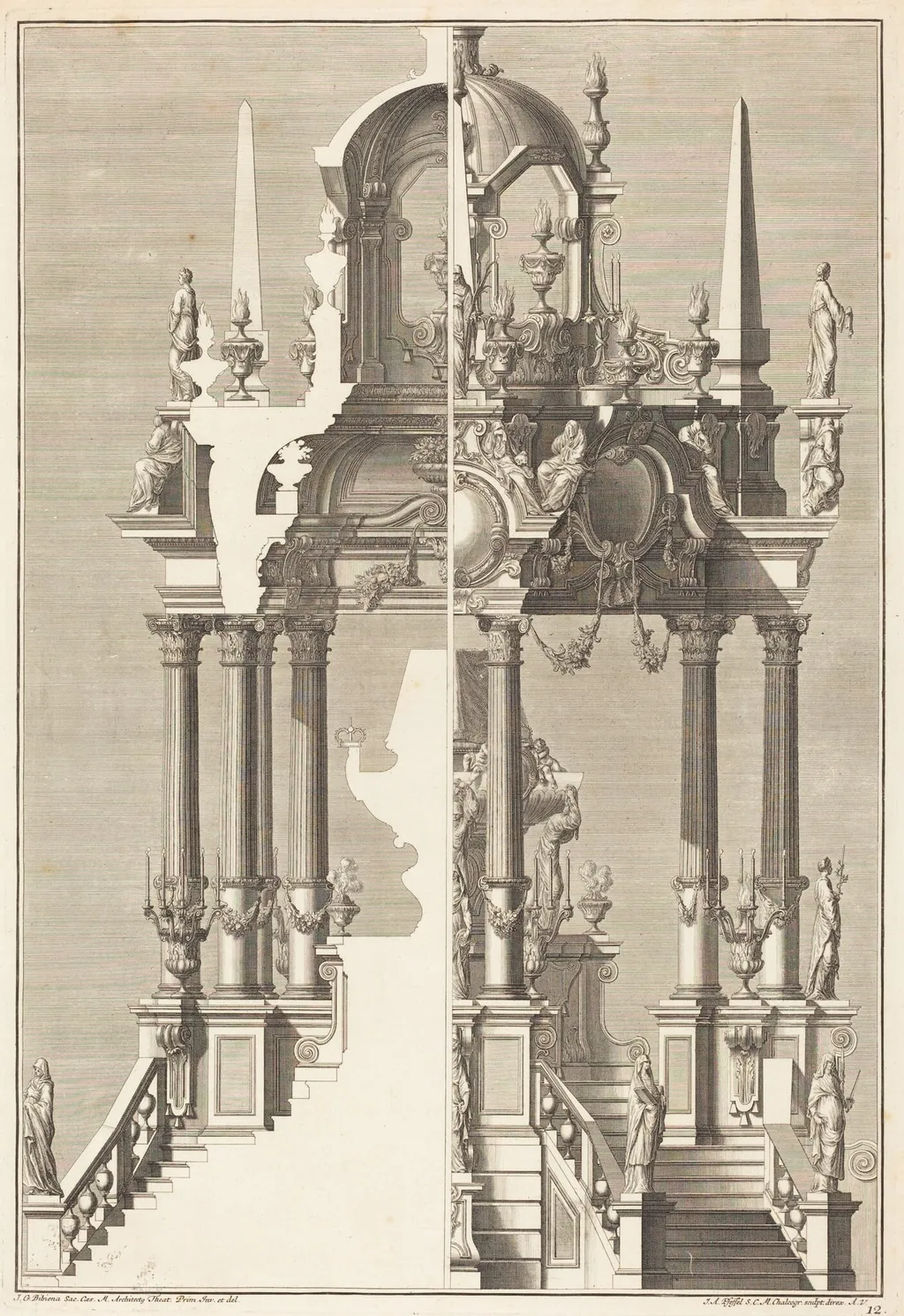
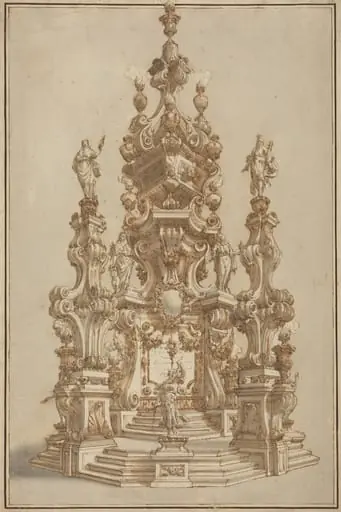
Catafalque is an ink print by the Baroque artist Johann Andreas Pfeffel I. It dates from 1740 and is held in the collection of the National Gallery of Art.
About this work
Overview
Johann Andreas Pfeffel I’s 1740 engraving titled Catafalque presents a meticulously rendered, towering funerary structure. Executed on laid paper, the print depicts an elaborate arrangement of stone and metal elements, including sculptural figures, ornamented columns, and a stepped platform that culminates in a central, richly decorated casket surmounted by additional statues and lanterns.
Subject & Meaning
The composition illustrates a ceremonial catafalque, a temporary monument erected to honor a deceased dignitary. By assembling symbolic statuary, architectural motifs, and illuminated features, the design conveys reverence and the solemn grandeur associated with public mourning rituals of the eighteenth‑century European court.
Technique & Style
Pfeffel employed traditional copper‑plate engraving, using fine incised lines to model volume and depth. Cross‑hatching and stippling create tonal variation that makes the stone and metal surfaces appear three‑dimensional, while the precise linear perspective guides the viewer’s eye up the stepped arrangement toward the central casket.
History & Provenance
Created in 1740, the print served as a visual proposal for a real catafalque, a common practice whereby designers presented detailed engravings to patrons before construction. The work is catalogued among Pfeffel’s architectural prints and remains in the collection of a European museum dedicated to printmaking.
Context
During the mid‑1700s, elaborate funeral architecture reflected the Baroque and early Rococo fascination with theatricality and spectacle. Engravings like Catafalque functioned as both design tools and records of transient ceremonial structures, preserving their visual impact beyond the brief period of use.
Legacy
Pfeffel’s engraving exemplifies the role of print media in disseminating architectural concepts across courts and workshops. It offers contemporary scholars insight into the planning processes behind temporary monumental works and the aesthetic priorities of eighteenth‑century commemorative practices.
Artist & collection


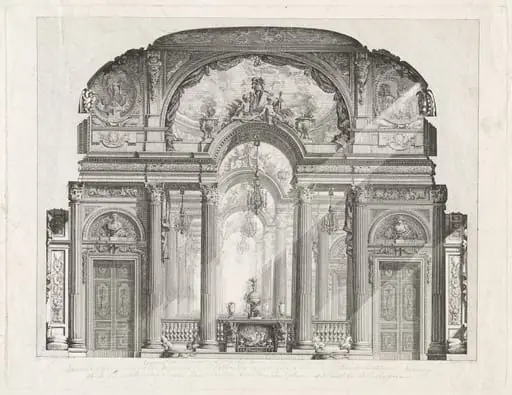 Cross Section of the Salon of the Palazzo Spinola, Genoa
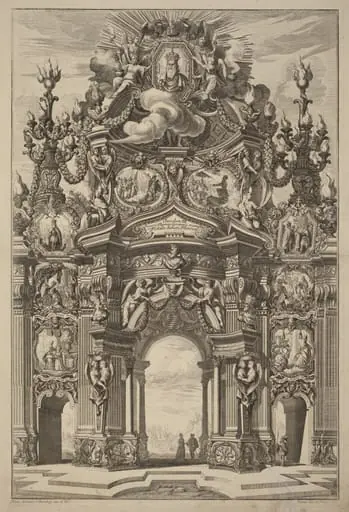 Triumphal Arch for Henry II
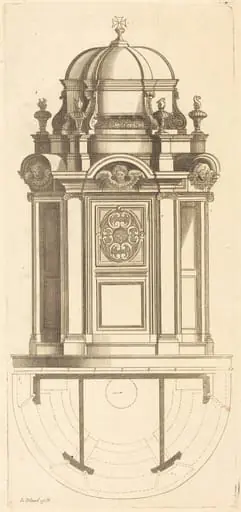 Plan et elevation des plus beaux confessionnaux de Paris, tres fidelemant mesure
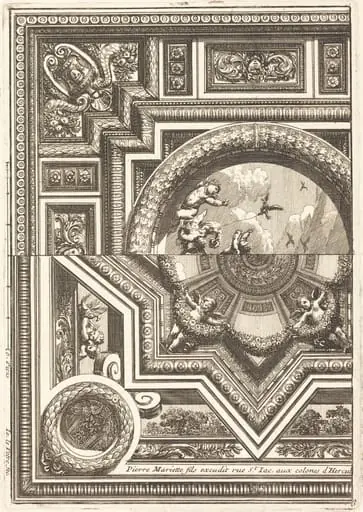 Quarts de plafons
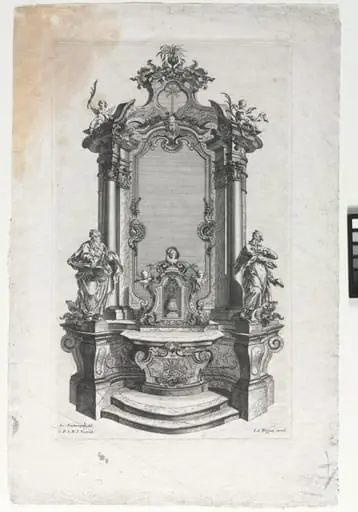 Model for Altar for Woodcarvers
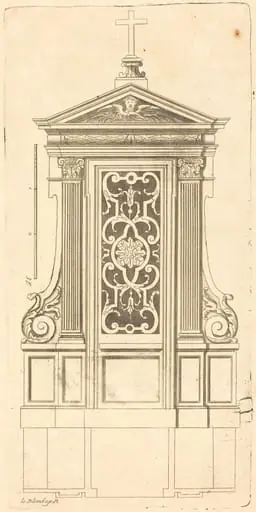 Plan et elevation des plus beaux confessionnaux de Paris, tres fidelemant mesure
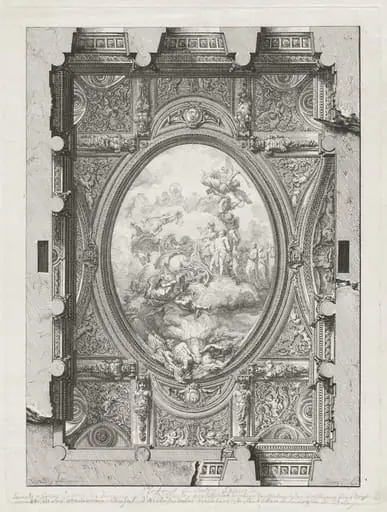 Design for the Ceiling of the Salon of the Palazzo Spinola, Genoa
 The Prima Macchina for the Chinea of 1751: Triumphal Arch for Roger I of Sicily
 Magnificent Catafalque in Honor of John III, King of Poland
 Triumphal Arch for Friedrich IV
 Fireplaces and Other Interior Decorations
 Magnificent Catafalque for a Deceased Noble