Artwork
Amphion
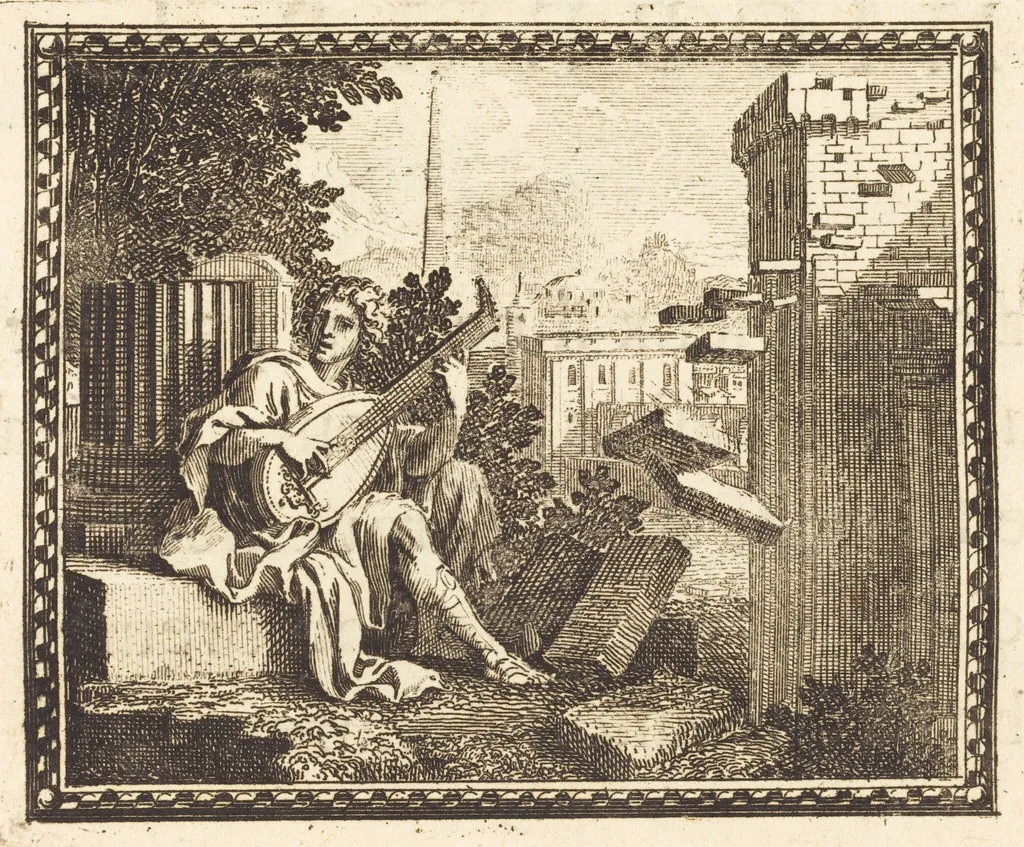
Amphion is an ink print by the Baroque artist Jean Lepautre. It dates from 1676 and is held in the collection of the National Gallery of Art.
About this work
This etching shows a man playing a big violin in front of a stone wall. He wears old-fashioned clothes and holds the bow like he means it.
The print comes from a 1676 book that mixes music and myth. It’s one of many small pictures made by punching lines into metal.
If you like sharp lines and old books, try another Lepautre, Jean.
Overview
Amphion is a print created by the French engraver Jean Lepautre in 1676. Executed on laid paper, the work combines etching and engraving techniques to produce a finely detailed image. The composition depicts a solitary figure playing a large violin before a stone wall, rendered in the crisp linear style characteristic of late‑seventeenth‑century French printmaking.
Subject & Meaning
The central figure is presented in period costume, holding a bow with decisive gesture as he draws the instrument’s strings. The title references Amphion, the mythic musician whose music could move stone, a theme echoed by the juxtaposition of the violinist and the solid wall behind him, suggesting the power of music to affect the inanimate.
Technique & Style
Lepautre employed a combination of etching—where lines are incised by acid—and engraving, which involves directly cutting the metal plate with a burin. This hybrid approach yields both the fluid, spontaneous marks of etching and the precise, controlled lines of engraving, resulting in a composition noted for its sharp delineation and subtle tonal variation.
History & Provenance
The print originally appeared in a 1676 publication that paired musical subjects with mythological narratives, a common format for illustrated books of the period. As part of that volume, Amphion circulated among collectors of printed music and classical literature, and later entered the holdings of several European libraries and private collections specializing in early modern prints.
Artist & collection


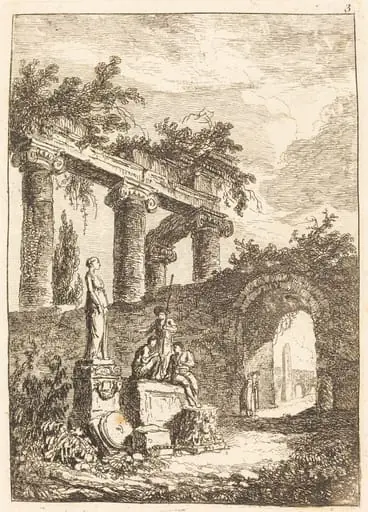 The Statue before the Ruins
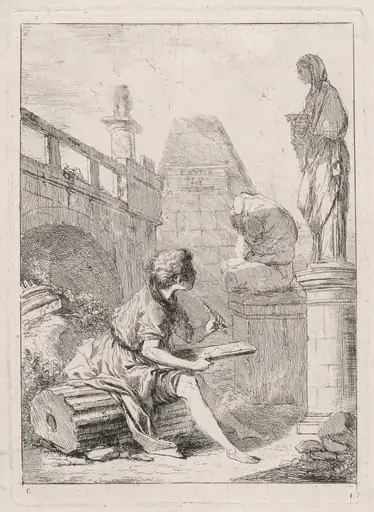 The Draftsman (Le dessinateur)
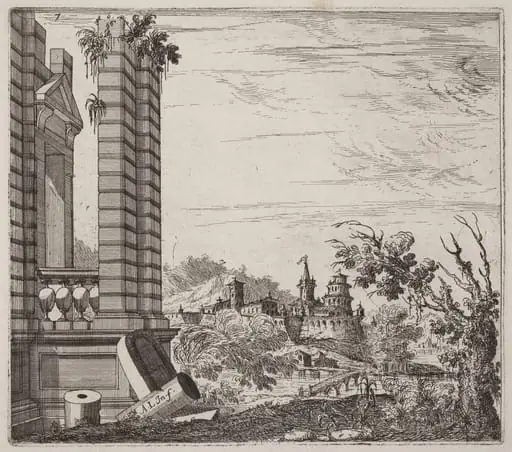 Fantastic River Landscape with Ruins and a Castle
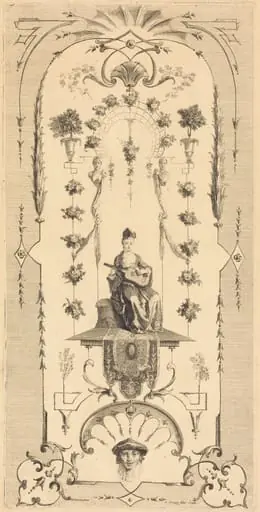 Seated Woman Playing a Guitar
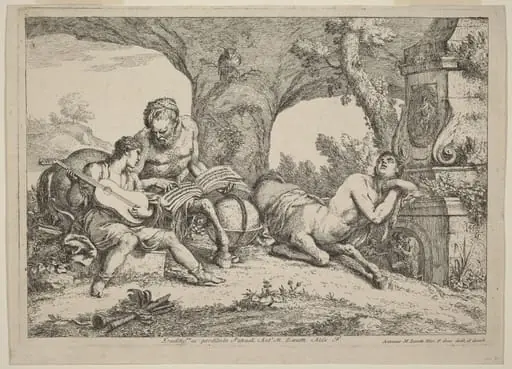 Chiron Teaching Music to Achilles
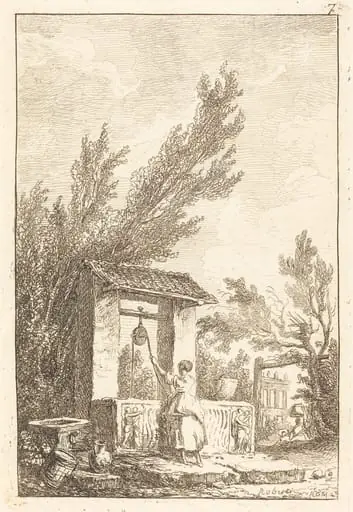 The Well
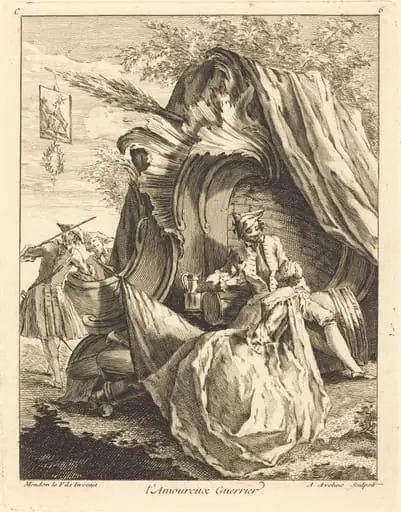 l'Amoureux Guerrier
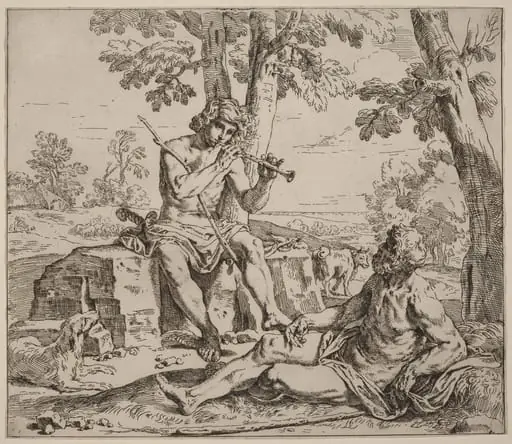 Mercury and Argus
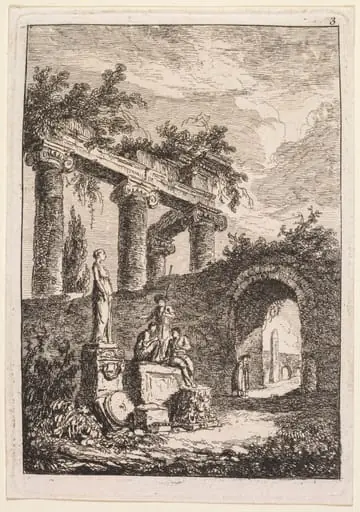 The Statue in Front of Ruins
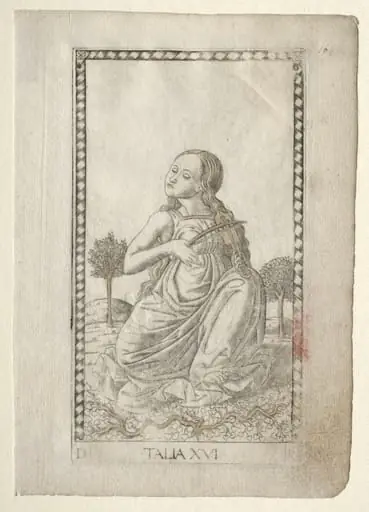 Thalia (comedy, pastoral poetry) (from the Tarocchi series D: Apollo and the Muses, #16)
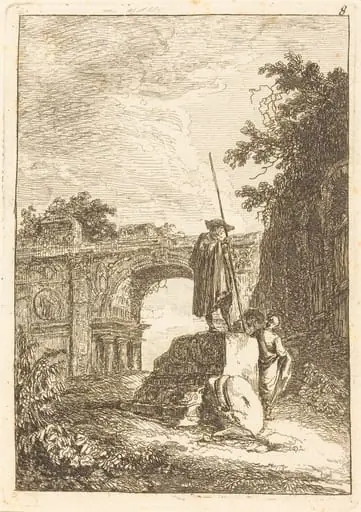 The Triumphal Arch
 Minerva Changing Arachne into a Spider