Artwork
Quarts de plafons
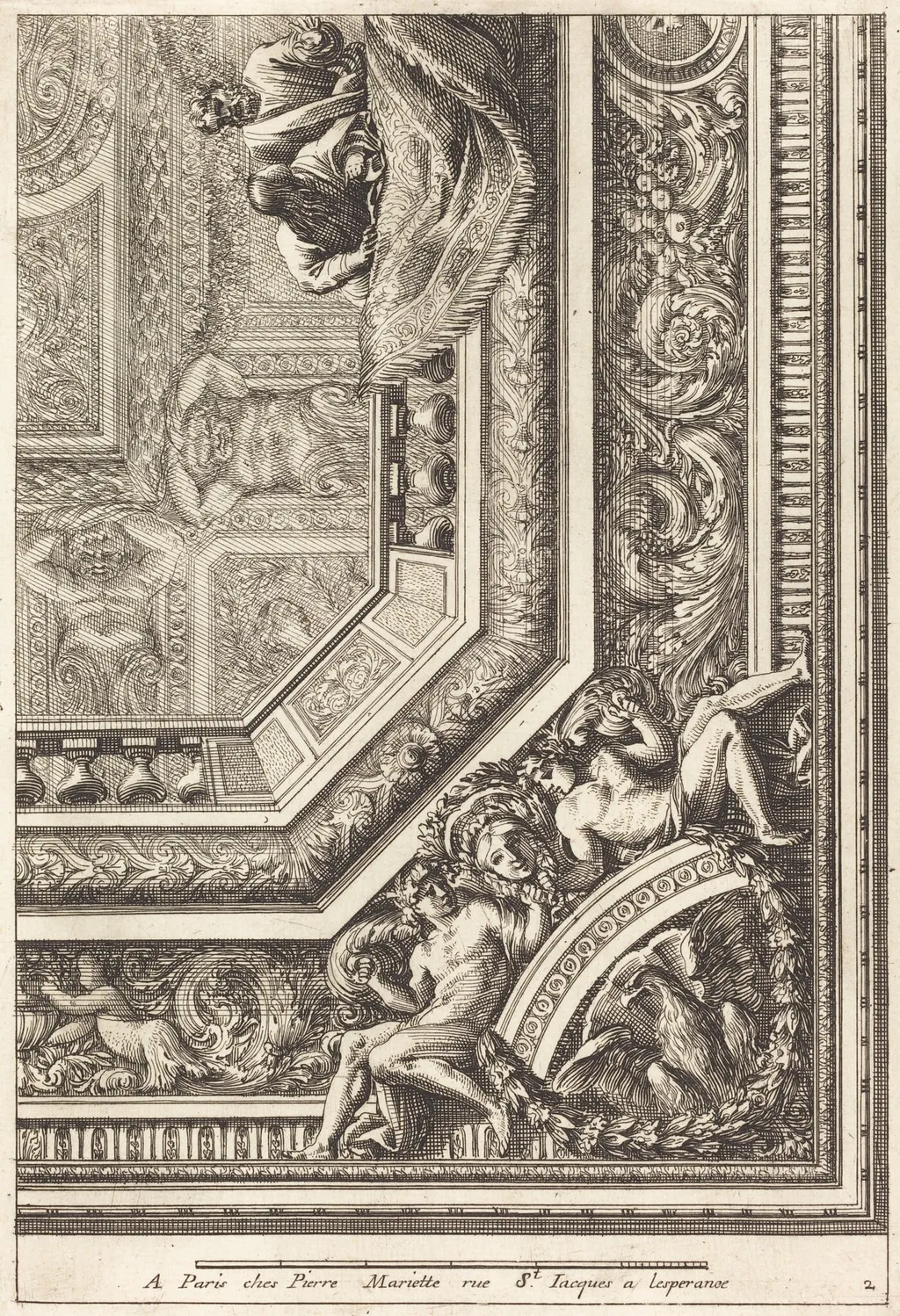
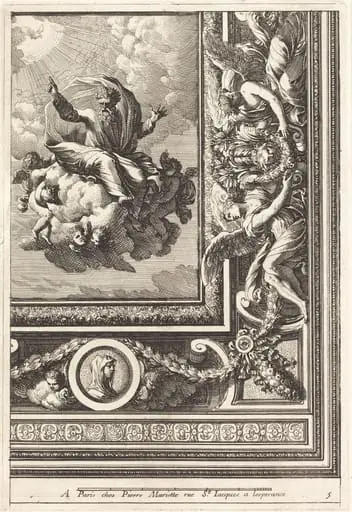
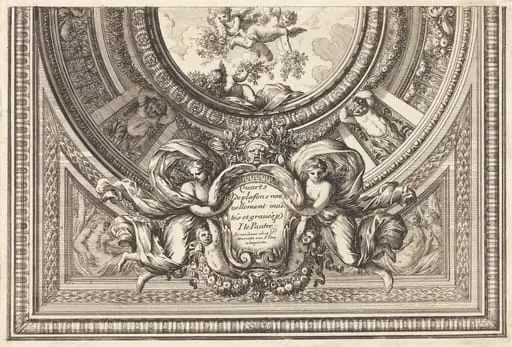
Quarts de plafons is an ink print by the Baroque artist Jean Lepautre. It dates from 1650 and is held in the collection of the National Gallery of Art.
About this work
Overview
The work belongs to the print tradition of architectural ornament, intended for artists and craftsmen as a reference for design.
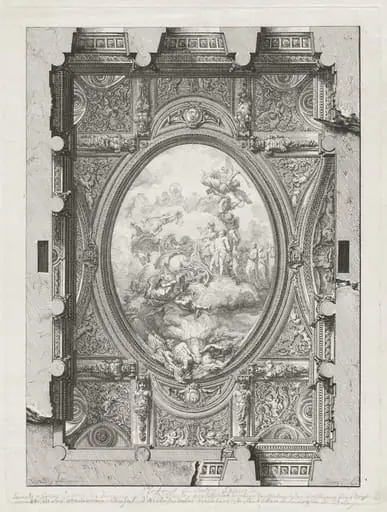
Quarts de plafons is an etching by Jean Lepautre, dated to around 1650. It depicts two ornate architectural corners of a ceiling, rendered in fine ink lines. The composition is densely packed with decorative elements—scrolls, foliage, and geometric motifs—suggesting an idealized interior space rather than a specific location. The work belongs to the print tradition of architectural ornament, intended for artists and craftsmen as a reference for design.
Subject & Meaning
The scene presents two symmetrical ceiling bays, each featuring mythological or allegorical figures. On the left, a winged figure perches on a cloud, holding a scroll; below, a kneeling figure mirrors the gesture. The right side repeats this arrangement with a cherub and a draped form. These figures likely symbolize inspiration or divine knowledge, common in Baroque decorative programs meant to elevate the status of royal or noble interiors.
Technique & Style
Lepautre employed etching to achieve fine, controlled lines, allowing intricate detail in the carving-like patterns. Shading and cross-hatching create a sense of volume and depth, transforming flat paper into the illusion of sculpted stucco and gilded relief. The precision of the lines reflects the technical discipline of printmaking, where each stroke was carefully bitten into the metal plate to replicate the complexity of architectural ornament.
History & Provenance
Created in mid-17th century France, the print was likely produced as part of a series for architects, decorators, or patrons interested in courtly interior design. Lepautre, known for his architectural engravings, circulated such plates among artisans who translated them into actual ceiling decorations. No definitive provenance is recorded, but similar works were collected in royal and academic libraries of the period.
Context
During the reign of Louis XIV, elaborate ceiling decorations became central to French court aesthetics, blending classical motifs with Baroque dynamism. Lepautre’s prints served as portable templates for these grand projects, bridging the gap between design and execution. His work reflects the growing professionalization of decorative arts, where printed images enabled the replication of elite styles across France and beyond.
Legacy
Quarts de plafons exemplifies how printmaking extended the reach of architectural design beyond the palace walls. Lepautre’s plates influenced generations of craftsmen and designers, preserving Baroque ornamental language in a reproducible form. Though not widely exhibited today, such prints remain vital documents in the study of early modern decorative practice and the transmission of visual culture.
Artist & collection


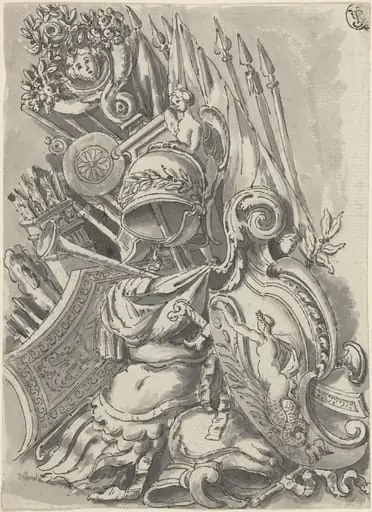
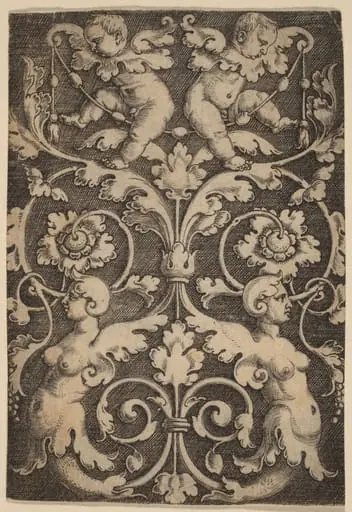 Upright Ornament with Two Sirens
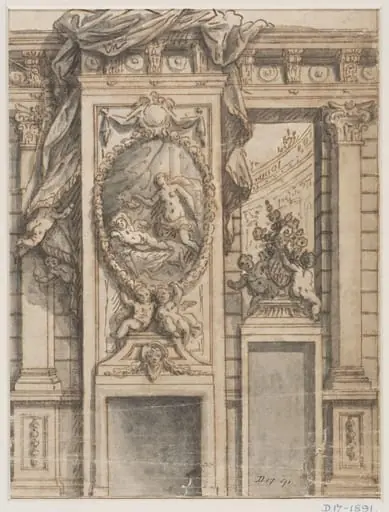 Design for wall decoration, possibly at Chatsworth, Derbyshire
![Renouvellement d'Alliance avec les Suisses 1663 (Renewal of Alliance with the Swiss 1663) [pl. 18], by Jean-Baptiste Massé](https://artifactworldgallery.com/img/jean-baptiste-masse--renouvellement-d-alliance-avec-les-suisses-1663-renewal-of-a--b0549fa383211be6-w320.webp) Renouvellement d'Alliance avec les Suisses 1663 (Renewal of Alliance with the Swiss 1663) [pl. 18]
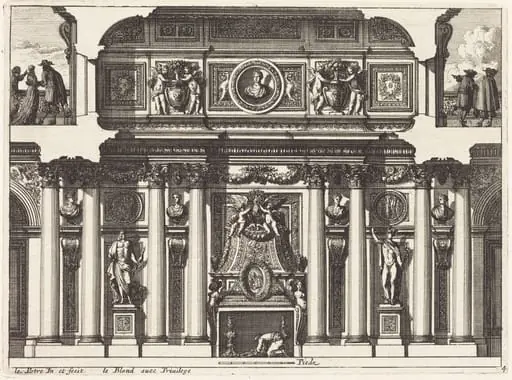
Renouvellement d'Alliance avec les Suisses 1663 (Renewal of Alliance with the Swiss 1663) [pl. 18]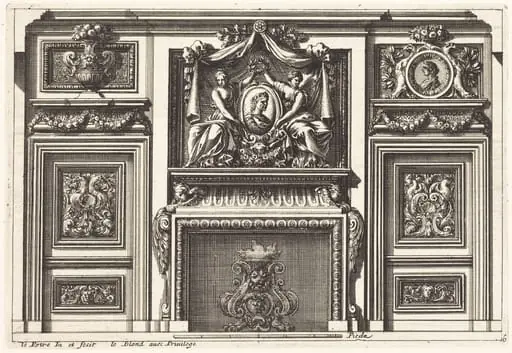 Fireplaces and Other Interior Decorations
 Design for the Ceiling of the Salon of the Palazzo Spinola, Genoa
![La Prééminence de la France reconnue par l'Espagne 1662 (The Preeminance of France Recognized by Spain 1662) [pl. 17], by Jean-Baptiste Massé](https://artifactworldgallery.com/img/jean-baptiste-masse--la-preeminence-de-la-france-reconnue-par-l-espagne-1662-the--0865c0d8271fc4b5-w320.webp) La Prééminence de la France reconnue par l'Espagne 1662 (The Preeminance of France Recognized by Spain 1662) [pl. 17]
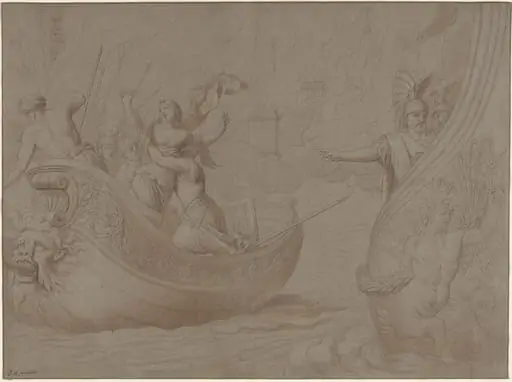
La Prééminence de la France reconnue par l'Espagne 1662 (The Preeminance of France Recognized by Spain 1662) [pl. 17] Ornamental Panel Surmounted by an Eagle and the Motto NATOS ET NOSTRA TUEMUR