Artwork
Livre de Tables
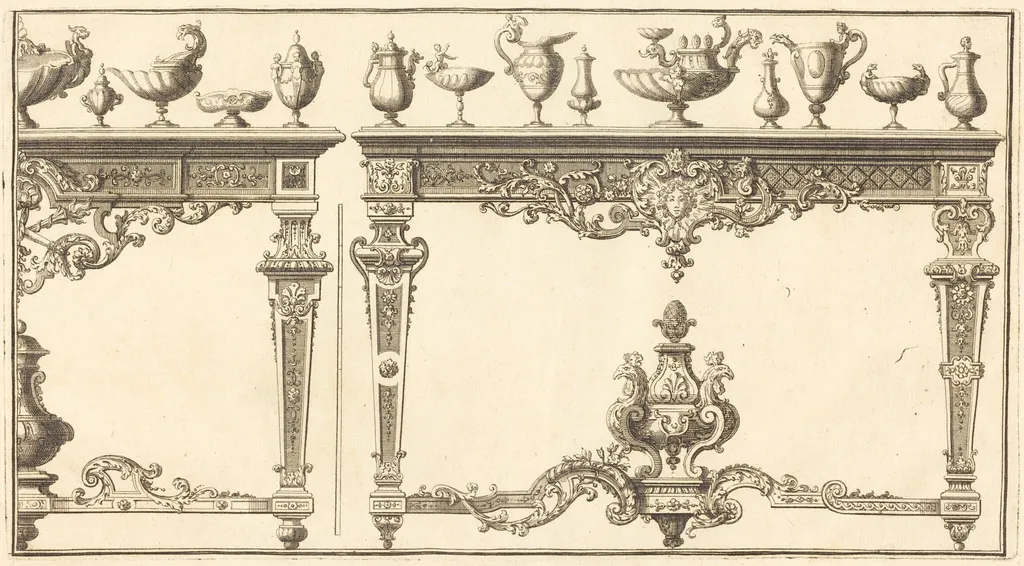
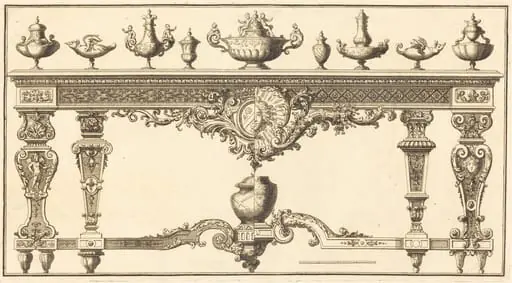
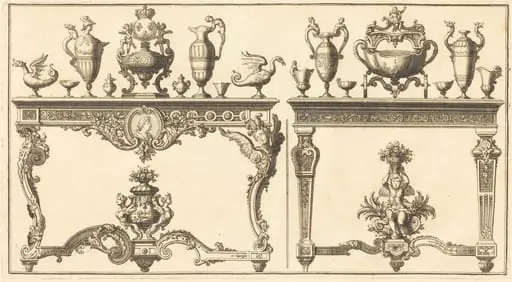
Livre de Tables is an ink print by the Baroque artist Pierre Lepautre. It dates from 1702 and is held in the collection of the National Gallery of Art.
About this work
Overview
The overall effect emphasizes elaborate decorative detail characteristic of early‑18th‑century French design.
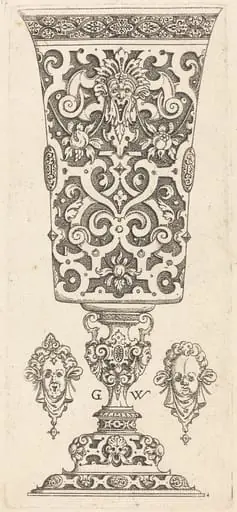
Pierre Lepautre’s 1702 etching, titled *Livre de Tables*, presents a richly ornamented fireplace interior. The composition centers on a mantel adorned with scrollwork, foliage, and diminutive figures, while the upper shelf displays an array of vases, pitchers and cups, each rendered with twisted handles and swirling motifs. The overall effect emphasizes elaborate decorative detail characteristic of early‑18th‑century French design.
Subject & Meaning
The print functions as a visual catalogue of interior décor, illustrating the luxurious furnishings favored by aristocratic households of the period. By arranging the objects on a single architectural setting, Lepautre highlights the harmony between functional elements—such as the fireplace—and ornamental accessories, suggesting an ideal of refined taste and domestic elegance.
Technique & Style
Executed in fine etching, the image relies on a series of carefully incised lines to achieve intricate shading and texture. Lepautre’s hand is evident in the precise rendering of curves and the delicate modulation of light across metal surfaces, reflecting the broader Baroque penchant for elaborate ornamentation and the technical rigor of printmaking in the early 1700s.
History & Provenance
Created in 1702, the work belongs to Lepautre’s output during a prolific phase of French print production. While specific ownership records are scarce, the etching has been documented in several early modern print collections, indicating its circulation among connoisseurs of decorative arts and its role as a reference for contemporary interior designers.
Artist & collection


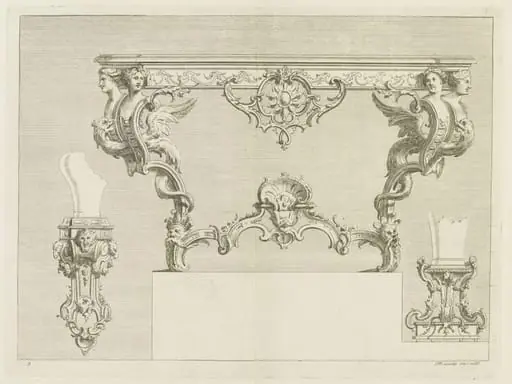 Nouveaux Desseins de Pieds de Tables et de Vases et Consoles de sculpture en bois Inventes par le sieur Pineau sculpteur
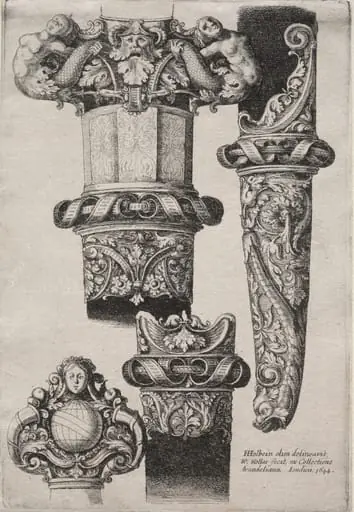 Design for Daggers
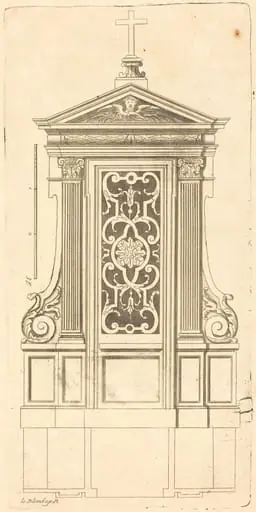 Plan et elevation des plus beaux confessionnaux de Paris, tres fidelemant mesure
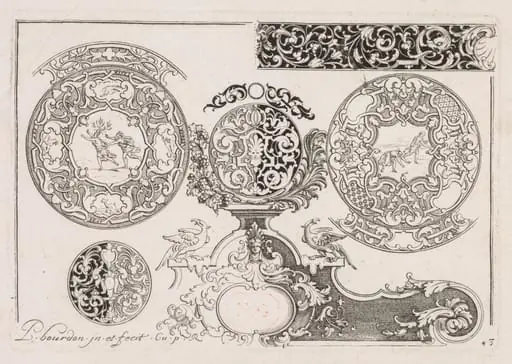 # 3 from " Livre second essais de Gravjre "
Second book of Engraved Designs
# 3 from " Livre second essais de Gravjre "
Second book of Engraved Designs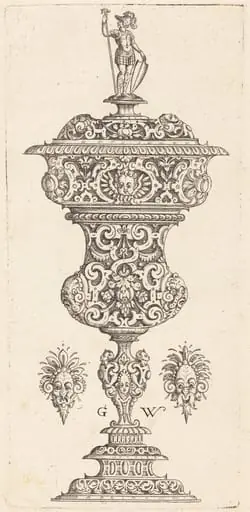 Goblet with lid surmounted by a Roman soldier
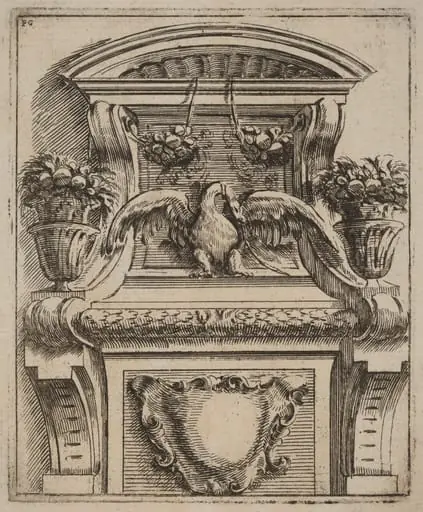 Architectural Motif with a Bird
 Goblet with base decorated with two large scallops