Artwork
The Judgment of Paris [recto]
![The Judgment of Paris [recto], by Guillaume Lethière, chalk, 1812](https://artifactworldgallery.com/img/guillaume-lethiere--the-judgment-of-paris-recto--1df8771f117e8a0e-w1024.webp)
The Judgment of Paris [recto] is a chalk drawing by the Romanticist artist Guillaume Lethière. It dates from 1812 and is held in the collection of the National Gallery of Art.
About this work
The painting is called The Judgment of Paris.
It was made around 1812, a time when artists were exploring new ways to express emotion. The fact that it's a watercolor over black chalk on wove paper, squared in black chalk for transfer, suggests the artist was preparing for further work.
You can learn more about this style by looking into the movement: Romanticism.
Overview
Guillaume Lethière’s drawing titled The Judgment of Paris, executed around 1812, is a watercolor composition rendered on wove paper. The work combines black chalk underdrawing with transparent watercolor washes, and the surface is marked with a grid of black chalk lines to aid in transferring the image.
Subject & Meaning
The image depicts the mythological episode in which Paris, a Trojan prince, must choose the most beautiful goddess among Hera, Athena, and Aphrodite. This narrative, popular in classical art, serves as a vehicle for exploring themes of beauty, choice, and the consequences of desire.
Technique & Style
Lethière employed a layered approach: an initial sketch in black chalk establishes form and composition, followed by watercolor applied over the chalk. The paper is squared with chalk marks, a preparatory method that assists in scaling or copying the design, indicating the drawing may have been a study for a larger composition.
History & Provenance
Created in the early nineteenth century, the drawing belongs to Lethière’s output during a period when Romantic artists were revisiting classical subjects with heightened emotional expression. Its provenance prior to museum acquisition is not documented in the available sources.
Context
The work reflects the Romantic era’s fascination with mythological subjects rendered with expressive line and color. Watercolor, less common for finished works at the time, underscores the experimental spirit of artists seeking new means to convey mood and narrative.
Artist & collection


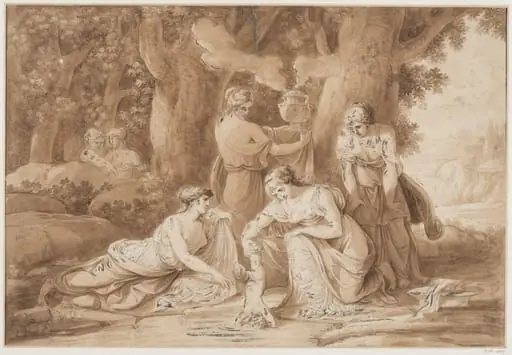 Thetis dipping Achilles
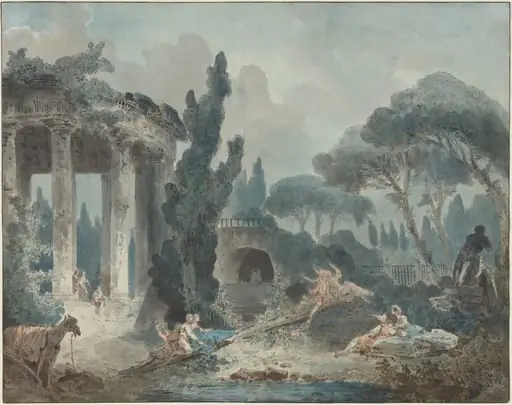 The Seesaw
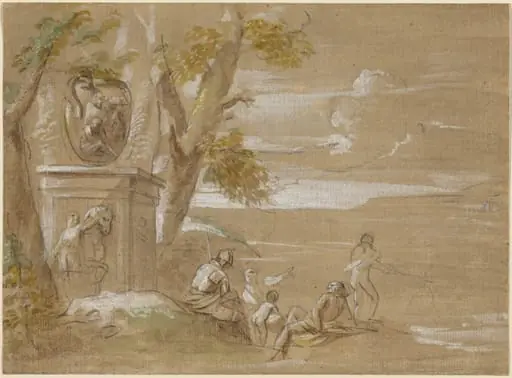 A Landscape with Seated Soldiers and Fishermen
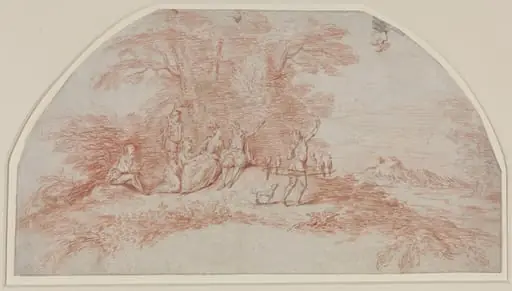 A Fête Galante with Falconers
 Cheerfulness
 Nudes in a Landscape
 Cymon, Iphigeneia and two female attendants in a landscape.
 Landscape with a Satyr Family and Classical Sculpture
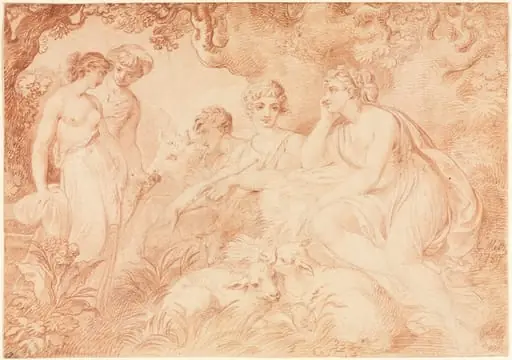 Shepherds and Shepherdesses
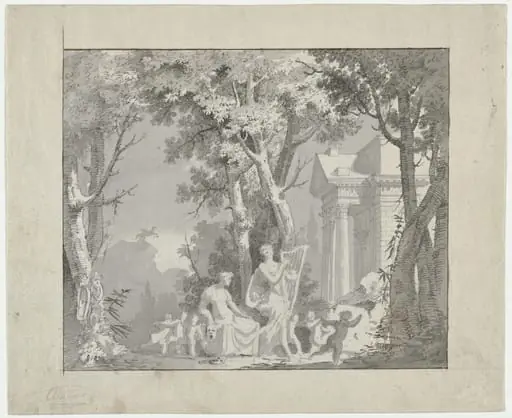 Classical Scene
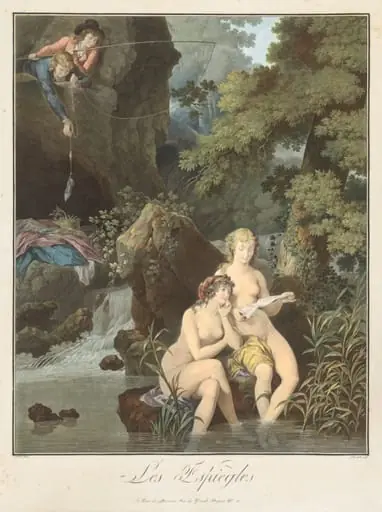 The Pranksters (Les Espiègles)
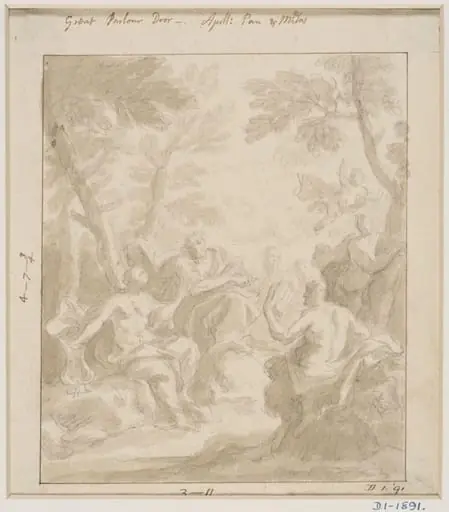 Design for an overdoor painting depicting Apollo, Pan and Midas