Artwork
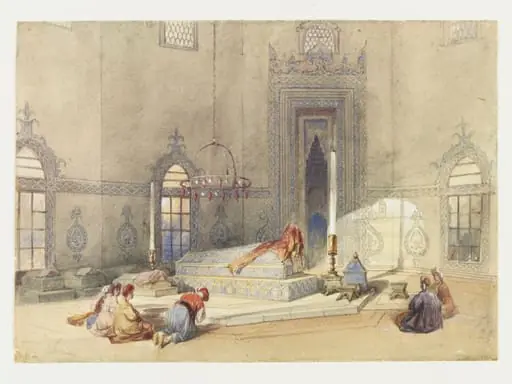
Interior of the Tomb of Sultan Mehmet I, Bursa
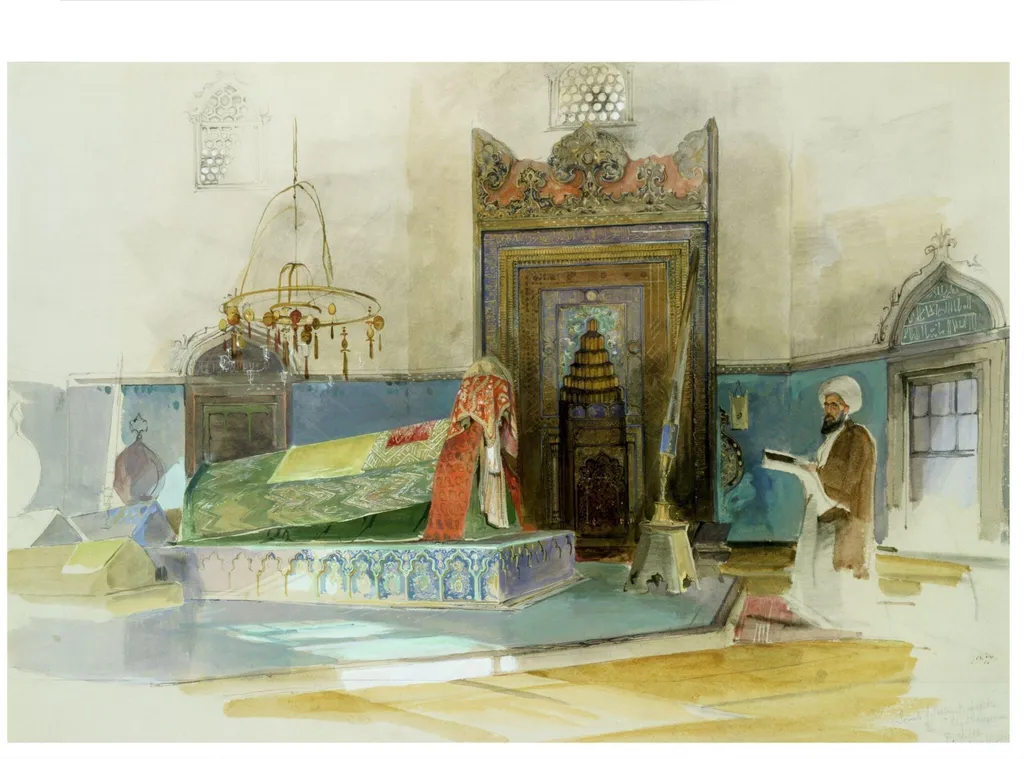
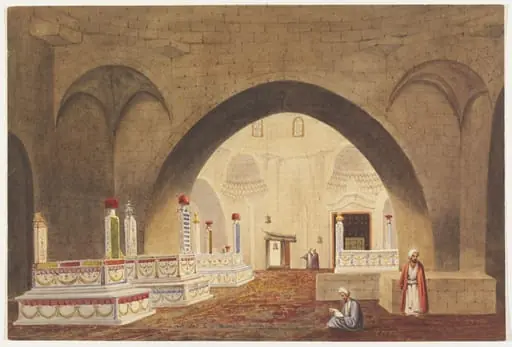
Interior of the Tomb of Sultan Mehmet I, Bursa is a watercolor work on paper by the Romanticist artist John Frederick Lewis. It dates from 1841 and is held in the collection of the Victoria and Albert Museum.
About this work
Overview
The work records architectural details and ceremonial textiles present at the tomb of Sultan Mehmet I, who reigned from 1413 to 1421.
Painted in the early 1840s by British artist William Lewis, this watercolour captures the interior of the Yesil Türbe in Bursa, the first capital of the Ottoman Empire. Lewis documented the site during a journey from Rome through the Balkans to Constantinople and onward to Egypt. The work records architectural details and ceremonial textiles present at the tomb of Sultan Mehmet I, who reigned from 1413 to 1421.
Subject & Meaning
The painting depicts the tomb chamber of Sultan Mehmet I, surrounded by silk shawls traditionally draped over the sarcophagus as signs of reverence. These textiles, now removed, once signaled ongoing ritual attention to the deceased ruler. The presence of a robed figure suggests a religious custodian, reinforcing the site’s function as both a mausoleum and a place of spiritual continuity within the Ottoman imperial tradition.
Technique & Style
Executed in watercolour, the work employs delicate washes to render the intricate tilework and the soft folds of silk. Lewis’s attention to surface texture and light reflects a topographical approach common among 19th-century travelers documenting foreign architecture. The composition is observational rather than idealized, emphasizing material detail over dramatic effect.
History & Provenance
Lewis visited Bursa likely in late 1841, en route from Constantinople to Egypt. The watercolour was produced during his travels through the Ottoman territories, part of a broader European interest in documenting Islamic monuments. The piece entered the collection of the Victoria and Albert Museum, where it remains as a record of the tomb’s appearance before modern conservation practices altered its display.
Context
The Yesil Türbe, built between 1419 and 1421, was part of a larger religious complex including a mosque and madrasa. As one of the earliest major Ottoman imperial tombs, its tiled interior and architectural harmony set a precedent for later imperial mausoleums. Lewis’s depiction preserves a moment when the tomb was still actively maintained with ceremonial textiles, a practice that faded in the 19th century.
Legacy
Lewis’s watercolour serves as a historical document of the tomb’s appearance before 20th-century restoration efforts. It reflects the European traveler’s gaze on Islamic heritage during a period of increasing cultural exchange and colonial curiosity. The work contributes to the visual archive of Ottoman architecture as seen through the eyes of a 19th-century British artist.
Artist & collection
Artist
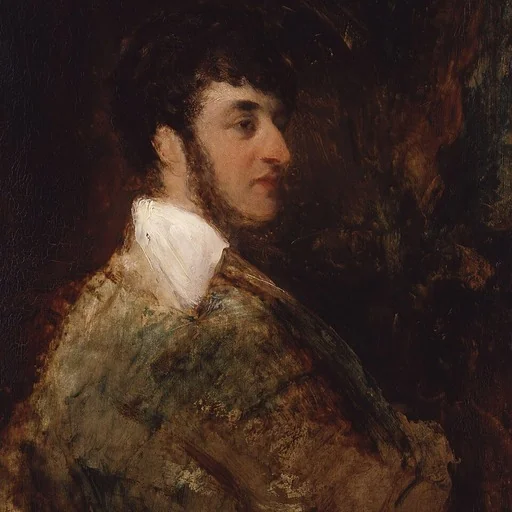
John Frederick Lewis (1804–1876) was an English Orientalist painter. He specialized in Oriental and Mediterranean scenes in detailed watercolour or oils, very often repeating the same composition in a version in each…

 Mausoleum of Mehmet Ali and his family at Cairo
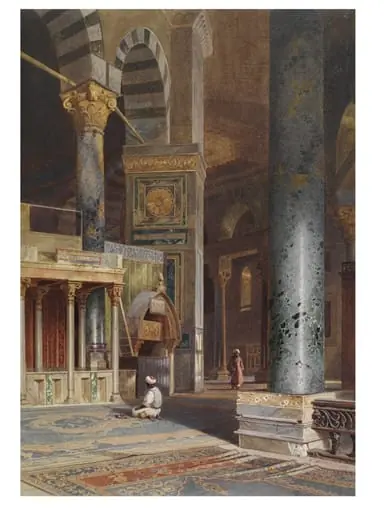 Interior of the Dome of the Rock, Jerusalem
 Interior of the Golden Temple, Amritsar
 The Mausoleum of Sultan Mahomed, Brusa
 Mosque. Souk el Hommos. Byrout
 Untitled
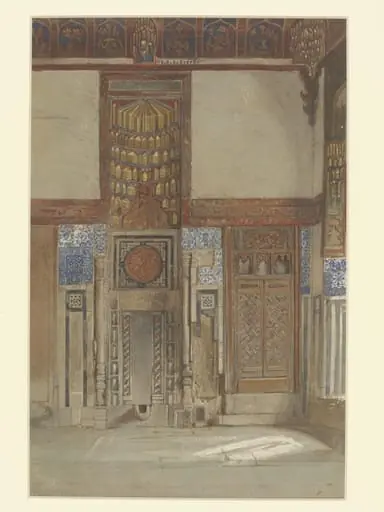 An Interior (the Eastern End) in the House of the Mufti Sheikh El Mahadi
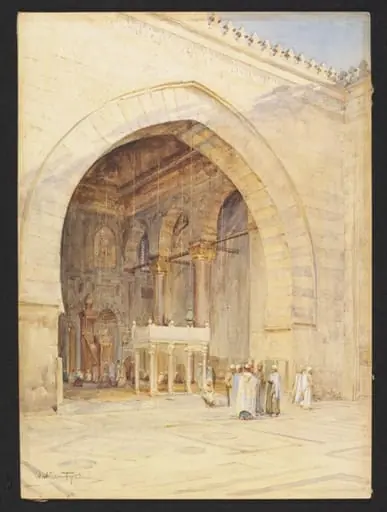 The Mosque of Berkouk Cairo
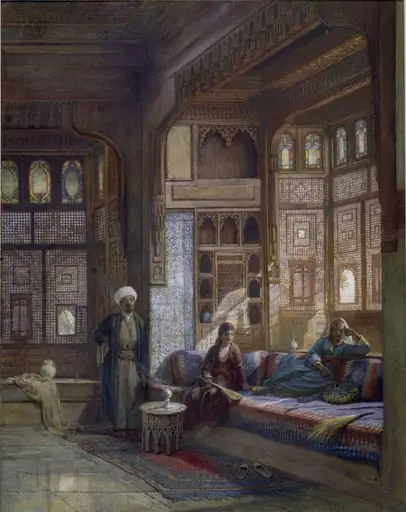 A room in the house of Shayk Sadat, Cairo
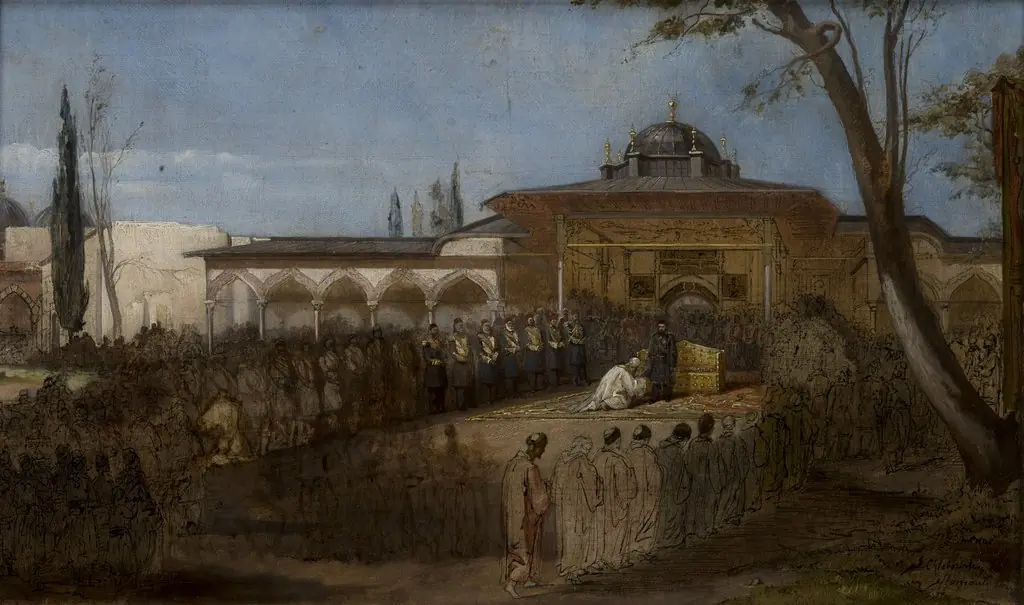 Scene with the Sultan