Artwork
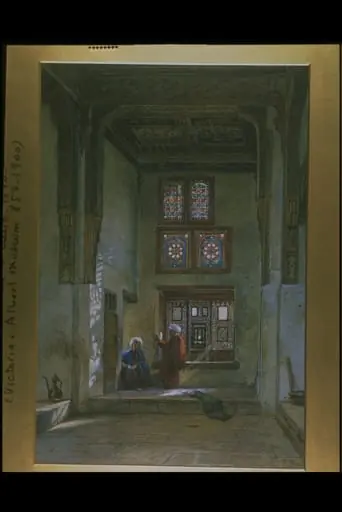
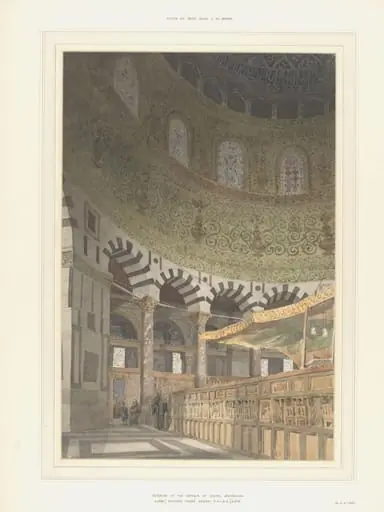
An Interior (the Eastern End) in the House of the Mufti Sheikh El Mahadi
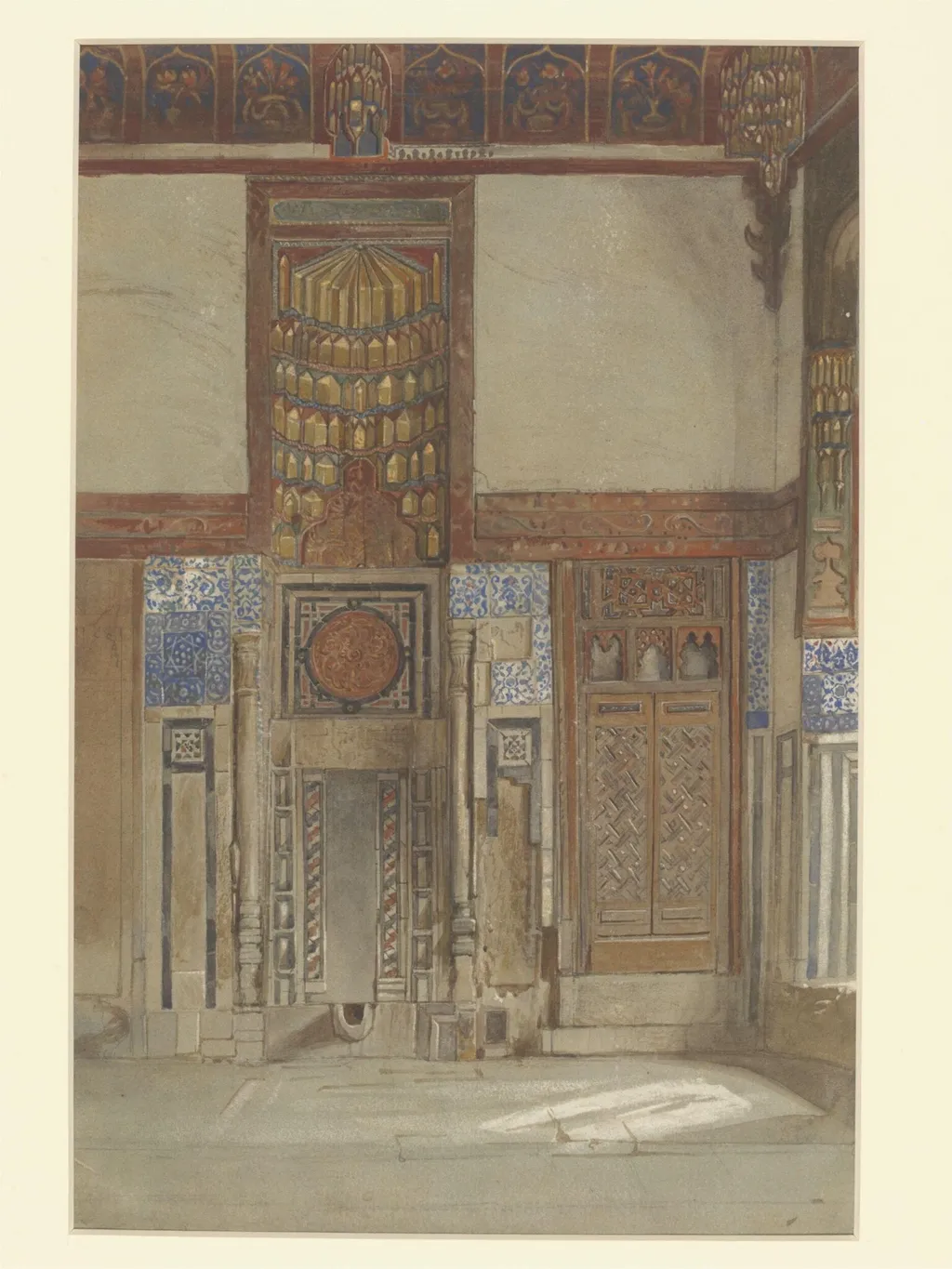
An Interior (the Eastern End) in the House of the Mufti Sheikh El Mahadi is a watercolor work on paper by the Impressionist artist Frank Dillon. It dates from 1874 and is held in the collection of the Victoria and Albert Museum.
About this work
Overview
Created around 1874, this watercolor by Frank Dillon captures a specific interior space in the home of Sheikh El Mahadi, a mufti in Egypt.
Created around 1874, this watercolor by Frank Dillon captures a specific interior space in the home of Sheikh El Mahadi, a mufti in Egypt. The work is part of the Victoria and Albert Museum’s collection and exemplifies Dillon’s interest in documenting architectural details of domestic life in the region. Rendered in delicate washes, the painting avoids idealization, instead emphasizing the quiet wear of everyday use.
Subject & Meaning
The scene depicts the eastern corner of a room, centered on an open wooden door revealing stored objects and a half-moon window beneath a faded tile border. The composition invites contemplation of private, lived space rather than ceremonial grandeur. The presence of modest, utilitarian items and signs of age suggest a focus on authenticity, reflecting the quiet dignity of daily existence within a religious household.
Technique & Style
Dillon employed transparent watercolor to build subtle layers of color and texture, capturing the roughness of plaster, the grain of wood, and the irregularity of tiled surfaces. Delicate red and gold arcs along the ceiling contrast with muted tones elsewhere, guiding the eye without dominating. The absence of sharp outlines and the soft blending of hues reinforce the sense of a space observed closely, not staged.
History & Provenance
The painting was likely made during Dillon’s time in Egypt in the early 1870s, when he traveled to record architectural interiors. It entered the Victoria and Albert Museum’s collection through its broader acquisition of 19th-century topographical watercolors. Its preservation reflects institutional interest in non-European domestic architecture as documented by Western artists during the colonial era.
Context
Dillon’s work emerged amid a broader European fascination with North African and Middle Eastern interiors, yet his approach diverged from exoticism. Rather than emphasizing ornamentation or grandeur, he recorded the subtle effects of time and use—chipped paint, uneven tiles, and worn wood—aligning his practice with emerging documentary tendencies in Victorian visual culture.
Legacy
Though not widely known today, Dillon’s watercolors contribute to a historical record of domestic architecture in 19th-century Egypt. His attention to unidealized detail offers a counterpoint to more theatrical depictions of the region. The work remains a quiet reference for scholars studying how Western artists engaged with everyday spaces beyond the monumental.
Artist & collection

Artist
Frank Edward Dillon, known in later years as Pop Dillon, was an American baseball player and manager.


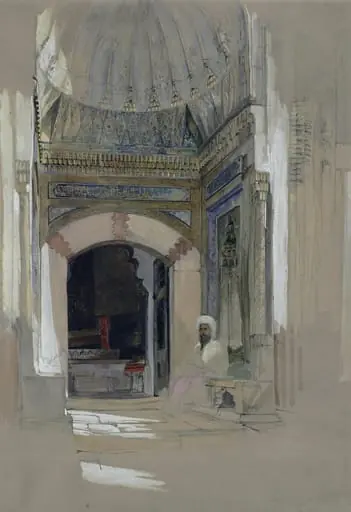 Entrance to the Tomb of Sultan Mehmet I, Bursa
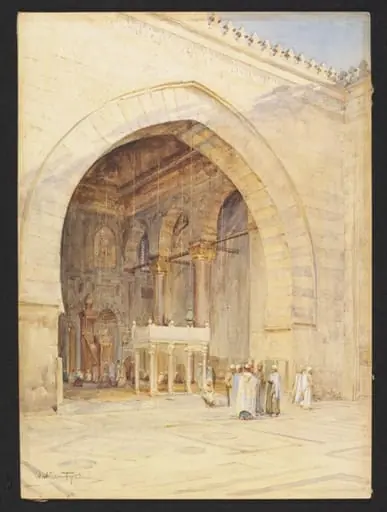 The Mosque of Berkouk Cairo
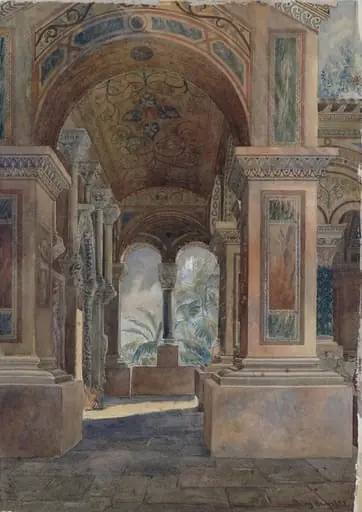 Interior of the Byzantine Court
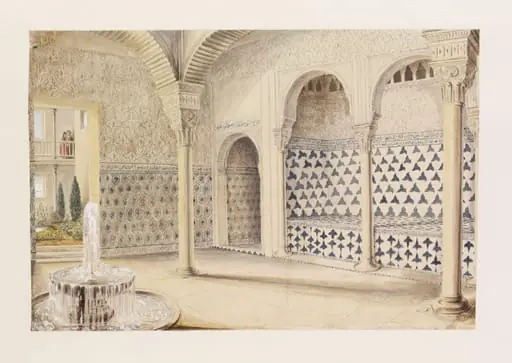 The Room of the Beds in the Alhambra
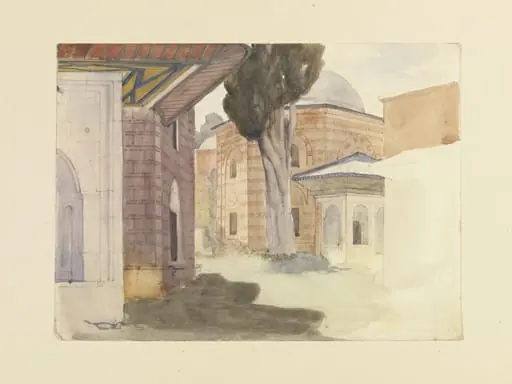 Türbes in the Royal Cemetery of the Muradiye (Murad II), Bursa
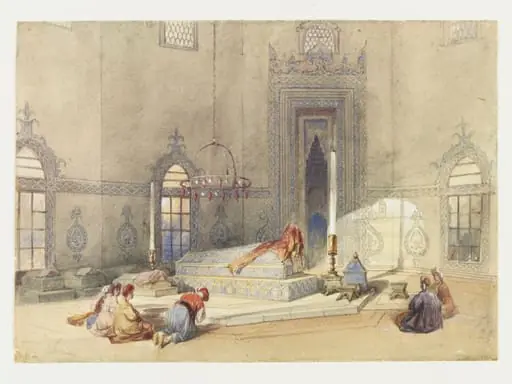 The Mausoleum of Sultan Mahomed, Brusa
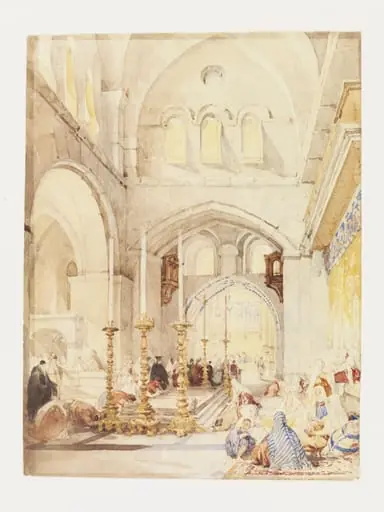 Entrance to the Church of the Holy Sepulchre
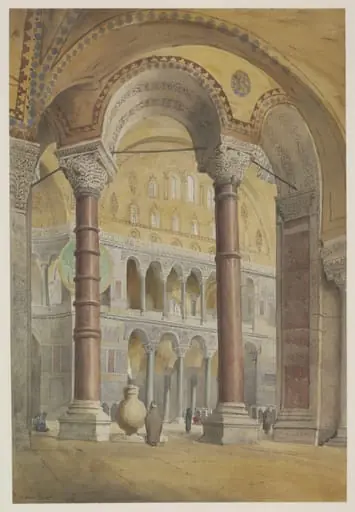 Interior of Santa Sophia, Constantinople
 The Mosque of Omar