Artwork
Interior of a Harem
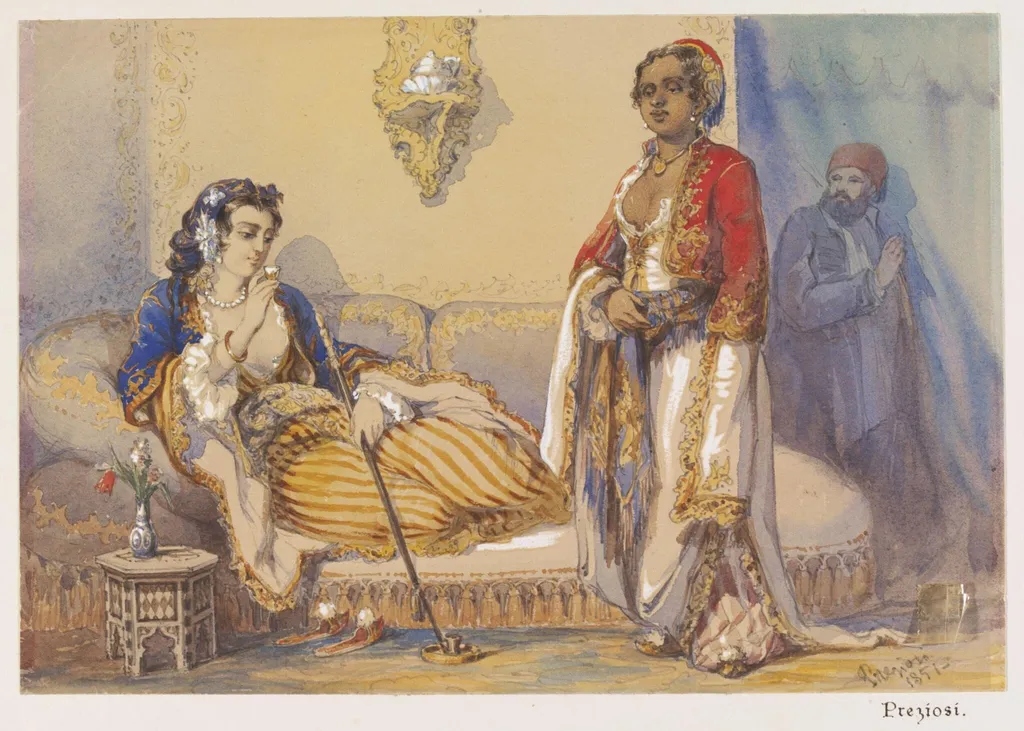
Interior of a Harem is a watercolor work on paper by the Impressionist artist Aloysius Rosarius Amadeus Raymondus Andreas Preziosi. It dates from 1851 and is held in the collection of the Victoria and Albert Museum.
About this work
The painting is called "Interior of a Harem" by Preziosi.
It's from 1851 and made with watercolour.
The artist likely used models to recreate this scene, which is interesting because he wouldn't normally be allowed to see a harem.
He might have based it on a visit to a Turkish friend's house.
You can look up the Victoria and Albert Museum to learn more about this work.
Overview
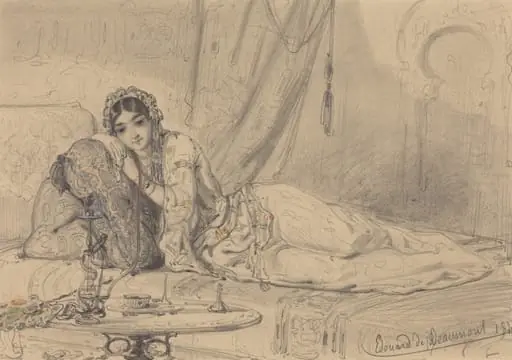
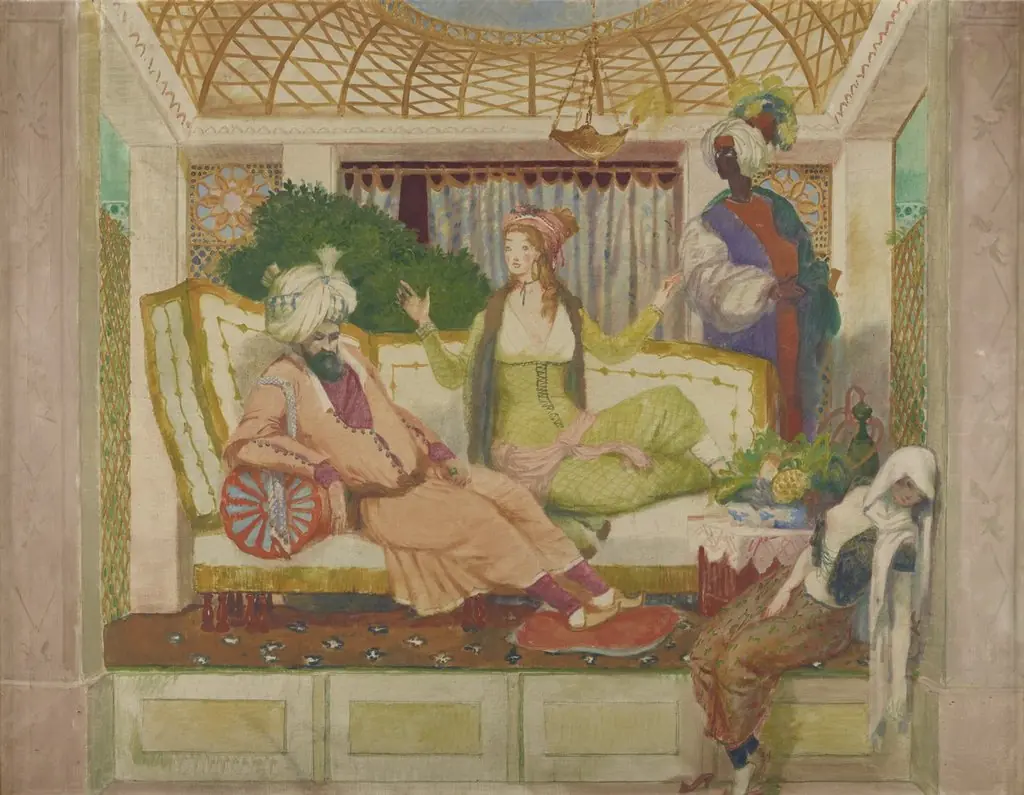
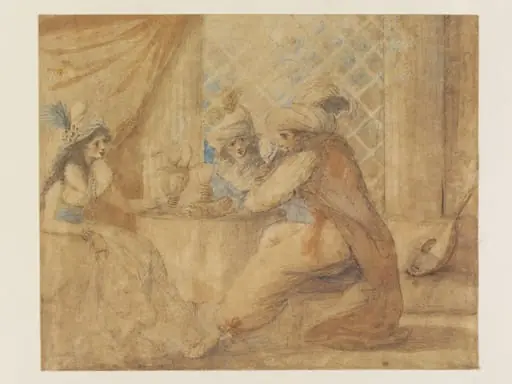
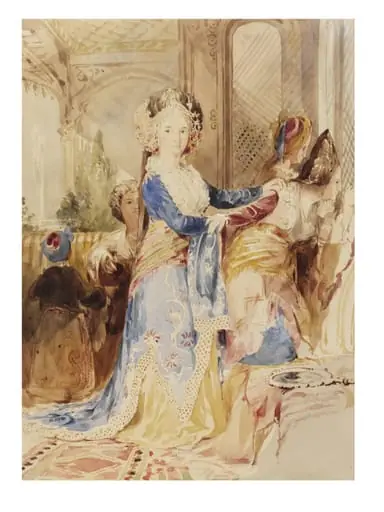
Interior of a Harem, a watercolour executed in 1851 by the Italian painter Luigi Preziosi, depicts a domestic interior populated by women and a servant. The composition presents a modestly furnished room where a woman smokes a pipe, holds a coffee cup, and a black slave stands nearby, while a male figure enters from the background.
Subject & Meaning
The scene illustrates a typical harem setting, emphasizing everyday activities such as smoking a chubuk—a pipe filled with aromatic tobacco—and drinking coffee. The presence of a Nubian‑type slave and the subtle hierarchy suggested by the entering master convey the social structure within Ottoman household spaces.
Technique & Style
Preziosi employs a delicate watercolour technique, rendering the furnishings with a blend of Eastern and Western motifs. Notable are the rococo‑inspired wall bracket and a fringed sofa that replace the traditional raised wooden platform, reflecting the mid‑nineteenth‑century diffusion of French decorative tastes into Turkish interiors.
History & Provenance
The work likely derives from studio models rather than direct observation, as non‑Muslim artists were generally barred from harem interiors. Scholars suggest it may be based on a visit to a Turkish acquaintance’s home. A later version, dated 1852 and purportedly commissioned for Empress Eugénie, presents a more sensationalized, Orientalist interpretation.
Context
During the 1800s, French rococo elements became fashionable in Ottoman elite homes, often in a simplified form. This cross‑cultural exchange is evident in the painting’s hybrid décor, which merges European ornamental details with traditional Turkish domestic arrangements.
Artist & collection
Artist
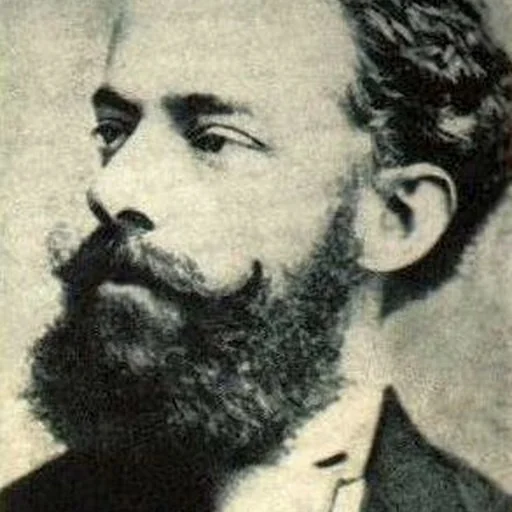
Aloysius Rosarius Amadeus Raymondus Andreas Preziosi
Amedeo Preziosi (2 December 1816 – 27 September 1882) was a Maltese painter and traveler known for his watercolours and prints of Constantinople, the Balkans, Ottoman Empire, and Romania.

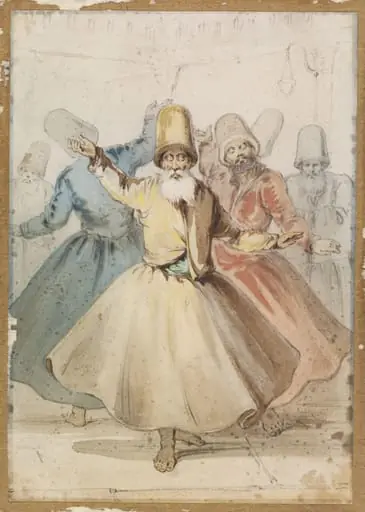
![Portrait of Trehem[?]Walid 'Abdullah, an Arab from Iraq, by Aloysius Rosarius Amadeus Raymondus Andreas Preziosi](https://artifactworldgallery.com/img/aloysius-rosarius-amadeus-raymondus-andreas-preziosi--portrait-of-trehem-walid-abdullah-an-arab-from-iraq--2476a3692d0929a5-w320.webp)
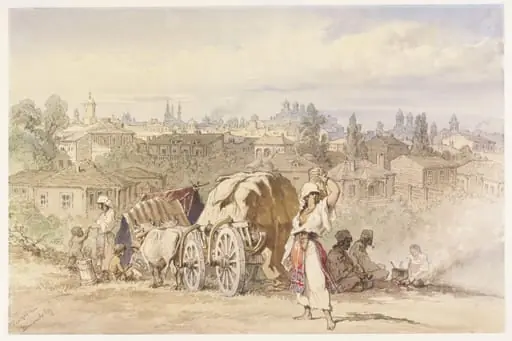
![A Seller of Milk-puddings [Mahallebi], by Aloysius Rosarius Amadeus Raymondus Andreas Preziosi](https://artifactworldgallery.com/img/aloysius-rosarius-amadeus-raymondus-andreas-preziosi--a-seller-of-milk-puddings-mahallebi--3da9fd2db017402d-w320.webp)