Artwork
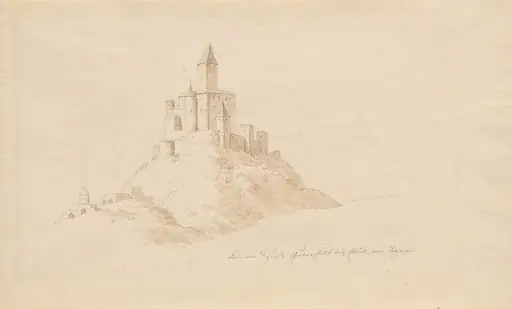
Schloss Landstuhl b. Kaisers, Lautern, den Prinzen v. Sickingen gehürig
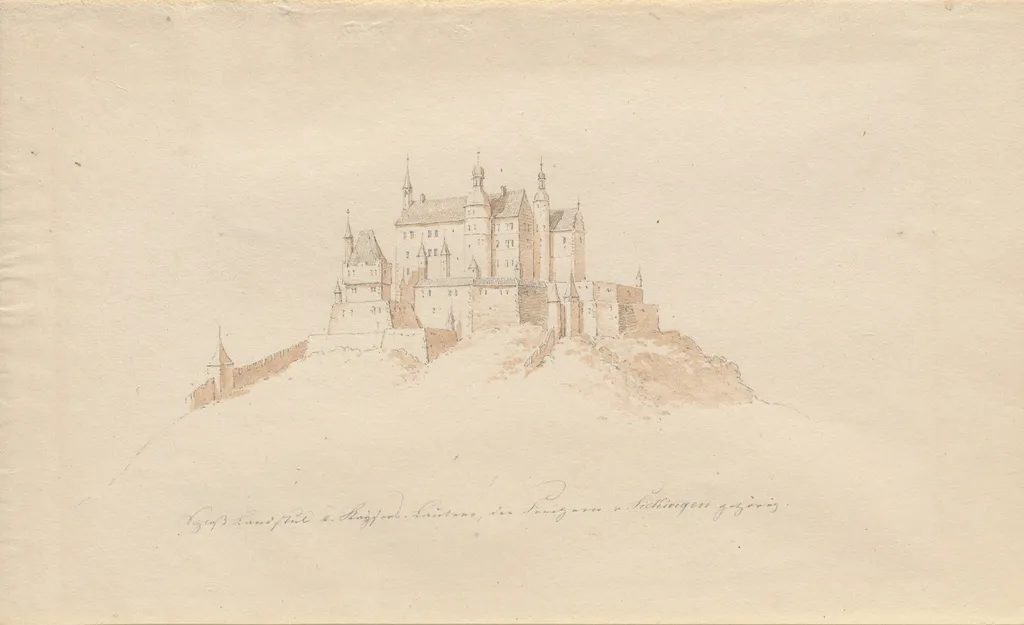
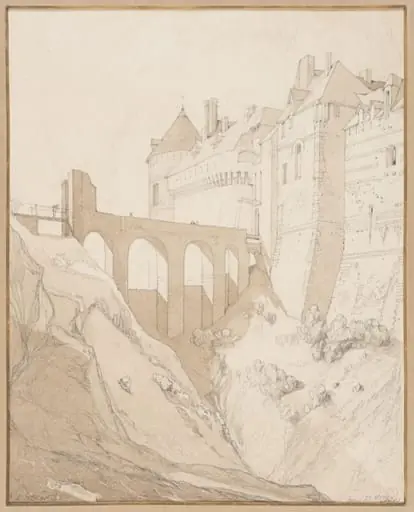
Schloss Landstuhl b. Kaisers, Lautern, den Prinzen v. Sickingen gehürig is a graphite drawing by the Romanticist artist Karl Julius von Leypold. It dates from 1840 and is held in the collection of the National Gallery of Art.
About this work
Overview
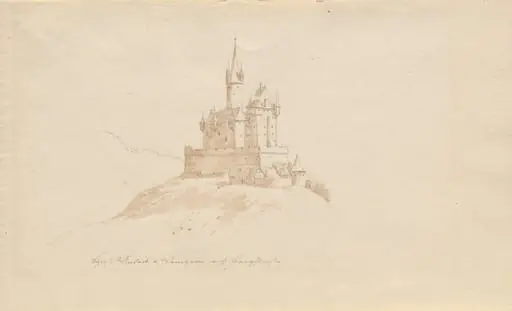
Sickingen gehürig*, presents a fortified castle perched atop a craggy hill.
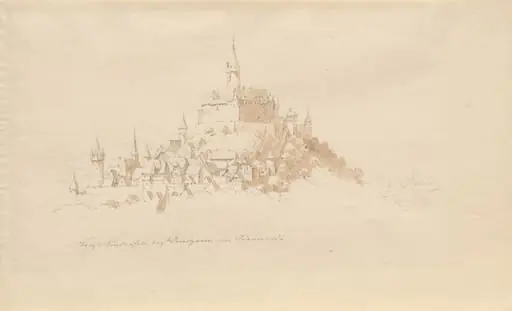
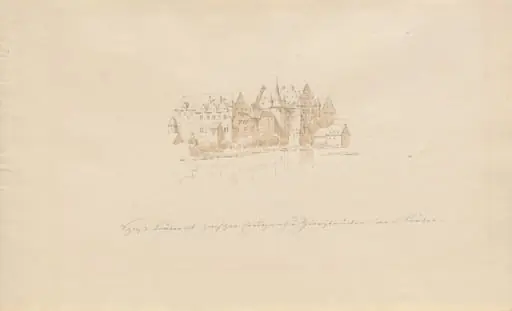
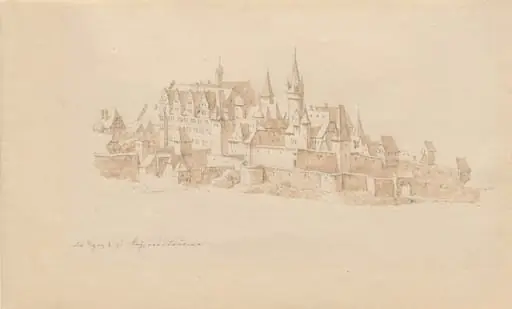
Karl Julius von Leypold’s 1840 drawing, titled *Schloss Landstuhl b. Kaisers, Lautern, den Prinzen v. Sickingen gehürig*, presents a fortified castle perched atop a craggy hill. Rendered in graphite with a brown wash on wove paper from a sketchbook, the composition captures the structure’s imposing towers, steeply pitched roofs, and massive stone walls, while a modest church nestles near the hill’s base on the left.
Subject & Meaning
The work depicts the historic Schloss Landstuhl, a medieval stronghold associated with Prince Franz von Sickingen. By situating the castle dramatically against a rugged landscape, the drawing emphasizes the site’s defensive character and its role as a symbol of regional power, while the adjacent church hints at the intertwined religious and secular authority of the era.
Technique & Style
Leypold employs a restrained graphite line combined with a subtle brown wash to model form and convey atmospheric depth. The soft tonal gradations and delicate hatching create a sense of volume, while the limited palette of browns and grays reinforces the Romantic fascination with ruins and the sublime qualities of nature.
History & Provenance
Created in 1840, the sketch originates from a personal sketchbook, suggesting it was a preparatory study rather than a finished work for exhibition. The drawing has remained within private collections before entering a museum holding focused on 19th‑century German art, where it serves as documentation of Leypold’s interest in historic architecture.
Artist & collection