Artwork
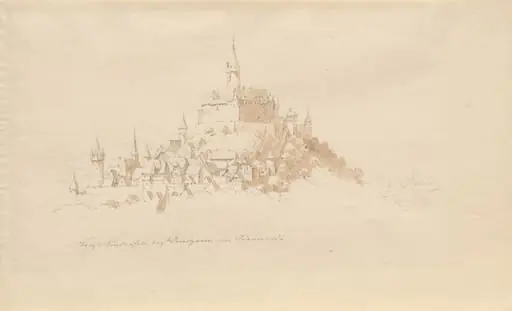
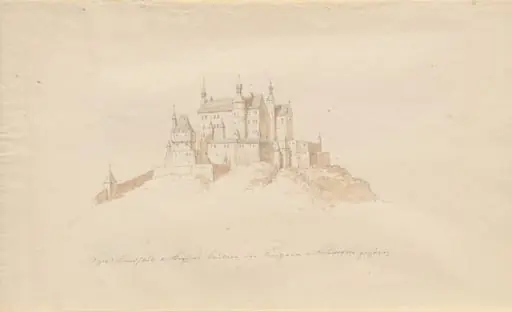
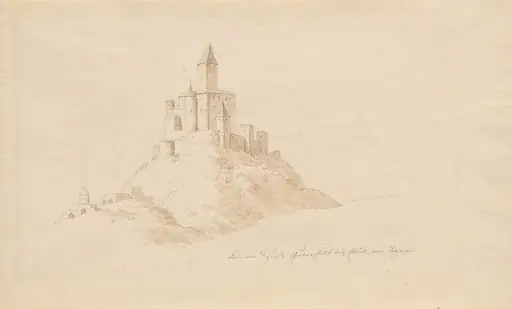
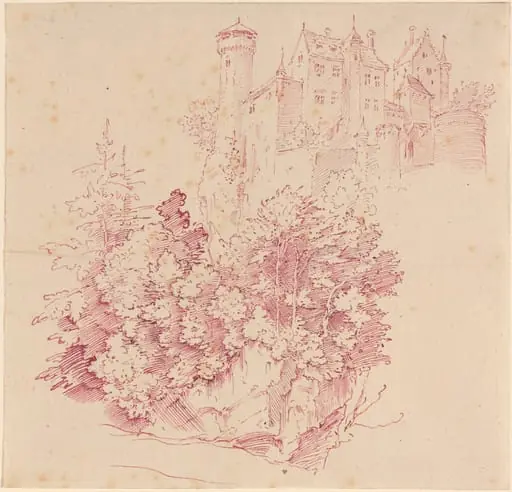
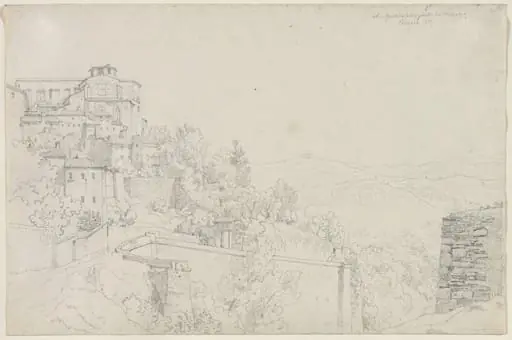
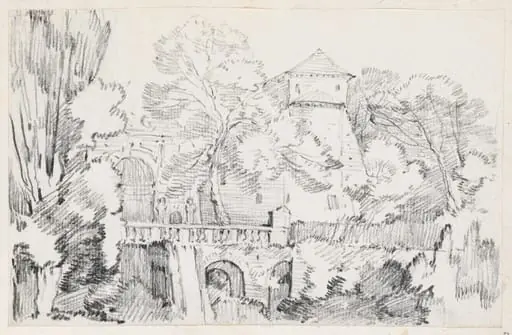
Schloss Windeck b. Weinhelm a. d. Bergstrasse
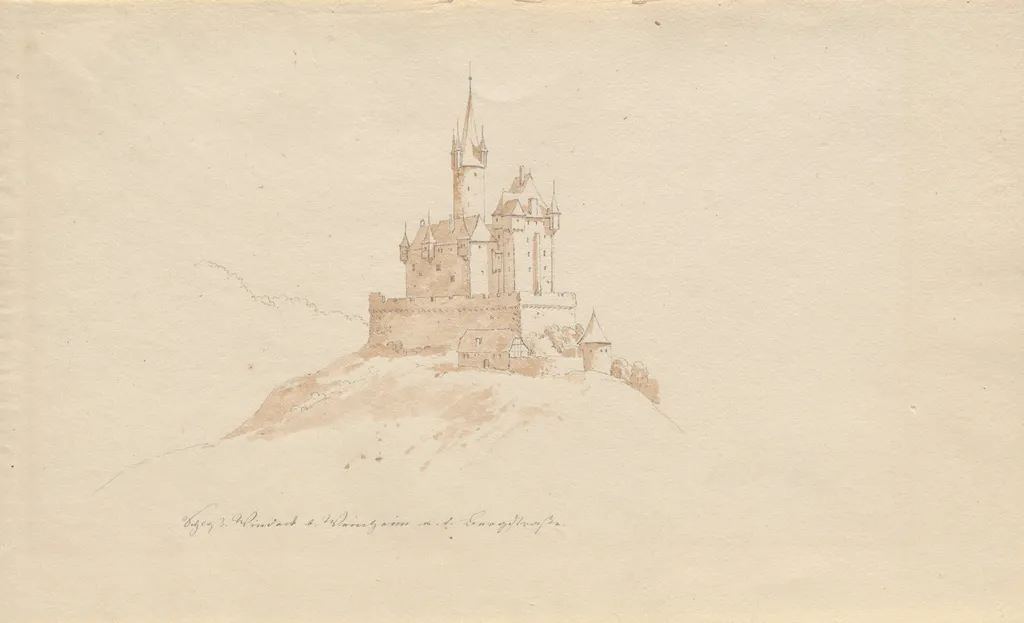
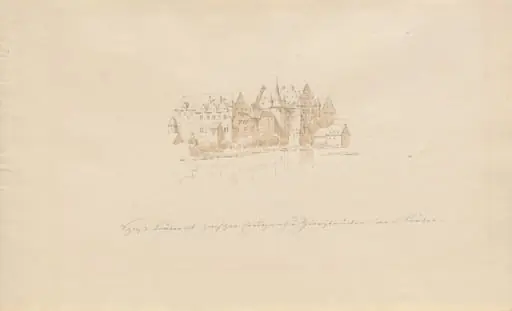
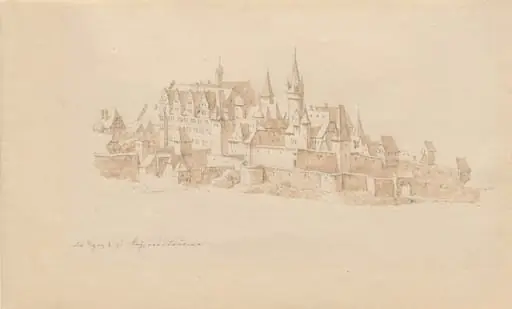
Schloss Windeck b. Weinhelm a. d. Bergstrasse is a graphite drawing by the Romanticist artist Karl Julius von Leypold. It dates from 1840 and is held in the collection of the National Gallery of Art.
About this work
Overview
The medium and support reflect the artist’s practice of capturing architectural subjects in situ with modest, portable materials.
This drawing, executed in 1840 by Karl Julius von Leypold, depicts Schloss Windeck near Weinhelm along the Bergstraße. Rendered in graphite with brown wash on wove paper, it originates from a personal sketchbook, suggesting it was made during a journey rather than as a commissioned piece. The medium and support reflect the artist’s practice of capturing architectural subjects in situ with modest, portable materials.
Subject & Meaning
The subject is Schloss Windeck, a modest castle ruin situated in the rural landscape of the Bergstraße region. Leypold’s focus on this structure, rather than a grander monument, indicates an interest in the quiet remnants of regional history. The drawing conveys a sense of quiet observation, emphasizing the building’s integration into its natural surroundings without overt romanticization or narrative.
Technique & Style
Leypold employed graphite for precise linear definition, layered with diluted brown wash to suggest depth and shadow. The use of wove paper, a relatively modern support at the time, allowed for subtle tonal gradations. His approach is restrained and observational, avoiding dramatic lighting or embellishment, favoring clarity and structural accuracy over expressive flourish.
History & Provenance
The drawing is part of a personal sketchbook compiled by Leypold during his travels in the early 1840s. It remained in private hands for much of its history, with no documented public exhibition prior to the 20th century. Its survival as a single sheet from a bound volume suggests it was valued as a record rather than a finished artwork.
Context
In the 1840s, German artists increasingly turned to regional architecture as subjects, influenced by rising interest in local heritage and topographical documentation. Leypold’s work aligns with this trend, reflecting a broader cultural movement to record vernacular structures before they vanished. His sketches served as both personal archives and contributions to emerging regional studies.
Legacy
Though not widely exhibited during his lifetime, Leypold’s drawings, including this one, are now recognized as valuable documents of 19th-century German topographical practice. They offer insight into how artists engaged with lesser-known sites, preserving visual records of structures that have since altered or disappeared, contributing to regional historical archives.
Artist & collection