Artwork
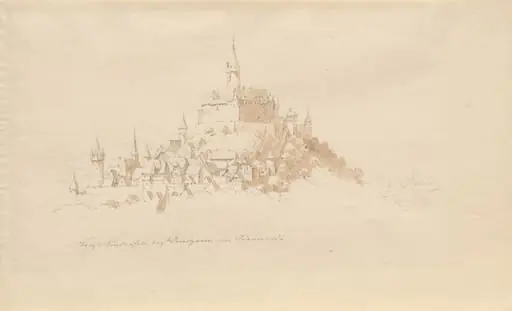
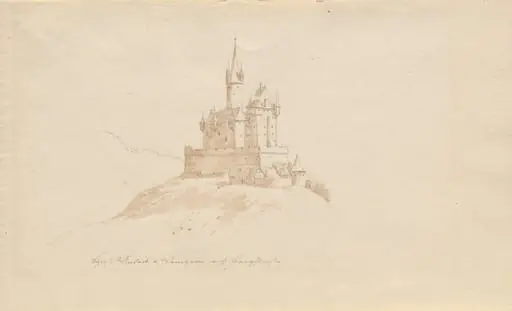
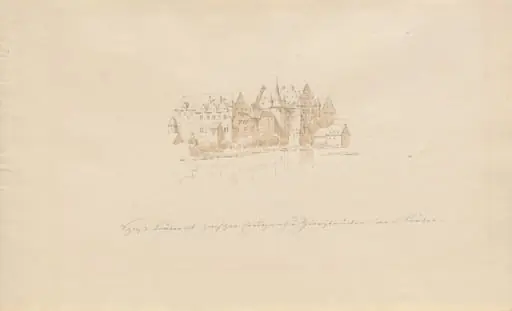
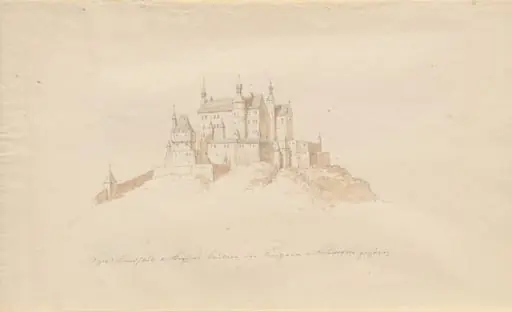
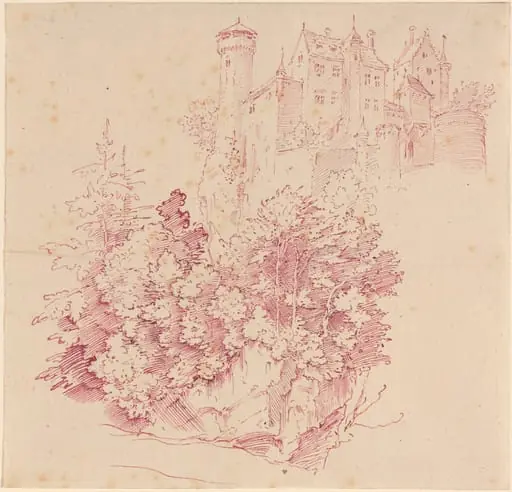
Das alte Schloss Gutenfeis bei Caub am Rhein
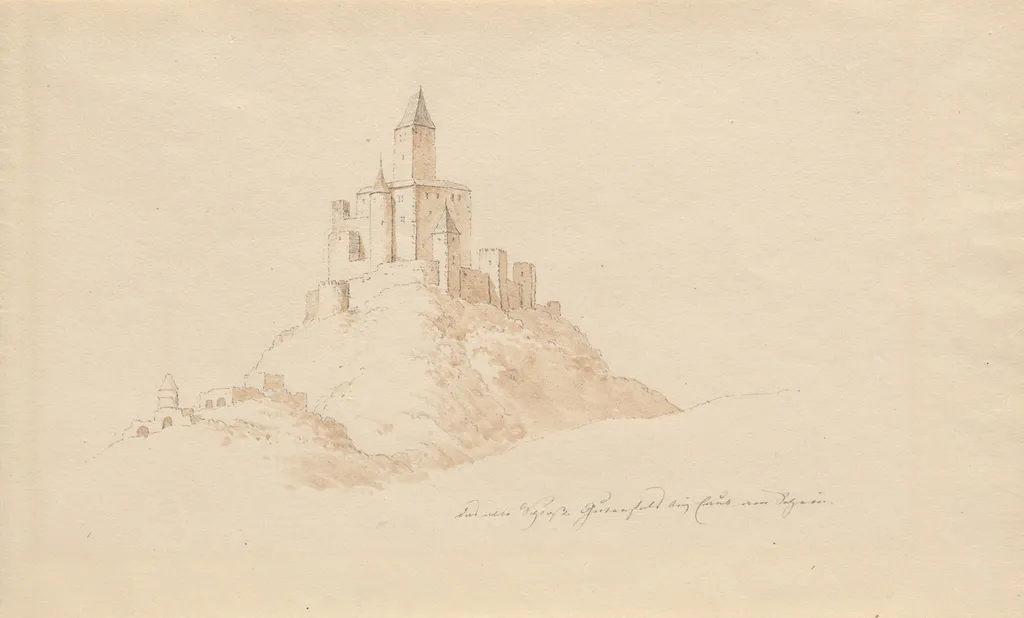
Das alte Schloss Gutenfeis bei Caub am Rhein is a graphite drawing by the Romanticist artist Karl Julius von Leypold. It dates from 1840 and is held in the collection of the National Gallery of Art.
About this work
Overview
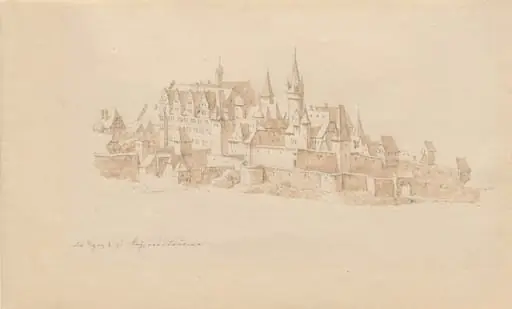
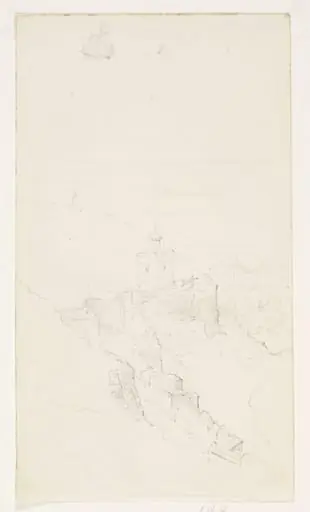
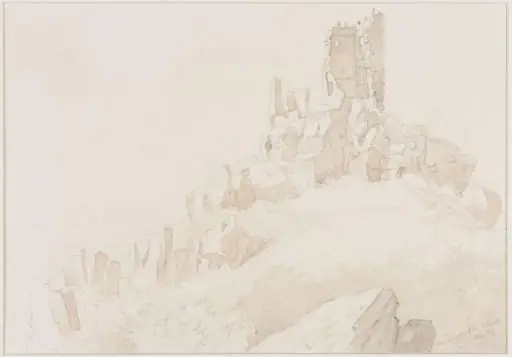
Karl Julius von Leypold’s 1840 drawing, titled *Das alte Schloss Gutenfeis bei Caub am Rhein*, presents a solitary ruin perched on a cliff above the Rhine. Executed in graphite with a brown wash on wove paper, the work captures a fleeting impression of the landscape rather than a detailed architectural study.
Subject & Meaning
The composition centers on the decaying castle of Gutenfeis, its stone walls fragmented and seemingly abandoned. Set against the river’s sweep, the ruin evokes themes of transience and the melancholy often associated with isolated historic sites, suggesting a contemplative response to the passage of time.
Technique & Style
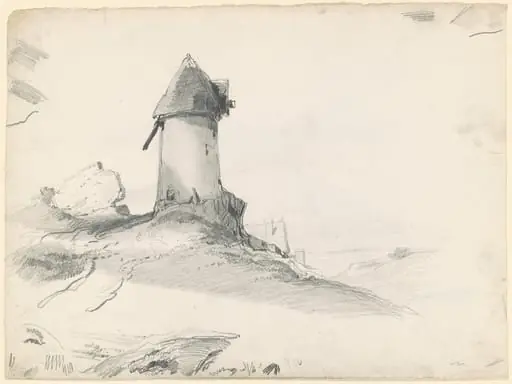
Created directly in a small sketchbook, Leypold employs swift graphite strokes combined with a light brown ink wash. The handling is loose, emphasizing atmospheric tone over precise rendering. This approach aligns with the Romantic emphasis on mood and the artist’s personal, diary‑like observation of place.
Context
The drawing belongs to the Romantic period, a movement that prized emotional resonance and the sublime qualities of nature. Leypold’s focus on a solitary, weather‑worn structure amid a dramatic river landscape reflects the era’s fascination with ruins as symbols of history and the natural world’s power.
History & Provenance
Completed in 1840, the work remains in its original format as a sketchbook drawing. No record of subsequent ownership changes or exhibition history is documented, indicating that it has likely remained within private or institutional collections since its creation.
Artist & collection