Artwork
Schloss Lauter zwischen Creutznach u. Zweibrücken an d. Lauter
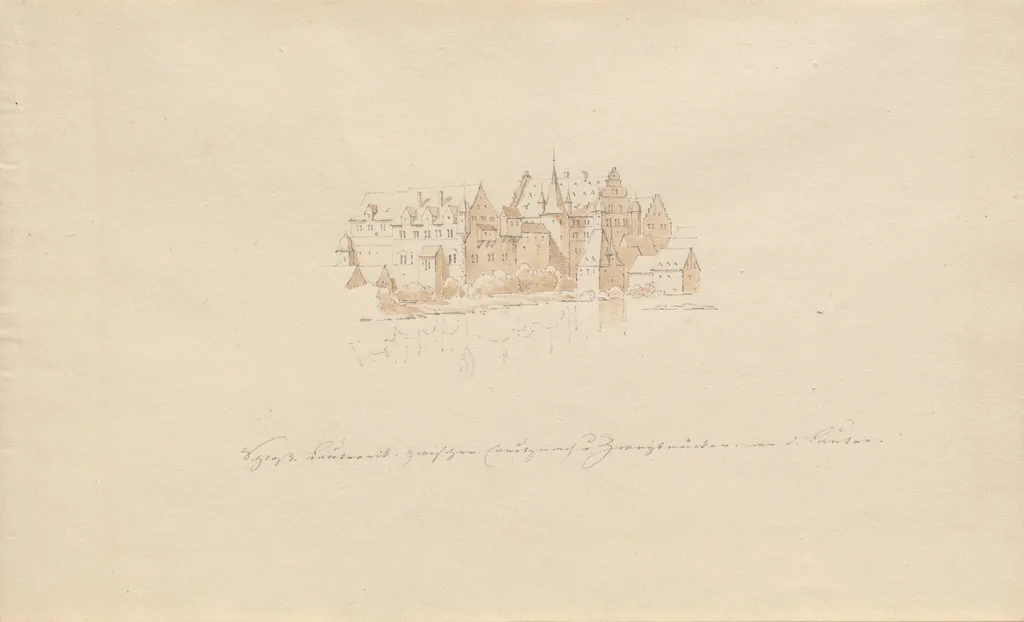
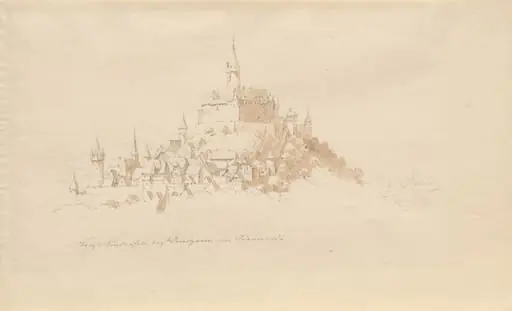
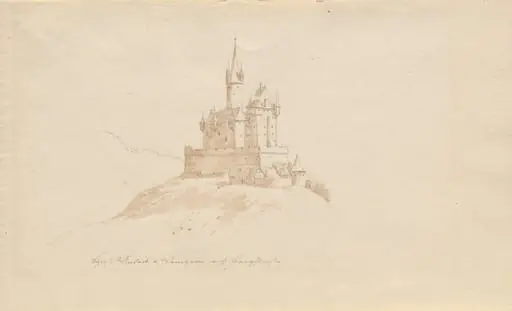
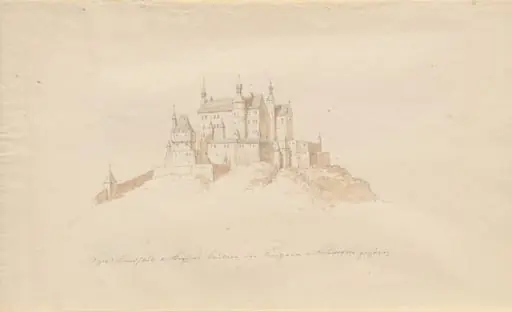
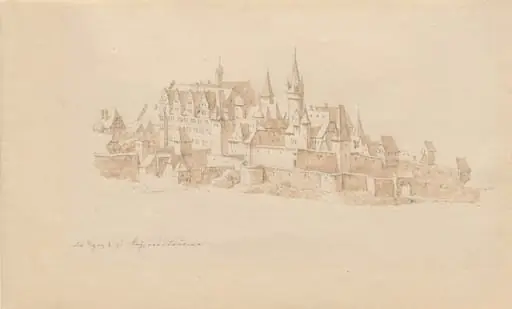
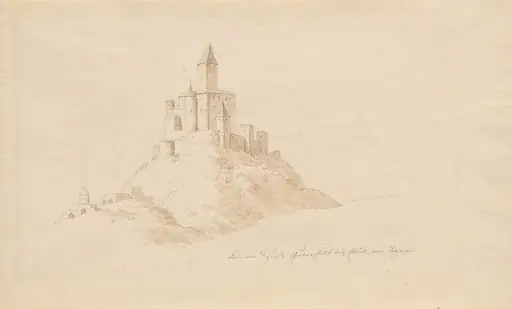
Schloss Lauter zwischen Creutznach u. Zweibrücken an d. Lauter is a graphite drawing by the Romanticist artist Karl Julius von Leypold. It dates from 1840 and is held in the collection of the National Gallery of Art.
About this work
Overview
Created in 1840 by Karl Julius von Leypold, this drawing depicts Schloss Lauter, a castle situated along the Lauter River between Creutznach and Zweibrücken.
Created in 1840 by Karl Julius von Leypold, this drawing depicts Schloss Lauter, a castle situated along the Lauter River between Creutznach and Zweibrücken. Executed in graphite and brown wash on wove paper, it originates from a sketchbook and captures the structure with precise, atmospheric detail. The work belongs to a tradition of topographical drawings that blend observation with poetic sensitivity.
Subject & Meaning
The drawing portrays Schloss Lauter as a fortified complex of towers and walls, nestled against rolling hills and dense foliage. A winding path leads toward the entrance, suggesting human presence without depicting figures. The calm river mirrors the architecture, reinforcing a quiet, contemplative mood. The scene evokes a sense of historical continuity rather than narrative drama.
Technique & Style
Leypold employed graphite for fine linear definition and brown wash to model form and depth. The paper’s texture enhances the soft gradations of tone, particularly in the hills and tree canopies. Buildings are rendered with careful architectural accuracy, while the surrounding landscape is suggested with loose, fluid strokes—balancing precision with atmospheric suggestion.
History & Provenance
The drawing is part of a series of sketches Leypold made during travels in the Rhineland-Palatinate region. Likely produced during a study trip, it reflects his interest in documenting regional architecture. Its survival in a sketchbook indicates it was a working study, not a finished exhibition piece, though it retains high artistic coherence.
Context
In the mid-19th century, German artists increasingly turned to local landscapes and ruins as subjects, influenced by Romantic ideals of nature and history. Leypold’s work aligns with this trend, emphasizing quiet reverence over grandeur. Unlike dramatic Romantic paintings, this drawing favors restraint, aligning with the scholarly tradition of topographical recording.
Legacy
Though not widely exhibited, the drawing contributes to the corpus of 19th-century German topographical art. It preserves a visual record of Schloss Lauter’s appearance before later alterations or decay. Leypold’s method—combining documentary accuracy with lyrical tone—remains a quiet example of how sketchbooks served as vital conduits for regional memory.
Artist & collection