Artwork
Daniel Heinsius
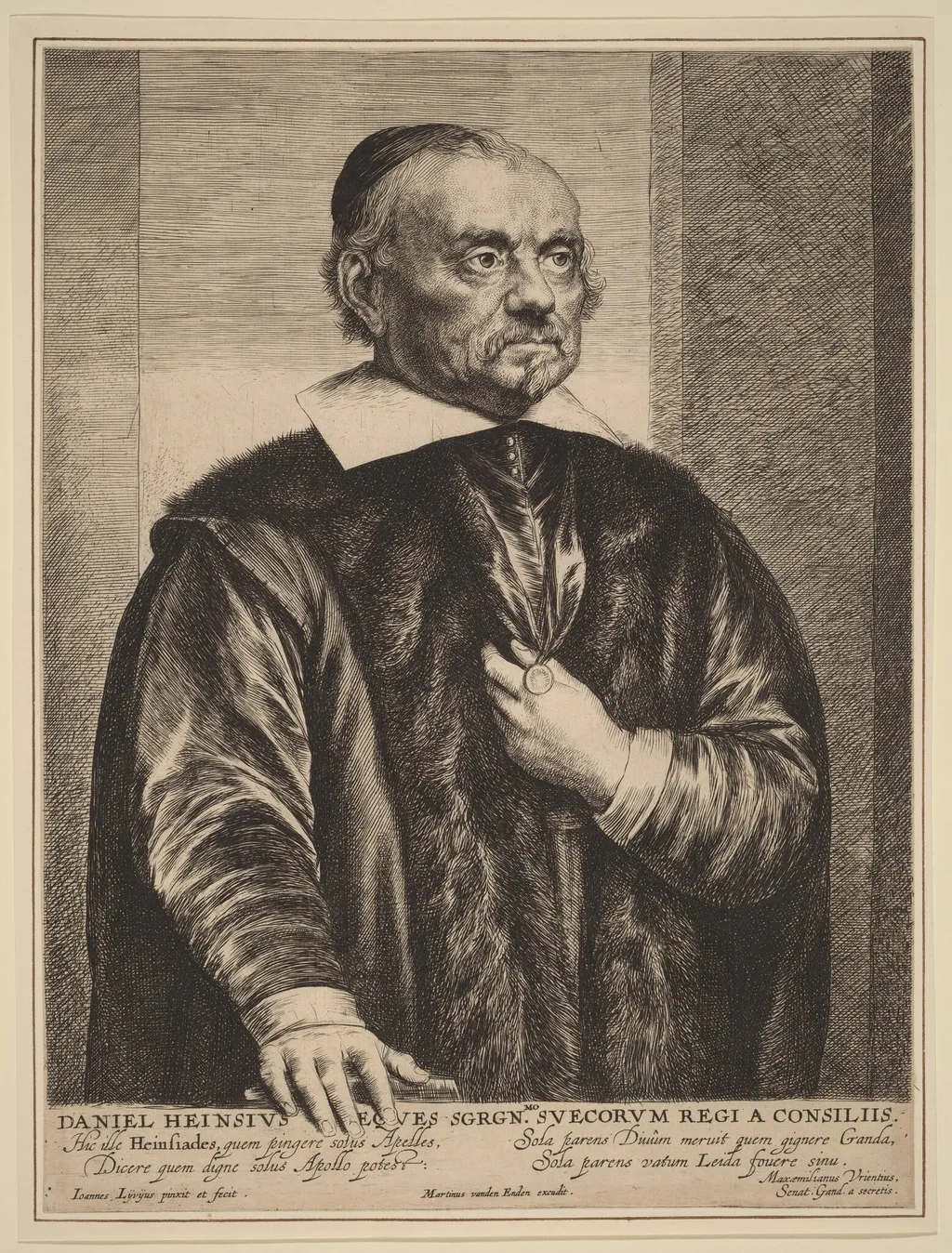
Daniel Heinsius is an ink print by the Baroque artist Jan Lievens. It dates from 1640 and is held in the collection of the National Gallery of Art.
About this work
Overview
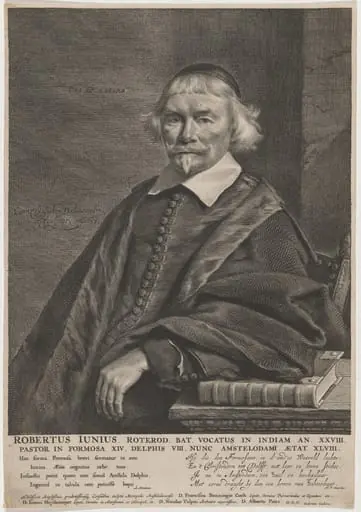
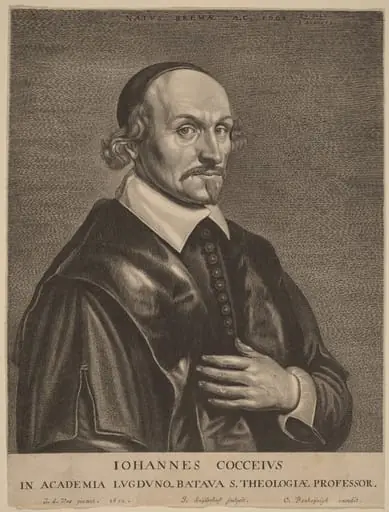
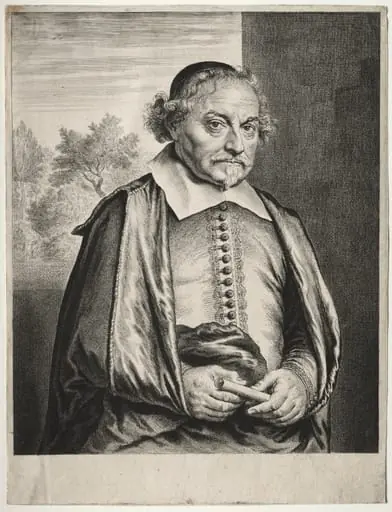
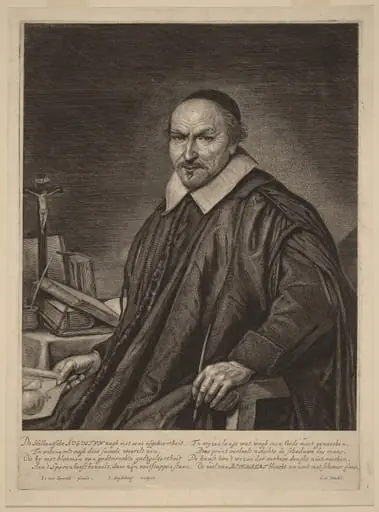
Jan Lievens, a Dutch artist active during the mid‑17th century, produced an etching and engraving of the scholar Daniel Heinsius in 1640. Executed on laid paper, the print presents a monochrome portrait that captures the intellectual’s mature age and contemplative demeanor.
Subject & Meaning
The image portrays Daniel Heinsius, a renowned humanist and philologist, seated with his hands placed on his chest. His fur‑trimmed collar, high‑necked shirt, and the careful rendering of his lined face convey both his scholarly status and the gravity of his lifelong work.
Technique & Style
Lievens combined etching with engraving, employing fine, incisive lines to delineate the folds of the scholar’s clothing and the texture of his skin. The precision of the line work reflects a typical 17th‑century Dutch approach to portraiture, emphasizing close observation and a restrained tonal range.
History & Provenance
Created while Lievens was based in Leiden, the print belongs to a period when the artist was moving between major artistic centers such as Amsterdam, London, Antwerp, The Hague, and Berlin. Its survival on laid paper indicates it was likely intended for a learned audience familiar with Heinsius’s reputation.
Context
The portrait emerges from the Dutch Golden Age, a time when portrait prints served both as commemorative objects and as means of disseminating the likenesses of prominent intellectuals. Lievens, trained under Pieter Lastman alongside Rembrandt, applied his experience in history painting to the intimate scale of printmaking.
Artist & collection
Artist
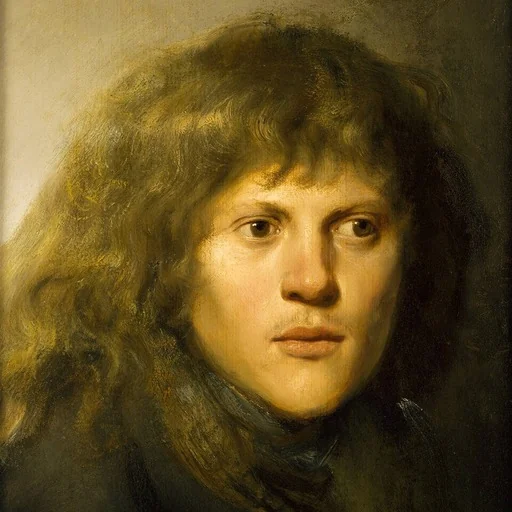
Jan Lievens (24 October 1607 – 4 June 1674) was a Dutch Golden Age painter who was associated with his close contemporary Rembrandt, a year older, in the early parts of their careers.