Artwork
Johannes Cocceius
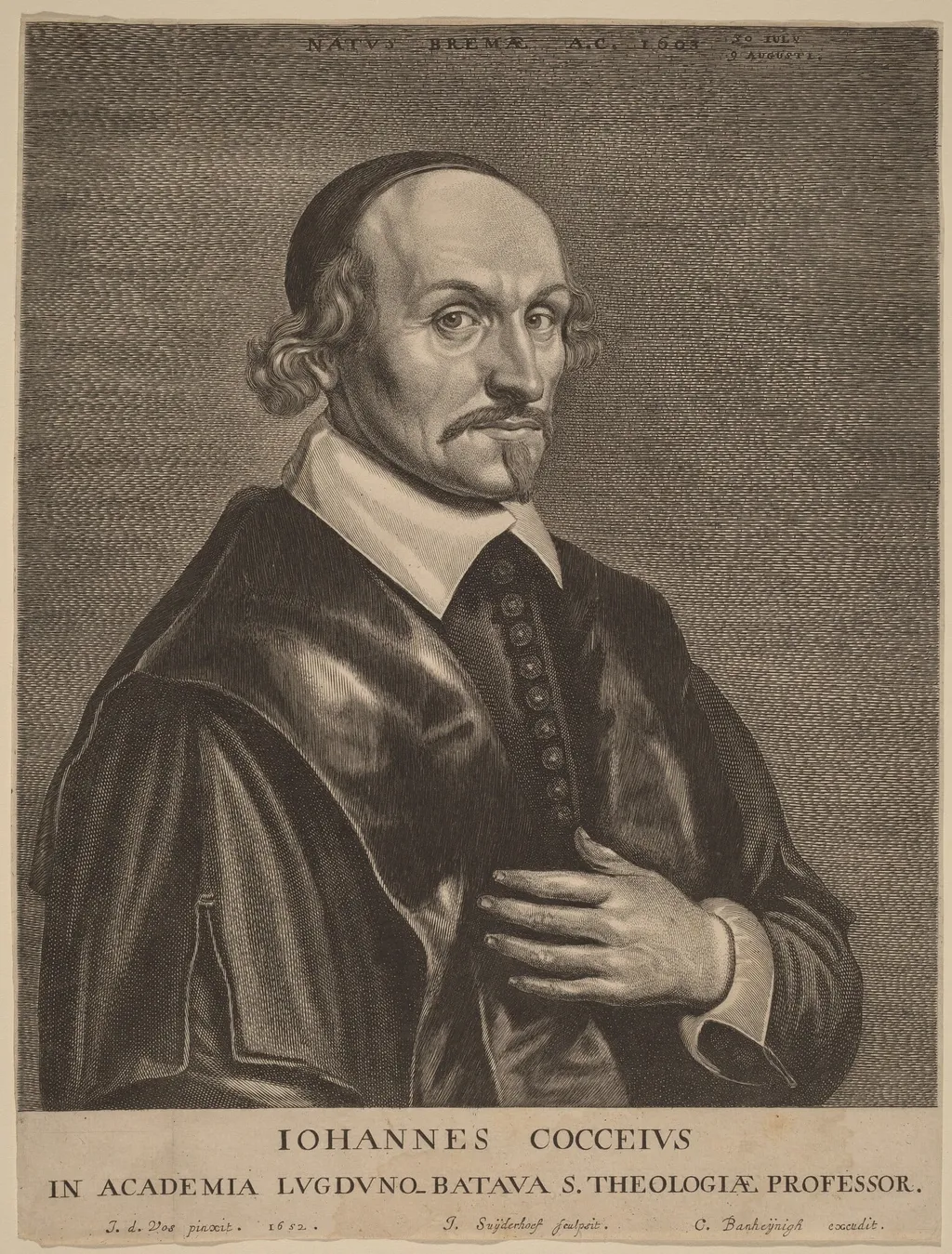
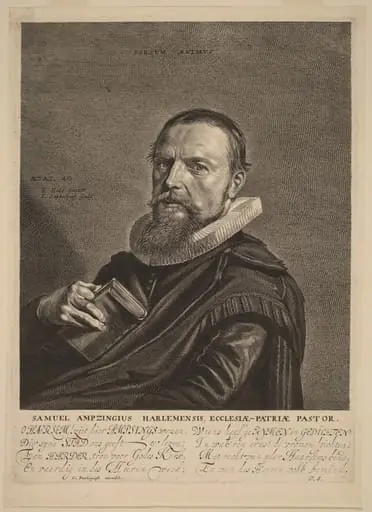
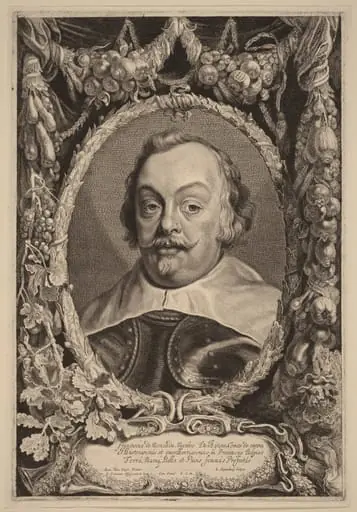
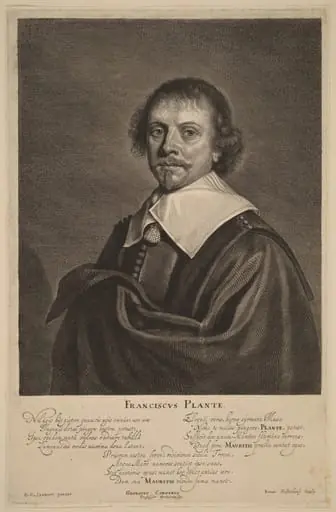
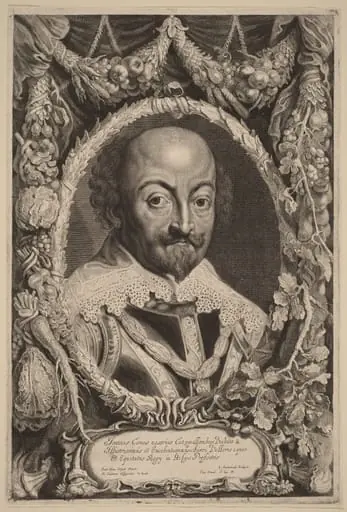
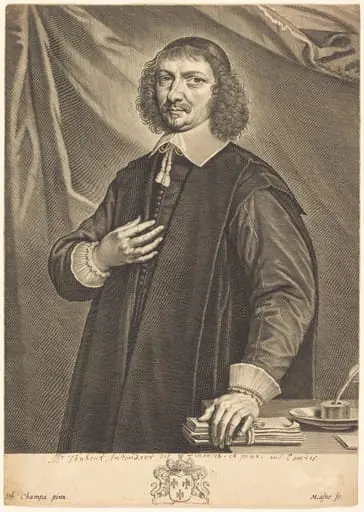
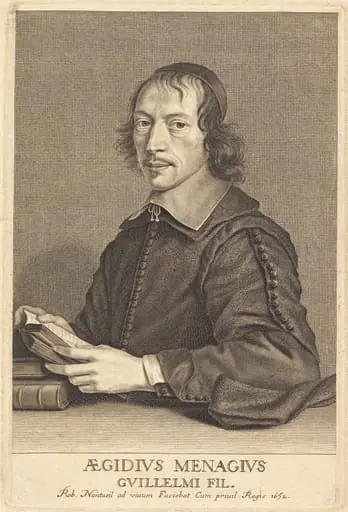
Johannes Cocceius is an ink print by the Baroque artist Jonas Suyderhoff. It dates from 1652 and is held in the collection of the National Gallery of Art.
About this work
Overview
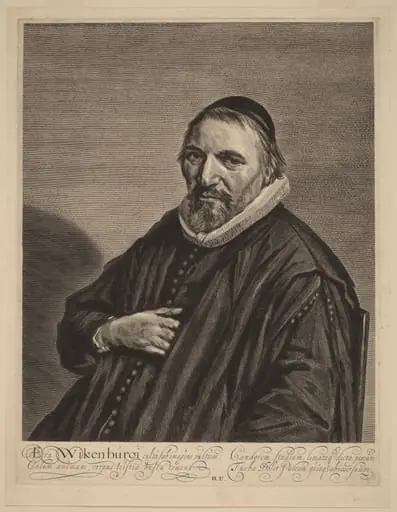
The inscription identifies his academic role, reinforcing the print’s function as a scholarly portrait rather than a decorative piece.
This 1652 engraving by Jonas Suyderhoff depicts Johannes Cocceius, a Dutch theologian and professor at Leiden University. Rendered in monochrome, the portrait emphasizes his intellectual presence through restrained composition and precise line work. The plain background isolates the figure, directing focus to his expression and attire. The inscription identifies his academic role, reinforcing the print’s function as a scholarly portrait rather than a decorative piece.
Subject & Meaning
Cocceius is portrayed with solemn dignity, his hands positioned gently over his torso, suggesting contemplation and inner conviction. His curled hair and neatly trimmed mustache reflect contemporary clerical fashion, while his dark robe signals his ecclesiastical status. The absence of ornamental details conveys a preference for intellectual authority over outward display, aligning with Reformed Protestant values of modesty and doctrinal seriousness.
Technique & Style
Suyderhoff employed fine, controlled engraving lines to model form and texture. Subtle cross-hatching defines the folds of Cocceius’s robe and the contours of his face, while delicate strokes suggest the softness of his hair and the sheen of fabric. The precision of the technique reflects the printmaker’s skill and the demand for accurate, dignified likenesses in academic and religious circles of mid-17th-century Holland.
History & Provenance
Created in 1652, the engraving likely served to circulate Cocceius’s image among students, colleagues, and theological networks. As a leading figure in the Cocceian school of theology, his likeness would have been valued for its association with his scholarly influence. The print’s survival in institutional and private collections attests to its enduring relevance in Protestant intellectual circles during and after his lifetime.
Context
In mid-17th-century Leiden, theological debate was intense, and figures like Cocceius shaped religious discourse through teaching and writing. Portraits such as this were common among academics, functioning as both personal mementos and public statements of intellectual identity. The engraving’s simplicity contrasts with the elaborate imagery of Catholic iconography, reflecting the Protestant emphasis on textual authority and personal piety.
Legacy
The engraving remains a primary visual record of Cocceius, preserving his appearance for later generations of theologians and historians. Its restrained aesthetic influenced subsequent academic portraiture in the Dutch Republic, reinforcing a visual language of sober intellect. Though not widely reproduced today, it continues to appear in scholarly publications on Reformed theology and Dutch print culture.
Artist & collection