Artwork
Glacial Boulders at the Edge of a Mountain
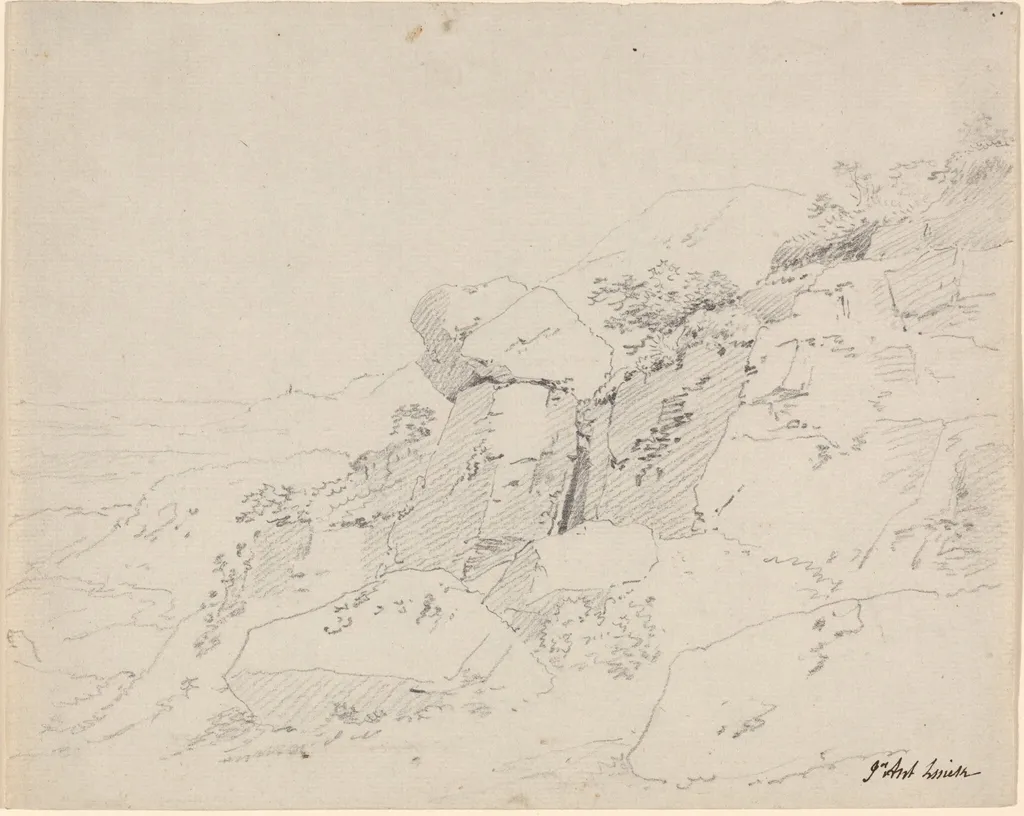
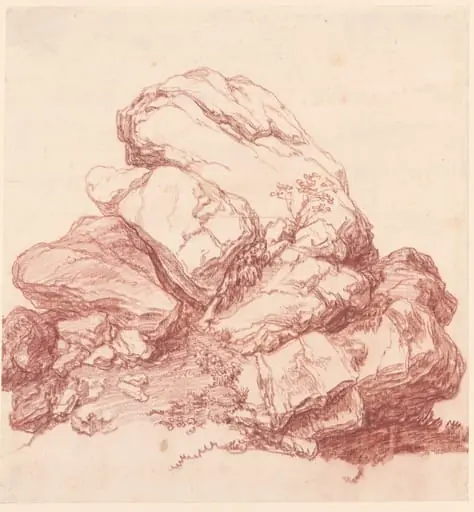
Glacial Boulders at the Edge of a Mountain is a graphite drawing by the Romanticist artist Jean Antoine Linck. It dates from 1805 and is held in the collection of the National Gallery of Art.
About this work
Overview
Created in 1805 by Jean Antoine Linck, this graphite drawing on light blue laid paper captures a mountainous landscape dominated by glacial boulders.
Created in 1805 by Jean Antoine Linck, this graphite drawing on light blue laid paper captures a mountainous landscape dominated by glacial boulders. The paper’s pale hue serves as both ground and atmospheric element, while delicate graphite strokes define form and texture without heavy contrast. The composition is restrained, focusing on geological weight and sparse vegetation rather than dramatic narrative.
Subject & Meaning
The scene depicts a rugged alpine edge, where massive, weathered boulders rest at the foot of a distant slope. Scattered shrubs and stunted trees suggest harsh, high-altitude conditions. The absence of human figures or architectural elements emphasizes nature’s autonomy, aligning with Romantic ideals that valued wild, untamed landscapes as subjects of quiet reverence rather than conquest.
Technique & Style
Linck employs varied graphite line weights to suggest mass and recession: heavier strokes define the boulders’ surfaces, while lighter, feathery marks indicate distant terrain and foliage. Subtle tonal gradations create volume without shading, relying on the paper’s tone to suggest ambient light. The draftsmanship is precise yet unpolished, reflecting direct observation over idealized composition.
History & Provenance
The drawing is dated to 1805, a period when Linck was active in Swiss and Alpine regions, sketching landscapes for scientific and aesthetic study. Its survival as a standalone sheet suggests it was preserved as a study rather than a finished work. No documented exhibition or ownership history prior to the 20th century is known.
Context
Produced during the early Romantic era, the work reflects a broader European interest in geology and natural phenomena. Unlike grand Romantic paintings, this drawing avoids theatricality, instead favoring quiet observation. It aligns with contemporary scientific expeditions that documented alpine terrain, merging empirical detail with emotional resonance.
Legacy
The drawing remains a modest but representative example of early 19th-century topographical sketching. It illustrates how artists engaged with nature not as spectacle but as subject worthy of careful, unembellished record. Its preservation highlights the value placed on preparatory works within Romantic-era artistic practice.
Artist & collection

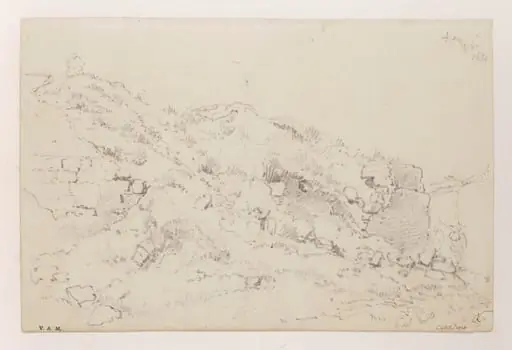 A hillside with ruined masonry
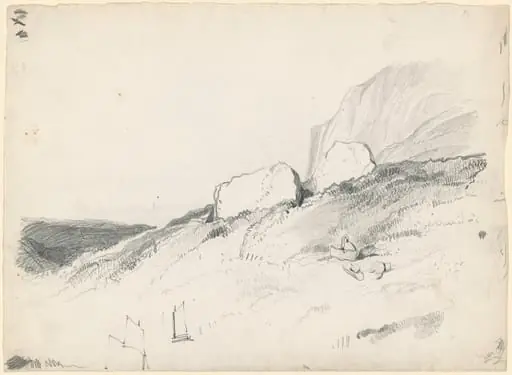 Rocky Landscape
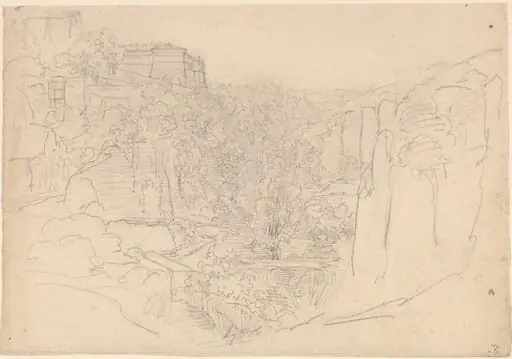 Fortified Castle Above a Narrow Valley
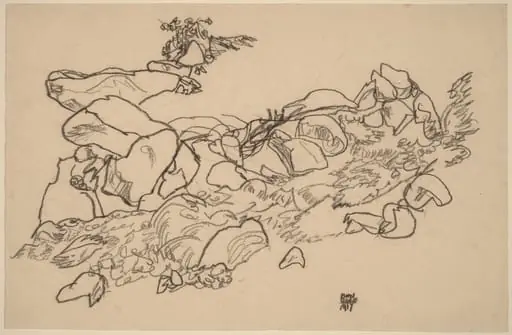 Mountain Stream
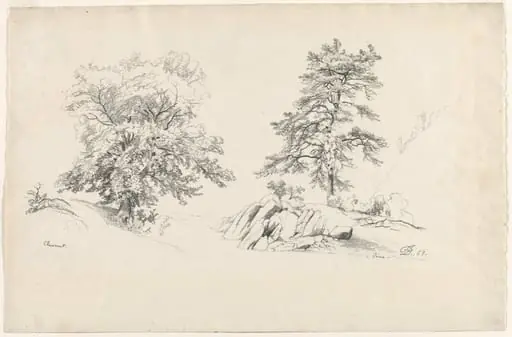 Chestnut and Pine
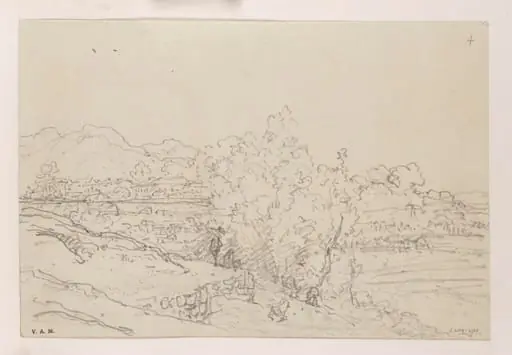 Fields and trees, with the city of Macau in the distance
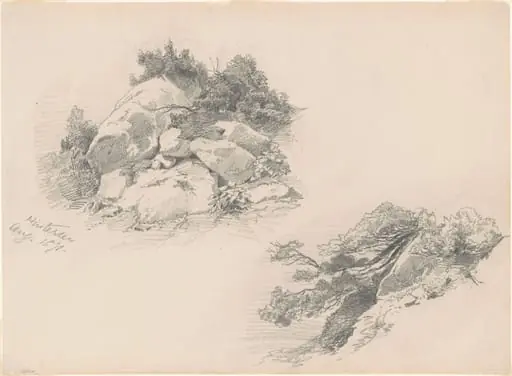 Hintersee, Germany
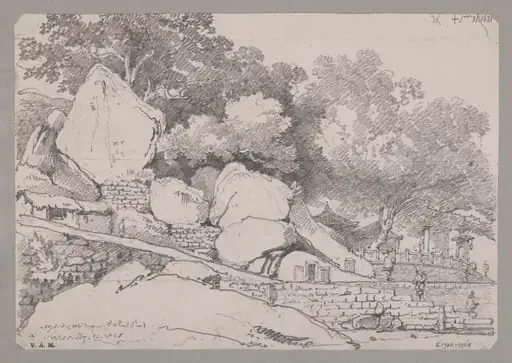 Rocks, and part of the Great Joss House, Macao
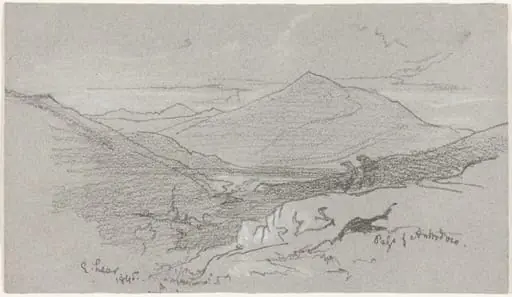 Mountainous View from Antrodoco
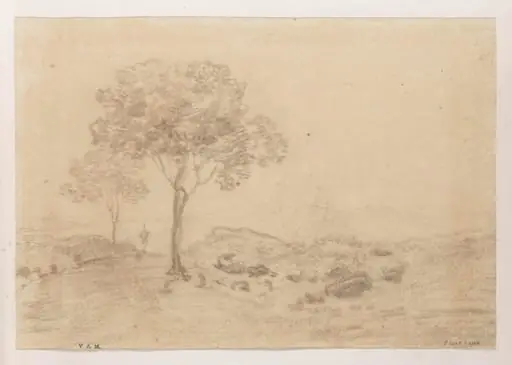 Two trees in a landscape
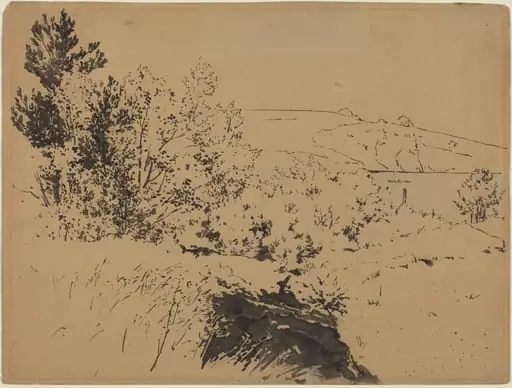 Coastal Landscape
 Weathered Boulders