Artwork
lasimaalaus, Kemiön kirkon kuori-ikkuna
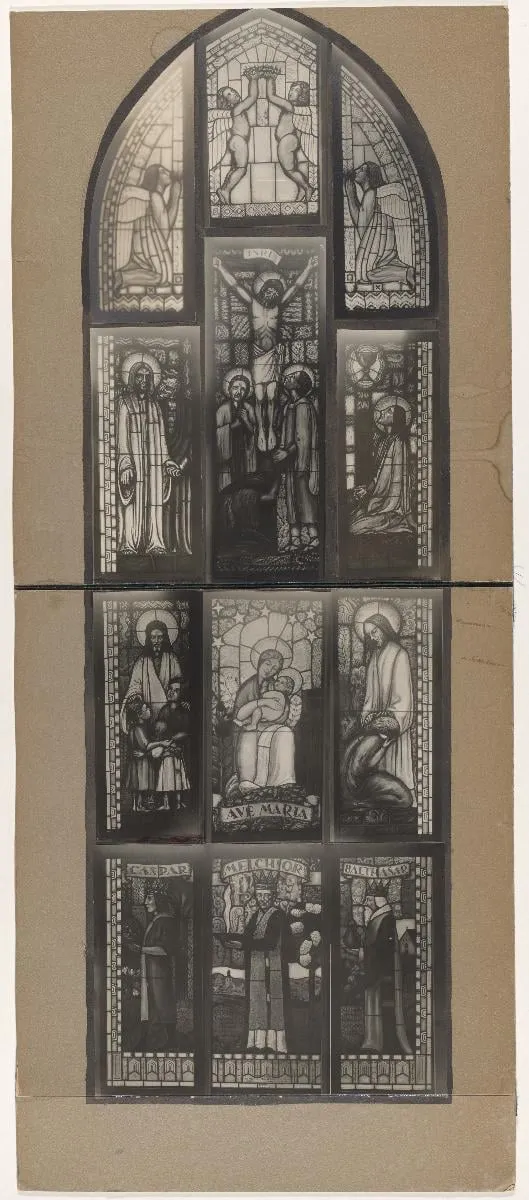
lasimaalaus, Kemiön kirkon kuori-ikkuna is a photography by Armas Lindgren. It is held in the collection of the Finnish Heritage Agency.
About this work
Overview
This black-and-white photograph captures a stained-glass window from Kemiö Church, divided into nine rectangular panels arranged in three rows.
This black-and-white photograph captures a stained-glass window from Kemiö Church, divided into nine rectangular panels arranged in three rows. The image exhibits the characteristic high-contrast outlines typical of early 20th-century ecclesiastical glasswork. The photo’s faded, grainy texture suggests it was taken decades ago, preserving the window’s appearance before modern conservation. The composition follows a traditional vertical narrative structure common in church windows of the period.
Subject & Meaning
The window’s panels depict Christian scenes arranged hierarchically: the top row shows the Crucifixion with figures at the cross and a supplicant below; the center row presents a maternal figure with a child, likely the Virgin and Child; the bottom row features additional worshippers and symbolic gestures. The sequence guides the viewer from sacrifice to compassion to devotion, reflecting liturgical themes of redemption and prayer common in Finnish Protestant church decoration.
Technique & Style
The original glasswork employs bold black leading to define each figure and shape, creating a graphic, almost illustrative quality. Colors, now unseen in the monochrome photograph, would have been rich but restrained, typical of early modern ecclesiastical glass in Scandinavia. The style prioritizes clarity and symbolic legibility over naturalism, aligning with Lutheran traditions that favored didactic imagery over ornate decoration.
History & Provenance
The window originates from Kemiö Church in southwestern Finland, likely installed in the early 1900s during a wave of church renovations. Its design reflects the period’s blend of national romanticism and religious modesty. The photograph, though undated, appears to be from the mid-20th century, possibly taken for archival or educational purposes. It is now held in the collection of the Museum of Ethnography, where it serves as a record of regional religious art.
Context
This window belongs to a broader Finnish tradition of church glasswork that emerged after the Reformation, favoring simplified biblical narratives over Catholic iconography. Its layout and subject matter echo contemporary Lutheran liturgical needs, where visual aids supported congregational understanding. Similar windows exist in rural Finnish churches, often commissioned from local artisans rather than major studios, reflecting community-based religious expression.
Legacy
Though the original glass may have undergone restoration or replacement, the photograph preserves its early form as a cultural artifact. It contributes to the documentation of vernacular religious art in Finland, illustrating how faith was visually communicated in small communities. The image remains a reference point for scholars studying the intersection of local craftsmanship and Protestant devotional practice in the Nordic region.
Artist & collection
Artist
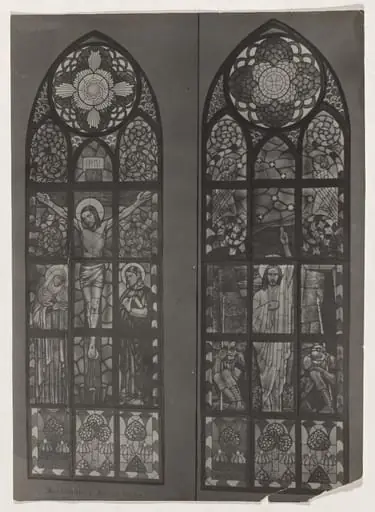 lasimaalaus, Forssan kirkon kuori-ikkunat
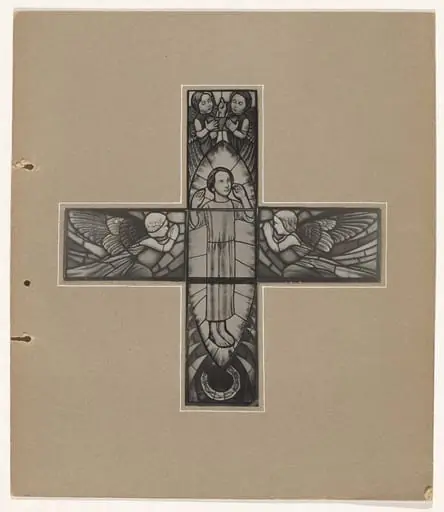 ristinmuotoinen lasimaalaus, Olaus Petrin kirkko
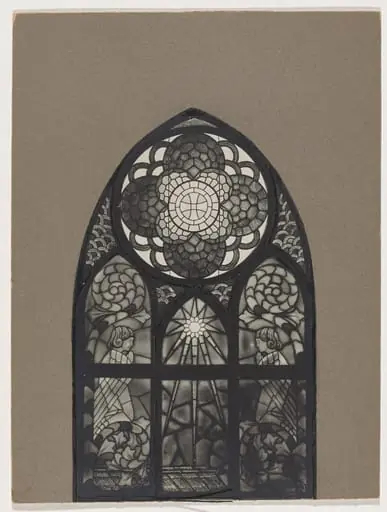 lasimaalaus, Forssan kirkon kuori-ikkuna, Jeesuksen syntymä
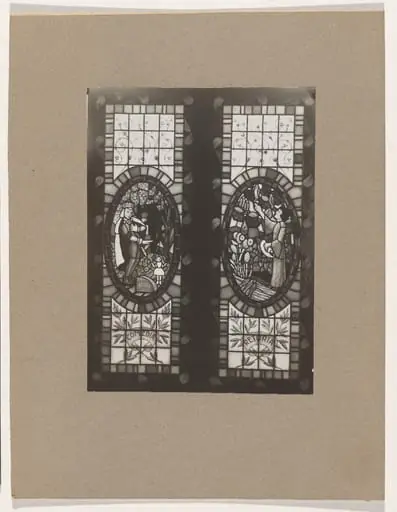 lasimaalaus, Kymintehdas, comedia retoria
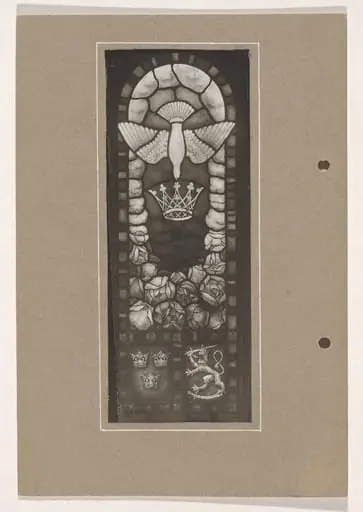 lasimaalaus, Olaus Petrin kirkko, kyyhkynen ja kruunu
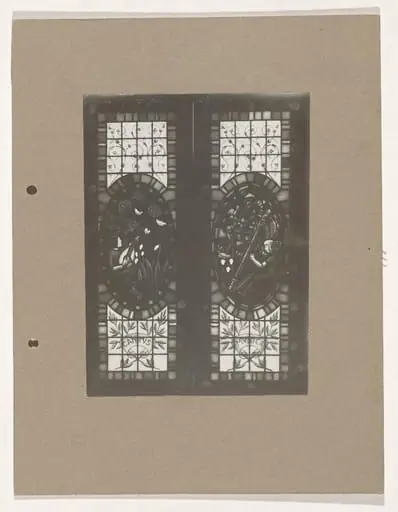 lasimaalaus, Kymintehdas, cantus musica
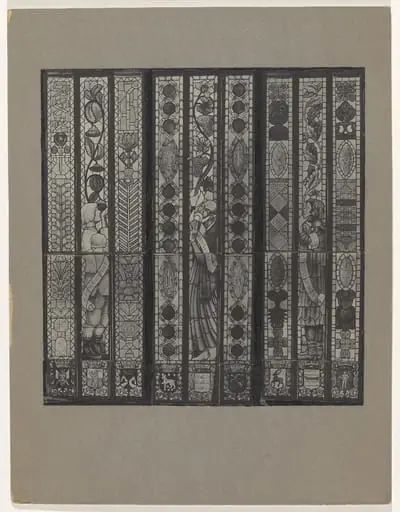 lasimaalauksia, Suomen kansallismuseon pääportaikko, ethnographia - historia - archaeologia
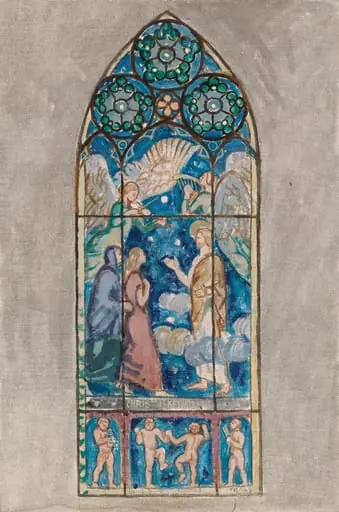 Christus resurrexit, luonnos Porin kirkon lasimaalausta varten
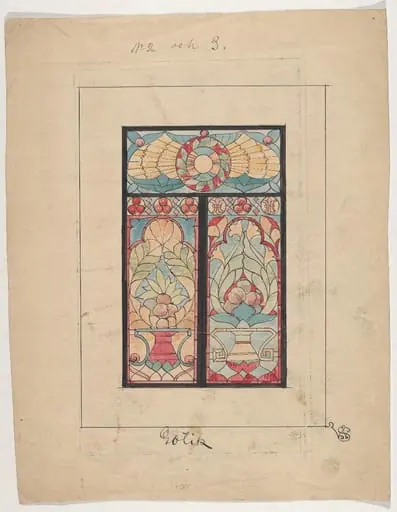 lasimaalaussuunnitelma, kasviornamentiikkaa, hedelmäkulhoja
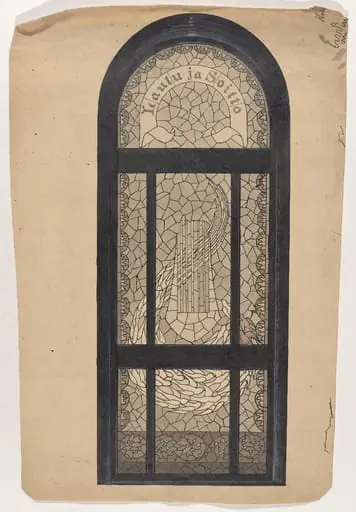 lasimaalausluonnos pyörökaari-ikkunaan, Laulu ja Soitto